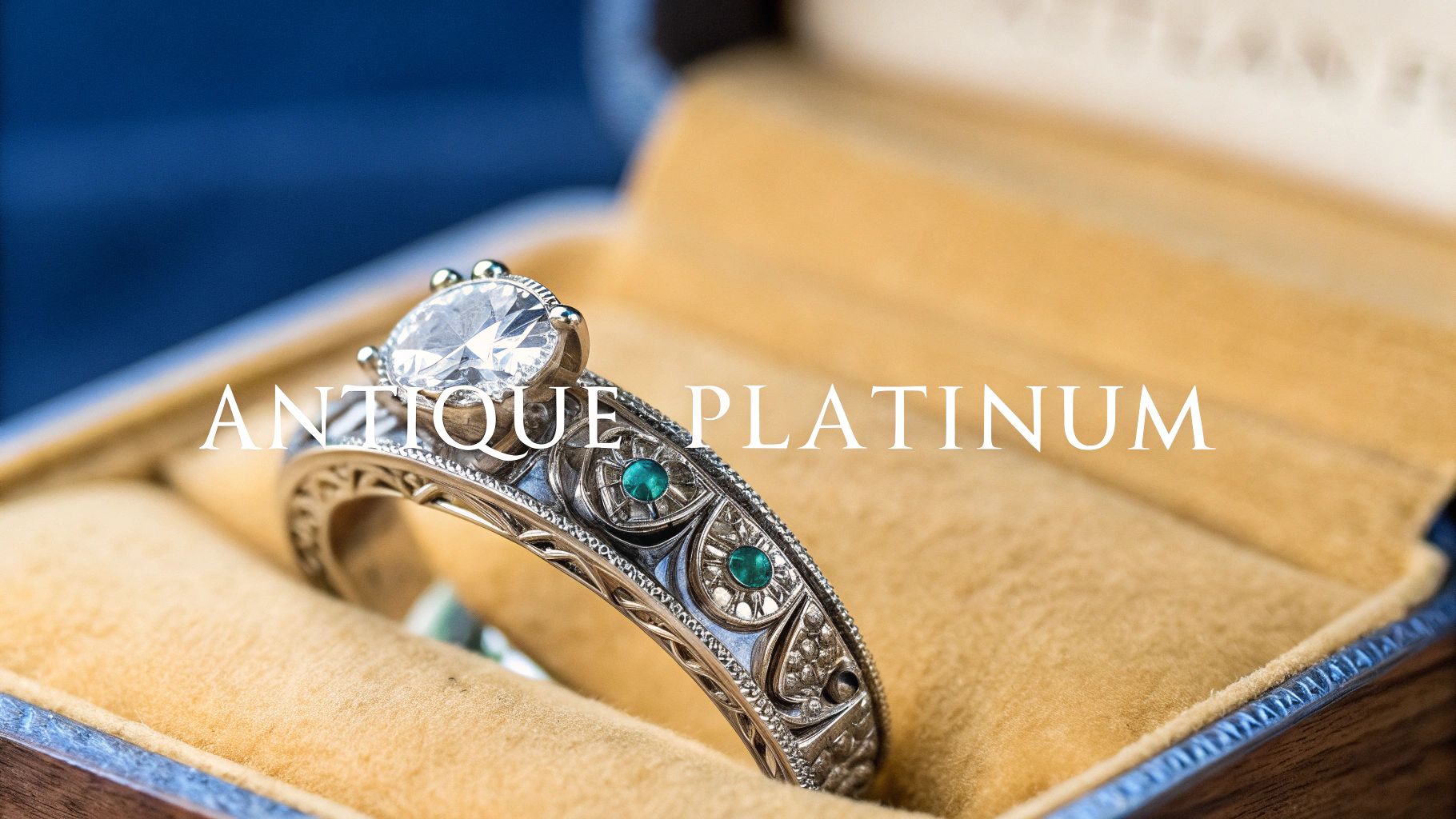
An antique platinum wedding ring isn't just another piece of jewelry. It's a tiny, wearable piece of history. These rings capture a unique blend of enduring craftsmanship, timeless style, and the incredible strength of platinum, making them a beautiful and meaningful way to symbolize your love.
Why Choose an Antique Platinum Wedding Ring
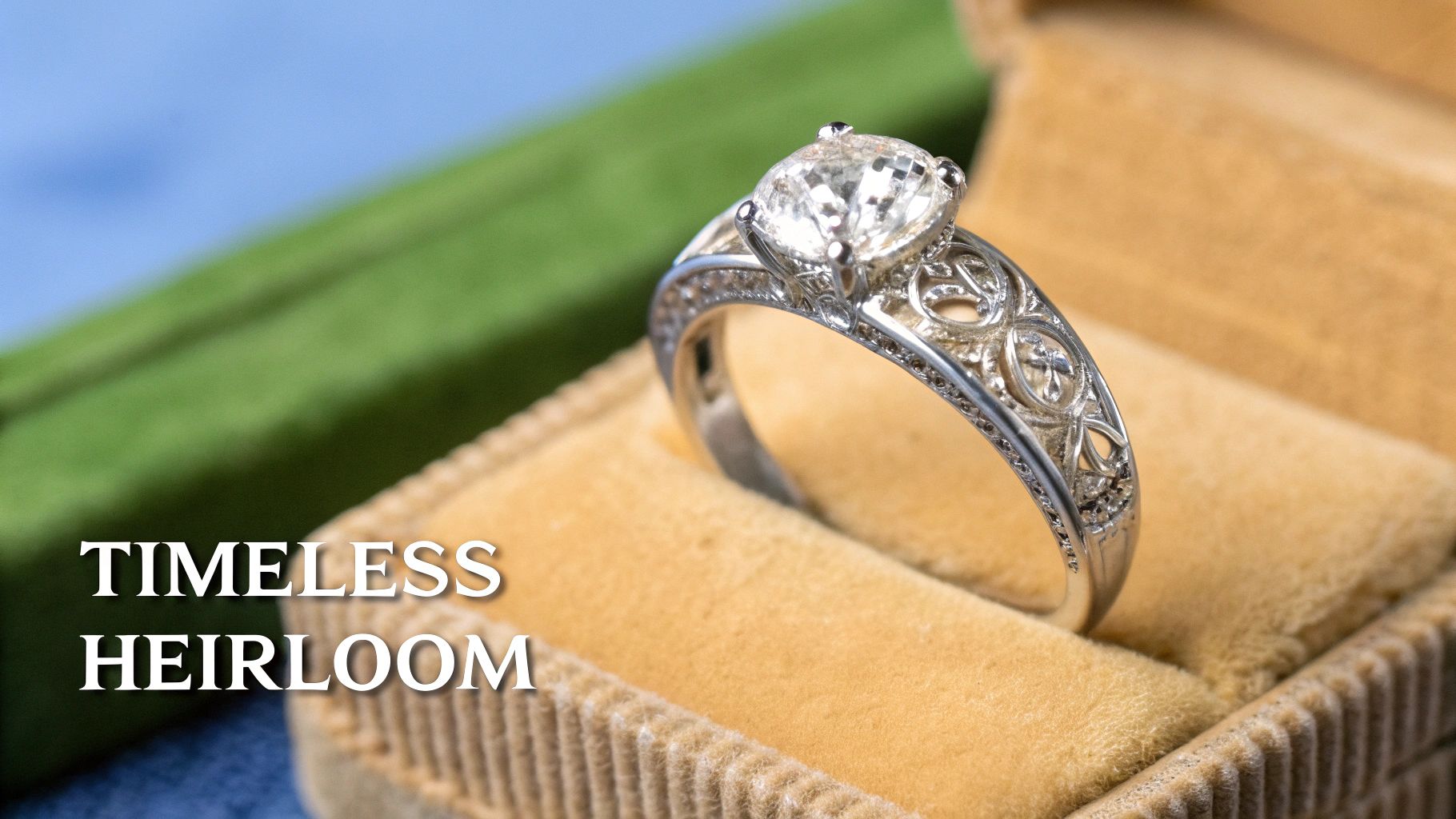
When you choose an antique platinum wedding ring, you’re choosing a story. Think about it: you're holding a piece that was painstakingly crafted a century ago, a silent witness to the romance of the Roaring Twenties or the delicate elegance of the Edwardian era. That connection to the past gives each ring a soul that modern pieces often can't replicate.
But this choice isn't just about sentiment. It's a practical one, too, thanks to the metal itself. There’s a good reason why platinum was the top choice for master jewelers back in the day.
The Unmatched Durability of Platinum
Simply put, platinum is one of the toughest precious metals you can find in jewelry. It's incredibly dense. So, unlike gold, which can wear away over the years, platinum holds its own. When it gets scratched, the metal just moves aside—it doesn't actually get lost.
This amazing resilience is why so many intricate designs from the early 1900s are still around in such beautiful condition. A huge plus is that platinum naturally resists tarnish, a quality you can learn more about in this guide to non-tarnish jewelry.
A Luster That Never Fades
Here’s another great reason to go with platinum: its naturally bright, cool-white shine. To get that silvery look, white gold needs a rhodium plating, which wears off and has to be reapplied every few years. Platinum, on the other hand, is naturally white. It will never fade or change color.
Over time, platinum develops a soft, satiny finish called a patina. This unique characteristic is actually prized by collectors because it enhances the ring’s vintage feel, telling the story of a long and well-loved life.
This authentic, lasting glow creates the perfect backdrop for diamonds and other gemstones, making them pop with even more brilliance. An antique platinum wedding ring truly is the perfect blend of history, artistry, and lasting beauty—an exceptional symbol for a lifelong commitment.
A Journey Through Platinum's Golden Eras
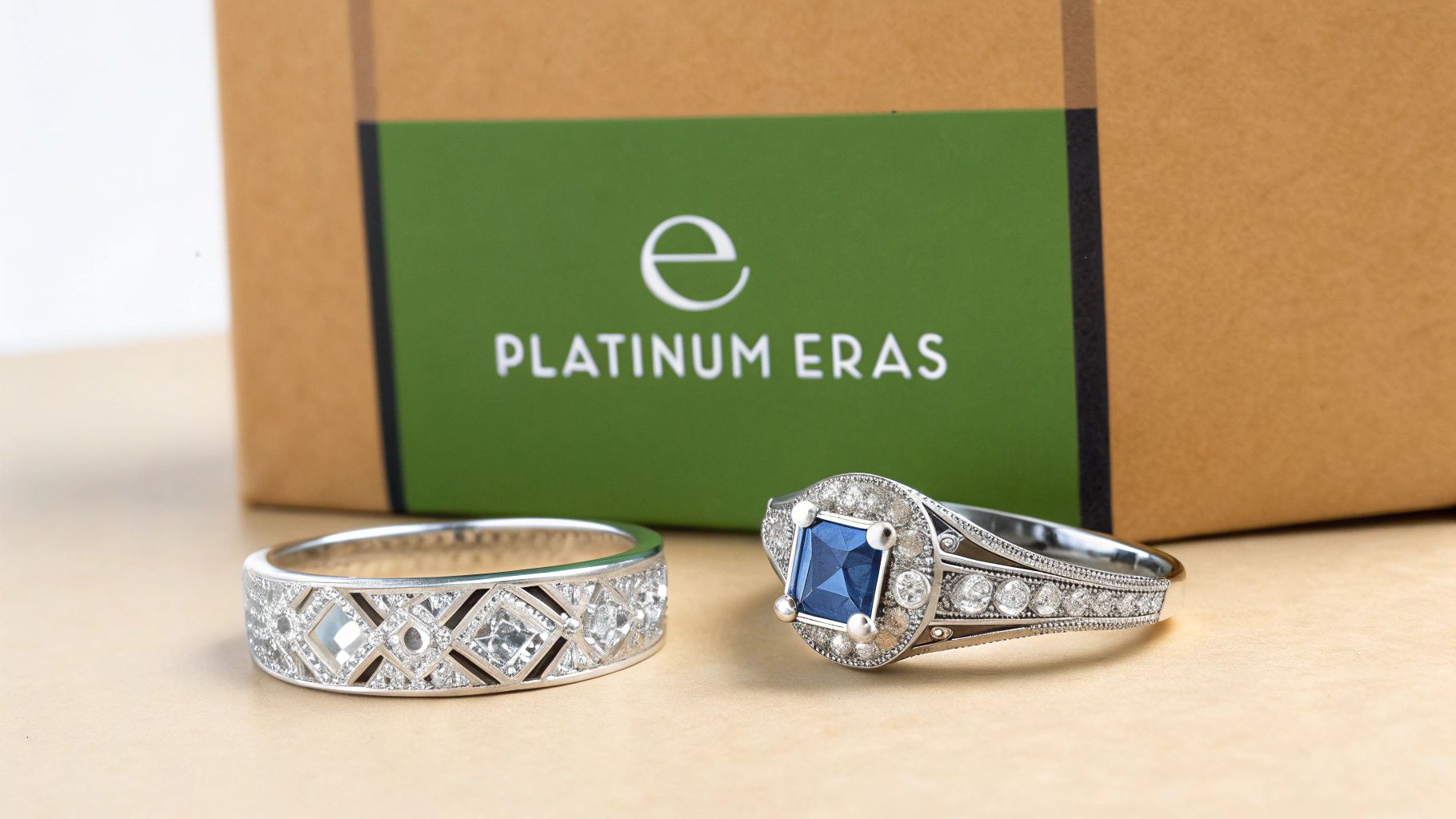
To really appreciate an antique platinum wedding ring, you have to understand its backstory. These aren't just pretty pieces of metal; they're tiny time capsules, each one holding the art, culture, and spirit of the moment it was made. The story of platinum is really the tale of two completely different, revolutionary periods that changed jewelry design forever.
Imagine the world stepping out of the stiff, formal Victorian age and into a new century buzzing with optimism and grace. That was the setting for platinum's first true golden age.
The Delicate Romance of the Edwardian Era (1901-1910)
The Edwardian era was all about elegance. Fashion became lighter and more ethereal, and jewelry had to match. Before this time, creating those incredibly intricate, lace-like patterns in metal was a huge challenge—gold and silver were just too soft to hold such delicate shapes without breaking.
Then platinum arrived on the scene and changed everything. Its incredible strength meant jewelers could finally craft pieces that looked as light as spun silk but were tough enough for everyday wear. It was like suddenly being able to build a delicate sculpture with a strong, fine-wire frame instead of soft clay. Platinum was the framework jewelers had always dreamed of.
This breakthrough unleashed the signature styles we now associate with the period:
- Filigree and Milgrain: Jewelers spun metal into breathtakingly fine, thread-like patterns called filigree. They often trimmed these designs with tiny metal beads—a technique called milgrain—to add a soft, shimmering texture to the edges.
- Garlands and Bows: Designs took their cues from nature and classical art. You'll see graceful garlands, delicate bows, flowing ribbons, and intricate floral motifs everywhere.
- Lace in Metal: The overall look was so delicate that people called it "lace in metal." An antique platinum wedding ring from this era feels almost impossibly detailed, a testament to pure artistry.
The Edwardian period put platinum on the map as the ultimate metal for luxury and sophistication. But the soft romance of this era was about to be replaced by something far more dramatic.
The Bold Geometry of the Art Deco Period (1920-1930s)
If the Edwardian era was a graceful waltz, the Art Deco period was the Charleston—it was energetic, daring, and shockingly modern. The Roaring Twenties brought a cultural revolution that celebrated industry, speed, and clean, geometric forms. And this new world demanded a jewelry style to match.
Platinum was the perfect metal for this new aesthetic. Its cool, white sheen provided the ideal stark canvas for the sharp lines and bold symmetry that defined Art Deco design. Jewelers used platinum to create architectural settings for high-contrast gemstones.
The Art Deco period was a complete break from the flowing, nature-inspired forms of the past. It was all about machine-age inspiration, which resulted in jewelry that was structured, powerful, and undeniably glamorous.
This is the era where the antique platinum wedding ring became a true icon. While platinum had been used before, its strength and naturally white color—which, unlike white gold, never needed plating—made it the top choice for the era’s best designers. Still, it was a luxury. Platinum accounted for less than 10% of wedding rings produced in the early 1900s because it was so rare and expensive. You can explore more about the value of platinum rings to get a sense of their historical weight.
Key features of Art Deco platinum rings include:
- Geometric Shapes: Squares, triangles, octagons, and sharp angles took the place of the gentle curves of the previous decade.
- Bold Color Contrasts: Designers loved pairing brilliant white diamonds with deeply colored gems like sapphires, emeralds, and onyx for a dramatic visual pop.
- Symmetry and Repetition: Patterns were often perfectly symmetrical and repeated, echoing the precision of modern machinery and architecture.
Every antique platinum wedding ring from these golden eras is a wearable piece of art, a small slice of history that carries the unique personality of its time.
How to Spot an Authentic Antique Platinum Ring
Stepping into the world of antique jewelry can feel like becoming a detective. It takes a trained eye and a little know-how to tell a true century-old heirloom from a convincing modern copy. This guide will walk you through the tell-tale signs of authenticity, giving you the confidence to evaluate an antique platinum wedding ring.
Think of it like being a historian looking at an old document. You wouldn't just read the words; you'd look at the ink, the paper, and the handwriting to understand its story. Authenticating a ring is the same—you have to look past its beauty and focus on the tiny details that reveal its history.
Start with the Maker's Mark
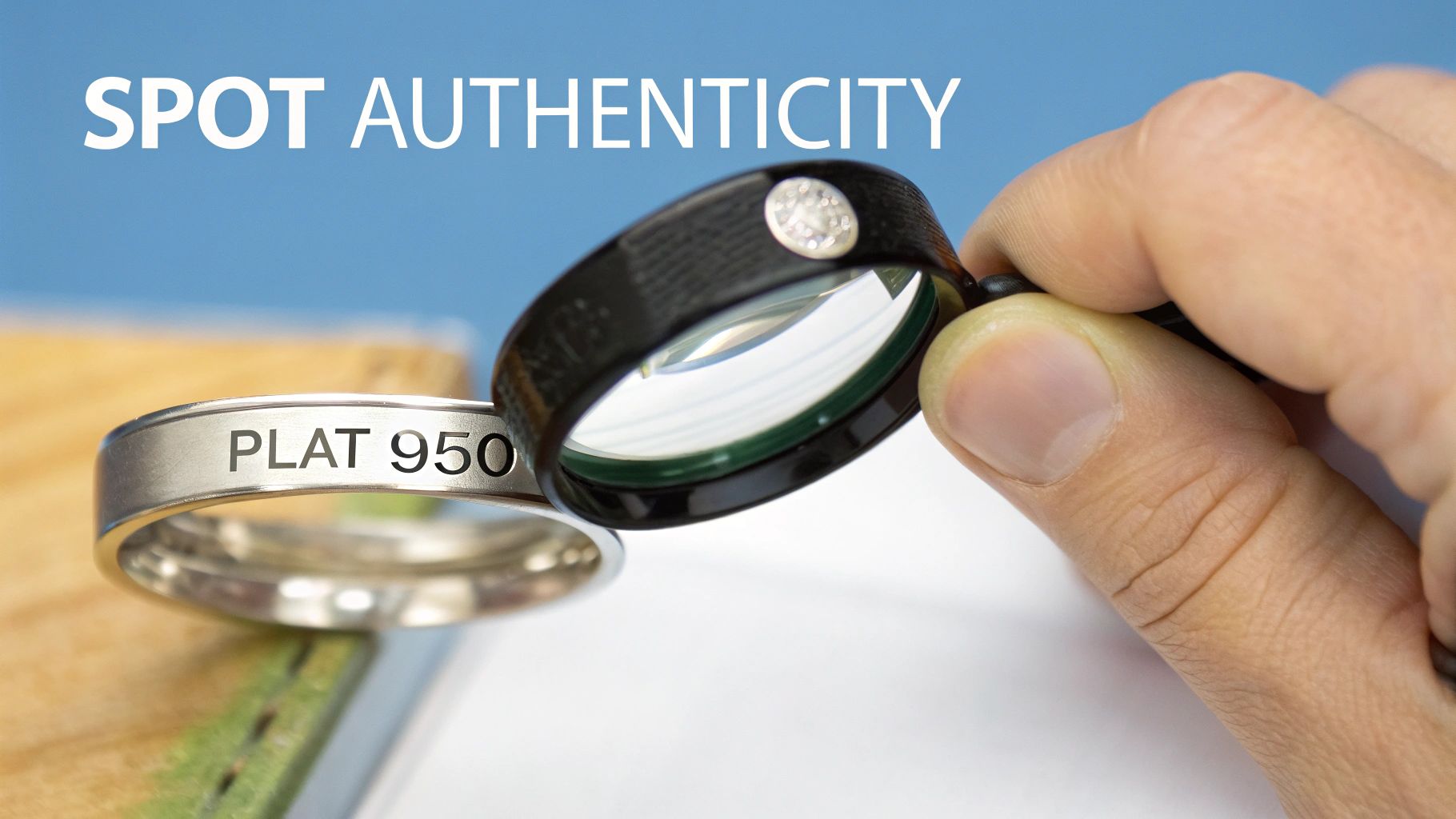
Your first and most important clue is the hallmark. These are tiny stamps, usually tucked away on the inside of the band, that act as the ring's birth certificate. They can tell you about the metal’s purity, where it came from, and sometimes even who made it and when.
For an antique platinum ring, you're looking for very specific marks. You'll need a jeweler's loupe, or even the magnifier on your phone, to get a good look.
- Purity Marks: Look for stamps like “PLAT,” “PT,” or “950Pt.” These confirm the metal is platinum, with 950 indicating it’s 95% pure—a common standard for fine jewelry.
- Maker's Marks: These are the unique symbols or initials of the jeweler who created the ring. With a bit of research, these marks can connect your ring to a specific historical designer.
- Country of Origin: Some rings have assay marks, like a lion for London or an eagle’s head for France. These tell you where the piece was officially tested and stamped.
If a ring doesn't have a mark, it's not automatically a fake; marks can wear away after a century of love and wear. But finding one is incredibly strong evidence of its authenticity.
Examine the Craftsmanship
Next, take a close look at how the ring was made. Antique jewelry was crafted by hand, and this human touch leaves behind subtle clues that are very different from the sharp perfection of today's machine-made pieces.
It’s like the difference between a hand-painted sign and one that’s been printed. The hand-painted one has softer edges and a unique character, while the printed sign is flawless and uniform. The same goes for jewelry.
Key Takeaway: Hand-engraving on antique rings has a distinct "U" or "V" shape when you look at it under magnification, showing where the tool carved through the metal. Modern laser engraving, on the other hand, often looks flat and frosted, without the depth of real handiwork.
An authentic antique platinum wedding ring will show signs of being hand-fabricated. Look for intricate filigree with soft, flowing lines or delicate milgrain edging that feels slightly worn down and part of the design. The prongs holding the stones might not be perfectly identical, as each one was shaped by hand.
Inspect the Gemstones
The diamonds and other gems in the ring are another huge clue to its age. Diamond cutting techniques have changed dramatically over the years. Modern diamonds are cut for that explosive, disco-ball sparkle.
Antique diamonds, however, were cut by hand and candlelight to create a deeper, warmer glow. They play with light in a softer, more romantic way. Learning to spot these older cuts is a fantastic skill to have. If you want to dive deeper, you can find guides on how to spot authentic antique jewelry and its unique features.
To make things a bit easier, here’s a quick-reference table to help you spot the differences between a genuine antique and a modern piece designed to look old.
Identifying Features of Antique vs Modern Rings
| Characteristic | Authentic Antique Ring | Modern Reproduction |
|---|---|---|
| Hallmarks | May have worn, historic stamps like "PLAT" or specific maker's marks. | Often has crisp, modern stamps like "PT950" from a laser. |
| Engraving | Soft, deep, and slightly irregular hand-engraved details. | Sharp, uniform, and shallow machine-made or laser-engraved patterns. |
| Gemstone Cut | Features Old European, Old Mine, or Rose cuts with a warmer, deeper sparkle. | Uses modern Round Brilliant cuts with a splintery, high-intensity sparkle. |
| Prongs | Often thicker, softer, and may show slight irregularity from hand-finishing. | Typically thin, sharp, and perfectly uniform. |
| Patina | Exhibits a soft, satiny finish in recessed areas from decades of wear. | Has a uniformly bright, high-polish finish all over. |
By combining these three investigative steps—checking the marks, examining the craftsmanship, and inspecting the stones—you can build a strong case for a ring's authenticity. This careful approach turns you from a simple shopper into a knowledgeable collector, ready to find a true piece of history.
Understanding the Value of Your Ring
Figuring out what an antique platinum wedding ring is worth is so much more than just weighing the metal. While the platinum itself has value, the real price comes from a mix of artistry, history, gemstone quality, and sheer rarity. It's less like pricing a commodity and more like appraising a one-of-a-kind piece of art.
Think about two paintings of the same size. One is a simple, generic landscape, and the other is a signed piece by a famous artist. Their values are worlds apart, right? The same logic applies here. A plain platinum band and an intricate Art Deco masterpiece with sapphires have completely different price tags because their stories and craftsmanship are on different levels.
A Fresh Look at the Four Cs
When we talk about modern diamonds, the "Four Cs"—Cut, Color, Clarity, and Carat—are king. They're graded with scientific precision, and the goal is always perfection. But for the diamonds in an antique ring, we have to look at these rules through a historical lens. Here, it’s not about perfection; it’s all about character.
- Cut: Antique diamonds were painstakingly cut by hand, often by candlelight. An Old European or Old Mine cut won’t sparkle with the same fiery brilliance as a modern diamond, but it has a deep, romantic glow that many collectors just adore. The value is in the charm of the hand-faceted work, not in its mathematical precision.
- Color and Clarity: By today's standards, a slight warmth in color (think J-K on the modern scale) or a few minor inclusions might be seen as flaws. In an antique piece, however, they’re often just part of the stone’s original character. Authenticity and age are valued far more than sterile perfection.
Here’s a good way to think about it: a modern diamond is like a high-definition digital photo—perfectly crisp and bright. An antique diamond is like a classic film photograph—it has a unique grain, a certain warmth, and a depth that tells a story.
Beyond Gemstones: Artistry and Rarity
Often, the biggest factors driving the price of an antique platinum ring are its craftsmanship and how rare it is. These are the elements that turn a piece of jewelry into a true collectible, elevating it to a historical artifact. A ring with intricate, hand-engraved details is worth far more than a simple one because it showcases a level of skill that's hard to find today.
The most desirable antique rings are those that perfectly capture the essence of their era. A ring that is a textbook example of Art Deco geometry or Edwardian lace-like filigree is more than just a piece of jewelry—it's a time capsule.
This is where a maker's mark can really change the game. A ring signed by a legendary house like Cartier, Tiffany & Co., or Van Cleef & Arpels will command a significant premium. Its provenance—a documented history of ownership—adds yet another layer of value and desirability. Getting a professional appraisal is the only real way to understand these nuances. Our guide on getting an appraisal for your antiques can walk you through that process in more detail.
The global market for vintage and antique rings is growing, fueled by a real appreciation for heritage jewelry. While the price of platinum metal has averaged around $28.72 per gram recently, the fabrication process alone can add 10-25% to the cost because it requires such specialized skills. Depending on the artistry and gems involved, vintage platinum rings can sell for anywhere from $2,000 to over $18,000, which just goes to show how much design and rarity matter. Discover more insights about platinum jewelry pricing on gabrielny.com.
Ultimately, valuing an antique platinum wedding ring means looking beyond the raw materials. You're really assessing the story, the skill of the hands that created it, and its unique place in history.
Where to Find Your Perfect Ring
The hunt for an antique platinum wedding ring is half the fun. This isn't like walking into a modern jewelry store and pointing at something in a glass case; it's a treasure hunt for a piece with a soul and a story. Your goal is to find a seller who is just as excited about the history and craftsmanship as you are.
Figuring out where to look is key to the whole experience. The right path leads to a confident purchase you’ll cherish, while the wrong one can be frustrating. Each option has its own vibe, so let's break them down. But before you even start looking, make sure you know your size. Antique rings can be tricky to resize, so getting it right from the start is a huge help. Here’s a great guide on how to measure for a ring size accurately.
Specialized Estate and Antique Jewelers
For most people, a local estate jeweler is the best place to begin the search. These aren't just salespeople; they are specialists who live and breathe antique jewelry. Think of them as curators for a tiny, wearable museum—every piece has been hand-selected for a reason.
The biggest plus here is trust. You can hold the ring in your hand, look at it under a loupe, and talk to a real person who knows their stuff. A good dealer will happily walk you through a ring’s history, explain its hallmarks, and point out the unique quirks of its old-cut diamonds.
Key Questions for a Local Jeweler:
- What’s your return or exchange policy?
- Do you provide a written appraisal or certification?
- What can you tell me about the history of this piece?
Reputable Online Marketplaces
The internet has completely changed the game, giving you access to an incredible number of antique rings from all over the world. Specialty websites for antique and vintage jewelry can be a goldmine, offering a selection far beyond what any single physical shop could carry.
Of course, buying online means you have to be extra careful. Since you can't see the ring in person, you have to rely on the seller's transparency. Crisp, detailed photos and honest descriptions are non-negotiable. Always check for sellers with a long track record of glowing reviews and, most importantly, a clear and fair return policy. That policy is your safety net, giving you time to have the ring checked out by your own jeweler after it arrives.
A trustworthy online seller will always provide multiple high-resolution photos from every angle, including close-ups of the hallmarks and any imperfections. If the pictures are blurry or the description is vague, it's a major red flag.
The Thrill of Auctions and Antique Shows
If you love the thrill of the chase, nothing beats an antique show or an auction. These events gather tons of different dealers under one roof, so you can see a dizzying array of styles all in one place. Auctions, in particular, can be a fantastic way to snag a spectacular ring at a great price—if you know what you’re doing.
The environment is often fast-paced, so go in with a plan. If auctions sound interesting, it's smart to learn the ropes first. This guide on finding antique auction houses near you is a great resource to get you started. At an antique show, just take your time, chat with the vendors, and don’t feel shy about respectfully negotiating. It’s a wonderful way to find a truly one-of-a-kind ring and enjoy the hunt.
Caring For Your Timeless Heirloom
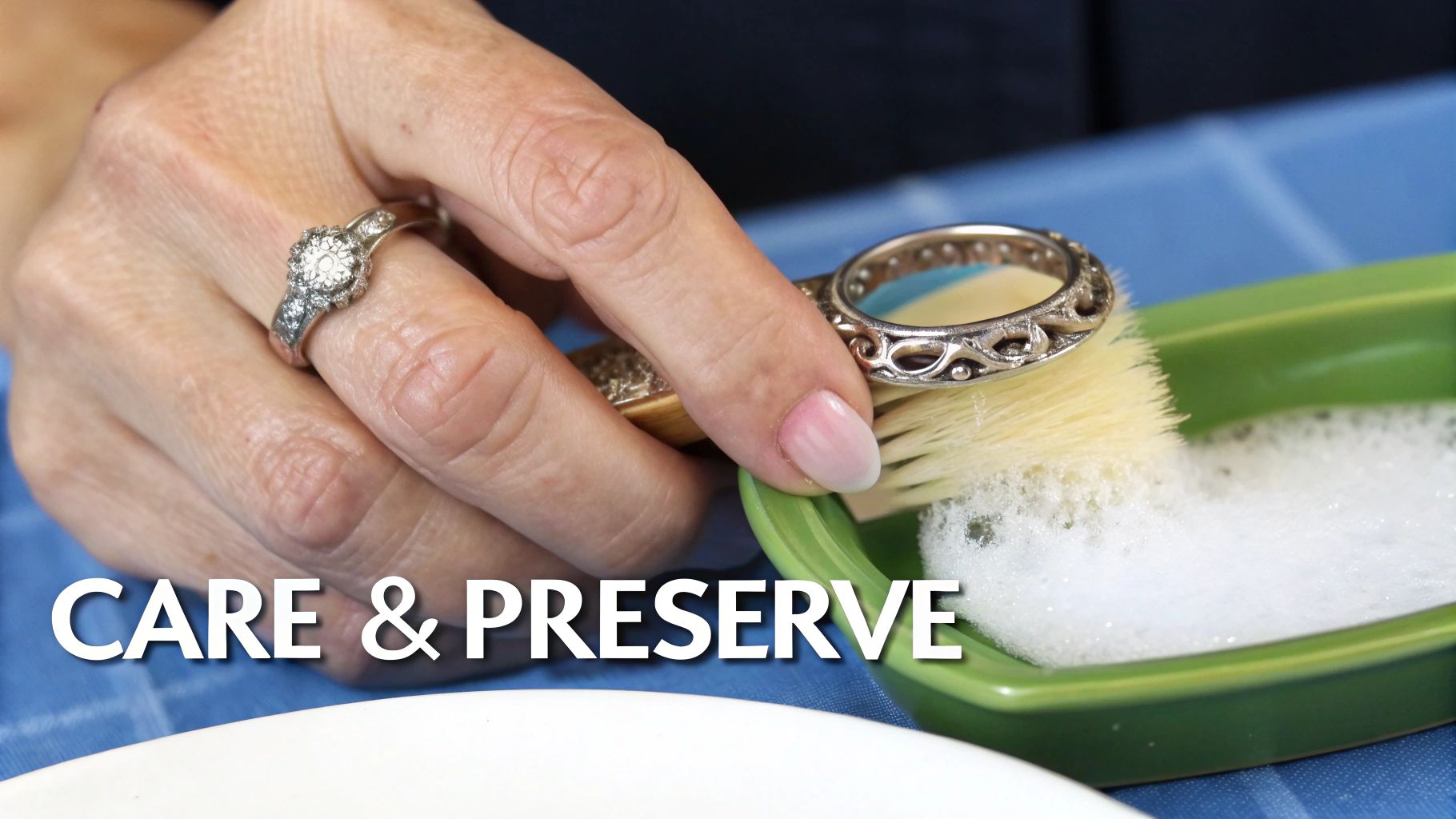
When you own an antique platinum wedding ring, you become its current steward, a keeper of a small piece of history. The good news is that keeping it beautiful for the next generation is surprisingly easy, thanks to platinum's incredible resilience.
Platinum is naturally tough and doesn't demand a lot of fuss. But even the sturdiest ring will pick up daily grime from lotions, soaps, and oils, which can make its gemstones look a little dull. A simple at-home cleaning is usually all it takes to bring back that sparkle.
A Gentle At-Home Cleaning Routine
Forget harsh chemicals or fancy gadgets. The safest and most effective way to clean your ring is with a gentle soak, which won't harm the delicate metalwork or antique stones.
Here’s a simple, three-step method that works wonders:
- Mix a mild bath: Grab a small bowl, fill it with warm water, and add a few drops of a gentle dish soap. Look for one without heavy dyes or fragrances. Give it a quick stir to make some suds.
- Soak and gently scrub: Let your ring soak in the soapy water for about 15-20 minutes. This gives the soap time to work its magic and loosen up any buildup. Afterward, use a very soft brush—a baby toothbrush is perfect—to gently clean around the settings and under the stones.
- Rinse and dry carefully: Hold the ring under warm running water until all the soap is gone. Then, pat it completely dry with a soft, lint-free cloth.
Important Tip: Always, always close the sink drain before rinsing your ring! It's a tiny habit that has prevented countless heart-stopping moments and saved many a precious heirloom.
Understanding Platinum’s Unique Patina
One of the most charming things about old platinum is how it ages. Gold actually wears away over time, getting thinner with each passing year. Platinum, on the other hand, just moves around. As it gets scratched, the metal is displaced, not lost.
Over decades, this process creates a soft, satiny finish called a patina. Collectors absolutely love this look because it’s a hallmark of a genuine antique. It tells the story of the ring’s journey through time. You get to decide whether to keep this history or restore the ring's original shine.
- Preserving the Patina: Most people choose to embrace the patina. It adds a depth and character you just can't fake. A gentle cleaning will make the diamonds pop without erasing this beautiful, time-worn finish.
- Restoring the Shine: If you’re drawn to that bright, mirror-like gleam, a professional jeweler can polish the ring for you. This will remove the patina and make it look almost brand new.
The Importance of Professional Check-Ups
Cleaning your ring at home is great for keeping it sparkling, but it can't replace an expert’s eye. Think about it—those tiny prongs holding your gemstones in place have been on the job for nearly a century. Over time, they can loosen, putting your stones at risk.
Find a trusted jeweler who has experience with antique pieces and have them inspect your ring at least once a year. They'll check for loose stones, make sure the settings are secure, and give it a deep, professional clean. This little bit of upkeep is the best insurance policy for making sure your heirloom stays intact for another lifetime.
Got Questions? We've Got Answers
Stepping into the world of antique rings can bring up a lot of questions. It's completely normal! Getting good answers is the key to feeling confident in your search for that perfect piece. Let's tackle some of the most common things people ask.
Can I Actually Wear an Antique Platinum Ring Every Day?
Yes, absolutely! There’s a reason jewelers fell in love with platinum over a century ago—it's incredibly tough. As one of the densest and strongest metals in jewelry, it was built to last.
Of course, you should treat any fine jewelry with respect, but a well-cared-for antique platinum ring is more than up to the challenge of daily life. Its durability is a huge part of its timeless charm.
Here's something fascinating about how platinum wears: when you scratch gold, a tiny bit of the metal is lost forever. When you scratch platinum, the metal just gets pushed aside. No material is lost, which is why it holds its integrity so well over a lifetime.
How Can I Spot the Difference Between Platinum and White Gold?
The two easiest clues are weight and color. First, just hold them. Platinum is much denser than gold, so a platinum ring will feel noticeably heavier than a white gold ring of the same size.
Second, look closely at the color. Platinum has a natural, cool-white luster that doesn't fade. White gold, especially older pieces, can start to show a faint yellowish tint as its rhodium plating wears away over time. Don't forget to check for a stamp inside the band—platinum is usually marked with “PLAT,” “PT,” or “950.”
Is It Possible to Resize an Antique Platinum Ring?
Most of the time, yes. A good jeweler who has experience with antique pieces can definitely resize a platinum ring. That said, some designs are trickier than others.
Rings with detailed engravings that go all the way around or "eternity" bands with a continuous circle of gemstones can be very difficult—sometimes impossible—to alter. Your best bet is always to chat with a trusted jeweler before you buy a ring you know needs to be resized.
Have an heirloom you're curious about? The Curio app puts an antique expert in your pocket. Snap a photo to instantly identify your items, learn their history, and get a quick valuation. Download it today at https://www.curio.app and uncover the stories hiding in your treasures.