
When you see Limoges Elite Works marks on the bottom of a piece, you're looking at a stamp of quality from a very specific period of French porcelain history. These marks belong to Bawo & Dotter, a major firm that produced and decorated high-end porcelain primarily for the American market from the 1890s all the way through 1932.
Finding a mark in green, red, or even gold is your first clue to dating the piece and confirming it's the real deal. Generally, the Elite Works name signals superior craftsmanship from a particularly sought-after era of Limoges production.
Your Quick Guide to Identifying Elite Works Marks
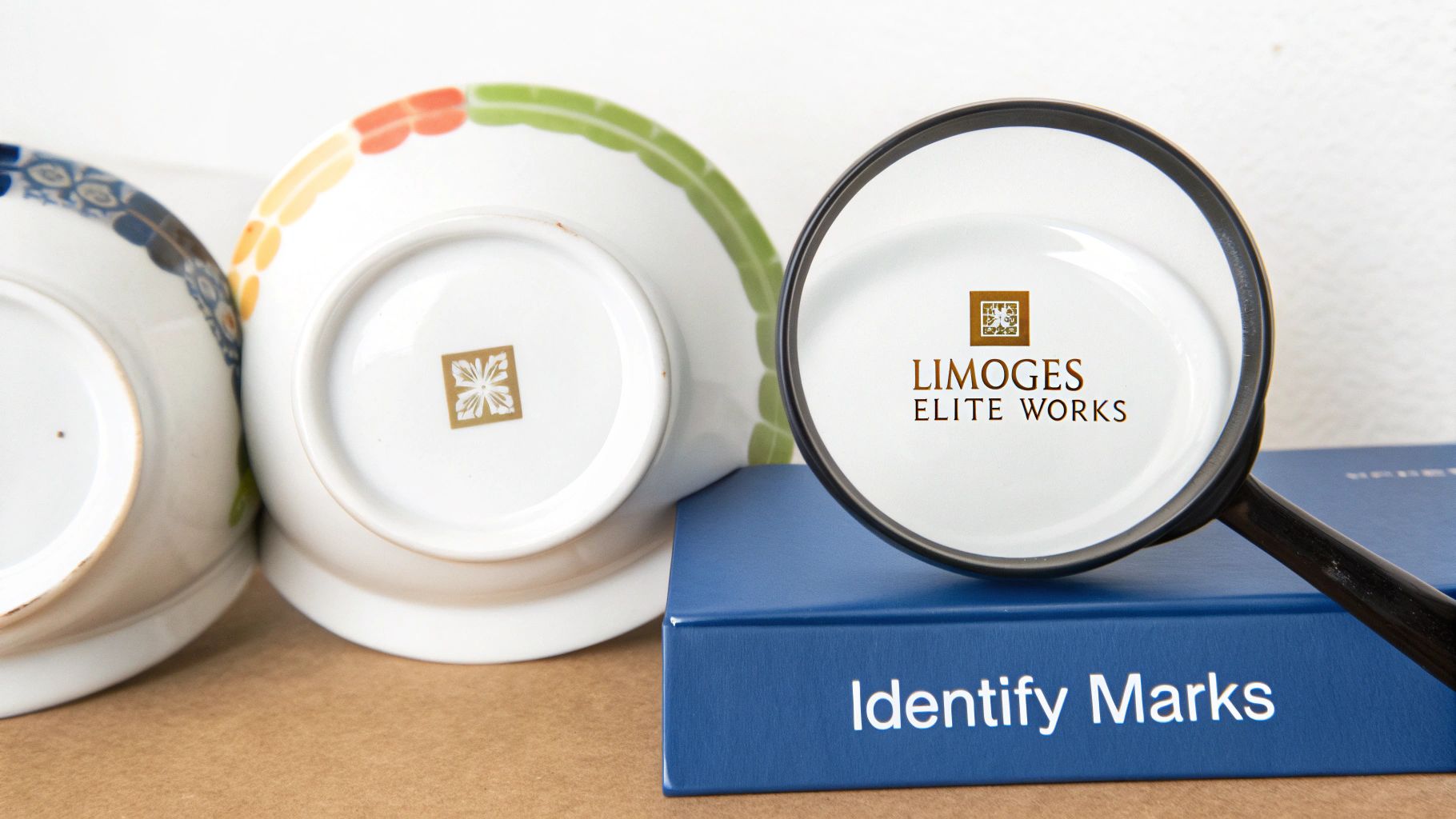
So, you've found a piece of porcelain with "Elite" on the back. You're holding a little piece of Limoges history, and understanding the different Limoges Elite Works marks is how you'll uncover its story and, of course, its value. Think of this guide as a direct, visual reference to help you quickly figure out which era your porcelain comes from.
The marks that Bawo & Dotter used changed quite a bit over their roughly four decades in business. Little details—the color of the mark, where it's placed, and the exact wording—are all telling. An early decorating mark used before 1900 looks very different from a manufacturing mark used during their peak production years between 1900 and 1914.
Key Mark Characteristics to Observe
Before we get into the year-by-year examples, it's a good idea to train your eye to spot these key features. Every detail helps narrow down the timeline and verify that what you have is authentic. If you want a wider perspective on how these details play a role in the broader world of ceramics, our pottery marks identification guide is a great place to start.
Color of the Mark: Green marks were almost always applied under the glaze (we call this underglaze). This typically means the white porcelain blank itself was made by Elite Works. Red marks, on the other hand, were applied over the glaze (overglaze) and usually signify a piece that was decorated by the company, even if the blank came from another factory.
Wording and Logos: The difference between "Elite L France" and "Elite Works Limoges France" is a dead giveaway for different timeframes. As you get into later pieces, you might even see marks reflecting the company's merger, known as Guérin-Pouyat-Elite.
Placement: An authentic mark should be clear and well-centered. If you see something that's sloppy, blurred, or placed in an odd spot, it could be a red flag for a forgery.
By paying close attention to these simple elements, you can get some immediate and reliable insights. This first look is absolutely essential for confidently figuring out your porcelain's background and starting to understand its potential value.
The Story Behind Bawo & Dotter and Elite Works
To get a real handle on Limoges Elite Works marks, you first need to understand the American company that brought them to life. The story doesn't start in France, but in New York City with Bawo & Dotter, an ambitious importing firm that kicked off in the 1860s. Their initial business model was straightforward but incredibly smart: import high-quality, undecorated porcelain "blanks" from various Limoges factories, then decorate them specifically for the American market.
This approach let them tune their products directly to the tastes of their customers. During the Gilded Age, the demand for fancy, hand-painted European porcelain was through the roof. Bawo & Dotter seized this opportunity by opening their own decorating studio in Limoges in the 1870s, giving them hands-on control over the artistry and style of everything they sold.
From Decorators to Manufacturers
The company's decorating business was so successful that it sparked a major change in direction. They asked themselves: instead of just painting porcelain made by others, why not make it ourselves? This kind of vertical integration would give them total control over the entire process, from mixing the clay to applying the final touches of gold.
So, in 1896, Bawo & Dotter officially opened their own full-scale manufacturing plant in Limoges and called it "Elite Works." This pivot from a decorating studio to a complete production house was a huge deal in the porcelain trade between France and America. It meant they could create porcelain specifically for American buyers, who by the late 19th century were snapping up over 80% of all exports from Limoges.
The pieces from this new factory were often a bit heavier and more durable than their French counterparts, a practical choice for American homes. The designs were classic for the era, full of lush floral patterns, elaborate gold work, and romantic scenes that buyers loved.
Peak Production and a Lasting Legacy
The years between 1900 and 1914 are really considered the golden age for Elite Works. During this time, the factory was churning out an incredible variety of dinnerware, tea sets, and decorative pieces, all of exceptional quality. It’s no surprise that marks from this period are what collectors hunt for today.
The name "Elite" wasn't just a marketing gimmick; it was a statement of quality. Bawo & Dotter aimed for the top shelf, putting their porcelain in direct competition with Limoges giants like Haviland and J. Pouyat.
World War I threw a wrench in the works in 1914. While the factory did reopen after the war, it never quite recaptured its former glory. The company eventually merged with other producers, which was a common story for many Limoges firms as the economy shifted. If you're curious about other major players from that time, our guide to J. Pouyat Limoges marks is a great next stop.
Even though Elite Works closed its doors for good in 1932, its legacy is undeniable. The beautiful porcelain and the distinctive Limoges Elite Works marks it carries are a lasting tribute to a unique Franco-American partnership that defined luxury for an entire generation.
Decoding Marks: A Chronological Reference
Figuring out the age of your Limoges Elite Works piece really comes down to matching its backstamp to a specific time in the company's history. The marks weren't static; they changed right along with the business, from its start as a decorating studio to its peak as a full-blown manufacturer and its eventual merger. This guide breaks down the marks by era, so you can date your porcelain with real confidence.
Just by looking at the color, wording, and design of the stamp on the bottom of your piece, you can place it on a timeline. Each period tells a unique story, whether it's the early days of decorating porcelain made by others or the golden age of in-house production that collectors get excited about.
Early Decorating Marks: Pre-1896
Before setting up their own factory in 1896, Bawo & Dotter was strictly a decorating business. They would buy plain, undecorated porcelain, known as "blanks," from other established Limoges factories and then apply their own artistic designs.
The marks from this early stage are almost always red and applied over the glaze. This overglaze technique made it simple to add their own branding to an already-fired piece of porcelain.
- Key Identifier: Look for a simple red shield containing the words "ELITE" and "FRANCE." You'll often see an "L" floating just above the shield.
- What it Means: This mark tells you that Bawo & Dotter decorated the piece, but another company actually made the porcelain blank itself.
- Example: It’s common to see a piece from this era with two marks: a green underglaze mark from a manufacturer like Tressemann & Vogt (T&V) and the red overglaze "Elite L France" shield. The green tells you who made the blank, and the red tells you who decorated it.
The Classic Manufacturing Era: 1896–1914
This period was the absolute golden age for Elite Works. Once they opened their own manufacturing facility, they started producing their own fantastic quality porcelain from scratch. To show off this major change, the main factory mark switched from a red overglaze stamp to a green underglaze one.
This new green mark was applied directly to the porcelain before the final glaze and firing, making it a permanent part of the piece. The wording also became more direct, often reading "ELITE WORKS" and "LIMOGES FRANCE" to proudly state their new manufacturing prowess.
Expert Insight: An underglaze green mark from this 1896–1914 window is a fantastic sign. It tells you the piece was both made and decorated by Elite Works during its most prestigious and productive years. For many collectors, this is the mark to look for.
Post-WWI Revival and Merger Marks: 1920–1932
The factory shut down during World War I but reopened its doors in 1920. Marks from the early '20s often look a lot like the pre-war ones, sometimes with minor tweaks. The real shake-up, though, came in 1924 when Elite Works merged with two other Limoges giants, Guérin and Pouyat.
This merger created a brand new company, and the backstamps had to change to reflect that.
Post-Merger Marks (1924-1932):
- Guérin-Pouyat-Elite: Marks from this final chapter often combine all three company names in some fashion.
- "The Elite" or "Elite Special": You might also find these simpler marks, which were typically used on their dinnerware lines.
- Color: They continued using both green underglaze marks (for the blank) and red overglaze marks (for decoration details or import info).
The factory finally closed for good in 1932, which marked the end of authentic Limoges Elite Works production. Any piece that carries one of these official backstamps can be reliably dated to somewhere between the 1880s and the early 1930s.
How Marks Affect Value and Authenticity

The specific Limoges Elite Works marks on a piece of porcelain aren't just a simple brand stamp. They are a direct window into its past, serving as a critical piece of evidence for its authenticity and, ultimately, its value on the collector's market. A clear, well-documented mark acts as a certificate of provenance, immediately setting a piece apart from the sea of unmarked or vaguely identified Limoges porcelain.
Think of it this way: a piece bearing a verified green underglaze mark from the company's golden age (1896-1914) is almost always more sought-after than one with a later mark from the merger era. Why? Because that specific mark tells an expert it came from the peak of Elite Works' independent production, when quality and artistry were paramount. It’s a story baked right into the porcelain.
Key Factors Appraisers Look For
When an appraiser examines an Elite Works piece, they aren't just glancing at the mark. They're decoding it. The era is a huge factor, but tiny details can swing the valuation significantly. Even the condition of the mark itself matters—a crisp, perfectly legible stamp is always better than a smudged, faded, or partially worn one.
Here are the main things they'll consider:
- Mark Era: As noted, pieces from 1896-1914 are the sweet spot for many collectors. However, marks from the pre-1896 decorating period or the post-1924 merger era have their own historical significance and collector base.
- Rarity of the Mark: Not all marks were used equally. Some variations were in circulation for only a short time or were reserved for special product lines, making them much harder to find. An uncommon mark can create a real buzz among serious collectors.
- Artist Signatures: If you find an artist's signature alongside the factory mark, you may have something special. This is a tell-tale sign of a hand-painted piece, indicating a higher level of individual artistry and quality that can dramatically increase its value.
The table below breaks down how these different mark characteristics can influence the final valuation of your Elite Works porcelain.
Impact of Mark Characteristics on Valuation
| Mark Feature | Description | Impact on Value | Example |
|---|---|---|---|
| Era Identification | The specific time frame the mark was used, such as the pre-1900 red overglaze mark. | High Impact. Early marks from the 1896-1914 period often command premium prices. | A green "Elite Works Limoges France" mark from 1900 will generally be valued higher than a Bawo & Dotter mark post-1924. |
| Mark Clarity | How clear and legible the mark is. Is it crisp, or is it blurred, smudged, or worn away? | Moderate Impact. A clear mark confirms authenticity and is more desirable to collectors. | A piece with a perfectly struck, easy-to-read mark might fetch 10-15% more than an identical item with a poorly applied one. |
| Artist's Signature | A hand-signed name or initial appearing near the factory mark, indicating a studio artist. | High Impact. Can significantly increase value, especially if the artist is known and documented. | A platter signed by a known artist like "Dubois" could be worth double or triple an unsigned piece with the same blank. |
| Mark Rarity | A variation of a mark that was used for a very short period or on a limited production run. | Moderate to High Impact. Attracts specialized collectors willing to pay a premium for uniqueness. | A rare transitional mark used for only one year could be more valuable than a common mark used for two decades. |
Ultimately, the powerful authentication provided by Limoges Elite Works marks has secured their premium status in the global antiques market. It's not uncommon for clearly marked pieces to command prices 30-50% higher than comparable unmarked Limoges items, simply because their history is documented and verifiable.
Spotting Fakes and Misattributions
In the antiques world, authenticity is everything. A genuine underglaze factory mark from Elite Works should feel completely smooth to the touch. This is because it was applied before the final glaze was fired, sealing it under the surface. If you can feel a raised edge or the mark looks like it's sitting on top of the shiny glaze, you might be looking at a modern fake.
Crucial Authentication Tip: Pay close attention to the mark's placement and quality. Real factory marks are typically well-centered and crisp. Be suspicious of blurry text, crooked stamps, or any details that don't match up with verified examples.
Learning to spot these small but critical differences is a key skill for any collector. If you're trying to get a baseline for what your own items could be worth, using an antique value estimator can be a good first step. A genuine mark gives you the confidence you need to assign real, defensible value to your porcelain treasures.
Identifying Common Elite Works Patterns and Styles
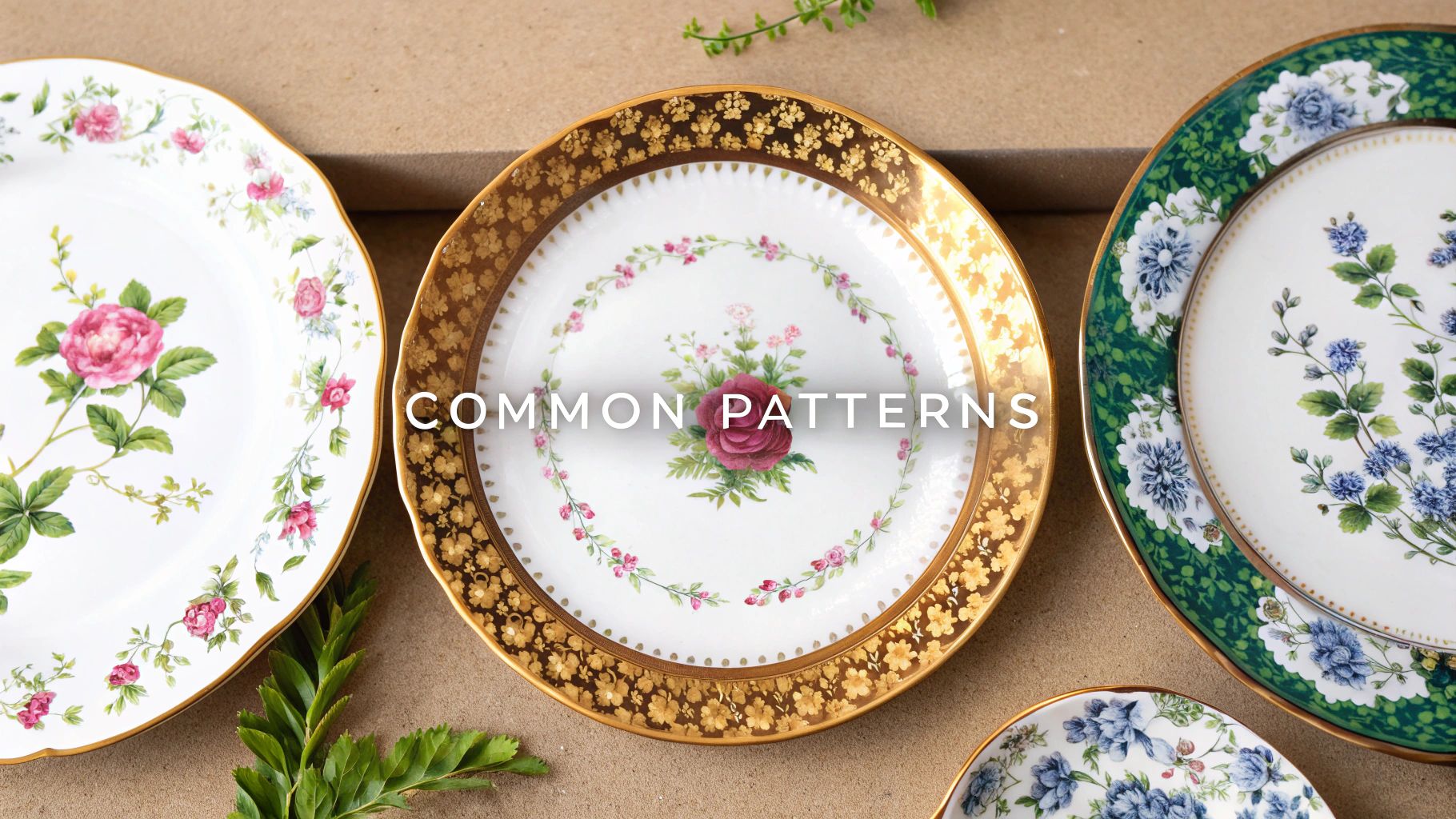
While the Limoges Elite Works marks are your first stop for dating a piece, it's the pattern that truly gives it a voice. Bawo & Dotter had a keen sense of what buyers in Gilded Age and Edwardian America wanted, and their designs hit the mark perfectly. Think romantic, intricate, and absolutely dripping with luxury.
Learning to spot these signature patterns is a skill every collector should have. It does more than just help confirm a piece's origin; it helps you understand its history and place in the decorative arts timeline. The most popular designs were produced for decades, often gracing everything from a single teacup to a full dinner service.
Signature Floral Motifs
Florals were the heart and soul of Elite Works porcelain. These weren't just simple decals; they were often lush, hand-painted compositions that really showed off the decorators' talent. Most of the patterns you'll come across fall into a few popular categories that were in high demand between 1896 and 1914.
- Small Pink Roses and Garlands: This is probably the most classic Elite Works look. You'll see delicate sprays of pink or deep red roses, often tied together with swags of green leaves or accented with tiny blue forget-me-nots. This design was a huge hit on tea sets, dessert plates, and chocolate pots.
- Large Cabbage Roses: Leaning into the romantic spirit of the era, many pieces feature big, voluptuous roses in full bloom. You'll find them in shades of deep pink, creamy white, or soft yellow, often as a central design or artistically placed around the border.
- Violets and Lilacs: Another favorite theme was clusters of purple violets or lilacs. These offered a slightly more understated elegance compared to the ever-popular roses but were just as beautiful.
The Importance of Gold Gilt Work
Heavy gold detailing is a true hallmark of Elite Works porcelain and a major driver of its value. The factory was renowned for its lavish use of 22k gold, which they used for everything from simple pinstripes on a rim to incredibly complex, acid-etched borders and ornate handles.
A piece with intricate, well-preserved gold is almost always more sought-after. The quality and quantity of the gold work directly signaled an item's prestige when it was new, and that's a feature that still attracts collectors and commands higher prices today.
Keep an eye out for heavily decorated rims with scrolling, embossed, or scalloped gold designs. The handles on cups, teapots, and serving dishes were often completely gilded—a signature touch that added to the piece's opulent feel. When you combine this knowledge of patterns with your understanding of the Limoges Elite Works marks, you can build a much more accurate and insightful valuation.
The Story Behind the Limoges Name
To really get a feel for the Limoges Elite Works marks, you first have to understand the city itself. Limoges is a name that just is porcelain, but it wasn't always that way. The city's journey into the heart of the ceramics world kicked off in the late 18th century with a lucky break—a geological discovery that changed French art forever.
The magic ingredient was kaolin, a pure white clay that's absolutely necessary for making true hard-paste porcelain. This was the same stuff Chinese artisans had been perfecting for centuries. Before finding it near Limoges, European potters were stuck making softer, more fragile porcelain. This find literally put Limoges on the map, giving local craftsmen the one thing they needed to compete with the best in the world.
How Limoges Became a Porcelain Powerhouse
The region really took off in 1771. That's when Finance Minister Turgot gave the green light for factories to start using the local kaolin. This single decision transformed the area from an economic backwater to an international sensation by 1830.
In just a few decades, Limoges blew past Paris to become the center of French porcelain. By the mid-1800s, there were over 30 factories humming with activity. You can dig deeper into the fascinating history of Limoges porcelain and its rise to fame to see the full picture.
This is the world that Bawo & Dotter stepped into. They didn't just pick a random spot for their factory. They made a smart, strategic move by setting up their Elite Works operation in the most famous porcelain city on the planet. They gained immediate access to a deep pool of local talent—artisans whose families had been working with porcelain for generations.
When Bawo & Dotter opened Elite Works in Limoges, they weren't just making plates and cups. They were plugging into a centuries-old legacy of quality and a brand name that already had global recognition.
This background is so important for collectors. When you see a Limoges Elite Works mark, it's not just a company stamp. It’s a direct link to this incredible history of French craftsmanship. Every piece is a small artifact from a legendary porcelain hub, blending old-world French tradition with a savvy American business sense. Knowing this history helps you appreciate why these pieces were made with such incredible skill and why they're still so cherished today.
Got Questions About Elite Works Marks? We've Got Answers.
When you're deep into the world of antique porcelain, questions are bound to pop up, especially with a specific maker like Elite Works. You've gone through the guides, looked at the pictures, but some things might still feel a bit fuzzy. That's perfectly normal.
This little Q&A is here to tackle some of the most common things collectors ask about Limoges Elite Works marks. Think of it as a handy cheat sheet to clear up those lingering doubts and help you feel more certain about what you're looking at.
What Does a Red Elite Works Mark Mean?
Seeing red? It almost always means you're looking at an overglaze decorating mark. This is a big clue. It tells you the mark was stamped on after the piece was glazed and fired, not before.
You'll mostly find these red marks on pieces decorated by Bawo & Dotter before they got their own full-scale factory up and running in 1896. In simple terms, they bought a plain white porcelain "blank" from another Limoges factory and then worked their magic, adding the beautiful hand-painted designs. The green underglaze mark, on the other hand, tells you Elite Works made the whole thing from scratch, which was their standard practice after 1896.
Is All Elite Limoges Made by the Same Company?
Yes, it is. If you see a genuine "Elite" or "Elite Works" mark, that piece came from one specific factory in Limoges. That factory was owned by Bawo & Dotter, a New York-based company that knew exactly what the upscale American market wanted.
While Limoges was buzzing with dozens of factories, the "Elite Works" brand was Bawo & Dotter's signature line. The name stuck, even after the company merged in 1924 to become Guérin-Pouyat-Elite. So, if you spot "Elite," you can reliably trace its history back to that one company.
How Can I Tell If My Elite Works Mark Is a Fake?
Spotting a fake often comes down to touch and a good, close look. The most reliable factory marks from the main production era (after 1896) are almost always underglaze. This means they were applied before the final clear glaze, so they should feel perfectly smooth.
A quick tip: run your finger over the mark. If you feel a raised edge, almost like a sticker, or it looks like you could scratch it off, be very suspicious. It’s likely a modern fake or a decoration added long after it left the factory.
Beyond the feel, here's what to check:
- Sharpness: Is the mark crisp and clear? Authentic marks are precise. Blurry lines, wonky letters, or spelling mistakes are huge red flags.
- Consistency: Pull up the verified examples in this guide and compare them side-by-side. Does the font match? Is the shield design right? Any weird variations should make you pause.
Does a Pattern Number Add Value to My Piece?
It doesn't add a specific dollar amount, but it absolutely makes a piece more valuable and desirable. Why? Because collectors are often on a mission to complete a dinnerware set. An identifiable pattern number makes your piece a perfect fit for them, which drives up demand.
A pattern number is also your best friend when it comes to research. It lets you find exact matches from recent auctions and sales, giving you a real-world baseline for what your piece is worth. It goes without saying that rare patterns, especially those with intricate hand-painting and lots of gold, will always fetch more than the simpler, more common designs.
Ready to uncover the history and value of your own treasures? With the Curio app, you can identify antiques with just a photo. Get instant insights, historical context, and appraisal estimates right from your pocket. Download Curio today and let your antiques tell their story!