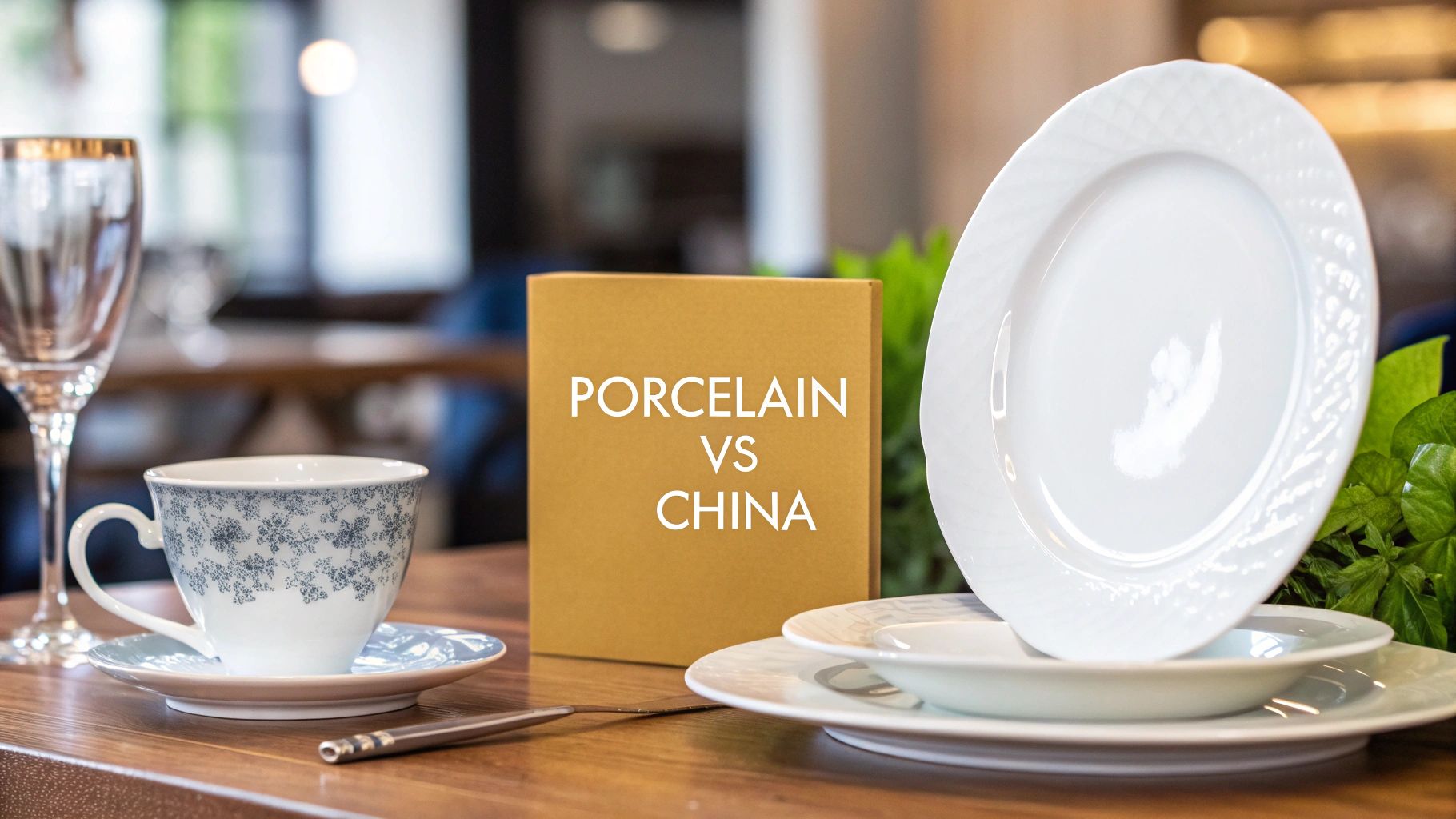
Let's get one thing straight right away: when people talk about "porcelain vs. china," they're often talking about the same family of ceramics. The easiest way to think about it is that all china is a type of porcelain, but not all porcelain is china. The term "china" has become shorthand for fine china or bone china, a more delicate and translucent version of its tougher cousin.
Understanding the Porcelain and China Distinction
The real story behind these two materials lies in their ingredients and how they're made. It's a bit like baking—a few simple changes to the recipe can create something entirely different.
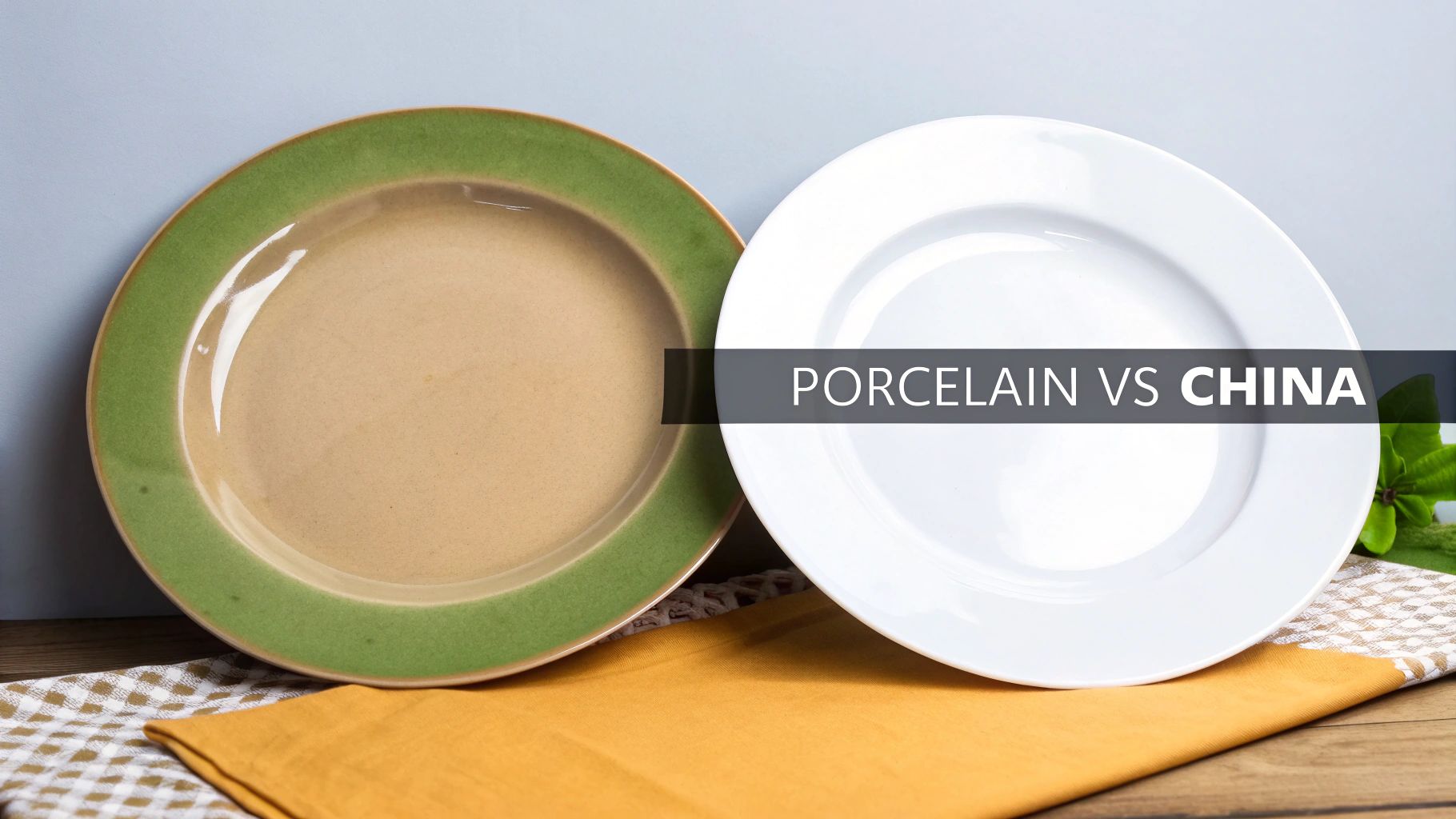
Standard porcelain is the workhorse of the ceramic world. It’s crafted from a robust blend of kaolin, feldspar, and quartz, then fired at incredibly high temperatures—sometimes reaching 1,455°C (2,650°F). This process results in a material that's exceptionally hard, strong, and known for its classic bright white finish. Think of durable, everyday dinnerware that can take a beating.
Fine china, and particularly bone china, takes that porcelain recipe and adds a key ingredient: animal bone ash. This innovation, first perfected in England by the famous potter Josiah Spode, completely changes the game. The bone ash allows the ceramic to be fired at a lower temperature, creating a product that is both surprisingly strong and beautifully lightweight and thin, with a characteristic warm, milky-white glow.
Core Differences at a Glance
For a quick reference, here’s a breakdown of what sets these two materials apart. This table cuts through the noise to show you the key distinctions at a glance.
Quick Guide: Porcelain vs. Bone China
| Attribute | Porcelain | Fine China / Bone China |
|---|---|---|
| Key Ingredient | Kaolin, feldspar, quartz | Porcelain base + bone ash |
| Color | Bright, cool white | Soft, warm, milky-white |
| Translucency | Opaque or slightly translucent | Highly translucent (glows in light) |
| Weight | Heavier and thicker | Lighter and thinner |
| Durability | Very hard and chip-resistant | Surprisingly strong, most chip-resistant |
| Common Use | Everyday dinnerware, restaurants | Formal dinnerware, teaware, fine dining |
These differences aren't just technical; they directly influence everything from how a piece feels in your hand to its overall durability. While porcelain is a fantastic choice for tough, daily use, bone china brings a refined elegance to the table without being overly fragile.
Market Perception and Value
This distinction also plays out in how these ceramics are valued and sold. The global porcelain tableware market was worth an estimated USD 8.2 billion in 2023, with significant growth expected. While the Asia Pacific region is a production powerhouse, the demand for high-end tableware is largely driven by Europe and North America.
Within this massive market, bone china has carved out a special niche. Thanks to its lightweight feel and signature translucency, it accounts for about 15% of the high-end segment, cementing its status as a luxury item. You can read more about the global porcelain tableware market trends to see how these dynamics are shifting.
Key Takeaway: The primary separator is bone ash. Its inclusion in bone china creates a lighter, thinner, and more translucent product compared to standard porcelain, fundamentally altering its look and feel.
How Materials and Manufacturing Shape Each Piece
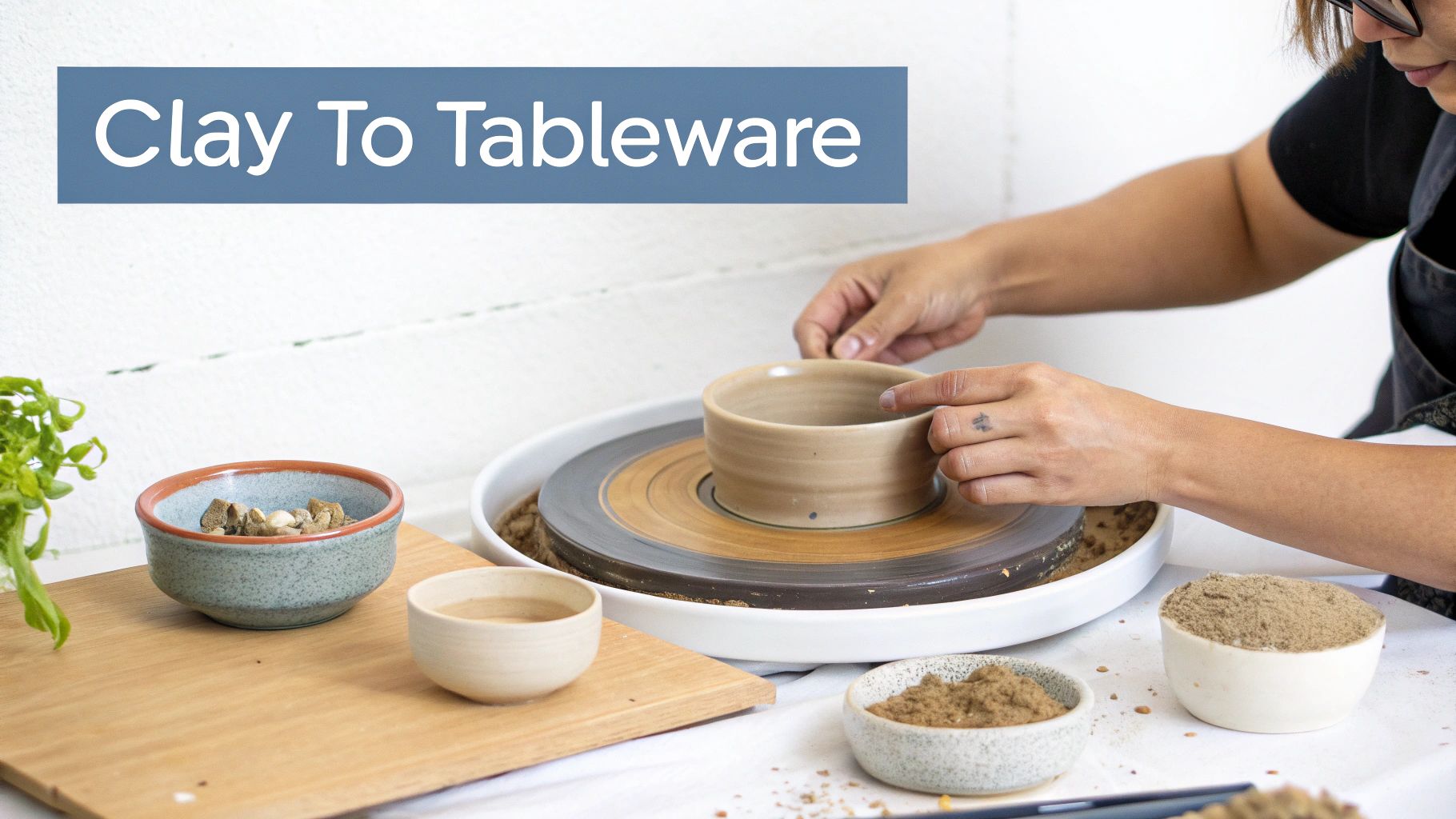
The true character of any ceramic, whether it's sturdy porcelain or fine bone china, is born from its raw ingredients and the intense heat of the kiln. It's these subtle differences in the creation process that give each piece its unique identity, influencing everything from its strength to its look and feel. This is where humble clay begins its journey to become elegant tableware, a transformation perfected over centuries.
You can see this distinction play out on a global scale, where local materials and production methods make all the difference. China, with its rich natural resources and advanced factories, is a powerhouse, supplying premium porcelain to markets across North America and Europe. The demand for high-end porcelain has grown so much that it's now used for far more than just dinnerware. You can dive deeper into the global porcelain market on The Brainy Insights.
Forging Strength: The Porcelain Process
Porcelain's reputation for being tough is no accident; it’s literally baked in. The process starts with a precise blend of key ingredients:
- Kaolin: A pure, white clay that gives the mixture its structure and workability.
- Feldspar: This mineral acts as a flux, melting at high temperatures to fuse all the materials together.
- Quartz: Adds strength and helps the piece hold its shape during the intense firing process.
This mixture is then fired in a kiln at incredibly high temperatures, often reaching 1,455°C (2,650°F). This extreme heat triggers vitrification, where the feldspar melts into a glass-like liquid, filling every microscopic gap. The result is a dense, non-porous material that’s incredibly hard and resistant to chipping and staining, making it a workhorse for everyday use. Its composition is quite similar to what you’d find in many beautiful antique vases from Italy, which are also prized for their enduring quality.
Manufacturing Insight: It's the high-temperature firing that gives porcelain its signature strength and bright, cool-white color. This is why it’s the go-to choice for restaurants and busy households that need dinnerware to stand up to heavy, constant use.
The Secret Ingredient: Bone China's Unique Composition
The story of bone china is really one of clever innovation. It starts with a base similar to porcelain—kaolin and feldspar—but adds a game-changing ingredient: calcined animal bone ash. For a piece to be officially called bone china, it must contain at least 25% bone ash, though high-end brands often push that number to 45-50%.
This single addition completely changes both the manufacturing process and the final product. Bone ash allows the clay to vitrify at a lower temperature, around 1,250°C (2,282°F). Firing at this more moderate heat produces a ceramic that is surprisingly strong, yet remarkably lightweight and thin.
The bone ash is also what gives bone china its most celebrated quality: a beautiful translucency. It creates a soft, warm, milky-white hue and allows light to pass through the body of the piece, giving it a delicate glow that you won't find in standard porcelain. This elegant finish, paired with its unexpected durability, is what defines the luxury and appeal of bone china.
How to Tell Porcelain and China Apart by Sight and Touch
https://www.youtube.com/embed/x6F26_TlS_M
Beyond the chemistry and kilns, the best way to tell porcelain and fine china apart is to simply use your senses. With a little practice, you can learn to identify these materials just by looking at them, feeling their weight, and even listening to the sound they make. This hands-on approach is often the fastest and most reliable way to size up a piece when you're out treasure hunting.
These sensory clues—color, translucency, weight, and sound—give you immediate feedback. They help you confidently figure out if you're holding a sturdy piece of porcelain or a delicate piece of fine bone china, as each material has a distinct personality that reveals itself through these simple tests.
Visual Clues: The Light and Color Test
One of the easiest and most telling methods is the light test. You don’t need any special tools, just a good light source and your eyes.
Hold the plate, cup, or saucer up to a bright window or a lamp. If it's bone china, a warm, gentle glow of light will pass right through it. You might even see the shadow of your fingers on the other side. This beautiful, luminous quality comes directly from the bone ash in its formula.
Porcelain, on the other hand, is almost always opaque. You might get a faint hint of light through a very thin piece, but it will be far denser and lack that signature warm, see-through glow you get with bone china.
Next, take a close look at the color. The best way to do this is to place the item against a pure white background, like a clean sheet of paper, to judge its true hue.
- Porcelain: Tends to be a bright, cool, almost blue-toned white.
- Bone China: Has a softer, warmer, milky-white or even ivory appearance.
This subtle difference in shade is a direct result of the materials and is one of the most dependable visual cues.
Tactile Clues: Weight, Thickness, and Feel
Your sense of touch is another powerful tool in your identification kit. The first thing you'll notice when you pick up two similar-sized pieces is how different they feel in terms of weight.
Bone china is famous for being incredibly lightweight and thin for how strong it is. It feels delicate and refined in your hands, a trait that hides its surprising durability and makes it a favorite for fine dining.
Porcelain is noticeably heavier and thicker. It feels solid and robust, which is exactly why it’s a workhorse in busy places like restaurants and cafes. The same density that makes it so tough also gives it a satisfying heft.
As you run your fingers over the surface, both should feel smooth and non-porous. However, the fineness of bone china often gives it a silkier, more delicate touch.
Expert Tip: A piece that glows with a warm translucence when held to the light and feels surprisingly light in your hand is almost certainly bone china. That combination is the most reliable sensory tell.
Reading the Story: Backstamps and Hallmarks
If your senses leave you guessing, the most definitive way to identify a piece is to flip it over and check the backstamp. This maker’s mark, found on the underside, is like a signature that can tell you the manufacturer, where it was made, and sometimes even a rough production date.
Well-known manufacturers almost always mark their wares. Look for famous names like Wedgwood, Royal Doulton, or Spode, which are legendary for high-quality English bone china. Likewise, brands like Meissen or Limoges are synonymous with exquisite porcelain.
Sometimes, the backstamp will spell it out for you with phrases like "Bone China," "Fine Bone China," or "English Bone China." While the absence of a label doesn't automatically mean it's porcelain, its presence is a dead giveaway. Learning how to identify china patterns and marks can unlock the fascinating history behind every piece you find.
To help put it all together, here is a quick guide to using your senses to identify what you’re holding.
A Sensory Guide to Identification
This table breaks down the simple tests you can perform to tell porcelain and bone china apart just by looking and touching.
| Identification Method | Porcelain Characteristics | Bone China Characteristics |
|---|---|---|
| Translucency | Opaque; minimal to no light passes through. | Translucent; emits a warm, soft glow when held to light. |
| Color | Bright, stark, often with a cool blue undertone. | Soft, warm, milky-white or ivory hue. |
| Weight | Heavier and feels more substantial and dense. | Surprisingly lightweight for its size and strength. |
| Thickness | Generally thicker and more robust in construction. | Thinner, more delicate, and refined in profile. |
| Backstamp | May be marked with maker's name (e.g., Limoges). | Often explicitly states "Bone China" or a famous maker (e.g., Wedgwood). |
By combining these methods—visual, tactile, and documentary—you’ll quickly build the skills to identify ceramics with confidence, turning every find into a new discovery.
Choosing the Right Tableware for Daily Use
Picking between porcelain and fine china for your home goes way beyond just aesthetics; it's really about matching the dinnerware to your actual lifestyle. Once you get past the technical details, the big question is how each one holds up day-to-day, from a quick weekday breakfast to a full-blown dinner party. Your choice sets the tone for your table and dictates how much care you'll need to take.
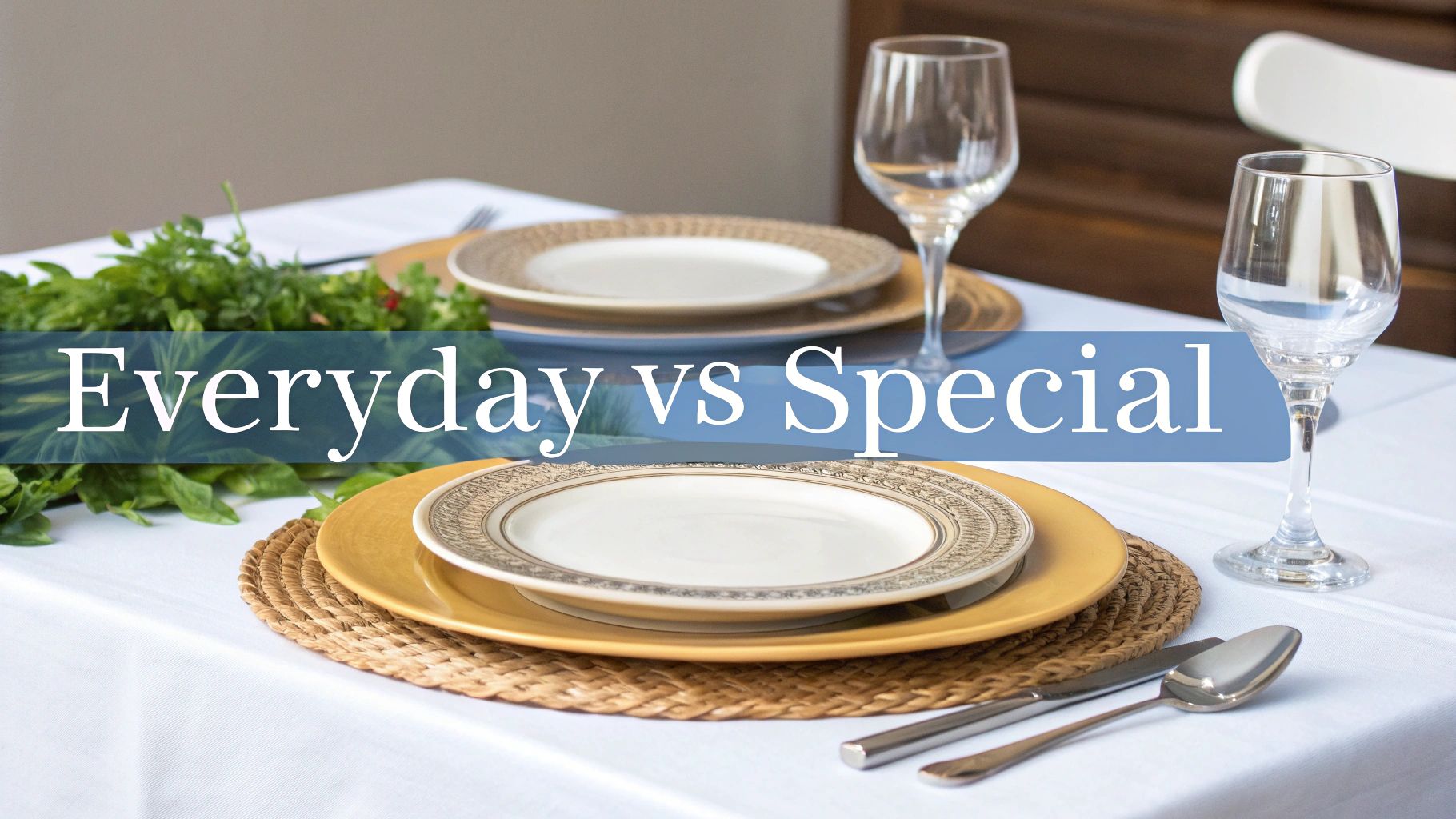
There's a common misconception that anything fine and elegant must also be incredibly fragile. That's simply not the case with bone china. Because it includes bone ash in its clay mixture, bone china is actually one of the strongest and most chip-resistant ceramics you can buy. This unique ingredient creates a material that is surprisingly tough, despite feeling so delicate and lightweight.
That built-in strength means you don't have to keep your "good china" locked away for special occasions. With just a little care, high-quality bone china can easily handle the demands of regular use, adding a touch of elegance to your everyday meals without the constant fear of chipping or breaking.
The Workhorse: Porcelain for Everyday Life
When you need sheer, uncompromising durability, porcelain is the undisputed champ. It’s fired at incredibly high temperatures, which makes its body dense and non-porous. The result is a material that’s exceptionally hard and resistant to scratches, stains, and sudden temperature changes. This makes it the perfect choice for the daily grind in a busy home.
This is exactly why you see porcelain in high-traffic places like restaurants and hotels. It’s built to withstand constant use, cycles in commercial dishwashers, and the inevitable bumps and knocks without easily chipping. For families with kids, or for anyone who just wants dependable, low-maintenance dinnerware, porcelain is a no-brainer.
If you want to dig deeper into selecting dinnerware that looks good and lasts, this guide to choosing a ceramic dinner set offers a broader perspective.
Practical Insight: Think of porcelain as your all-terrain vehicle—sturdy, reliable, and ready for anything. Bone china, on the other hand, is like a luxury sedan—elegant and refined, but with surprising performance and strength under the hood.
Making the Right Choice for Your Table
So, how do you decide? The best choice usually comes down to finding the right balance between the elegance you want and the practicality you need. Once you understand the real-world differences in the porcelain vs. china debate, you can tailor your choice to your specific situation.
Here are a few scenarios to help you think it through:
- For Busy Families: If your dishes will face heavy rotation, frequent dishwasher cycles, and microwave warm-ups, porcelain is the clear winner. Its durability is unmatched, making it perfect for a household that needs tableware that can keep up.
- For Elegant Daily Dining: If you love a touch of luxury in your daily routine and don't mind handling your dishes with a bit more care, bone china is an excellent choice. You get that refined look and feel, but with great chip resistance that elevates any meal.
- For Special Occasions: For those formal dinners or holiday feasts, bone china truly shines. Its delicate translucence and sophisticated feel create a memorable dining experience that your guests will definitely notice.
- For a Blended Approach: Why not have both? Many people find a mix-and-match strategy is the perfect solution. Use tough-as-nails porcelain for the daily hustle and bring out a beautiful set of bone china when you're entertaining.
In the end, both materials offer a fantastic combination of beauty and function. Porcelain gives you everyday resilience and peace of mind, while bone china delivers surprising strength in a beautifully elegant package. By thinking about how you actually live and dine, you can confidently pick the tableware that’s the perfect fit for your home.
How Material Affects Value and Collectibility
It’s a common trap to think that either porcelain or china is automatically more valuable. The reality is, the material is just the canvas. A piece's true worth is a story told through its history, its maker, and the artistry poured into it.
This is why a simple porcelain vase from the Ming Dynasty can command millions at auction, while a brand-new bone china dinner set might only hold its retail value. The factors that really move the needle in the market are far more nuanced than just the recipe fired in the kiln.
The Maker’s Mark and Its Influence
A piece’s value is deeply connected to who made it. A backstamp from a legendary porcelain house like Meissen, Sèvres, or Royal Copenhagen instantly puts an item in a different league for collectors. These names represent centuries of unparalleled quality and artistic breakthroughs.
The same goes for fine china. A mark from a celebrated English potter like Wedgwood, Spode, or Royal Doulton carries a legacy of masterful craftsmanship. The maker’s reputation is a seal of quality and a direct link to a specific moment in history—something collectors will always pay a premium for. Learning to read these marks is a crucial skill, and you can dive deeper with guides like our own on identifying Belleek backstamp dates.
Why Bone China Often Costs More at Retail
While antique porcelain often reigns supreme in the auction world, you'll frequently see new bone china with a higher price tag in a store. This isn’t a sign of it being "better," but a direct result of a more complex and expensive manufacturing process.
Adding bone ash to the mix and mastering the specialized firing needed for that signature strength and translucence just takes more time, resources, and expertise. That higher production cost gets passed along to the buyer, which is why bone china is often positioned as a luxury product in today’s market.
The global porcelain market was valued at USD 9.89 billion in 2024 and is projected to grow substantially. Europe's significant market share is largely fueled by the strong demand for high-end products like bone china.
This trend highlights how modern value is shaped by both production costs and what consumers perceive as premium. You can find more data about the global porcelain market on Fortune Business Insights.
The Factors That Truly Define a Collectible
At the end of the day, whether you're holding a piece of porcelain or china, the same core factors determine its lasting value. Rarity is king. A piece from a limited run or a discontinued pattern will always be in higher demand.
Condition is, of course, absolutely critical. An item that has survived without chips, cracks, or fading will always fetch the top price. Finally, the sheer artistry—the skill in the hand-painted details, the intricacy of the gilding, and the elegance of the design—is what separates a simple dish from a true work of art.
When you're looking at any piece, train yourself to see past the material and focus on the bigger picture:
- Provenance: Who made this, and where has it been?
- Age: Is it a genuine antique or a modern reproduction?
- Rarity: Are there thousands out there, or just a handful?
- Artistry: How much skill and craftsmanship went into it?
By focusing on these elements, you’ll get a much more accurate read on a piece's potential value. Its real story is in its history, not just its chemical makeup.
Caring For and Preserving Your Ceramic Pieces
Keeping your porcelain and fine china beautiful for years to come really boils down to knowing how to handle them. Their unique makeup means they need slightly different approaches to cleaning and storing. Get it right, and these pieces can easily become family heirlooms.
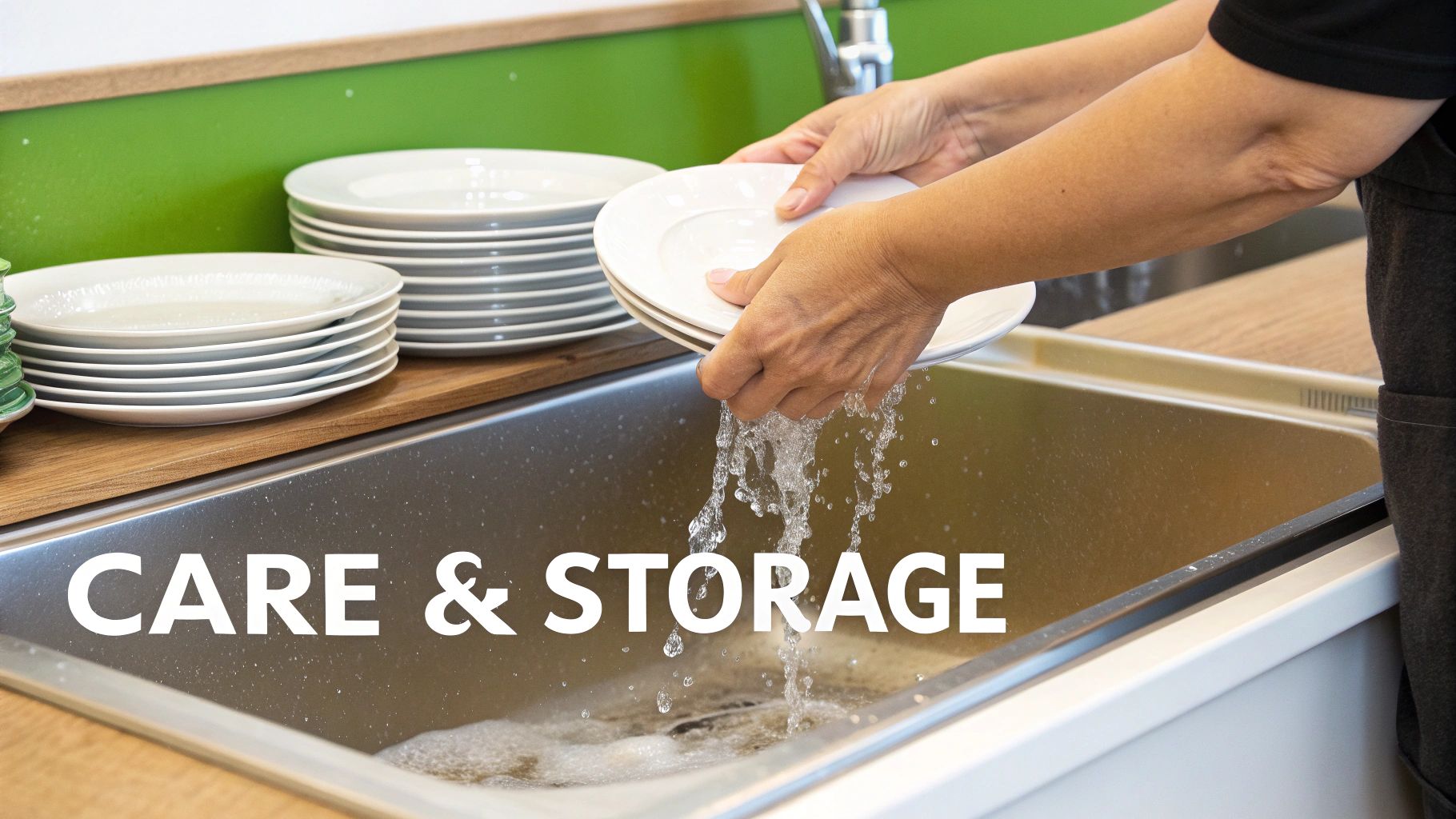
Most of the porcelain made today is incredibly tough—it’s designed for everyday life. Thanks to its non-porous, glassy surface, it's generally dishwasher safe. The one big exception? Anything with metallic details. Gold, silver, or platinum trim will be ruined by the dishwasher's harsh detergents and high heat, so wash those by hand.
Fine bone china, with its delicate nature, almost always requires hand-washing. To preserve its intricate patterns and fine construction, stick to warm, soapy water and a soft cloth. This gentle approach prevents scratches and keeps the artwork from fading.
Storage and Handling Best Practices
How you store your pieces is just as critical as how you wash them. The number one enemy here is chipping, which usually happens when pieces are stacked carelessly.
- Use Protective Dividers: Never stack plates or bowls directly on top of each other. Slip a soft buffer—like a felt divider, paper napkin, or even a coffee filter—between each piece to prevent scratches.
- Avoid Over-Stacking: Keep your stacks low. Too much weight on the bottom items can cause tiny stress fractures you won't see until it's too late.
- Store Cups Separately: It's tempting, but don't hang teacups by their handles. This puts a huge strain on the joints. The best way to store them is sitting upright on a shelf.
Conservation Tip: For light tea or coffee stains, a simple paste of baking soda and water can work wonders. If you're dealing with a bigger problem like a chip or crack, skip the DIY fix and take it to a professional ceramic conservator.
The core principles of gentle handling and cleaning are universal for all your delicate ceramics. Understanding best practices, like those for caring for ceramic abstract sculptures, can help you protect your entire collection, from dinner plates to decorative art.
Common Questions About Porcelain and China
When you're trying to tell porcelain and china apart, a few questions always seem to pop up. Let's clear up some of the most common ones, so you can feel confident whether you're buying a new set, using an old one, or just trying to figure out what you have.
Is Bone China More Expensive Than Porcelain?
When you're shopping for new dinnerware, yes, bone china almost always has a higher price tag. The process to make it is just more complicated and costly, thanks to the addition of bone ash and the specific firing it needs.
But for antiques, the script flips completely. The material itself takes a backseat to the piece's history. Things like the maker's mark, its age, how rare it is, and the quality of the artwork are what really drive the value. An 18th-century Meissen porcelain figurine, for example, could be worth thousands more than a brand-new set of bone china.
Can I Put Porcelain and China in the Microwave?
It all comes down to the decoration. Plain, undecorated porcelain is usually tough enough to handle the microwave without any issues.
Critical Safety Tip: If a dish has any kind of metallic detail—gold, silver, or platinum trim—keep it out of the microwave. The metal can create sparks, which can ruin the dish and even damage your appliance. When in doubt, flip it over and look for a "microwave safe" stamp.
Bone china is a bit more delicate. Its thin body is more vulnerable to the sudden temperature change, so it's best to play it safe and avoid microwaving it unless the manufacturer specifically says it's okay.
Which Is Better for Everyday Use?
For the daily grind, porcelain is the undisputed champion. It's incredibly hard and non-porous, making it super resistant to chips, scratches, and stains. There’s a reason restaurants and busy families rely on it—it’s made to withstand a lot of wear and tear.
Bone china is surprisingly durable for how fine it looks, but given its higher cost, most people tend to save it for special occasions or more careful, everyday dining rather than tossing it in the sink with the rest of the dishes.
Does Bone China Actually Contain Bone?
It absolutely does, and that's what makes it so special. To be called "bone china," a piece must be made with at least 25% calcined bone ash, which comes from cattle bones.
This isn't just a quirky historical fact; the bone ash is the secret ingredient behind its most prized qualities. It’s what gives bone china its unique strength, its incredibly light weight, and that beautiful, warm translucence that makes it stand out from other ceramics.
Have a piece you can't identify? Unsure about its history or value? Let Curio be your guide. Just snap a photo, and our app provides instant identification, historical context, and an appraisal. Download Curio today and uncover the stories hiding in your collection.