Figuring out the age of a Royal Bayreuth piece comes down to knowing the marks. You're looking for specific colors, symbols, and words that the factory used and changed over its long history. The most common marks you'll find are blue or green stamps under the glaze, usually with a crest, the company name, and the word "Bavaria." These marks can date a piece anywhere from the late 1800s all the way to the late 20th century.
A Fast Guide to Identifying Your Porcelain Marks
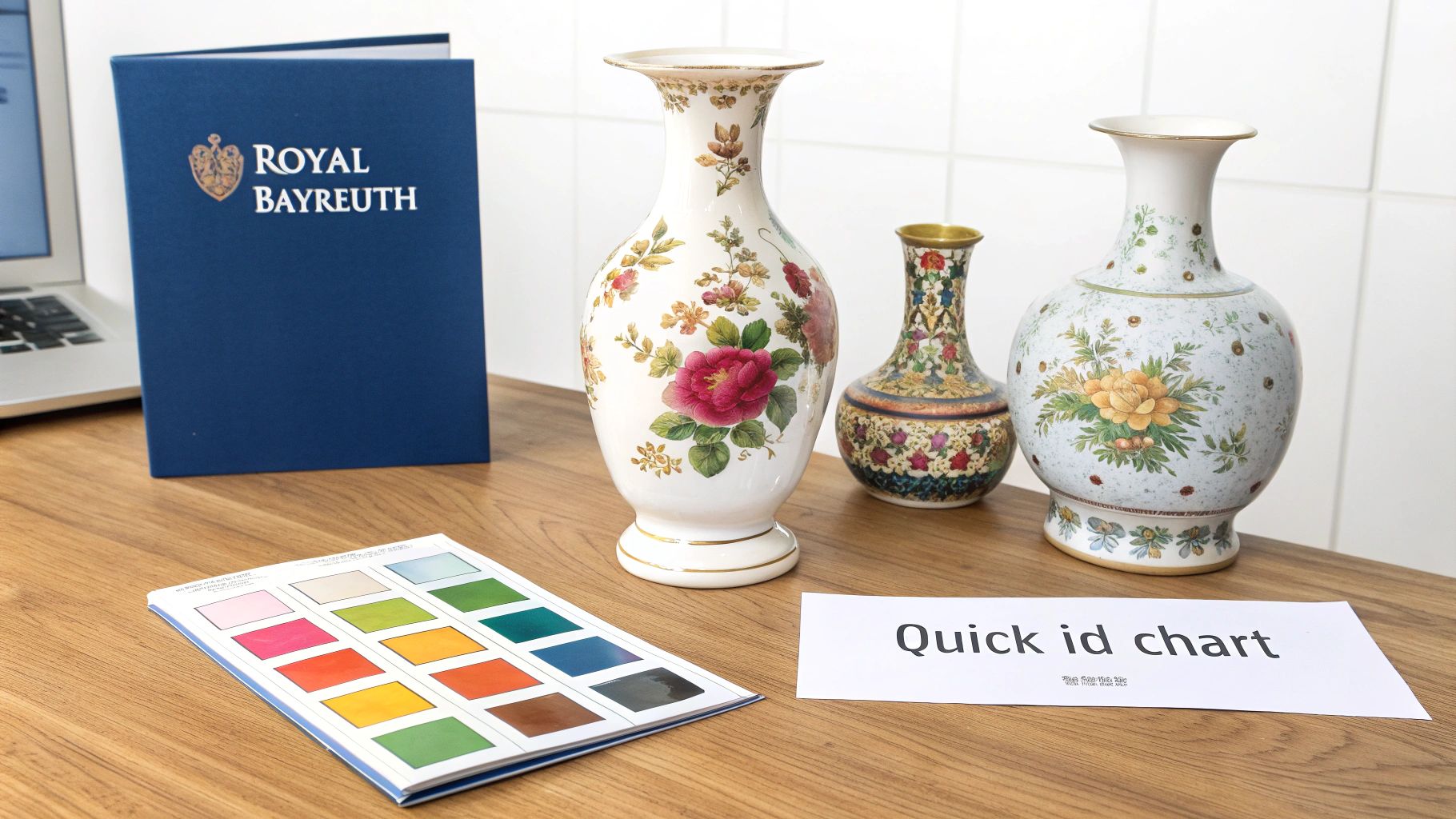
If you're a collector or reseller, you know that speed matters. When you're at a flea market or estate sale, you need to quickly figure out what you're looking at to know if it's a good find. This section is designed to be your go-to reference for just that, zeroing in on the most common visual cues of Royal Bayreuth marks.
Just by understanding a few key parts of the mark, you can get a surprisingly good idea of a piece's age. The color of the mark is your first and best clue. That iconic blue stamp, for instance, is a hallmark of the factory's biggest export years in the early 20th century. A green mark, on the other hand, often points to a different era entirely.
Using This Quick Reference Chart
To make things even easier, the table below gives you a quick summary. It ties the mark's color to its general date range and points out other key features to look for. Think of it as your first step in the identification process.
Quick Identification Chart of Common Royal Bayreuth Marks
This table offers a quick-glance reference to the most frequently encountered Royal Bayreuth marks. Use it to rapidly narrow down the potential age and origin of your porcelain by matching the color and key features.
| Mark Color | Key Features | Primary Date Range | Common On |
|---|---|---|---|
| Blue | T-in-shield crest, "Royal Bayreuth," "PRIV." | c. 1902 - 1940s | Export ware, scenic tapestries, novelty items |
| Green | Armorial crest, often with "T" | c. 1885 - 1902 | Earlier pieces, tableware |
| Red | Overglaze stamp, sometimes with patterns | Varies | Decorator marks, special orders |
| Black | Simple "Germany" or "Bavaria" | Post-WWII | Later production, utilitarian pieces |
This chart is your starting point. For a much deeper dive with specific examples and variations, our illustrated guide in the next sections will walk you through everything. And to broaden your knowledge, check out our general pottery marks identification guide for more context on other makers.
A few more quick tips to keep in mind:
- Blue Marks: These are the ones you'll see most often, especially on pieces made for export from about 1902 onward.
- Green Marks: You'll typically find these on earlier items and certain product lines, signaling a different production period.
- "Bavaria" vs. "Germany": Seeing "Bavaria" is standard. If "Germany" is also included, it helps date the piece to after the 1890s, a change prompted by international trade laws.
- The Crest: Pay close attention to the shield and lion crest. Even tiny changes in its design can help you pinpoint the production date with much greater accuracy.
A Legacy Forged in Royal Patronage and Fire
To really get a feel for Royal Bayreuth marks, you need to know the story behind them. This isn't just trivia; it's the context that gives each piece its soul. We're talking about a history stretching back more than 200 years, packed with royal charters, artistic flair, and an incredible will to survive.
The story begins in 1794 in Tettau, a small Bavarian village, not the city of Bayreuth as many assume. From day one, it was known as the Königlich privilegierte Porzellanmanufaktur Tettau, operating under an official royal charter from the Bavarian monarchy. That "Royal" in the name wasn't just for show—it was a seal of quality that opened doors across Europe and laid the groundwork for its fame.
Surviving War and Disaster
The factory's history is a true rollercoaster. A massive fire in 1897 nearly wiped it off the map, but the company's leaders didn't just rebuild—they modernized. This disaster actually became a turning point, sparking a new wave of creativity and production that led to some of its most celebrated work.
Even more impressive, Royal Bayreuth weathered the storm of two World Wars and the division of Germany. Its ability to keep operating through such upheaval is a powerful testament to the timeless appeal of its porcelain and the dedication of its craftspeople. This is why collectors prize these pieces so highly; they are survivors, tangible bits of history.
A piece of Royal Bayreuth is more than just a beautiful antique. It’s a direct link to a past filled with German craftsmanship that endured through fire, war, and political turmoil. Every marked piece is a small historical artifact.
This incredible backstory is what makes hunting for Royal Bayreuth marks so fascinating. Every little symbol, color, or word on the base of a creamer or plate is a breadcrumb leading back to a specific chapter in this long journey. When you understand the history behind the mark, you're not just identifying an object—you're uncovering a piece of a rich, resilient legacy.
An Illustrated Guide to Every Royal Bayreuth Mark
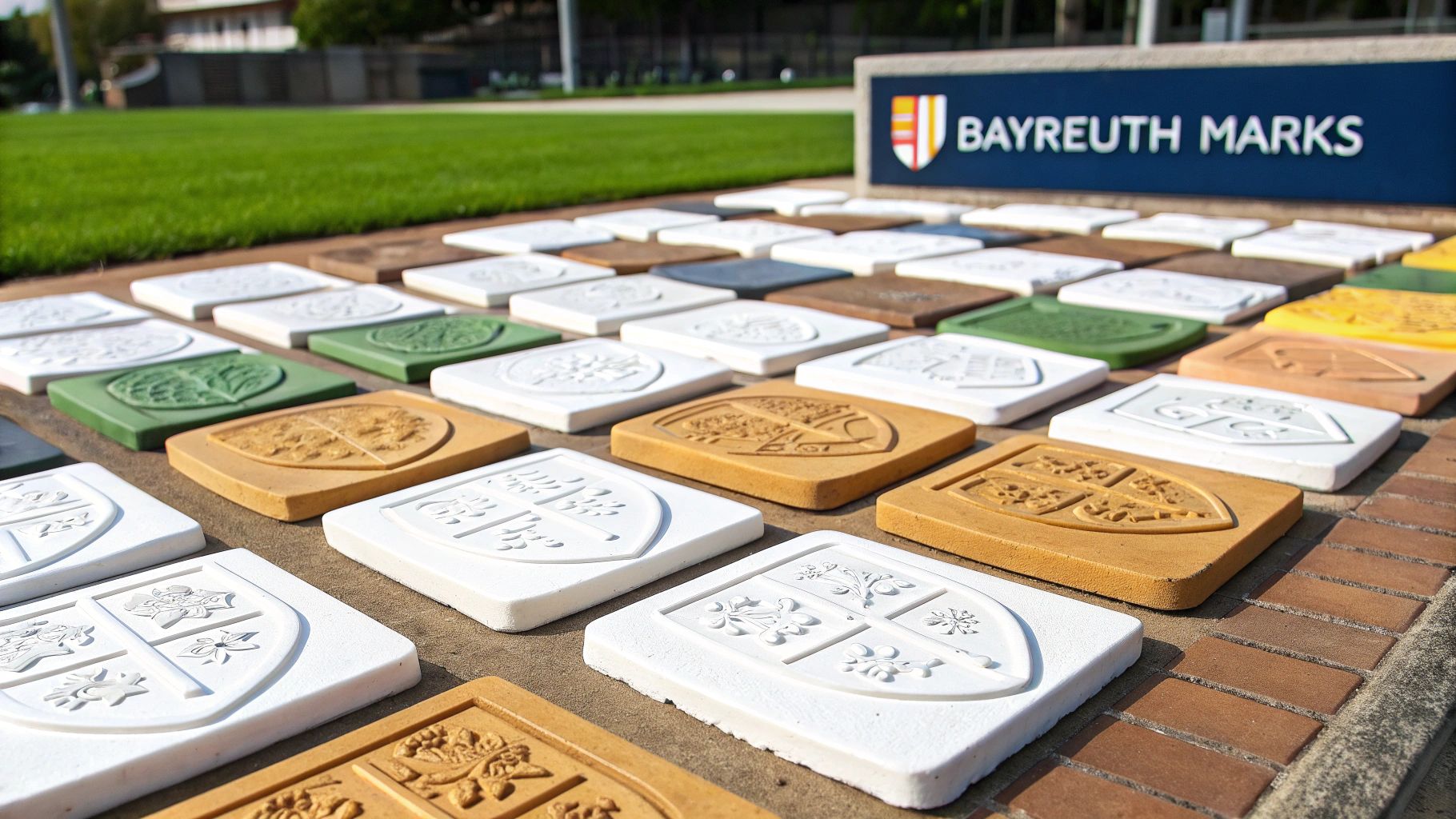
Dating a piece of Royal Bayreuth porcelain all comes down to the mark on its base. Over two centuries, the factory went through a variety of marks, and even subtle shifts in color, text, or the crest's design can pinpoint different production eras. This guide offers a detailed visual breakdown of the most important Royal Bayreuth Bavaria marks to help you figure out the age of your treasures.
You'll quickly notice that blue marks are the most common, as they became the standard when the company's export business took off in the early 20th century. But don't overlook the others. Earlier pieces often have green marks, while black and red stamps also make an appearance, each telling a unique part of the factory’s long history.
The Early Green Marks: Circa 1885-1902
Before the famous blue stamp took over, Royal Bayreuth mainly used green underglaze marks. Collectors get excited about these early marks because they belong to pieces from the late Victorian era, a time of major artistic change for the company.
Here’s what to look for in these green marks:
- The Armorial Crest: Most will have a heraldic crest with a shield flanked by lions. Sometimes, you'll see the letter "T" inside the shield, standing for Tettau.
- Wording Variations: The words "Royal Bayreuth" often arch over the crest, with "Bavaria" printed right below it. You might also spot "Königl. priv.", a reference to the factory's original royal privilege.
- Color Consistency: The green is usually a rich, deep forest green, though you might find slight variations from piece to piece.
These green marks typically show up on tableware and decorative items made before the factory really started pushing its exports to the United States. Finding one is a strong sign that your piece is a true antique, likely made before 1900.
The Iconic Blue Marks: Post-1902
The switch to a blue mark around 1902 lines up perfectly with Royal Bayreuth’s golden age of production for the American market. This is the mark most collectors know and love, especially on the brand's whimsical and highly sought-after novelty items like figural pitchers and tapestry ware.
The classic blue mark is unmistakable. It features a crest with a shield holding a stylized "T" over horizontal lines, topped with a crown and flanked by lions. You'll almost always see the words "Royal Bayreuth" and "PRIV. 1794," with "Bavaria" at the bottom. This mark was used for decades, but small tweaks over time can help you narrow down the production date even further.
The Porzellanfabrik Walküre Connection
A huge piece of the Royal Bayreuth puzzle is the Porzellanfabrik Walküre factory. It was set up in 1899 by Siegmund Paul Meyer (SPM) and became an absolute powerhouse, producing incredible quantities of porcelain for export under the Royal Bayreuth name. In fact, it's the reason the blue mark became a global symbol of German quality.
The Walküre factory operated for 120 years until 2019, shipping an astounding 75% of its durable, heat-resistant porcelain to foreign markets like the U.S. and UK. This partnership is what cemented the brand's international fame. If you're curious, you can discover more insights about the Walküre factory's history and its vital role.
A key takeaway for collectors is recognizing that the ubiquitous blue mark often signifies production from the SPM Walküre factory, which was instrumental in meeting the soaring international demand for Royal Bayreuth porcelain.
This connection really explains the sheer volume and consistent quality of pieces from this period. Understanding this part of the story adds a whole new layer of appreciation for the craftsmanship and sharp business sense that made the brand what it is today.
Getting to Know Popular Royal Bayreuth Patterns and Shapes
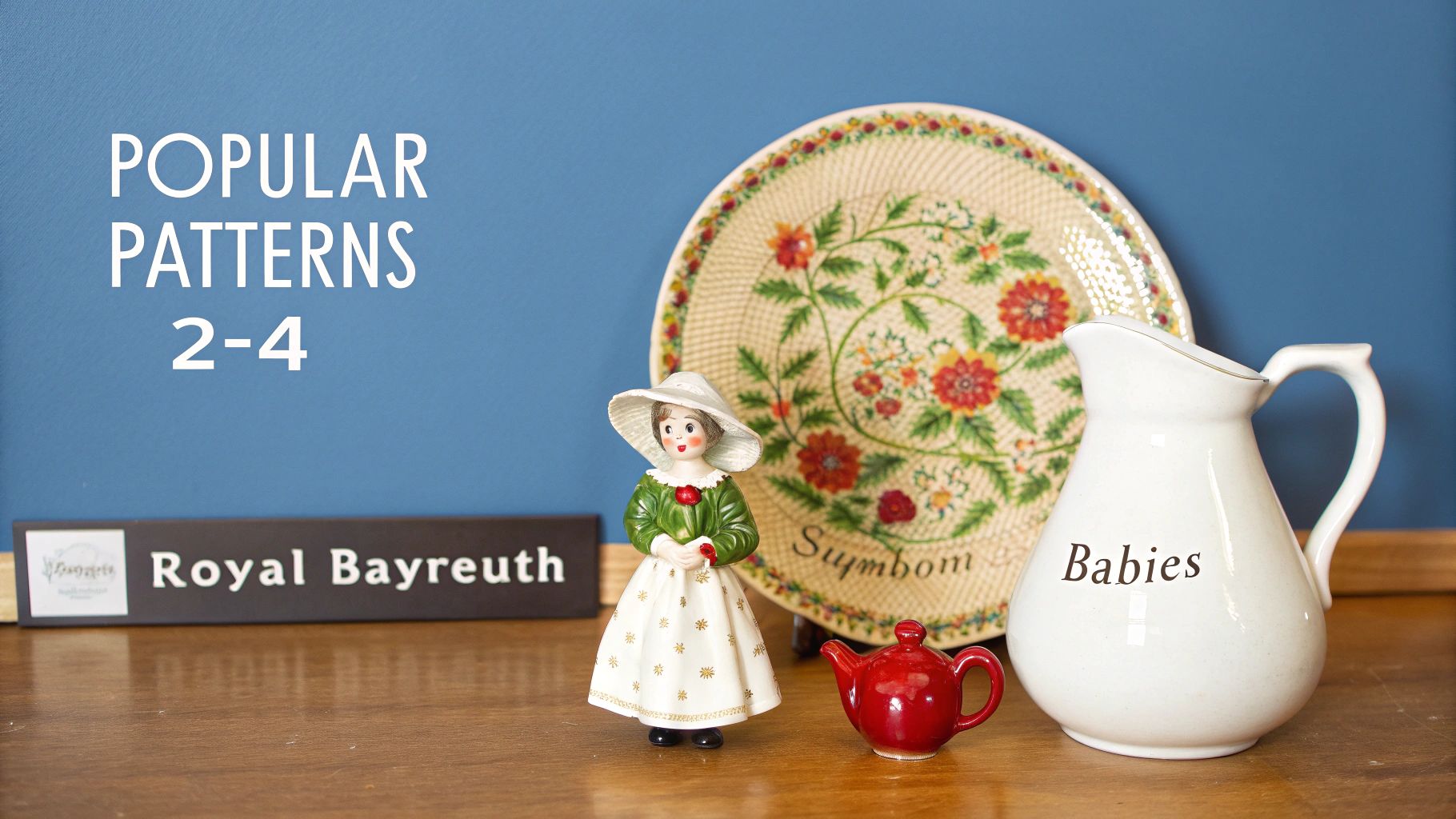
While the mark on the bottom of a piece gives you a date, the pattern tells its own story. Getting familiar with Royal Bayreuth's signature designs is a game-changer, especially when a mark is hard to read or missing altogether. The factory was brilliant at creating novelty items, and their incredible range of styles is what truly captured the hearts of collectors.
From whimsical figural creamers to gorgeous scenic plates, the variety is simply stunning. When you can spot these iconic designs on sight, you can gauge a piece’s value and history based on its artistry alone. This kind of visual expertise is just as important as knowing your marks.
Iconic Collectible Patterns
Some patterns are pure Royal Bayreuth—designs so famous they’ve become synonymous with the brand. These are the ones that really get collectors excited, thanks to their unique charm and artistry.
- Sunbonnet Babies: This is probably the most famous pattern of them all. You'll find charming scenes of children whose faces are hidden by big, floppy bonnets. Based on illustrations by artist Bertha Corbett, these pieces were made on everything from plates to pitchers, mostly between 1900 and 1920. They are incredibly sought-after.
- Tapestry Ware: You can't miss the unique, fabric-like texture of these pieces. Tapestry ware usually features incredibly detailed portraits or pastoral scenes. The company created this effect by applying a decal over a fine fabric mesh before glazing, resulting in a look that's truly one-of-a-kind.
- Corinthian and Scenic Decor: These lines show off Royal Bayreuth's more traditional, elegant side. They feature classical figures, romantic landscapes, and a rich color palette with lots of fine detail.
Collector's Tip: Be extra careful with the Sunbonnet Babies series, as it's one of the most faked. Always check the transfer quality and the clarity of the Royal Bayreuth Bavaria mark to confirm you're looking at an authentic piece.
Whimsical Figural and Novelty Items
Beyond plates and bowls, Royal Bayreuth really shined with its three-dimensional novelty porcelain. These imaginative, often playful, shapes are what many collectors live for, showcasing the factory at its creative best.
Most of these figural pieces were made to be functional—creamers, pitchers, sugar bowls, and other small containers that brought a bit of fun to the table. Their vibrant colors and lifelike shapes make them instantly recognizable.
Some of the most popular figural designs include:
- Tomatoes: You'll find bright red, realistically textured pitchers, creamers, and covered dishes shaped just like ripe tomatoes.
- Lemons and Other Fruits: The factory didn't stop at tomatoes. They made a whole produce section of lifelike figural pieces, including lemons, strawberries, and other fruits and vegetables.
- Animals and Characters: Royal Bayreuth had a playful side, creating pieces shaped like animals or characters. The famous Devil and Cards line, which features devilish figures holding playing cards, is a perfect example and remains a highly prized find for its uniquely edgy theme.
Popular Royal Bayreuth Patterns and Their Characteristics
To help you quickly identify some of the most common and valuable patterns, I've put together this quick reference table. It summarizes the key features of the designs that collectors are always hunting for.
| Pattern Name | Description | Typical Era | Key Collectible Feature |
|---|---|---|---|
| Sunbonnet Babies | Children in scenes with faces obscured by large bonnets. | c. 1900-1920 | Charming, nostalgic illustrations by Bertha Corbett. |
| Tapestry Ware | Scenic or portrait designs with a textured, fabric-like finish. | Early 1900s | The unique, tactile finish achieved with a mesh overlay. |
| Devil and Cards | Figural pieces featuring demonic characters and playing cards. | Early 1900s | The quirky, unconventional, and highly graphic subject matter. |
| Rose Tapestry | A specific Tapestry Ware line featuring vibrant pink roses. | Early 1900s | The beautiful floral imagery combined with the textured finish. |
| Tomato | Figural items shaped and colored like realistic tomatoes. | Early 1900s | The lifelike shape and vibrant red glaze; a classic figural. |
| Conch Shell | Creamers and pitchers shaped like iridescent conch shells. | c. 1902-1919 | The pearlescent glaze and elegant, naturalistic form. |
Having this knowledge in your back pocket makes a huge difference when you're out at an antique shop or flea market. Recognizing a Rose Tapestry finish or a Devil and Cards creamer from across the room is a skill that will serve you well.
How the Mark, Condition, and Rarity Drive Value
Identifying the Royal Bayreuth Bavaria mark is just the starting point. To truly understand what a piece is worth, you have to look at the bigger picture. The condition of the mark, the rarity of the item, and the overall shape it's in all come together to determine its final value. A crisp, clear mark is always a better sign than one that's faded, smudged, or partially worn away.
The age of a piece, which we can pinpoint from its mark, has a huge impact on value. An item with an early green mark from c. 1885-1902, for example, is usually much harder to find than something with a common blue mark from the 1920s. Assuming they're in similar condition, the older piece will almost always be worth more.
But rarity isn't just about age—it's also about the pattern. A common Sunbonnet Babies plate might sell in the $50-$75 range. In contrast, a rare figural item from the Devil and Cards line can easily fetch $300-$500 or even more. That huge gap shows just how much a desirable pattern can drive up the price.
Key Valuation Factors Beyond the Mark
Once you've identified the mark, it's time to play detective with the piece itself. These three factors are every bit as important as the stamp on the bottom.
- Condition: Go over the item with a fine-tooth comb. Look for chips, cracks, hairline fractures, or significant crazing (that web of fine cracks in the glaze). Any of these flaws will seriously hurt the value.
- Pattern Rarity: As we've seen, some patterns are wildly more collectible than others. Do a little digging online to see how often your pattern shows up on auction sites and what it has sold for recently.
- Market Demand: What's hot and what's not in the collecting world is always changing. A pattern that was all the rage a decade ago might have cooled off. Keeping an eye on current trends is essential for smart pricing.
A pristine Royal Bayreuth piece with a rare mark and a sought-after pattern is the holy grail for collectors. Damage is the single biggest value-killer, often slashing a piece's worth by 50% or more, no matter how old or rare it is.
Putting It All Together for an Accurate Appraisal
Figuring out what a piece is worth is part science, part art. You have to weigh all these different factors together. For a more detailed look at how these elements work together, check out guides on what makes antiques valuable.
Ultimately, the true value of any collectible is what someone is willing to pay for it. By combining your knowledge of Royal Bayreuth Bavaria marks with a careful inspection of the piece's condition and rarity, you'll be in a great position to set a fair and realistic price.
Spotting Fakes and Modern Reproductions
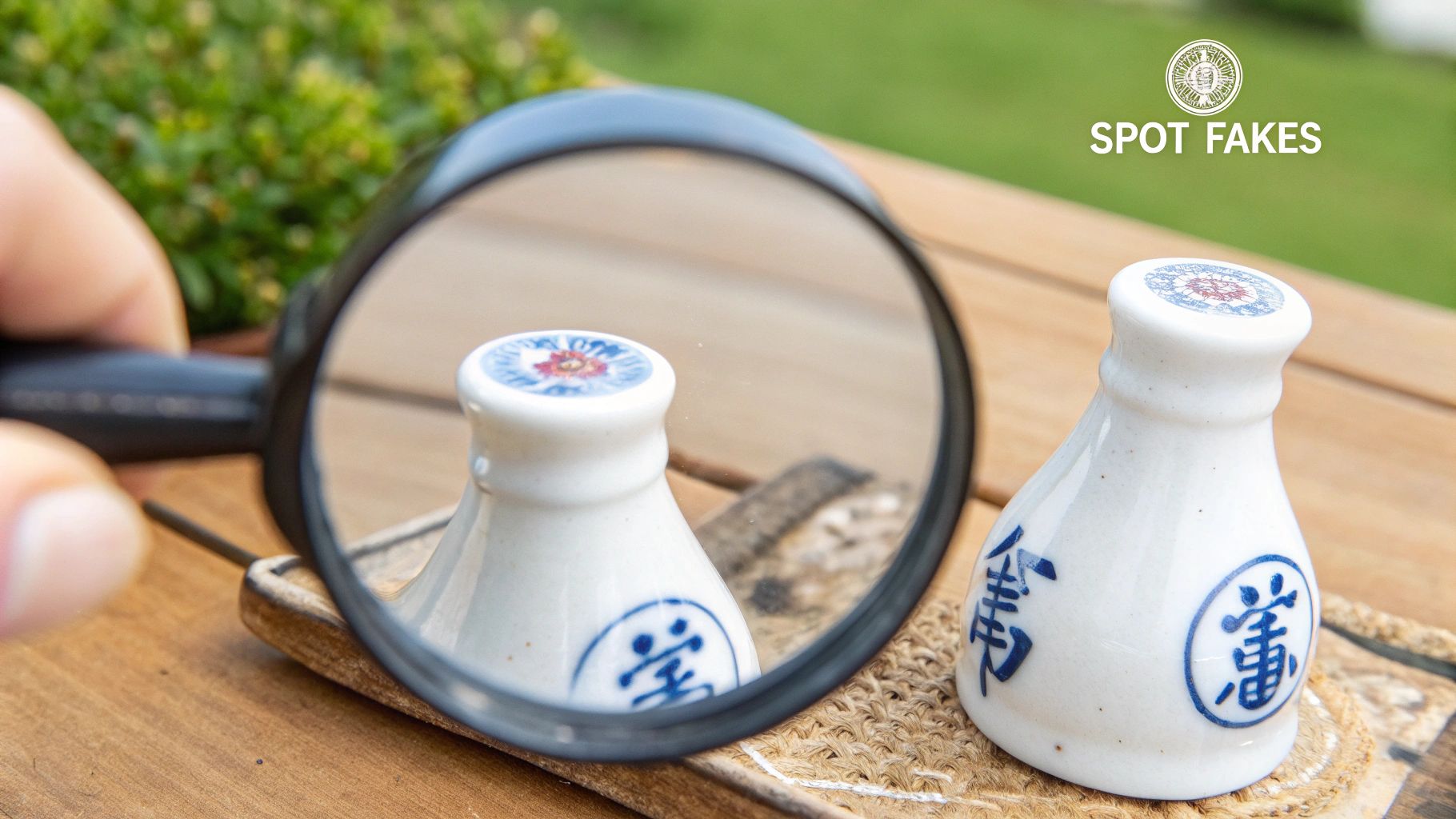
As with any popular collectible, the market for Royal Bayreuth has its share of fakes and modern knock-offs. The good news is that once you know what to look for, these forgeries often reveal themselves through small but significant mistakes.
Your first stop should always be the backstamp. Authentic Royal Bayreuth Bavaria marks were applied with care and are almost always found under the glaze, making them crisp and permanent. Fakes, on the other hand, often have blurry or smudged marks. Sometimes the mark is applied over the glaze, which means it can feel slightly raised and will show signs of wear.
Common Red Flags on Fakes
When you're looking at a potential piece, keep these tell-tale signs in mind. Even one of these should make you pause and take a much closer look.
- Wrong Colors or Glaze: Reproductions often get the colors just slightly wrong—either a bit too garish or noticeably duller than the vibrant but controlled palette of the real deal. The glaze might also have a slick, overly glossy modern look, missing the subtle depth you'd expect from antique porcelain.
- Shoddy Painting: Genuine Royal Bayreuth is known for its quality artistry, whether hand-painted or transfer-printed. Fakes frequently give themselves away with crude details, sloppy brushwork, or transfer patterns that look pixelated up close.
- Unbelievable Prices: If you stumble upon a rare "Devil and Cards" pitcher for a steal, be skeptical. That's a classic "too good to be true" scenario. Forgers love to replicate the most sought-after and expensive patterns.
A big giveaway is simply how the piece feels in your hands. Authentic Royal Bayreuth has a certain weight and fineness to it. Fakes are often clunky, made from heavier, thicker ceramic that just doesn't feel right. Trust your touch as much as your eyes.
Comparing Authentic and Fake Marks
The devil is truly in the details when you compare marks side-by-side. On a forgery, the lions in the crest might look more like blobs, the crown could be misshapen, or the font and spacing of the word "Bavaria" might be off. These little inconsistencies are dead giveaways to a trained eye.
Learning to spot these warning signs is an essential skill for any collector. For more general advice that works across different categories, our guide on how to spot fake antiques provides a wealth of extra tips. Building this expertise not only protects you from a bad buy but also deepens your appreciation for the genuine article.
Answering Your Questions About Royal Bayreuth Marks
When you're out there hunting for Royal Bayreuth, certain questions always seem to pop up. Let's tackle some of the most common ones I hear from collectors to clear up those little mysteries you might run into when looking at Royal Bayreuth Bavaria marks.
Think of this as your quick-reference guide for those details that can trip up even seasoned enthusiasts.
What Does "Priv 1794" On a Mark Mean?
Seeing "Priv. 1794" or "Königlich privilegiert 1794" on a mark is a direct link to the factory's impressive history. "Priv." is just an abbreviation for the German word privilegiert, meaning "privileged."
This detail isn't the date your piece was made; it's the date the Tettau factory was founded. The factory was granted a royal charter—a special privilege—by the Bavarian monarchy way back in 1794. They proudly included this date on many later marks to showcase their long, distinguished heritage.
Is All Royal Bayreuth Porcelain Actually From Bavaria?
Yes, it is. Every piece of authentic Royal Bayreuth porcelain came out of Bavaria, Germany. The story starts in 1794 in the small village of Tettau, which is deep in Bavarian territory.
Down the road, a crucial partner factory, Porzellanfabrik Walküre, set up shop in the city of Bayreuth, also in Bavaria. Stamping "Bavaria" on the porcelain wasn't just a statement of fact; it was a mark of quality, as the region was already world-famous for its incredible porcelain.
Why Does My Piece Say "Germany" Instead of "Bavaria"?
The words you see on the bottom of your piece are often clues tied to major historical events. Before Germany unified in 1871, you wouldn't find "Germany" on any marks. It wasn't a country yet!
After unification, things changed. Big trade laws like the United States' McKinley Tariff Act of 1890 mandated that imported goods had to be clearly stamped with their country of origin. This is why you start seeing "Germany" added to or sometimes even replacing "Bavaria" on pieces made for export from that point on. Spotting the word "Germany" is a dead giveaway that your item was made after 1890.
An item marked only "Bavaria" is almost always older than one marked "Bavaria, Germany." This simple distinction is one of the quickest and most reliable dating clues you have.
Why Are Some Royal Bayreuth Patterns Unmarked?
It's not common, but you can occasionally stumble upon an authentic piece with no mark at all. This can happen for a few different reasons.
- The piece might have been a "second"—an item with a tiny flaw that the factory sold off without its official stamp.
- It could have been part of a large dinner or tea set where only one or two of the main serving pieces got the mark.
- After a century of love, use, and washing, the mark may have simply worn right off.
Telling an unmarked piece from a fake takes a well-trained eye. You have to rely entirely on your knowledge of the patterns, the specific shapes, and the unmistakable feel and quality of the porcelain itself.
Feeling stumped by a family heirloom or a recent thrift store find? Let Curio be your personal detective. Just snap a photo, and our app will instantly dig up its history, origin, and an estimated value. Download Curio today and start uncovering the stories hiding in your treasures.