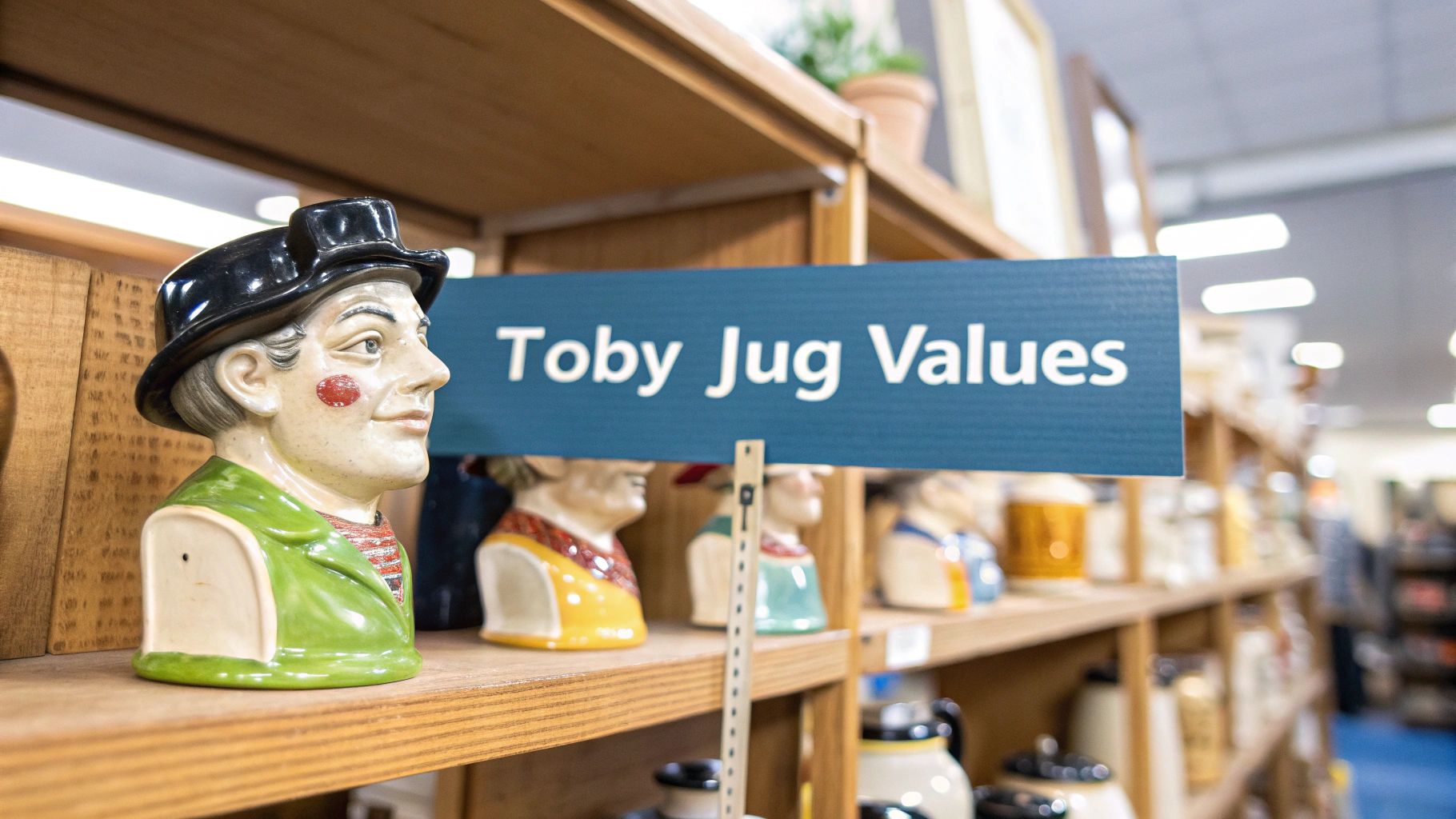
Figuring out the value of a Toby jug is part art, part science. A modern, common piece might fetch you the price of a decent lunch, but a rare 18th-century original? That could be worth thousands. A jug's final price tag really comes down to four key things: who made it, how old it is, how rare it is, and what kind of shape it’s in.
What Really Determines a Toby Jug's Value
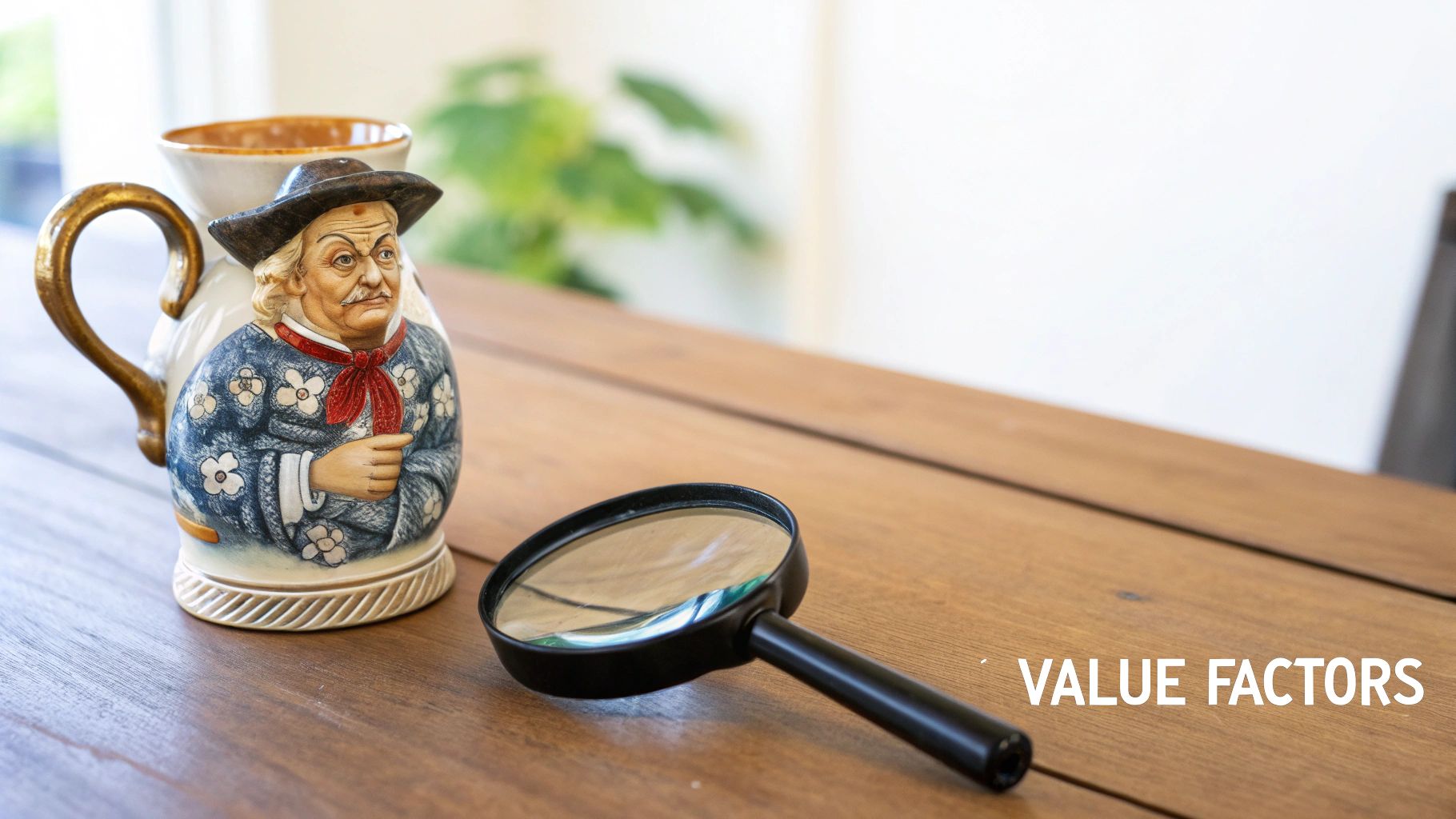
Think of it like being a detective. You can't just look at one clue and solve the case. Instead, you have to gather all the evidence to understand the jug's real story and, ultimately, its market price. The name stamped on the bottom is a huge clue, but the jug's history and condition tell the rest of the story.
Learning to weigh all these factors together is the key. It keeps you from overpaying for a common piece or, even worse, letting a true treasure slip away for a fraction of its worth. Once you get the hang of it, you can size up any Toby jug with a confident and knowledgeable eye.
The Four Pillars of Valuation
When it comes right down to it, valuing a Toby jug rests on four critical pillars. Each one gives you a vital piece of the puzzle, and once you put them all together, a clear picture of its market value emerges.
- Maker and Marks: First question: who made it? This is often the biggest factor. Big names like Royal Doulton, Wedgwood, and the early Staffordshire potteries almost always bring in higher prices.
- Age and Period: When did it come out of the kiln? Jugs from the 18th and early 19th centuries are the holy grail for collectors because they're so much scarcer than the ones mass-produced in the 20th century.
- Rarity and Subject: How many of these are out there, and who is it supposed to be? A prototype or a limited-edition character will always be worth more than a jug that was made by the thousands.
- Condition: How well has it survived the years? A pristine jug is the gold standard. Cracks, chips, and especially bad repairs can slash its value dramatically.
For particularly valuable pieces, it's helpful to think of the process much like getting a jewelry appraisal for insurance, where provenance and condition are meticulously examined to determine worth.
A Toby jug's value is a blend of its history, artistry, scarcity, and preservation. No single factor tells the whole story, but together, they reveal its true place in the collector's market.
Key Factors Influencing Toby Jug Values at a Glance
To make it even simpler, here's a quick cheat sheet. This table breaks down the core elements that collectors and appraisers look at when determining what a Toby jug is worth, from the maker's mark to its physical condition.
| Value Factor | Description | Impact on Value |
|---|---|---|
| Maker | The specific pottery or artist who created the jug. | High (Famous makers like Ralph Wood or Royal Doulton significantly increase value). |
| Age | The historical period when the jug was produced. | High (18th-century originals are the most valuable; value generally decreases with newer pieces). |
| Rarity | The number of similar jugs known to exist. | Very High (Prototypes, limited editions, or withdrawn designs command premium prices). |
| Condition | The physical state, including any damage or repairs. | Very High (Pristine condition is ideal; chips, cracks, or restoration drastically lower value). |
Seeing how these factors interact is the real skill. A rare jug from a top maker might still lose significant value if it has a major crack, while a more common piece in perfect condition could surprise you with its price.
How to Identify the Most Valuable Makers
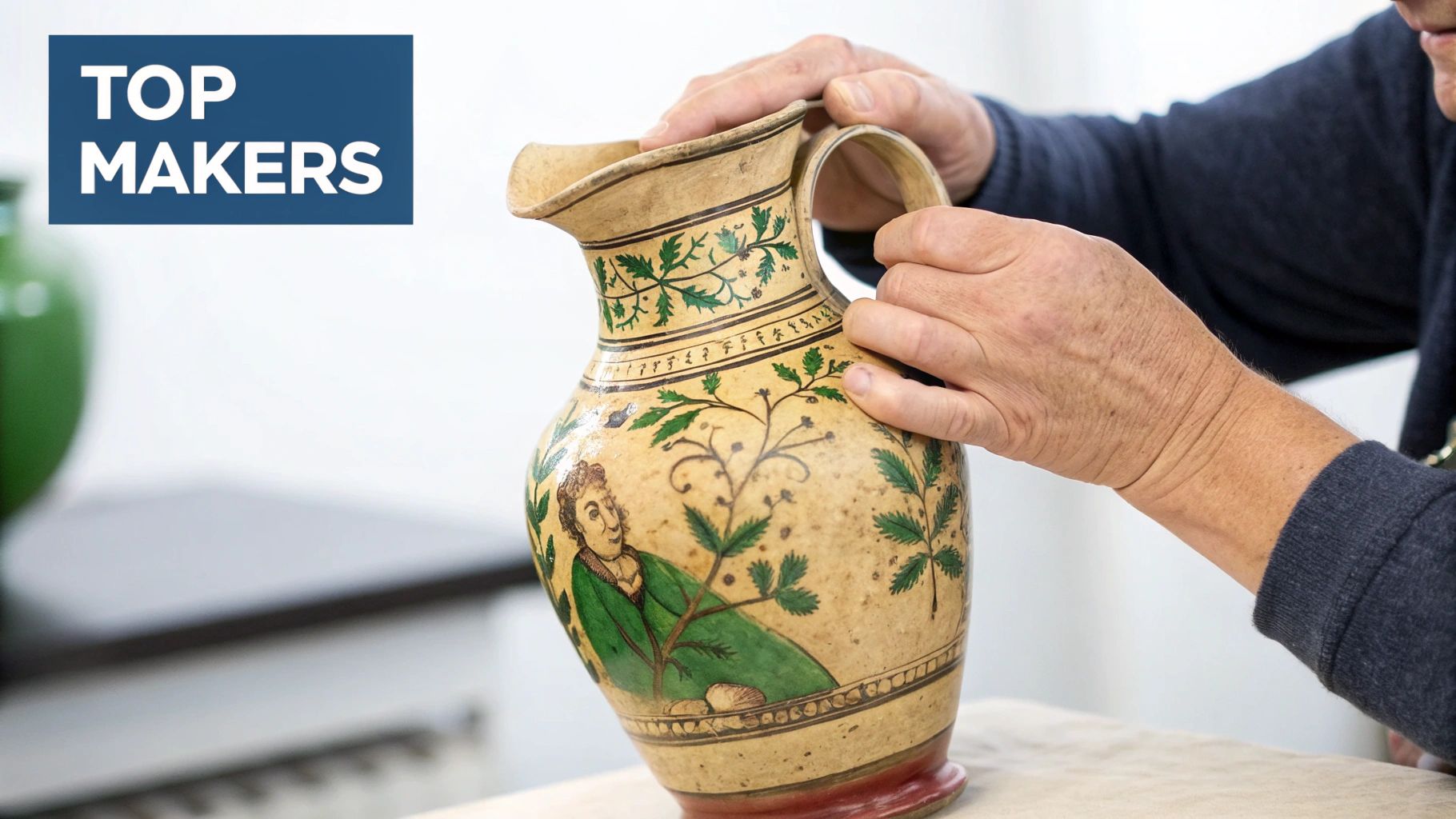
The very first thing any serious collector does when they get their hands on a Toby jug is flip it over. Why? Because that little patch of clay on the bottom holds the most important clue to its value: the maker’s mark.
This signature, whether it's a neatly stamped logo or a simple hand-scratched initial, is what separates a common decorative piece from a rare artifact potentially worth a small fortune.
Think of a prestigious maker's name as a stamp of quality and a ticket to a specific moment in history. When you see names like Royal Doulton, Wedgwood, or an early Staffordshire potter like Ralph Wood, your collector's intuition should start tingling. Learning to spot these marks is easily the most important skill you can develop for figuring out what a Toby jug is really worth.
The Giants of the Industry
Over the centuries, countless potteries have tried their hand at Toby jugs, but only a handful of names truly make collectors sit up and take notice—and consistently command high prices at auction. These are the makers who didn't just master the art form; they defined it.
- Early Staffordshire Potters (c. 1760s-1820s): This is the holy grail for collectors. Potters like Ralph Wood and his family are legends in the ceramics world, known for their beautifully crafted, early jugs. Their pieces often have distinctive, almost runny-looking glazes that are an instant giveaway for the era.
- Wedgwood: A true titan of English ceramics, Wedgwood’s Toby jugs are all about refined quality and flawless finishes. They weren't the most prolific producers, but the brand's powerhouse reputation means any piece is highly collectible.
- Royal Doulton: This is arguably the most famous name in the game. In the 20th century, Royal Doulton ran with the idea of the modern "character jug," which focuses on just the head and shoulders. While thousands of common examples exist, the early or rare models are incredibly valuable.
A maker’s mark is so much more than a brand. It’s a piece of provenance. It connects a jug to a specific workshop, a historical period, and a legacy of craftsmanship that directly inflates its value today.
Decoding the Marks on the Base
So, how do you find and make sense of these crucial clues? It’s often simpler than you might think. Turn the jug over, grab a magnifying glass or use a bright light if you need to, and take a close look. You're generally looking for one of a few types of identifiers. For a deeper dive into the sheer variety you might encounter, our comprehensive guide to vintage pottery marks is an excellent resource for any collector.
Here are the main types of marks you'll find:
- Backstamps: These are the most common. They are stamped, printed, or impressed logos that often include the company’s name. The iconic Royal Doulton lion and crown is a perfect, instantly recognizable example.
- Incised Marks: This is an older technique where potters scratched their name or initials directly into the wet clay before firing. These marks can be faint and hard to read, but they often signal a very early, handmade piece from the 18th or early 19th century.
- Registration Numbers: Starting in the 19th century, many British potteries began using registration marks or numbers. These are fantastic clues because they can help you date a piece with surprising accuracy, sometimes down to a specific year.
The bottom of a Toby jug is its birth certificate. The name, the style of the mark, and any accompanying numbers all work together to tell the story of its origin, providing a solid foundation for its valuation.
The physical look and feel of the jug can also act as a signature. For instance, the creamy, almost translucent appearance of an early pearlware glaze is a world away from a later, darker, and more opaque Rockingham glaze.
Learning to spot these subtle differences in material and finish can help you link a piece to a specific maker and era, even if the mark is faded or completely missing. It’s a skill that lets you flip over any jug and start to unravel its unique story.
How to Date Your Toby Jug Using Marks and Clues
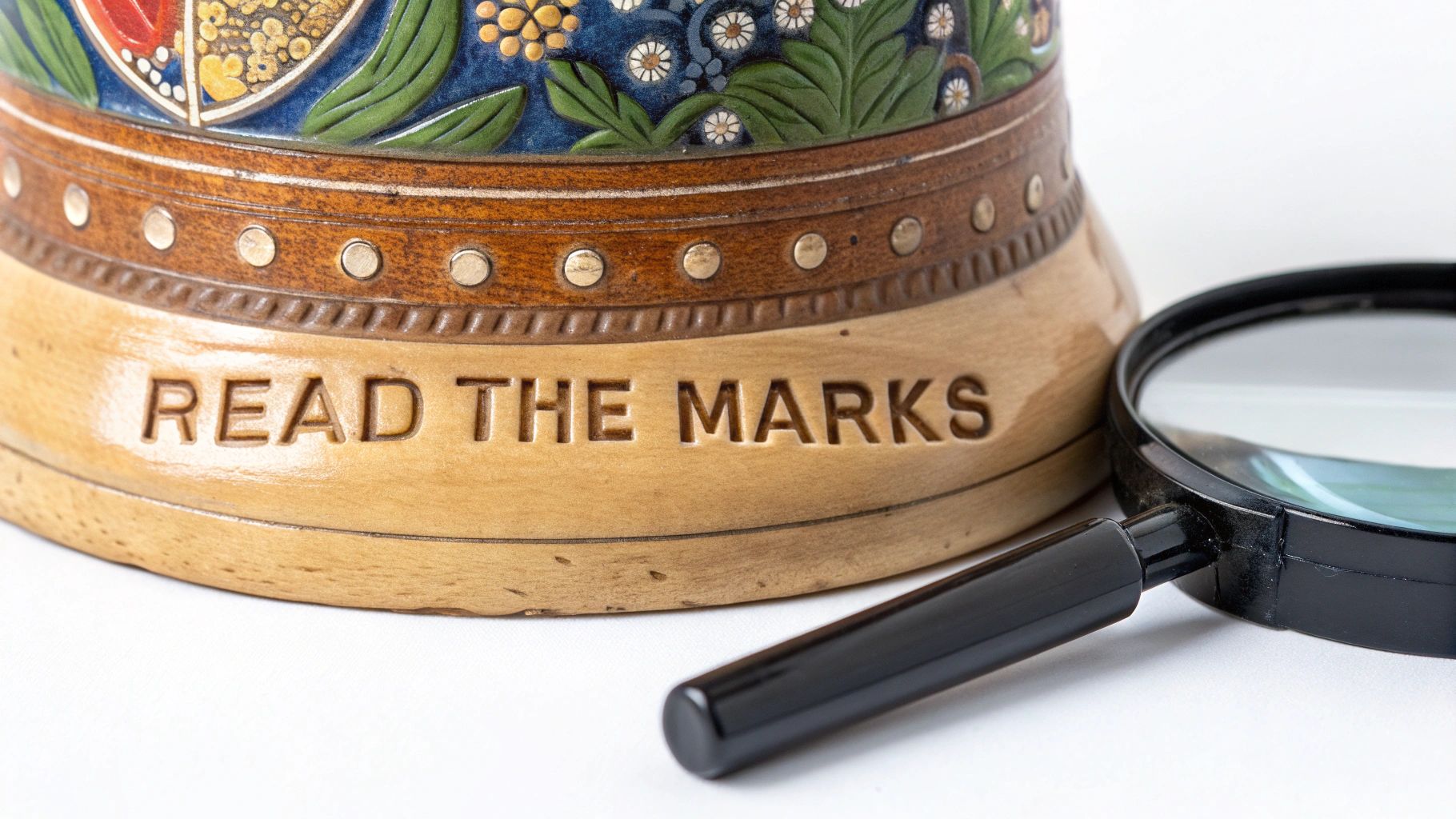
While the maker’s mark tells you who made your jug, there are other clues on the base that can tell you when. Think of the bottom of your jug as its birth certificate—a collection of symbols, numbers, and subtle details that can pinpoint its age. Nailing down the production era is one of the biggest factors in what a Toby jug is worth, so it pays to do a little detective work.
This is about more than just finding a famous name. You'll want to piece together multiple clues, from registration numbers to small changes in a company's logo, to build a precise timeline. It’s this process that turns a ballpark guess into a confident valuation.
Deciphering Backstamps and Registration Numbers
For any jug made in the 19th and 20th centuries, the backstamp is your best friend. Potteries were constantly tweaking their logos, and these small changes are goldmines for dating a piece. For instance, the simple addition of "Ltd" or "Made in England" can instantly place a jug within a specific historical window.
Royal Doulton is a perfect example of this. Their backstamps evolved so much over the years that collectors have been able to map out a very clear timeline. The style of the crown, the shape of the lettering, and other symbols can often narrow a jug’s production down to a specific decade. A tiny detail, like a small "A" mark, tells you the piece was made after 1939, when glaze formulas were changed due to wartime restrictions.
One of the best clues you can find is a registration number. From 1842 to 1883, British potteries used a diamond-shaped mark (often called a "kite mark") that actually encoded the exact date a design was registered. After 1884, they switched to a sequential "Rd No" (Registration Number) system. Both of these can be cross-referenced with historical records to date a piece with incredible accuracy. If this is new territory for you, a good pottery marks identification guide is a great place to start building that foundational knowledge.
Uncovering Clues on Unmarked Jugs
But what about the really old jugs, the ones with no marks at all? Don't worry, this is where the real fun begins. For 18th and early 19th-century pieces, the absence of a mark is actually quite common. Instead of looking for a stamp, you have to read the jug itself.
The real art of dating early Toby jugs lies in reading the physical evidence. The shape of the footrim, the style of the handle, and the texture of the glaze are the fingerprints left behind by potters long ago.
Here are the key physical clues to look for on unmarked pieces:
- The Glaze: Early Staffordshire jugs often have a soft, slightly runny lead glaze. It typically has a creamy or yellowish tint, which collectors call pearlware or creamware. Look for areas where the glaze has subtly pooled in the crevices.
- The Footrim: Flip the jug over and run your finger along the base. An unglazed, often gritty footrim is a tell-tale sign of an early piece, as it sat directly on the sandy floor of the kiln. Later jugs tend to have a much more finished, glazed-over base.
- Weight and Feel: Early, hand-potted jugs just feel different. They're often lighter and have a slightly uneven, rustic character compared to the heavier, more uniform slip-cast jugs that became common in the Victorian era.
- Firing Marks: Check the base for small imperfections like tripod marks—three little scars left by the stilts used to stack pottery in the kiln. These are wonderful signs of early production methods.
By combining these observations, you can start to confidently place an unmarked jug in the right time period. This is crucial, because a correctly identified 18th-century piece can be worth hundreds, if not thousands, of dollars more than a convincing later imitation. Every clue helps build the story that ultimately determines your Toby jug’s value.
Why Rarity and Condition Are Critical
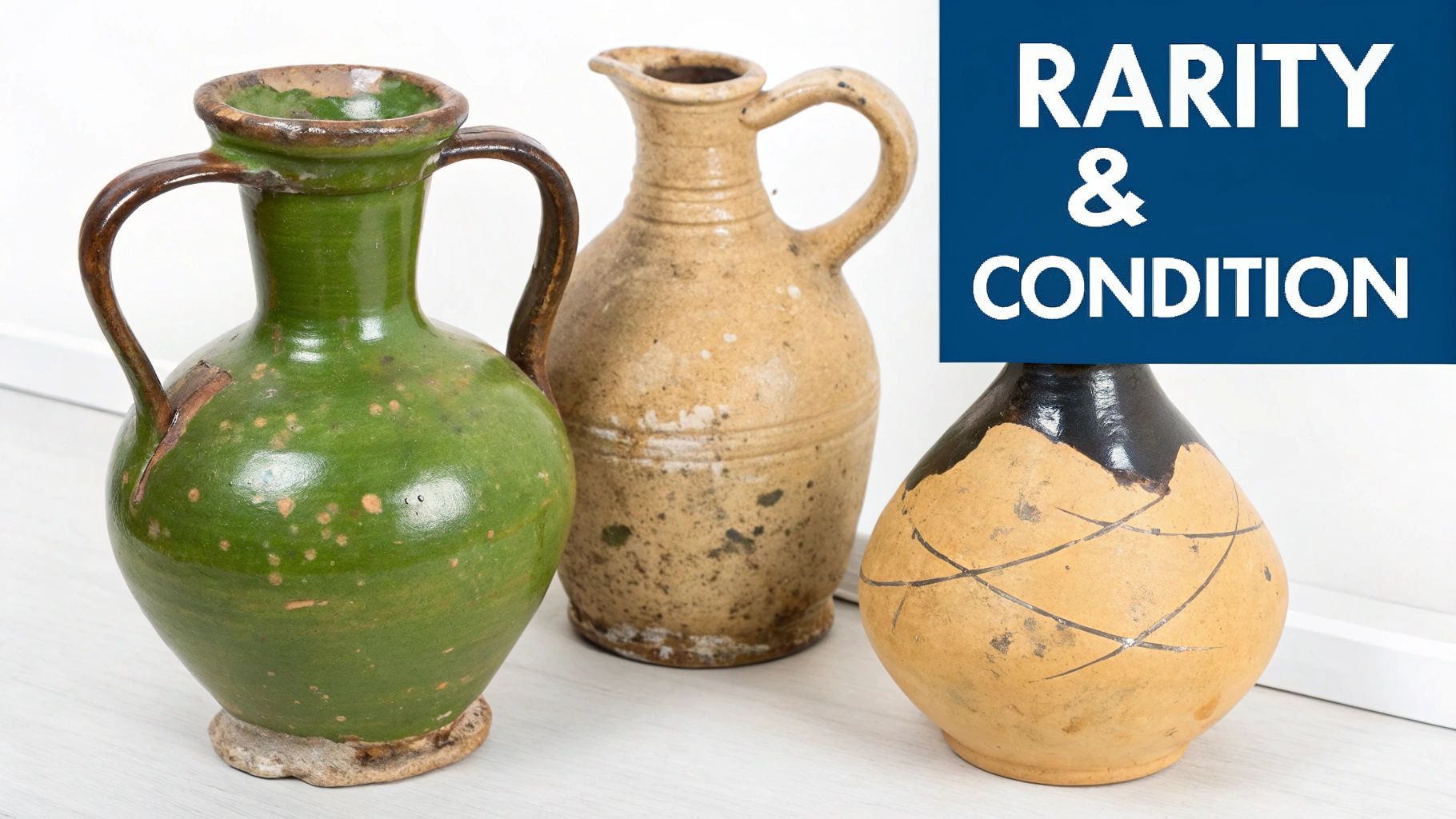
Once you've figured out the maker and age of a Toby jug, two final factors come into play that can make its value skyrocket or plummet: rarity and condition. This is where the real thrill of collecting comes in. It’s what separates a common piece from a genuine treasure and explains why two jugs that look almost identical can have vastly different price tags.
Think of it this way: rarity is all about supply—how many of a certain jug were ever made? Condition, on the other hand, is about the quality of what’s left. When you find a jug that is both exceptionally rare and in perfect shape, you've hit the jackpot.
What Makes a Toby Jug Truly Rare
Rarity isn’t just about being old. Sure, an 18th-century jug is naturally scarcer than one from the 1980s, but the real story is in the original production numbers. A modern, limited-run jug can easily be rarer—and worth far more—than a common design from the 1800s.
This kind of scarcity usually comes from unique circumstances that cut production short right from the beginning. These are the stories that get a serious collector's heart racing.
- Prototypes and Trial Pieces: Before a design was mass-produced, potteries would create test versions to get the look just right. These prototypes might have different colors or modeling details you won't see on the final version, making them one-of-a-kind artifacts.
- Withdrawn or Recalled Designs: Sometimes, a jug was pulled from the market almost as soon as it was released. It could be due to a licensing dispute, poor sales, or a flaw in the design. The handful that made it out the door become instant rarities.
- Limited Editions and Colorways: Makers like Royal Doulton loved to create intentionally small batches. A jug marked "75 of 250" has scarcity built right in. The same goes for experimental color variations, or "colorways," which were often produced in tiny numbers and are now highly prized.
The Royal Doulton Clark Gable character jug is a classic example. A licensing tiff meant the design was withdrawn almost immediately, with only about 100 examples thought to exist today. That documented scarcity is exactly what makes it so valuable.
The very top of the market is almost entirely driven by these ultra-rare pieces. Royal Doulton prototypes, for instance, have fetched incredible prices at auction, with sales ranging from £3,000 to over £20,000. Two particularly famous character jugs even sold for £20,175 each at Sotheby’s, proving that museum-quality rarity commands a serious premium. You can find more details about record-breaking sales and Toby Jug values over at True Legacy Homes.
How to Assess a Jugs Condition
Condition is the great equalizer in the world of antiques. A super rare jug can lose 50-70% of its value from a single crack or a shoddy repair. Collectors are looking for pieces that have survived the test of time with their original character intact. Learning to spot damage is a crucial skill for getting an accurate valuation.
A simple "good, better, best" approach can help you size up any piece.
Good (Fair Condition)
A jug in this category has definitely lived a little and shows its age.
- Visible paint wear, especially on high points like the nose or the brim of the hat.
- One or two minor chips, sometimes called "flea bites."
- Noticeable crazing, which looks like a fine web of cracks in the glaze.
Better (Excellent Condition)
This is a jug that's been looked after. It’s not perfect, but it’s close.
- No chips, cracks, or repairs at all.
- The colors are still vibrant and show very little wear.
- It might have some very light, clean crazing that doesn't spoil its look.
Best (Mint Condition)
This is the collector's dream. The jug looks like it just came out of the kiln yesterday.
- Absolutely no flaws, damage, or wear of any kind.
- The glaze is flawless, and the colors are as bright as the day they were painted.
- Mint condition pieces are incredibly hard to find and will always fetch the highest prices.
A Realistic Look at Current Market Prices
So, we've covered the big four: maker, age, rarity, and condition. Now it's time to get down to brass tacks and talk about what these jugs are actually worth. Whether you're looking to buy, sell, or just figure out what your collection is worth, having a handle on current market prices is key. Toby jug values are all over the map, and it's important to know where your particular piece lands.
Think of the market as a pyramid. At the very bottom, you have the common, mass-produced jugs that are easy to find and won't break the bank. As you move up, you'll find the more sought-after pieces from famous makers, then the truly scarce antiques, and right at the top, the incredibly rare prototypes and pristine 18th-century originals.
Establishing a Value Hierarchy
To make sense of Toby jug values, it helps to think in terms of price brackets. Of course, every jug has its own story, but these general ranges give you a solid starting point. A common 20th-century piece might fetch $50 on a good day, while a documented antique from a top Staffordshire pottery can easily soar past $1,000.
This hierarchy isn't just guesswork; it's built on what collectors are willing to pay and what pieces have sold for in the past. Auction results and price guides show a clear divide. Common 20th-century jugs, for instance, usually fall in the $20–$75 range. Your average mid-century Royal Doulton might be worth $50–$150. But step back into the 19th century, and a good Staffordshire example could be anywhere from $400–$1,500+. The holy grail? Authentic 18th-century originals, which can start at $2,000 and climb to $10,000 or even more. You can dive deeper into valuation insights and historical sales data to see how these numbers shake out.
Understanding this value pyramid is key. Most jugs fall into the lower, more accessible tiers. The high-value pieces that make headlines are the exception, not the rule, representing the pinnacle of rarity and collector desire.
To give you a quick reference, here’s a simplified breakdown of what you can expect for different types of Toby jugs.
Toby Jug Value Ranges by Era and Type
This table offers a general guide to market values, helping you get a quick sense of what a jug might be worth.
| Toby Jug Category | Typical Value Range (USD) |
|---|---|
| Common 20th-Century Mass-Produced | $20 – $75 |
| Mid-Century Royal Doulton (Common) | $50 – $150 |
| 19th-Century Staffordshire | $400 – $1,500+ |
| Authentic 18th-Century Originals | $2,000 – $10,000+ |
Remember, these are just ballpark figures. Condition, rarity, and maker can push a piece well above or below these ranges.
Current Market Trends and Collector Tastes
Like any collectibles market, what's "hot" in the Toby jug world can change. While the fundamentals of value don't really shift, collector tastes do, and that can nudge prices up or down. Right now, there's a very strong, stable demand for early, high-quality Staffordshire pieces from the 18th and early 19th centuries. Collectors view these as true investment-grade antiques, and their scarcity keeps prices high.
On the other hand, the market for the more common 20th-century character jugs, especially from Royal Doulton, is pretty saturated. They're still collected and loved, but there are just so many of them out there that only the truly rare models see much of a price jump.
Here's a quick snapshot of what's currently trending:
- High Demand: Authentic 18th-century jugs from makers like Ralph Wood, particularly if they're in fantastic shape.
- Stable Demand: Good 19th-century Staffordshire pieces and the rarer, limited-edition models from the 20th century.
- Softer Demand: Common, mass-produced character jugs from the post-war years, unless you have a complete set or a piece in absolutely perfect condition.
Keeping these trends in mind gives you a realistic footing. It helps you understand what your jugs are truly worth today, so you can go into any sale or purchase with confidence.
Smart Strategies for Selling Your Toby Jugs
Knowing what your Toby jug is worth is one thing, but actually getting that price when you sell it is a whole different ballgame. The right game plan can mean the difference between a fast, profitable sale and a long, frustrating headache. Your best move depends entirely on what you have—a common character jug needs a different approach than a rare 18th-century antique.
First things first: get an accurate, honest appraisal. It’s your most important tool. For a truly high-value piece, it's worth investing in a professional appraiser. If you have more common jugs, a little homework goes a long way. Check the "sold" listings on sites like eBay to see what people are actually paying right now. This simple step keeps you from accidentally giving away a treasure or pricing a jug so high that no one even bothers to look.
Choosing the Right Sales Venue
Where you sell your jug is just as critical as how you price it. Different platforms attract different buyers, and matching your piece to the right audience is the key to getting top dollar.
- Local Antique Dealers: This is often the quickest, most hassle-free option, especially if you have a handful of mid-range jugs you want to move. The trade-off? Dealers need to make a profit, so expect to be offered a wholesale price, which is always lower than what it might fetch from a collector.
- Online Marketplaces (eBay, Etsy): These sites open your collection up to a huge, global audience. This is the perfect route for common to mid-value jugs. Your success here really hinges on taking excellent photos and writing a detailed, honest description.
- Specialized Auction Houses: If you suspect you have a genuinely rare or antique Toby jug, an auction house is the way to go. Their experts can properly authenticate and market your piece to serious collectors with deep pockets—the kind of buyers who will compete for the best items.
It also pays to know what's hot and what's not. The Toby jug market as a whole probably peaked between the 1960s and the late 1980s, but demand for the really early pieces is still very strong in the UK and Europe, where their history is deeply appreciated. Meanwhile, US buyers often drive up prices for celebrity or pop-culture character jugs. A rare Royal Doulton prototype, for instance, can still command thousands. You can explore auctioneer insights on Toby jug collecting to get a better feel for these market quirks.
Presenting Your Jug for a Successful Sale
Once you’ve picked your spot, it's all about presentation. High-quality photos and a great description aren't just nice to have; they're essential, especially when you're selling online.
Think of your listing as your digital sales pitch. Clear photos from every angle—including the base and any flaws—build trust. An honest, detailed description that tells the jug's story—its maker, age, and condition—will catch the eye of serious buyers and help you get the best price.
Always be upfront about any damage, no matter how tiny. A chip that a buyer discovers only when they unpack the box is a recipe for a return and a bad review. Honesty builds credibility and makes for a much smoother sale for everyone. Selling antiques online is an art, and our guide on how to sell antiques online can give you even more strategies for success.
Common Questions About Toby Jug Values
As you get deeper into the fascinating world of Toby jugs, a few questions always seem to surface. It doesn't matter if you’ve been collecting for years or just found your first piece in a thrift store—getting solid answers helps you buy and sell with confidence. Let's tackle some of the most common ones.
Are All Royal Doulton Toby Jugs Valuable?
Not by a long shot. While Royal Doulton is the biggest name in the game, they made an enormous number of character jugs, especially from the 1940s through the 1980s. Many of the common, mass-produced characters from that era are easy to find and typically sell for a modest $50 to $150.
The real money in Royal Doulton is all about rarity. Limited editions, early prototypes, or jugs that were pulled from production almost immediately—like the legendary ‘Clark Gable’ jug—can fetch thousands. The secret is always in the details, so be sure to check the backstamp and any model numbers to research the exact piece you're holding.
How Can I Tell if My Toby Jug Is a Reproduction?
Fakes and reproductions often have a few tell-tale signs that give them away. If you're getting a bad feeling about a piece, here’s what to look for:
- Overly Bright Glazes: A lot of modern copies have a super shiny, almost plastic-looking glaze. It just doesn't have the soft, subtle finish you’d expect from a genuine antique.
- Lack of Detail: Put it next to a photo of an original. Reproductions often look a bit blurry, with less defined molding and sloppier, less intricate painting.
- A Modern Base: An authentic antique, especially an old Staffordshire piece, will usually have an unglazed, slightly uneven footrim with signs of wear. A perfectly smooth, factory-fresh base or a "Made in China" stamp is a dead giveaway.
Does a Small Chip Destroy My Jug’s Value?
A chip or crack will definitely lower a jug's value, but whether it "destroys" it really depends on how rare the jug is. For a common piece that’s worth less than $100, any significant damage can make it nearly impossible to sell.
On the other hand, for a truly rare 18th-century piece, a small chip might only knock 20% to 40% off its value. When an item is that hard to find, collectors are often willing to overlook minor flaws just to own a piece of history. For high-end jugs, professional restoration is an option, but you absolutely must disclose it when you sell.
Ready to figure out what your collection is really worth? The Curio app puts an antiques expert right in your pocket. Just snap a few photos to instantly identify your items, learn their backstory, and get a quick appraisal. Download it today and let your treasures talk.