
The real magic of Vaseline glass isn't just its radioactive glow—it's the history, rarity, and craftsmanship baked into every piece. While you can find simple, common items for as little as $10-$50, the truly special pieces from well-known makers can easily command several hundred or even thousands of dollars. This isn't just glassware; it's a tangible piece of a bygone era.
What Is Vaseline Glass and Why Is It Collected
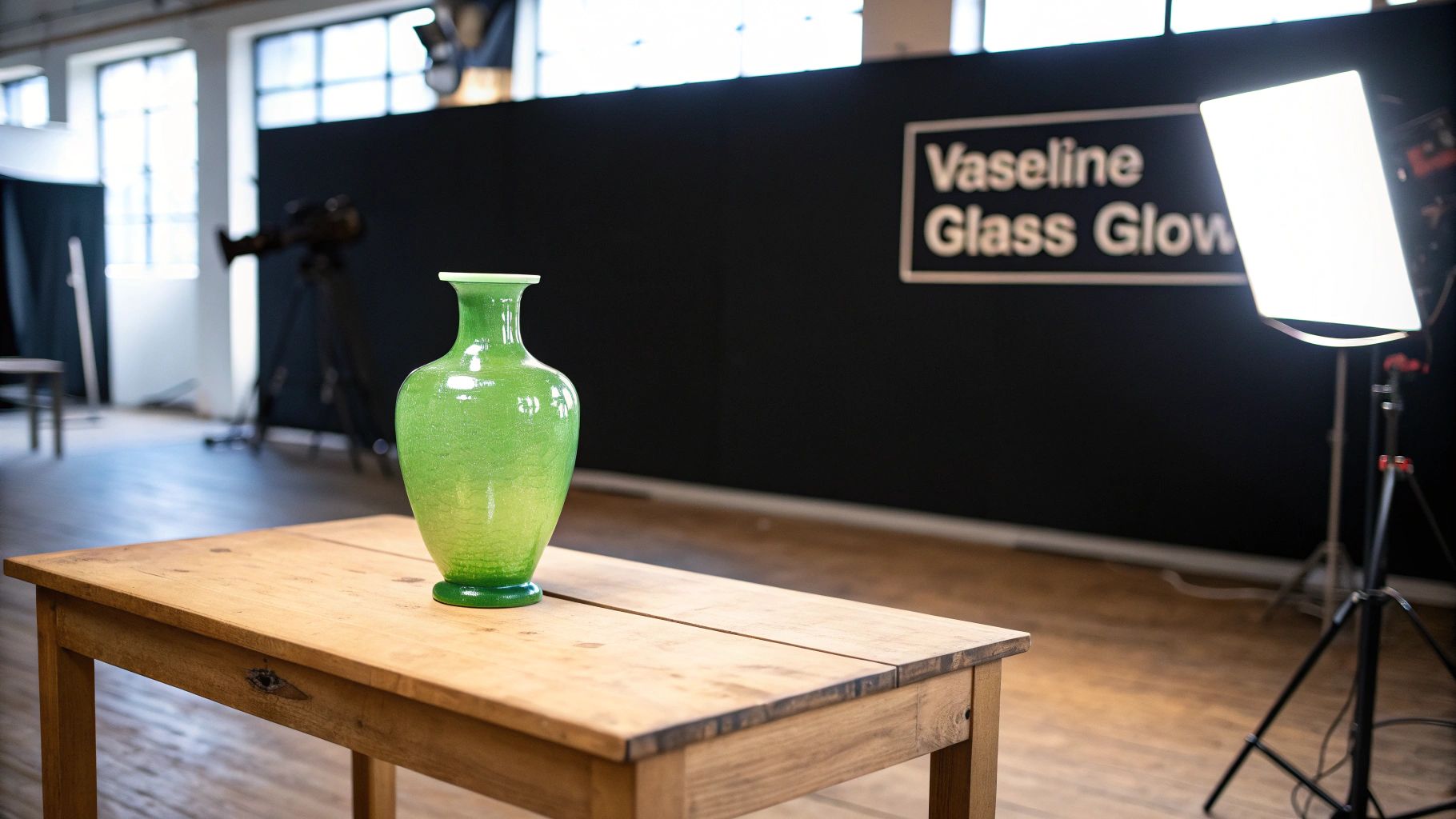
So, what exactly is this stuff? Vaseline glass is a unique type of glassware that gets its signature yellowish-green hue from a pinch of uranium dioxide mixed in during production. You can think of the uranium as the secret ingredient in a recipe—it doesn't just add color, it gives the finished product an almost otherworldly quality.
That hidden quality is its famous glow. Shine an ultraviolet (UV) or blacklight on a piece of Vaseline glass, and it erupts in a brilliant, supernatural green light. The science is pretty neat: the uranium atoms absorb the invisible UV light and then spit it back out as visible green light. It’s the same basic principle that makes a highlighter marker pop under a blacklight.
A Brief History of Its Glow
The story of Vaseline glass kicks off in Europe way back in the 1830s. It hit its stride during the Victorian era, becoming a popular material for everything from elegant tableware and decorative vases to everyday beads and buttons. Production was booming through the late 19th and early 20th centuries.
Then, things came to a screeching halt. In the 1940s, with the world plunged into World War II, the U.S. government took control of all uranium supplies for the war effort. This commercial production ban, which lasted all the way until 1958, created a hard stop in its history. For collectors today, this makes any pre-war piece instantly more interesting and often more valuable.
Is Vaseline Glass Safe to Own
One of the first questions I always hear from new collectors is, "Is it safe?" After all, handling something with uranium in it sounds a bit risky. The short answer is yes, it's widely considered safe.
The amount of radioactivity in Vaseline glass is incredibly low. In most cases, it emits less radiation than you'd get from natural sources in your everyday environment. The uranium is also locked tight within the glass itself, so there's no risk from just handling or displaying it.
That said, it’s always smart to treat any antique with respect. Most experts suggest not using Vaseline glassware for your morning orange juice or dinner, mainly as a better-safe-than-sorry precaution. For collectors, the minimal risk is a tiny price to pay for the historical connection and stunning beauty of these glowing artifacts. If you're just starting out, our guide to antique collecting for beginners has tons of other great tips.
How to Confidently Identify Authentic Vaseline Glass
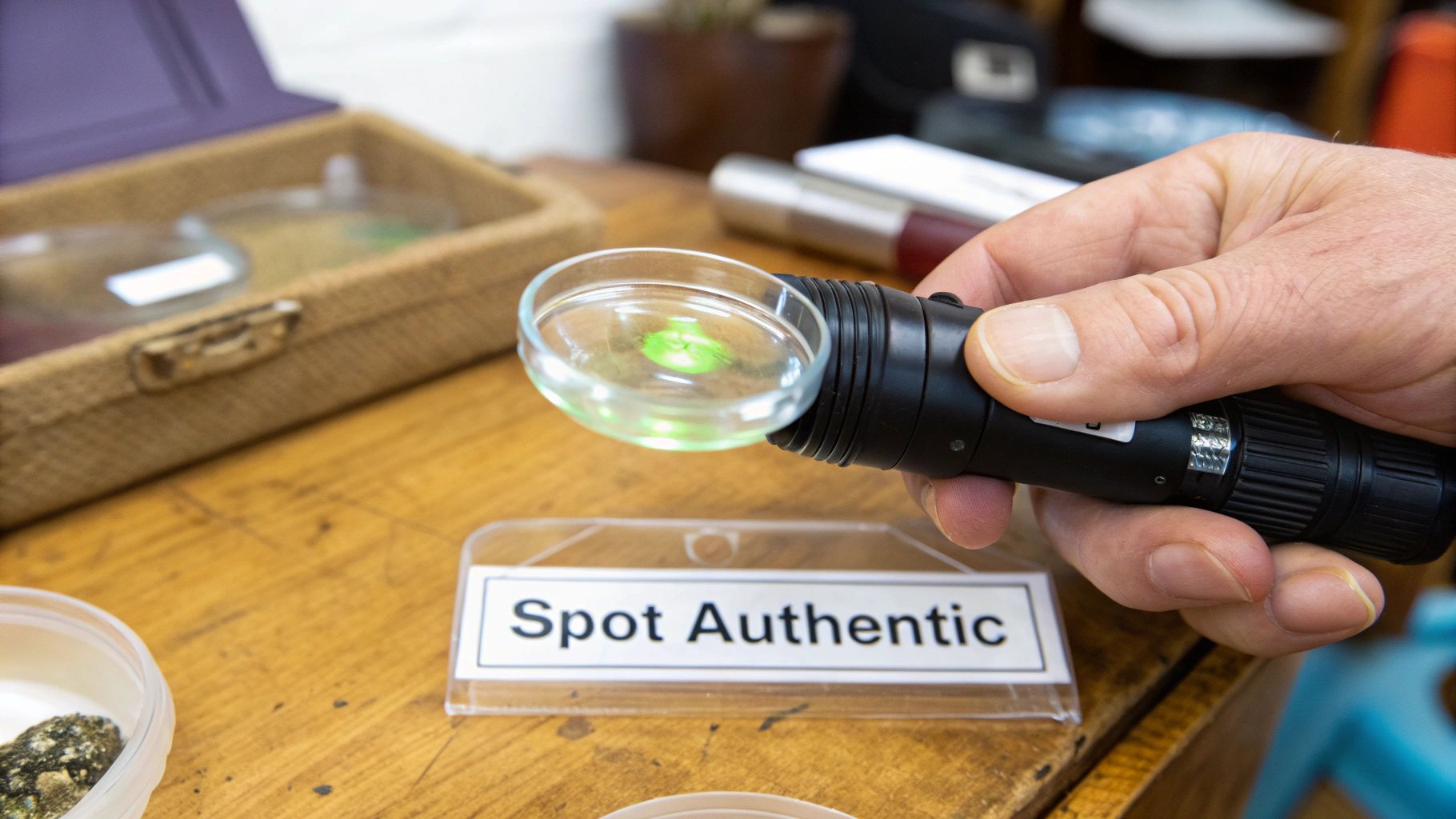
Jumping into the world of Vaseline glass feels like a real-life treasure hunt. To succeed, you absolutely need one crucial tool in your kit: an ultraviolet (UV) blacklight. Without it, you’re just guessing.
The secret ingredient in authentic Vaseline glass is uranium dioxide, which makes the glass fluoresce with a signature, almost otherworldly glow under UV light.
Your first step is to get the right light. A simple, portable UV blacklight is all you need. You'll want a longwave UV-A light, ideally in the 320 to 400 nanometer range. They’re easy to find online and affordable enough to keep in your bag for trips to the flea market or antique store.
Now for the fun part. Find a dim corner and shine your UV light on the piece you're curious about. If it’s the real deal, the reaction is impossible to miss—an intensely bright, almost electric green glow. It’s not a faint shimmer; it’s a vibrant, unmistakable fluorescence that seems to pour out from within the glass itself.
Distinguishing the Glow from Lookalikes
That brilliant green glow is your best clue, but it's important to know that other types of old glass can fluoresce, too. This is probably the most common pitfall for new collectors, and mistaking a lookalike for the real thing can be a costly error. Learning to spot the subtle differences will save you a lot of headaches.
Manganese glass is the most common imposter. Glassmakers used manganese to remove color from glass, but as a side effect, it can glow a little under a blacklight. The key difference is that the glow from manganese is a much duller, weaker green—sometimes it even looks a bit yellow or peachy.
Key Takeaway: The glow of true Vaseline glass is vivid, sharp, and unmistakably green. The glow from manganese, on the other hand, is significantly less intense. Think of the difference between a bright neon sign and a dim nightlight.
Glassmakers also used cadmium and selenium to create fiery red, orange, and yellow glass. These pieces will often glow under a blacklight, but they'll glow in shades that match their daylight colors—red, orange, or yellow—making them easy to distinguish from the electric green of uranium. Understanding these nuances is a huge part of the collecting game, and you can learn more about the broader subject of identifying antique glassware in our detailed guide.
To help you quickly tell these glowing glasses apart on the fly, here’s a quick comparison.
Glow Comparison Chart for Vaseline and Other Glass
Use this table to quickly distinguish the unique glow of Vaseline glass from other fluorescent glassware you might find.
| Glass Type | Glow Color Under UV Light | Common Characteristics |
|---|---|---|
| Vaseline (Uranium) Glass | Intense, electric green | Translucent yellow-green color in daylight. The glow is brilliant and unmistakable. |
| Manganese Glass | Dull green to yellowish-green | Often used to decolorize clear glass; the glow is much weaker than uranium glass. |
| Cadmium Glass | Bright yellow, orange, or red | Used for vibrant red and orange glassware. The glow matches its daylight color. |
| Lead Crystal | Soft, icy blue or white | High lead content causes a subtle, moon-like shimmer rather than a vibrant color. |
This little chart can be a lifesaver when you're out in the field and need a quick reference.
Looking Beyond the Blacklight Test
While the blacklight test is the ultimate confirmation, other physical clues can help back up your find and give you a more complete picture of what you're holding.
First, always check the color in normal daylight. True Vaseline glass has a very distinct translucent, yellowish-green color, which is what earned it the name—it looks a bit like a jar of petroleum jelly. If a piece is opaque or a different shade of green, it might be a related type like custard glass, but classic Vaseline glass has that signature yellow-green tint.
Next, look for tell-tale signs of its age and how it was made. Keep an eye out for these details:
- Patterns: Many authentic pieces come from popular design eras like the Art Deco period (1920s-1940s). Look for geometric shapes, hobnail patterns, or intricate floral designs that were common at the time.
- Maker's Marks: Flip the piece over and check the bottom for any logos or marks. Companies like Fenton, Boyd, Cambridge, and Northwood are well-known and highly collectible. A clear maker's mark can add significant value.
- Craftsmanship: Older, hand-finished pieces often have charming imperfections. You might see tiny air bubbles trapped inside the glass, a rough pontil mark on the base where it was broken off the rod, or slight variations in thickness. These are all good signs of age and authenticity.
By combining a definitive blacklight test with these hands-on observations, you'll be able to spot authentic Vaseline glass with confidence and start to really understand what makes each piece unique and valuable.
The Key Factors That Determine Vaseline Glass Value
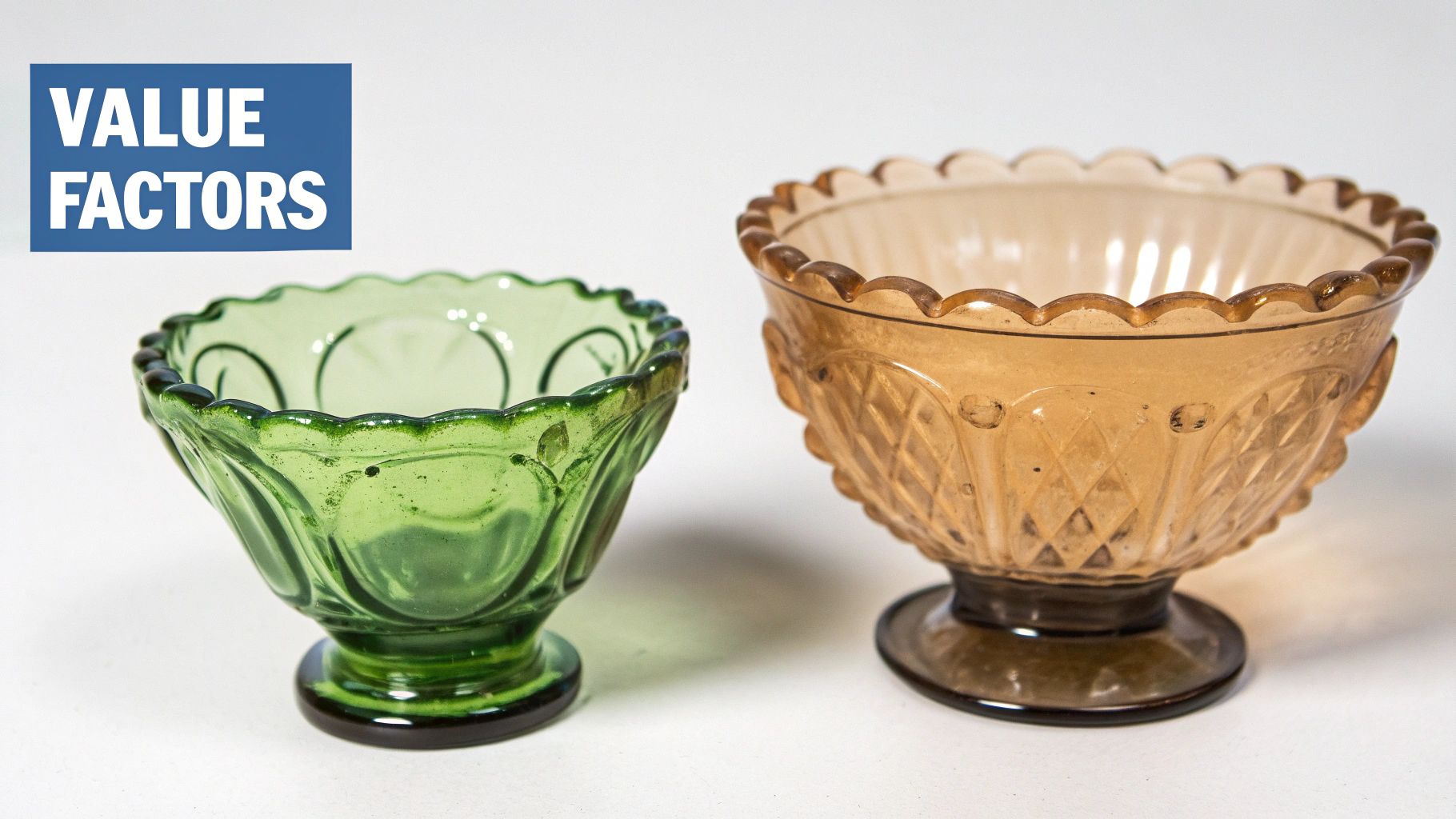
So, you've found a piece of glass that glows. That's the first step, but what really makes one piece worth a few dollars and another worth a few thousand? It's never just one thing. Think of it like a detective building a case; you have to look at several clues together—the age, who made it, its condition, and how many are still around.
The iconic green glow confirms you're holding genuine uranium glass, but that’s just the ticket to the show. The real story of its value is in the details. Let's dig into what those details are and what you should be looking for.
Age and Rarity: The Cornerstones of Value
Hands down, the biggest drivers of value are age and rarity. The two almost always go hand-in-hand. The older a piece is, the less likely it is to have survived the decades in one piece, making it a rare find that serious collectors will compete for.
Pieces from the Victorian era (1837-1901) and the Art Deco period (1920s-1940s) are the heavy hitters. Production came to a screeching halt during World War II when the government snapped up all available uranium for the war effort. This created a natural dividing line, making any pre-war glass from that golden age of production especially collectible.
Expert Insight: Rarity isn't just about how old something is. It can also be about a specific, hard-to-find pattern or a shape that was part of a limited run. A common saucer might be easy to find, but a complete punch bowl set in that very same pattern? That could be incredibly rare and command a price hundreds of times higher.
While glassmakers started using uranium again after 1958, they made a lot of it. The sheer volume means that most common post-war pieces aren't especially valuable. In fact, between 1958 and 1978, an estimated 4,160,000 decorative uranium glass pieces were made in the U.S. alone. Because of this, many common items sell for under $20. It really highlights how value comes from rarity and collector demand, not just age. You can learn more about uranium glass production history to get a feel for these market dynamics.
The Maker’s Mark: A Signature of Quality
Just like a signature on a painting, a maker's mark can boost a piece's value significantly. The big-name glass companies built their reputations on incredible quality, innovative designs, and top-tier craftsmanship, and collectors pay for that pedigree.
Keep an eye out for marks from these legendary manufacturers:
- Fenton Art Glass Company: Famous for their classic hobnail patterns and beautiful opalescent trim.
- Northwood Glass Company: Known for intricate patterns and stunning carnival glass finishes.
- Cambridge Glass Company: Celebrated for its elegant and refined tableware.
- Portieux Vallerysthal (PV): A French glassmaker known for unique opaline glass and distinctive dolphin candlesticks.
A crisp, identifiable mark turns a piece from "old glowing glass" into a documented artifact from a respected workshop. That's a story collectors are willing to pay a premium for.
Condition and Complexity: The Physical Appeal
When it comes to value, condition is everything. You could have the rarest piece in the world, but its price will plummet if it's damaged. Collectors want items in pristine, or very close to pristine, condition.
Always give a piece a thorough inspection for:
- Chips and cracks: Even tiny nicks on a rim can slash the value.
- Scratches: Heavy wear from a lifetime of use makes a piece less desirable.
- "Sick" glass: This is a cloudy or hazy film that's usually irreversible.
Beyond just being in good shape, the complexity and size of the piece matter immensely. A large, ornate epergne or an intricately etched punch bowl took far more skill to create than a simple saucer. These "masterpieces" are more valuable because they represent the very best of the glassmaker's art. A flawless Fenton hobnail epergne can be worth thousands, while a single chipped saucer in the same pattern might struggle to fetch ten dollars.
Color and Uranium Content: The Final Details
While that classic yellow-green is what Vaseline glass is known for, there are color variations that can affect the price. Some pieces are a purer yellow (often called "canary"), while others are a brighter, more distinct green. Opaque versions, like custard glass, also contain uranium and have their own dedicated fan base.
Finally, while the glow is what gets everyone excited, the intensity of that glow doesn't really drive the price. Uranium content could vary from less than 1% to over 25% in some very early pieces, resulting in anything from a soft glow to a "screaming" green light. A bright glow is definitely thrilling to see, but a piece's true worth is ultimately decided by its age, rarity, maker, and condition—not how loudly it fluoresces under a blacklight.
So, What's Vaseline Glass Actually Worth?
Figuring out the value of Vaseline glass can feel a bit like guesswork at first, but there's a definite logic to the market. Once you understand the different tiers, you can get a solid idea of what your glowing treasures might fetch. This is a great way for new collectors to set realistic expectations and for experienced hunters to size up a potential find.
The market for this glowing glassware has seen its share of ups and downs, often tied to historical trends and what collectors are chasing. Production really hit its stride between the 1880s and the 1920s, with famous makers like Fenton and Cambridge churning out incredible pieces. Then, the US government banned uranium for civilian use during the 1940s to support the war effort. That created a major gap in production, making those pre-war pieces much more desirable today.
You'll see a huge spread in prices. For instance, a recent auction saw a lot of 52 common pieces go for $1,200, while a single 14-karat gold uranium glass ring sold for just $83. It's a perfect example of how rarity and form, not just the glow, are what really drive the value. You can get more great insights on what makes collectors tick over at CollectorsWeekly.com.
Common Finds: Under $50
This is where just about everyone starts their collection, and for good reason! The $10 to $50 range is full of easy-to-find, mass-produced items that are perfect for getting your feet wet. These are the pieces you'll stumble upon at flea markets, antique shops, and online listings all the time.
Keep an eye out for things like:
- Small saucers and plates: Often, these are the lone survivors from larger dinnerware sets.
- Single cups or sherbet glasses: Tons of these were made, especially during the Depression.
- Reamers or juicers: A classic piece of kitchenalia and a staple for any new collector.
- Simple ashtrays or little bowls: Everyday, functional items that were once in every home.
Because there are so many of these pieces around, the price stays friendly. They’re the perfect training ground for honing your identification skills without breaking the bank.
Mid-Range Collectibles: $50 to $250
Once you graduate from the common stuff, you'll enter the exciting world of mid-range collectibles. Pieces in the $50 to $250 bracket are more special and usually have that "wow" factor that makes them stand out. They’re not as common as the entry-level finds and typically have a few key features that boost their value.
This category is home to items like:
- Decorative vases: Look for interesting shapes, patterns, or pieces from known makers like Fenton or Boyd.
- Complete serving sets: A matching creamer and sugar bowl, for example, is always a great find.
- Ornate candy or butter dishes: These often feature beautiful, complex patterns like hobnail or diamond point.
- Small lamps or candlesticks: These are fantastic because they're designed to show off that incredible glow.
In this range, a maker's mark or a well-known pattern can make a huge difference in price. These are the pieces that often become the heart of a collection, mixing real beauty with a tangible piece of history. For a deeper dive into valuing antiques, our price guide to antique items is a great resource.
High-End Treasures: Over $250
Welcome to the big leagues. This is where the true artistry and rarity of Vaseline glass shines brightest. When you see pieces fetching $250 or more, you're looking at items defined by incredible rarity, top-tier craftsmanship, and genuine historical importance. These aren't just sitting on a dusty shelf somewhere; they're the showstoppers that serious collectors are actively hunting.
What makes a piece "high-end?" It’s really a perfect storm of rarity, age, condition, and the reputation of the maker. A flawless, large, pre-war piece from a famous French or American glasshouse is what every collector dreams of finding.
Examples of these top-tier treasures include:
- Large, elaborate epergnes: These stunning, multi-tiered centerpieces were fragile and complex, so very few have survived intact.
- Complete punch bowl sets: Finding a full set with the bowl, base, and every single one of its original cups is the collecting equivalent of hitting the lottery.
- Rare patterns or colors: Anything from a limited production run or in an unusual shade like a vibrant canary yellow will command top dollar.
- Documented historical pieces: Glass with a paper trail—provenance that connects it to a specific person, place, or moment in time.
These amazing items are the pinnacle of the market. A single piece can be worth thousands, all because of its unique story and the fact that there just aren't many left.
A Smart Collector's Guide to Buying and Selling
https://www.youtube.com/embed/Hbi7843kFWo
Getting into the Vaseline glass market is part treasure hunt, part strategic game. Whether you’re just starting your collection or ready to sell a piece you've cherished, knowing the ropes is everything. The right approach can mean the difference between snagging a hidden gem for a steal and overpaying, or making a quick sale versus having a piece sit on a shelf for months.
For buyers, the thrill of the chase is half the fun. You can find these glowing treasures in all sorts of places, but each one has its own quirks.
Where to Hunt for Glowing Treasures
Your search for the real deal can lead you anywhere from a dusty corner in a local antique mall to a worldwide online auction. It pays to know the pros and cons of each spot.
- Local Antique Shops & Flea Markets: These are my favorite for a reason. You can actually pick up the pieces, feel their weight, and look for those all-important maker's marks. Best of all, you can bring your own blacklight and see that signature glow for yourself right then and there.
- Estate Sales: This is where you can hit the jackpot. Estate sales can be a goldmine for stumbling upon entire collections or incredibly rare items that haven't seen the light of day in decades. My advice? Get there early.
- Online Marketplaces (eBay, Etsy): The selection online is massive, with sellers from all over the world. The catch is that you can't inspect the item in person, so you have to be a bit of a detective.
When you're shopping online, the photos and description are your best friends. I have one simple rule: never buy a piece sold as "Vaseline" or "uranium" glass unless there's a clear photo of it glowing under a blacklight. If the seller hasn't included one, just ask. A serious seller will be happy to provide it.
Pro Buyer Tip: Read the seller’s description like a hawk. Look for details on the condition—chips, cracks, or scratches—and check the measurements and any mention of maker's marks. A good seller is upfront about flaws, which is exactly what you need to know to determine a piece's real value.
How to Sell Your Vaseline Glass for Maximum Value
When you're ready to sell, remember this: presentation is everything. Your job is to show a potential buyer not just a piece of glass, but its history and unique beauty. That's what convinces someone to pay what it's worth.
First things first: your photos have to be top-notch. Take clear, bright pictures from every angle, preferably against a simple, neutral background. And this is non-negotiable—you must include at least one killer photo of the piece glowing brightly under a UV blacklight. This is your proof of authenticity and the main reason collectors are interested in the first place.
Next, you need to write a description that tells a story. Don't just list it as a "green glass bowl."
- Identify the Maker: If you can find a maker's mark (like the one for Fenton or Boyd), make sure to mention it. It adds a ton of value.
- Describe the Pattern: If you know the pattern name, like "Hobnail" or "Diamond Point," include it. Collectors often search for these specific terms.
- Be Brutally Honest About Condition: Point out every single imperfection, no matter how tiny. Use collector's terms like "flea bite" for minuscule chips or "utensil marks" for faint scratches. Honesty builds trust and saves you the headache of a return.
- Provide Dimensions: Give exact measurements. No one wants to be surprised when their "large" platter turns out to be the size of a saucer.
By putting in the effort to create a detailed and honest listing, you'll attract serious collectors who are ready to pay a fair price. Many of these same principles hold true for other collectibles, too—for instance, you'll find similar best practices when collecting antique jewelry.
Spotting Reproductions and Fakes
Like any valuable collectible, Vaseline glass has its share of fakes and reproductions. Modern knockoffs often try to copy the classic patterns but usually miss the mark in a few ways. They might have a weaker, less intense glow, or they just lack the subtle details and fine craftsmanship—like tiny air bubbles or pontil marks—that you see in genuine antique glass. Always take a close look at the quality of the glass and the intensity of its glow to make sure you're getting the real thing.
Your Top Questions About Vaseline Glass, Answered
As you get into collecting, a few questions always seem to pop up. Whether you're just starting out or have been at it for years, it's good to have a handle on the basics. This is your quick guide to the most common things collectors wonder about.
Is This Stuff Actually Safe to Have in My House?
This is hands-down the number one question people ask, and the short answer is yes, it's considered safe for collecting and display. The amount of uranium is tiny, and the radiation it gives off is incredibly low—often less than what you’d get from a granite countertop or even just the natural background radiation in the environment.
The key thing to remember is that the uranium is vitrified, meaning it's fused and trapped inside the glass itself. It can't flake off or be absorbed through your skin. So, for handling, displaying, and enjoying your collection, there's no real risk. That said, most collectors play it safe and don't use these pieces for food or drinks.
Does All Glass That Glows Green Have Uranium?
Nope! This is a common rookie mistake. While that brilliant, almost electric green glow is the classic sign of uranium, other minerals can make glass fluoresce under a blacklight, too.
- Manganese: Often used to remove the greenish tint from old glass, manganese can glow a much weaker, duller shade of green or yellowish-green. It just doesn't have that "wow" factor.
- Cadmium & Selenium: These elements were the secret to making vibrant red, orange, and yellow glass. Under a UV light, they tend to glow in similar fiery colors, making them pretty easy to tell apart from true uranium glass.
Learning to spot the unique, intense glow of authentic Vaseline glass is a skill you'll develop over time. It's the difference between a real find and a clever lookalike.
A Pro Tip: Let the glow be your guide. Real uranium glass has a powerful fluorescence that seems to shine from deep within the piece. If the glow is faint, spotty, or the wrong color, it's time to be skeptical.
Where Should I Look for My First Piece?
The thrill of the hunt is half the fun! The good news is, you can start looking for Vaseline glass almost anywhere. Your local antique shop, a weekend flea market, or an estate sale are all fantastic places to begin.
You’ll often find common, more affordable items like small saucers, sherbet cups, or juicers. These are perfect for getting a feel for identification without breaking the bank. Of course, you can also browse online marketplaces like eBay and Etsy. Just be smart about it: only buy from sellers who show clear photos, and make sure one of those photos is of the piece glowing brightly under a UV light.
How Do I Clean and Care for My Collection?
You’ll want to keep your glowing treasures looking their best for years to come. The best approach is to treat them like any other piece of delicate, antique glassware—gently.
Always wash by hand with a soft cloth, a little bit of mild soap, and warm water. Drastic temperature changes can cause the glass to crack, which is known as thermal shock. For that reason, you should never, ever put Vaseline glass in the dishwasher or microwave. When you're displaying your pieces, try to keep them out of constant, direct sunlight, as it can cause very slight color changes over the decades.
Ready to uncover the story behind your own glowing finds? The Curio app puts an antique expert in your pocket. Just snap a photo to instantly identify, value, and learn the history of your treasures. Download Curio today and let your collection tell its story.