That old hammer sitting in your grandfather's toolbox? It’s so much more than just a tool. It's a direct link to the hands that built things long before we were around.
A vintage claw hammer holds a special appeal for collectors and craftspeople. There's something about its satisfying weight and the stories you can almost feel etched into its worn hickory handle. This guide is for anyone who's ever looked at one and wondered about its past, whether you're a curious homeowner or a reseller on the hunt for hidden gems.
More Than Just A Tool A Piece of History
When you pick up a vintage claw hammer, you're holding a real connection to an era of craftsmanship that’s becoming increasingly rare. These weren't like the mass-produced tools you find today; they were built to last for generations, often using superior steel and dense, old-growth hickory for the handles.
This is about more than just collecting. It’s about appreciating a legacy of genuine durability and skill. Every ding, scratch, and stain on the handle tells a story of a project finished or a problem solved. To truly understand these tools, you have to appreciate the context they came from. If you're new to this idea, exploring the concept of historical significance can be a great starting point: https://www.curio.app/blog/what-is-historical-significance
The Enduring Legacy of the Hammer
The hammer's design has an incredibly long history, stretching back an astounding 3.3 million years to primitive stone-age tools, making it the oldest tool with archaeological proof. The iconic claw hammer form we all recognize today was largely perfected by the 16th century—a testament to a design that has worked exceptionally well for over 500 years.
A vintage tool doesn’t just look like a hammer; it is a hammer, built in a time when manufacturers intended their tools to work and endure for a lifetime.
To really get a feel for what makes your hammer special, it helps to explore the wider world of hand tools. This broader context helps you understand what makes your specific find unique. Appreciating these old tools connects us to a time when quality and longevity were everything—a sharp contrast to our modern, often disposable, world.
Reading the Clues Your Hammer Reveals
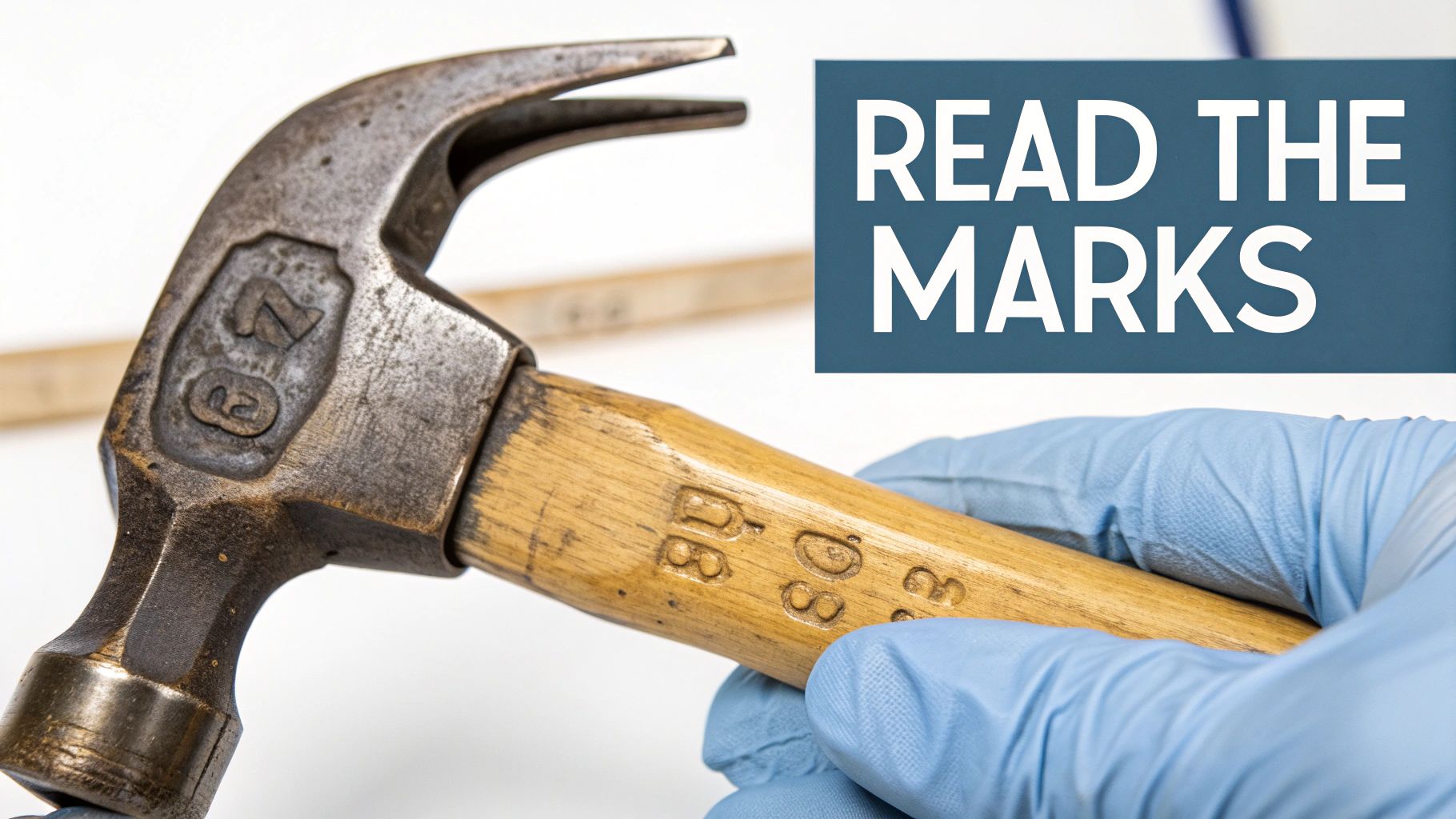
Every old hammer has a story to tell, and it's usually stamped right into the steel. Your job is to play detective and learn to read the small but crucial clues left by the manufacturer. These markings are your best guide to figuring out where a hammer came from, how old it is, and what it was made for.
The first thing to look for is the maker's mark or brand logo. You'll typically find this on the cheek—the flat side of the hammer head. Squint a little, and you might see familiar names like Stanley, Plumb, Estwing, or Vaughan. Years of use and a bit of rust can make these hard to see, so grab a magnifying glass and get a good light source.
Even if you can only make out a partial logo or a unique symbol, don't give up. That's often enough to get you started. This kind of detailed observation is a fundamental skill, much like learning how to identify antiques in general; the core principles are the same.
Common Vintage Hammer Markings and What They Mean
To help you get started, here's a quick reference guide for the kinds of markings you'll find on a vintage claw hammer and what they can tell you.
| Marking or Feature | Common Location | What It Tells You |
|---|---|---|
| Maker's Mark/Logo | Cheek (side) of the head | Identifies the manufacturer (e.g., Stanley, Plumb, Estwing). Key to dating and valuation. |
| Patent Number | Cheek or neck, often in small print | A direct link to a specific date. You can look these up in patent databases online. |
| Model Number | Cheek or neck | Helps identify the specific type, weight, and intended use of the hammer. |
| Weight Stamp | Cheek or neck (e.g., "16 oz") | Indicates the weight of the head, a clue to its purpose (framing vs. finish work). |
| User's Initials | Stamped on the head or handle | A personal touch from a previous owner; not original but part of its history. |
| "Made in USA" | Cheek or neck | Helps place the hammer in a specific manufacturing era, often post-1914. |
These are the most common clues you'll encounter, but every hammer is a little different. Keep your eyes peeled for anything that looks out of the ordinary.
Decoding Head and Claw Designs
Beyond the brand name, the actual shape of the hammer head can give you a ton of information. The design isn't arbitrary; every curve and angle was engineered for a specific job, and those designs evolved over time.
Take the striking face, for example. Is it a bell-faced hammer with a slightly rounded surface? That design was a favorite among finish carpenters because it could drive a nail flush without marring the wood. A totally flat-faced hammer, on the other hand, was more of an all-purpose tool for rougher framing or general work.
The claw is just as revealing.
- Rip Claws: These are much straighter and were built for prying boards apart and light demolition.
- Curved Claws: The classic, deeply curved claw gives you better leverage for pulling out stubborn nails.
The specific geometry of the claw, the sharpness of the "V" notch, and even the overall balance can often point to a specific maker or time period, even if you can't find a clear brand stamp.
Hunting for Patent Numbers and Model Codes
If you really want to dig deep, look for patent numbers or model codes. These are usually stamped in smaller text on the cheek or the neck, right below the head. A patent number is a goldmine because you can search it online and often find the exact year the patent was filed.
Some brands, like Vaughan, are famous for their model numbers. Back in 1888, the company introduced iconic models like the #9 rip claw (10 oz) and the #99 (16 oz), which are still prized by collectors. They even made a heavier 20 oz #999 for framing. Finding one of these specific models is a great sign you've got something special.
Placing Your Hammer in Its Historical Era
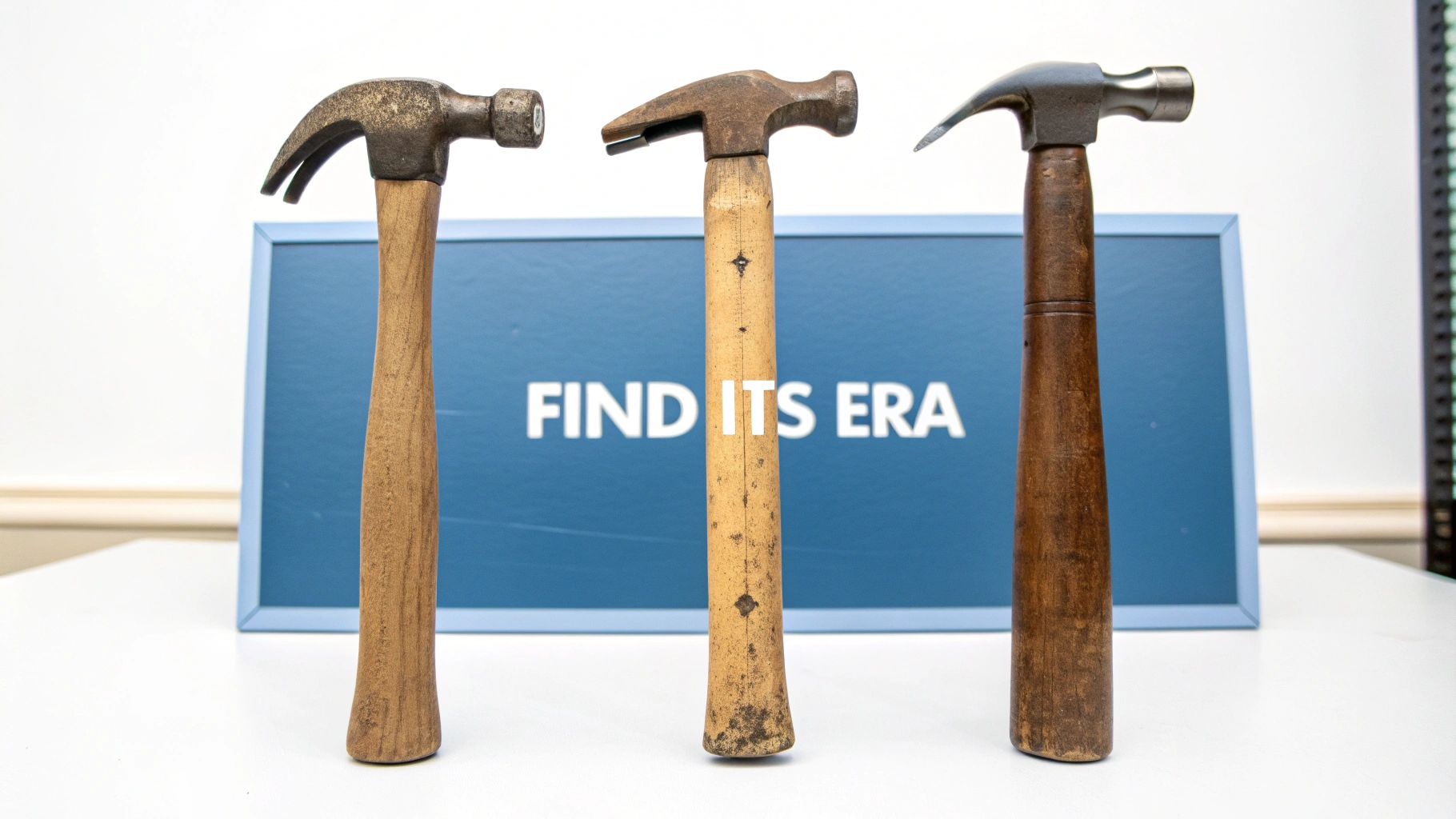
Once you've deciphered any maker's marks, the real fun begins: figuring out when your vintage claw hammer was made. The design, materials, and overall finish are like a timeline etched into the tool itself. Different eras left their own distinct fingerprints.
Hammers from the pre-1900s, for example, often have a certain rustic charm. You can almost feel the blacksmith's hand in them. They were typically hand-forged, which means you'll see slight imperfections, a less uniform shape, and maybe even some hammer marks left behind from their creation.
As we move into the early 20th century, you can see the shift toward mass production. Things got more standardized, finishes became smoother, and brands started locking in their signature designs. This evolution from one-off craftsmanship to factory consistency is a huge clue. If you're trying to figure out if your tool is from the 1880s or the 1950s, learning what is the difference between vintage and antique can really help narrow things down.
Assessing Condition: Patina or Problem?
A hammer’s condition is just as important as its age—sometimes more. The key is learning to tell the difference between a beautiful, desirable patina and the kind of destructive rust that's actively damaging the tool.
Think of patina as the story of the tool written on its surface. It’s that deep, warm, darkened color that wood and steel get after decades of honest work and gentle aging. Collectors love it. Destructive rust, however, is your enemy. It's flaky, orange, and often creates pits that weaken the metal.
Patina is history preserved; deep rust is history being erased. A collector will gladly pay a premium for a hammer with a rich, dark patina but will likely walk away from one that's badly corroded.
To get a true sense of the tool's health, zoom in on these key areas:
- The Striking Face: Look for "mushrooming"—where the edges of the face are splayed out and deformed from off-center hits. A little bit is normal for a working tool, but heavy mushrooming is a safety hazard.
- The Claw: Are the tips of the "V" notch still sharp and intact? Check closely for any chips or cracks, which can happen when prying stubborn nails.
- The Handle: Pay close attention to the area where the wood enters the head (the "eye"). This is where fine cracks often start. A solid, original handle is a major plus.
The Handle Tells Its Own Story
The handle can tell you so much about a hammer's life. An original handle, worn smooth from use but still seated tightly in the head with its original wedges, is the holy grail for collectors. It’s a sign that the tool has survived all these years just as it was made.
Picture this: you're at a flea market and see two almost identical hammers from the same maker. One has its original hickory handle, darkened with age but still solid as a rock. The other has a wobbly handle that's clearly a cheap, modern replacement. That first hammer is instantly more valuable and desirable.
A loose or replaced handle isn't a deal-breaker if you're just looking for a user tool, but for a collector, it’s a significant hit to its value. The originality of a vintage claw hammer is a huge part of its charm and worth.
Determining the Real-World Value of Your Find
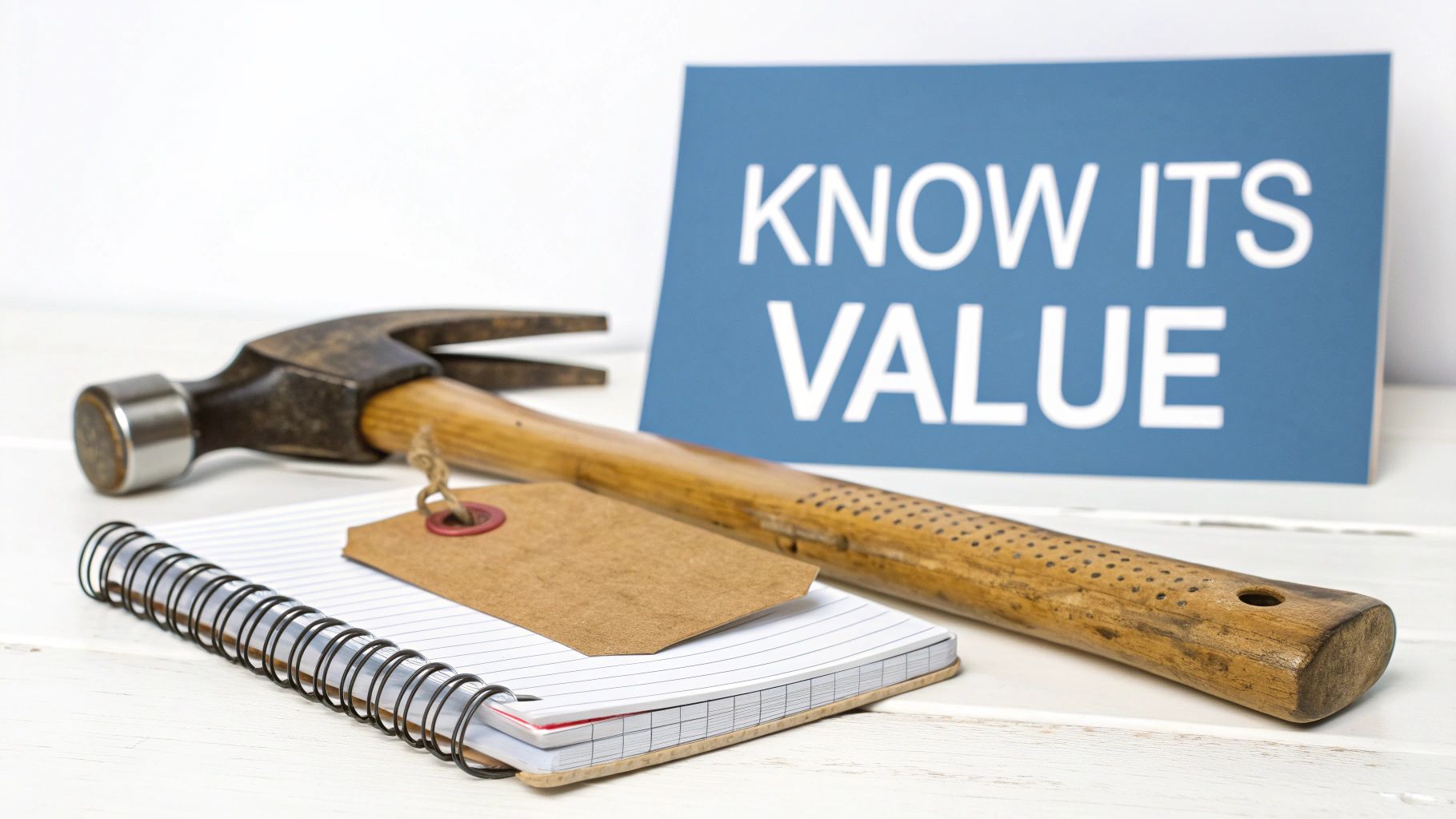
Alright, you’ve figured out what you have and given it a good look-over. So, what’s the bottom line? What is this old hammer actually worth? The truth is, its value is a mix of its story, who made it, and how well it has survived the years.
Not every old hammer is a hidden treasure. Take a common Stanley hammer from the 1970s. Millions were made, and you can find them in just about any garage or flea market. While it's a solid, reliable tool, its value is more in its usefulness than its rarity, usually fetching around $5 to $15.
But then you have the other end of the spectrum. A blacksmith-forged hammer from the 1880s is a completely different animal. It’s a piece of history, with unique markings and a story to tell. For a find like that, especially in good original shape, a serious collector might happily pay $100 or more. It's all about scarcity and craftsmanship.
What Drives a Hammer's Value?
To get a real sense of what your hammer is worth, you need to know what buyers and collectors are looking for. It's not just about age; it's about the bigger picture.
Here are the key things that move the needle on price:
- The Name on the Head: Some brands just have that pull. Think early Plumb, a Cheney with its cool nail-holding feature, or a Stanley with the iconic "Sweetheart" logo. These names get collectors excited.
- How Many Are Out There?: Was this a special model or a limited run? A hammer from a company that was only in business for a few years is going to be a lot harder to find—and therefore more valuable—than one from a massive producer.
- Originality and Condition: We’ve touched on this, but it’s crucial. A hammer with its original, tight-fitting hickory handle is always worth more than one with a cheap modern replacement. Clean markings and minimal damage to the face and claws are huge pluses.
A hammer's value is a balancing act. A rare brand in terrible condition might be worth less than a more common brand in pristine, original shape. Context is everything.
Vintage Claw Hammer Value Tiers
To make this a bit easier, I like to think of the market in a few different tiers. This simple framework can help you quickly gauge whether you’ve found a solid user tool or a shelf-worthy collector's piece.
Here’s a quick-glance table to help you place your hammer:
| Feature | Common/Low Value ($5-$20) | Collectible/Mid Value ($25-$75) | Rare/High Value ($100+) |
|---|---|---|---|
| Era | 1960s - 1980s mass-produced | 1920s - 1950s well-known brands | Pre-1900s or unique patented designs |
| Maker | Common brands (late Stanley, Craftsman) | Desirable brands (Plumb, early Stanley) | Obscure makers, blacksmith-forged |
| Handle | Replaced, cracked, or loose | Original, good condition with some wear | Excellent original handle with wedges |
| Condition | Heavy rust, chipped claw, mushroomed face | Light patina, clear markings, minimal wear | Pristine, crisp markings, no damage |
Remember, these are just guidelines. Market prices can fluctuate, but this should give you a solid starting point for figuring out what your vintage claw hammer is truly worth.
How to Clean and Preserve Your Vintage Hammer
There’s nothing quite like bringing a dusty, rust-covered vintage claw hammer back to life. It's one of the most satisfying parts of being a collector. But before you get carried away with a power tool, just stop. Taking a sandblaster or a wire wheel to an old hammer can completely erase its history, destroying the very character that makes it special.
The real goal here is preservation, not a factory-new shine. A gentle touch is always the best approach. It protects those valuable maker’s marks, keeps the original patina intact, and ensures the tool remains a tangible piece of the past. You can get fantastic results with simple stuff you probably already have at home.
Safely Removing Rust from the Hammer Head
Your main opponent is that flaky, active rust. The best way to deal with it without harming the steel underneath is a simple white vinegar bath.
Grab a container just big enough to fit the hammer head, pop it in, and pour in enough white vinegar to cover it completely.
Let it soak for about 12 to 24 hours, depending on how bad the rust is. You'll see the vinegar doing its thing as the rust slowly starts to dissolve. After its bath, pull the head out and use a brass-bristle brush or some fine #0000 steel wool to gently scrub away all that loosened rust.
This part is key: brass is softer than steel, so it won’t scratch the surface or rub off the markings you worked so hard to find. Give it a final wipe-down with a clean cloth, and you'll see the clean metal underneath.
The point isn't to make the head look brand new. You want to get rid of the damaging, flaky corrosion but leave the dark, stable patina that tells the tool's story. That aged finish is exactly what collectors look for.
Conditioning the Original Hickory Handle
If you've got an original hickory handle, you've got a real treasure. Those old-growth wood handles have a feel and density that you just can't find in modern replacements. They can get pretty dry over the decades, but bringing them back to life is surprisingly easy.
First, gently clean the handle with a cloth dampened with mineral spirits. This will cut through years of built-up grime and grease. Be sure to avoid soap and water, which can raise the wood grain and lead to cracking.
Once the handle is clean and totally dry, it's time to rehydrate the wood. The classic—and still the best—treatment is boiled linseed oil (BLO).
- Apply a generous coat: Use a clean rag to rub a liberal amount of BLO all over the handle.
- Let it soak in: Give the oil about 15-20 minutes to penetrate the wood fibers.
- Wipe off the excess: This is the most important step! Grab a fresh, clean cloth and vigorously wipe off all the extra oil until the handle feels dry to the touch.
Do this once a day for three days. You’ll build up a beautiful, protective finish that isn't greasy and really brings out the wood's natural patina, without making it look like it's been slathered in varnish.
After all that work, proper storage is everything. To make sure your vintage hammer stays in great condition, check out these proven tips for storing collectibles for advice on environment and handling. Your carefully preserved tool will be ready for display or even some light, careful use.
Got Questions About Old Hammers? We’ve Got Answers.
Diving into the world of vintage tools always sparks a few questions. You might be wondering if that handle is original, which brands are the real treasures, or whether you should actually swing that old hammer you just found. Let's clear up some of the most common questions that come up for collectors and woodworkers.
How Can I Tell If a Hammer Has Its Original Handle?
This is probably the number one question I get asked. Luckily, the hammer itself tells a story if you know how to read it.
First off, check the fit. An original hickory handle should be seated perfectly in the head—no gaps, no wiggle. These were fitted by skilled hands at the factory, and that craftsmanship holds up.
Next, flip it over and look at the top of the head where the handle comes through the eye. You're looking for the original wedges. The classic pattern is a central wooden wedge driven in line with the head, with two small metal wedges hammered in at an angle. A replacement job often looks a bit messier or uses a different setup.
Finally, just use your eyes. Does the wear on the handle match the wear on the head? If the steel looks like it’s seen a century of work but the wood looks brand new, you've probably got a replacement. An original handle will have that smooth, darkened patina from years of sweat and use, especially right where you grip it.
What Are the Most Collectible Vintage Claw Hammer Brands?
While any well-made old tool is a great find, certain names definitely make a collector's heart beat a little faster. Spotting one of these in a dusty box is a fantastic feeling.
Here are a few of the big names to keep an eye out for:
- Early Stanley: The "Sweetheart" logo (a heart with "SW" inside) is the one to find. They used this from about 1920 to 1935, and they're highly prized.
- Plumb: A true workhorse brand. Collectors love Plumb hammers for their incredible balance and rock-solid durability.
- Cheney: These are the cool ones. Famous for their patented nail-holding feature, which uses a little spring-loaded claw on the side, they are both unique and very collectible.
- Vaughan & Bushnell: A company with a long, respected history. You can't go wrong with their older models.
- Heller: Another top-tier American manufacturer whose older hammers are known for their exceptional quality.
Don't forget about the unmarked ones, either. A hand-forged hammer from a 19th-century blacksmith is a unique piece of history and highly valued for its one-of-a-kind craftsmanship.
Should I Restore My Hammer or Leave It As Is?
This really comes down to what you want to do with it. Are you preserving a piece of history, or are you putting a great tool back to work?
To preserve the maximum historical and monetary value of a vintage claw hammer, less is more. Your only job is to stop active rust. Leave that beautiful, dark patina alone. Taking a wire wheel or sander to it will erase its story and destroy its value.
Now, if you plan on using the hammer, a careful, safety-focused restoration is totally fine. That might mean re-hanging a loose head or carefully filing down a mushroomed face that could send chips flying. The golden rule is to be non-destructive. You can always clean it a bit more later, but you can never put back the metal you've ground away.
Can I Still Use a Vintage Claw Hammer?
You bet! In fact, many of these old hammers are far superior to modern ones. They were often forged from high-carbon steel and fitted with dense, old-growth hickory handles that you just can't find anymore.
Before you start your next project, just give it a quick safety check. Look for any cracks in the head or handle, make sure the head is on tight, and check that the striking face is smooth and free of chips. A well-maintained vintage hammer isn’t just a collectible—it’s an incredible tool that’s a true joy to use.
Uncovering the history and value of your old tools is easier than ever. Curio acts like an antique expert in your pocket, helping you identify and appraise your finds with just a photo. Download the app and let your antiques tell their story.