Sifting through racks at a thrift store or scrolling through online listings can feel like searching for a needle in a haystack. With countless garments from different decades, how do you spot the true treasures-the pieces with historical significance, superior craftsmanship, and lasting value? This guide is designed to be your field manual, transforming your hunt for vintage clothing from a game of chance into a strategic search. We'll equip you with the knowledge to identify the most sought-after vintage clothing brands to look for, turning overwhelming racks into a curated map of potential finds.
For many, the appeal of vintage goes beyond just unique style; it's a conscious choice to move away from disposable consumer culture. Shopping secondhand is one of the most effective fast fashion alternatives, allowing you to build a wardrobe with a story and a smaller environmental footprint. By learning to recognize quality brands, you not only acquire beautiful clothing but also participate in a more sustainable fashion cycle.
This comprehensive list will break down iconic brands, from well-known luxury houses to under-the-radar workwear labels. For each brand, you will learn:
- Key Identifiers: How to spot authentic pieces by examining tags, logos, and construction details from different eras.
- Signature Pieces: The most desirable and collectible items to keep an eye out for.
- Era Cues: Telltale signs that help you date a garment, from zipper types to fabric choices.
- Value & Resale Tips: A general understanding of what makes certain pieces more valuable for collectors and resellers.
Whether you're a seasoned collector, an online reseller looking to boost your inventory, or simply someone wanting to add timeless quality to your personal style, this guide will provide the specific, actionable insights you need. Let's get started.
1. Etsy
Etsy is less of a single store and more of a massive online marketplace, making it an essential first stop for anyone researching vintage clothing brands to look for. It brings together thousands of independent sellers, from casual hobbyists to professional vintage dealers, creating an unparalleled catalog of items spanning every conceivable era and style. This vast inventory makes it an incredible tool for discovery and price comparison.
What makes Etsy stand out is its sheer scale combined with powerful search tools. You can start with a broad search for something like "1970s prairie dress" and then use the platform's filters to narrow down the results by brand, size, price, and even seller location. This functionality is invaluable for understanding the market value of specific brands and identifying which labels consistently command higher prices.
How to Use Etsy Effectively
To get the most out of Etsy, treat it like a research library. Before hitting the thrift stores, spend time searching for brands you're curious about. Pay attention to how different sellers describe the items, the prices they set, and the quality of their pieces.
- Filter Smartly: Use the "Vintage" filter to automatically remove modern and handmade items. You can also filter by decade (e.g., 1960s, 1980s) to see which brands were prominent during specific periods.
- Message Sellers: Don't hesitate to contact sellers for more information. Ask for photos of the brand label, care tags, and any unique construction details. This is not only crucial for verification but also a great way to learn. Reputable sellers are often passionate experts happy to share what they know.
- Follow Favorite Shops: When you find a seller with a curated collection you love, follow their shop. This is an excellent way to see new, high-quality listings from trusted sources who have already done the hard work of sourcing and identifying great pieces.
Key Insight: Etsy's greatest strength is its ability to help you learn the market. By observing how experienced sellers price and present brands like Gunne Sax, Pendleton, or Levi's, you can build a mental database of what to look for "in the wild."
Pros and Cons
| Pros | Cons |
|---|---|
| Excellent for Price Discovery | Authenticity relies entirely on the seller's knowledge |
| Massive Inventory | Inconsistent keyword tagging can make searches tricky |
| Connect with Niche Experts | Quality and condition can vary dramatically |
| Powerful Search Filters | Shipping costs can add up from different sellers |
Ultimately, Etsy is a foundational resource. While you must vet each listing carefully, its collective knowledge base is unmatched. If you're just starting, you can learn more about how to identify key details from different eras by understanding how to date vintage clothing based on tags and construction.
Website: https://www.etsy.com/market/vintage_clothing
2. eBay
As one of the original online marketplaces, eBay remains a powerhouse for sourcing and researching vintage clothing brands to look for. Its massive, global inventory spans everything from high-end designer labels to obscure, unbranded pieces. Where eBay truly excels is in its historical data and flexible purchasing options, offering a real-time look into what brands are selling for and how sought-after they are.
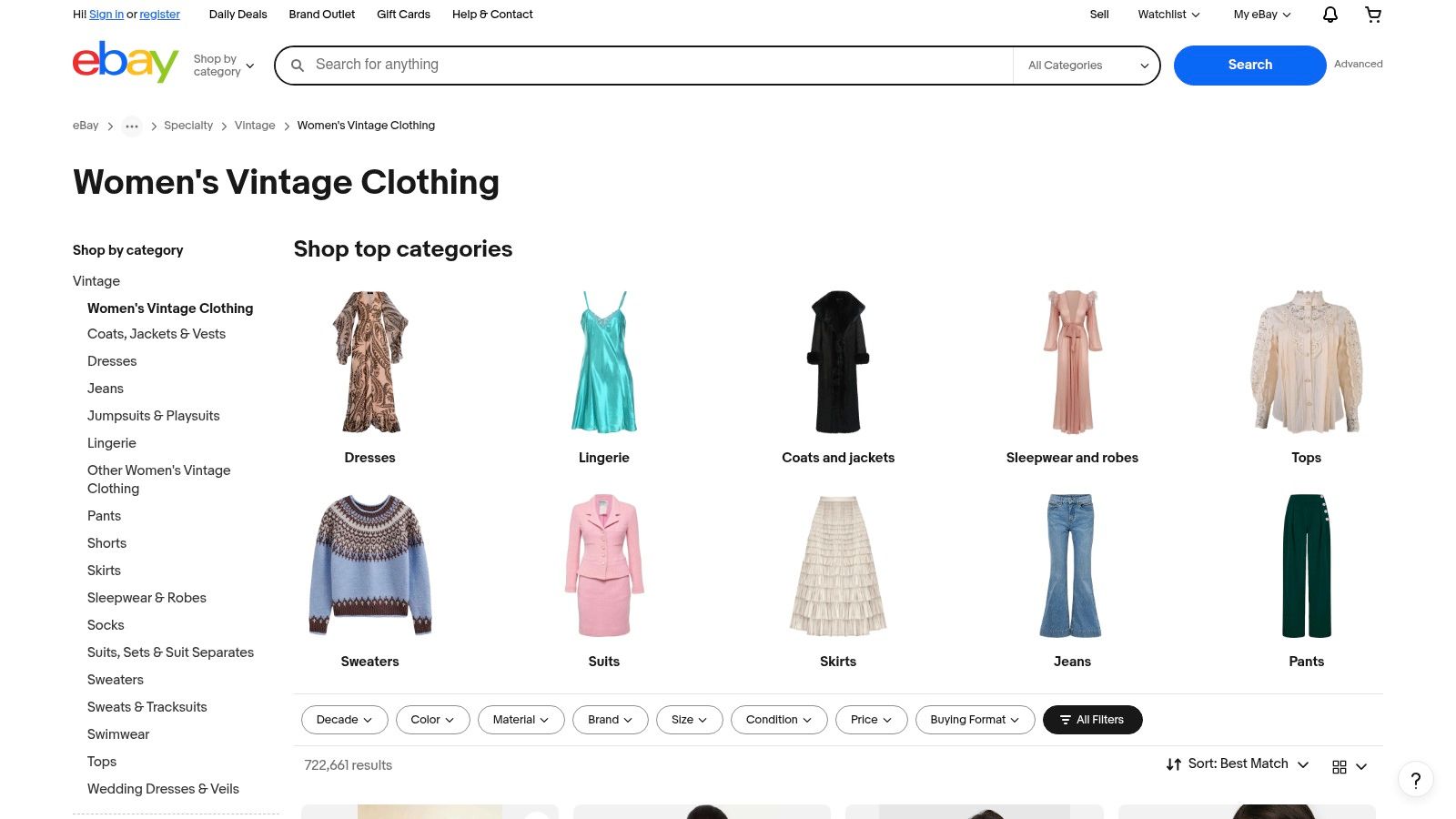
What sets eBay apart is its transparency into the secondary market. Unlike curated shops, eBay's "Sold Listings" filter provides an unfiltered view of actual transaction prices. This feature is indispensable for determining a brand's current market value, identifying sleeper hits, and avoiding overpaying. The combination of auctions, "Buy It Now" listings, and "Best Offer" options creates a dynamic environment for both patient bargain hunters and decisive buyers.
How to Use eBay Effectively
To leverage eBay's full potential, think of it as a stock market for vintage goods. Its data-rich environment can inform your buying and selling strategies better than almost any other platform.
- Analyze Sold Listings: Before you list or buy, search for the item and filter by "Sold Items." This shows you what people have actually paid, not just what sellers are asking. Pay attention to final auction prices versus "Buy It Now" sales.
- Set Up Saved Searches: If you're hunting for a specific brand like a vintage Lee jacket or a Lilli Ann suit, create a saved search. eBay will send you alerts when new items are listed, giving you an edge in finding underpriced or rare pieces before others do.
- Leverage "Best Offer": Many sellers are willing to negotiate. If a "Buy It Now" price seems high, don't be afraid to submit a reasonable offer. The worst they can say is no, and you can often secure a better deal.
Key Insight: eBay's sold data is your most powerful tool. It transforms guesswork into an informed strategy by showing you exactly what the market is willing to pay for specific brands, conditions, and sizes, helping you spot true value "in the wild."
Pros and Cons
| Pros | Cons |
|---|---|
| Best for real-time market pricing | Quality varies; requires close reading of descriptions |
| Frequent deals via auctions & sleeper listings | Limited platform authentication for most apparel |
| Massive global inventory | Competition can be fierce for in-demand items |
| Powerful "Sold Listings" data | Shipping can be expensive from international sellers |
Ultimately, eBay is an essential tool for understanding the nuts and bolts of the vintage market. While it requires diligence to sift through listings, the insights gained are invaluable. To better equip yourself for these searches, it’s helpful to know more about how to identify vintage clothing from different periods.
Website: https://www.ebay.com/b/Womens-Vintage-Clothing/182047/bn_2313854
3. Depop
Depop is a mobile-first social marketplace that has become a go-to platform for Gen-Z and younger millennials. Its trend-driven environment makes it an invaluable resource for identifying which vintage clothing brands to look for right now. While you'll find items from every era, the platform excels in streetwear, 90s sportswear, Y2K aesthetics, and archival designer pieces, giving you a real-time look at what's currently in high demand.
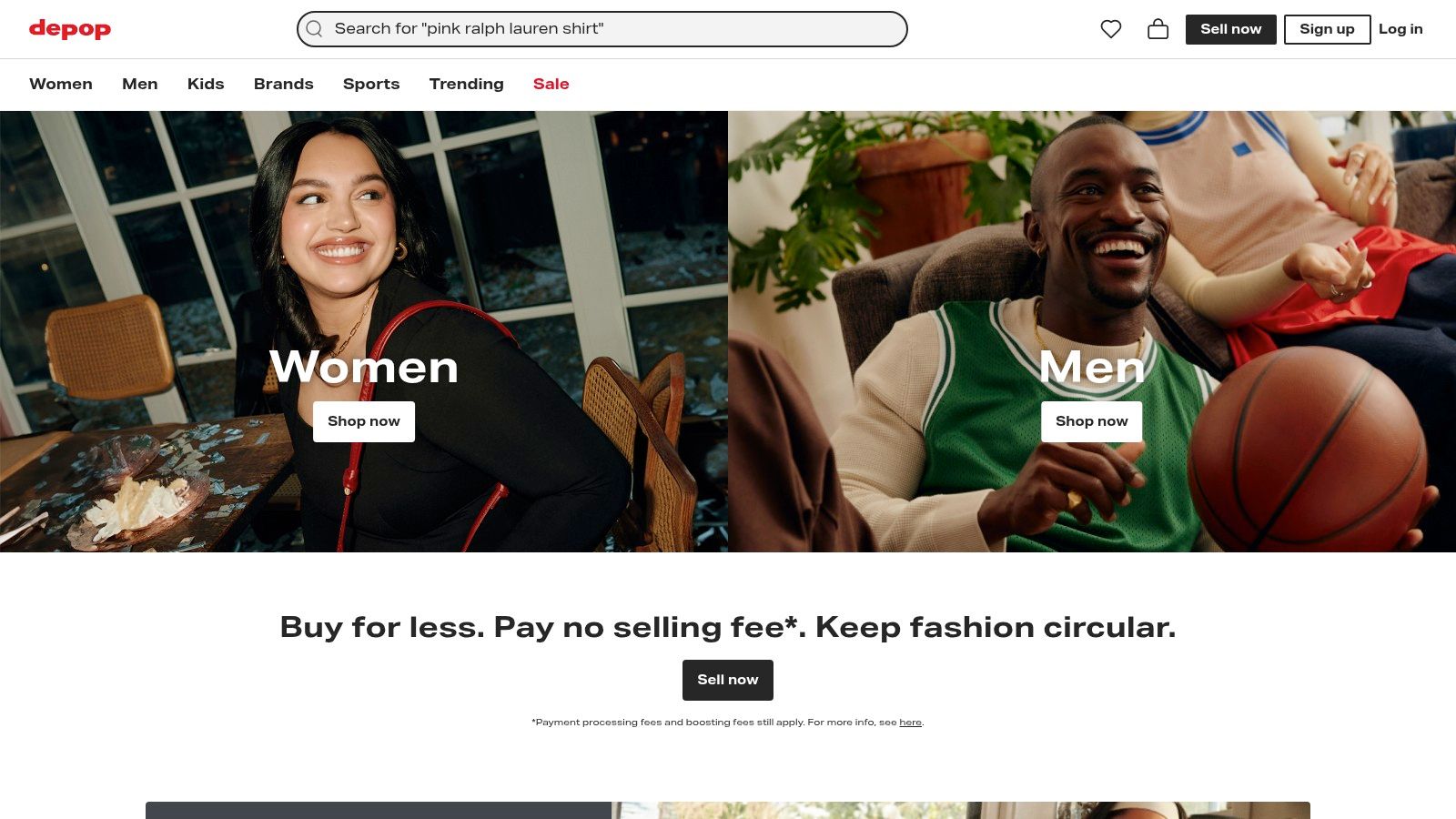
What makes Depop stand out is its focus on current trends and its social, feed-based interface. It operates more like a social media app than a traditional e-commerce site, allowing users to follow specific sellers and see curated items in their feed. A recent major change, the removal of seller fees in the U.S. market, has dramatically increased the number of listings, making it an even more competitive and vibrant marketplace for both buyers and researchers.
How to Use Depop Effectively
To maximize Depop, you should approach it as a trend forecasting tool. See what's popular and what specific pieces from vintage brands are being styled in modern ways. This insight is crucial for knowing what will sell quickly or what to hunt for at the thrift store.
- Follow Trendsetters: Identify and follow sellers who specialize in the eras or styles you're interested in. Their collections and "sold" listings are a direct indicator of market demand.
- Master the Search: Use brand names combined with specific keywords like "Y2K," "90s," or "gorpcore" to find trending items. Pay close attention to the hashtags sellers use, as these often reflect popular subcultures and aesthetics.
- Analyze Sold Listings: A key research tactic is to search for a brand and filter by "Sold Items." This shows you exactly what people are paying for specific pieces, providing a realistic view of a brand’s market value beyond just the asking price.
Key Insight: Depop is less about historical preservation and more about modern relevance. Use it to understand how vintage brands like Carhartt, Guess, or Von Dutch are being re-contextualized and valued by today's most active buyers.
Pros and Cons
| Pros | Cons |
|---|---|
| Vibrant supply of on-trend vintage | Search and tag quality can be inconsistent |
| Excellent for spotting emerging trends | Higher prevalence of "vintage-inspired" modern items |
| Good negotiation culture (Offers) | Buyer fees and payment processing fees apply |
| Strong mobile-first user experience | Descriptions can sometimes lack historical detail |
Ultimately, Depop serves as a modern pulse-check for the vintage market. While vetting seller credibility is important, the platform provides a direct line to what younger consumers want. If you are looking to sell what you find, you can get a better understanding of the process by learning more about how to sell vintage items effectively.
Website: https://www.depop.com/
4. Grailed
Grailed is a peer-to-peer marketplace focused on high-end menswear, streetwear, and archival designer pieces. While it caters to a modern audience, its dedicated vintage sections are a treasure trove for anyone researching high-value vintage clothing brands to look for. The platform excels at surfacing rare 80s and 90s sportswear, legacy Americana, and avant-garde Japanese labels, making it a key resource for understanding the more lucrative side of men's vintage.
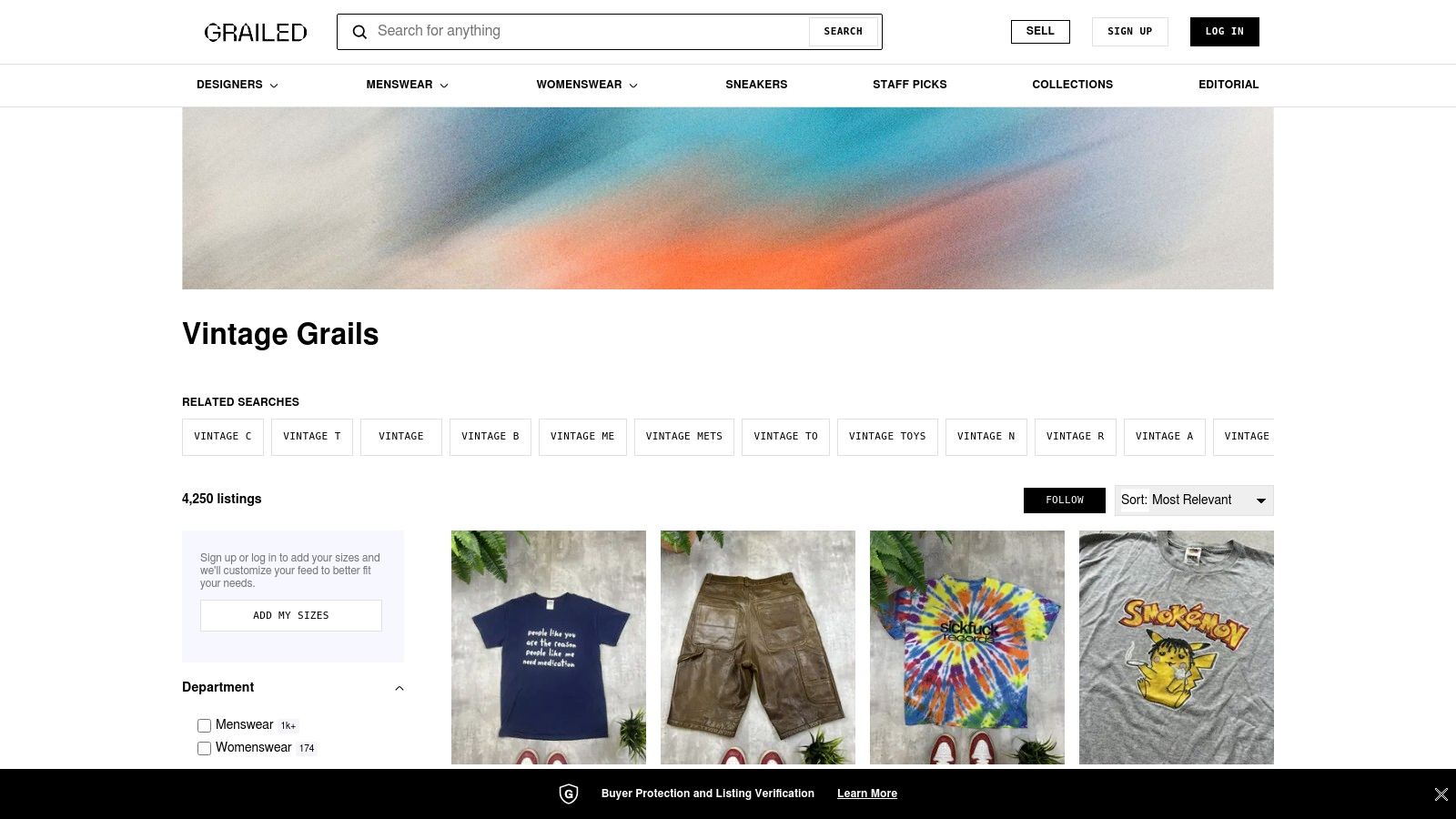
What makes Grailed unique is its deep brand ecosystem and highly knowledgeable community. Users can filter by thousands of specific designers, from iconic names like Ralph Lauren and Carhartt to niche archival labels like Issey Miyake and Jean Paul Gaultier. This specific focus on brands, combined with a user base that obsesses over authenticity details, creates an educational environment for learning what makes certain vintage menswear pieces so desirable.
How to Use Grailed Effectively
To leverage Grailed, think of it as a specialized, curated library for high-intent menswear. The platform's structure encourages deep dives into specific brand histories and market trends.
- Explore Curated Feeds: Start by browsing the "Vintage Grails" and "Vintage All" sections. These feeds are curated to showcase significant and interesting pieces, giving you a quick overview of what the market currently values.
- Use Saved Searches: If you're hunting for a specific brand like a vintage Stüssy tee or a 90s Patagonia jacket, set up a saved search. Grailed will notify you when new items matching your query are listed, allowing you to track prices and availability.
- Study Seller Descriptions: Pay close attention to how experienced sellers describe their items. They often provide detailed information on era, single-stitch construction, tag variations, and specific collection details. This is free, expert-level education on identifying valuable pieces.
Key Insight: Grailed teaches you what collectors and enthusiasts are actively hunting for. By observing the brands that appear in the "Grails" feed and sell quickly, you can learn to spot high-demand, high-value menswear items that others might overlook in a thrift store.
Pros and Cons
| Pros | Cons |
|---|---|
| Excellent for Learning High-Intent Brands | Some listings suffer from keyword "tag spam" |
| Large Selection of Niche Labels | Buyer protection can vary; check payment policies |
| Strong Community Authenticity Knowledge | Primarily focused on menswear, less variety for other categories |
| Powerful Brand-Specific Filters | Pricing can be high, reflecting its collector-focused market |
Grailed is an indispensable tool for anyone serious about sourcing and understanding valuable vintage menswear. While you need to be mindful of individual seller practices, the platform's brand-centric design and knowledgeable community make it one of the best places to hone your eye for what's truly collectible.
Website: https://www.grailed.com/browse/vintage-grails
5. The RealReal
The RealReal is an authenticated luxury consignment marketplace that operates at the higher end of the vintage spectrum. While it focuses heavily on contemporary pre-owned luxury, its curated vintage section is an essential resource for researching high-value vintage clothing brands to look for. Every item undergoes an in-house authentication process, providing a level of trust and quality assurance not found on peer-to-peer platforms. This makes it an invaluable tool for understanding the top-tier market.
What makes The RealReal stand out is its combination of professional authentication and editorial context. The platform not only sells items but also educates consumers on what makes certain archival pieces collectible. Its detailed product descriptions, standardized condition reports (Pristine, Excellent, Very Good), and curated "Rare Finds" sections help you learn the specific hallmarks of investment-worthy brands like vintage Chanel, Hermès, or Jean Paul Gaultier.
How to Use The RealReal Effectively
Use The RealReal as you would a gallery or a museum archive: to study the best of the best. The platform is perfect for learning the market prices for premium, authenticated vintage and identifying the specific details that create value.
- Study the Designer Directory: The RealReal has a comprehensive directory of designers. Browse the "Vintage" subcategory for specific brands to see which eras and styles are currently being sold and at what price point.
- Analyze Product Details: Pay close attention to the detailed descriptions and condition notes. The RealReal's team documents everything from specific collection years to minor flaws, which is excellent practice for learning what to inspect on your own finds.
- Read the Editorials: The site often features articles and guides on archival fashion and the history of iconic pieces. This content provides crucial context, helping you understand why certain vintage items are so sought after and valuable.
Key Insight: The RealReal is your benchmark for the luxury vintage market. By seeing what authenticated pieces from brands like Yves Saint Laurent or Gucci sell for, you can better estimate the potential value of a high-end item you might find at an estate sale or an upscale thrift store.
Pros and Cons
| Pros | Cons |
|---|---|
| High assurance on authenticity | Premium pricing reflects authentication and curation |
| Excellent for benchmarking luxury prices | Coveted inventory sells very quickly |
| Standardized condition grading | Less room for negotiation compared to open marketplaces |
| Educational content and editorials | Selection is curated, so it's less vast than Etsy |
The RealReal serves a different purpose than a massive marketplace. It’s not for finding hidden bargains, but for establishing an upper-market baseline. It’s where you go to confirm what a pristine, authenticated piece is truly worth, giving you the knowledge to spot an extraordinary find when you see one.
Website: https://www.therealreal.com/designers/vintage
6. Vestiaire Collective
Vestiaire Collective is a global online marketplace specializing in pre-owned luxury and designer fashion. While it covers contemporary items, its true value for researchers of vintage clothing brands to look for lies in its access to a worldwide network of sellers, particularly those in Europe. This provides a unique window into archival designer pieces and European vintage labels that are often scarce in North American thrift stores or marketplaces.
What sets Vestiaire Collective apart is its focus on authenticated luxury and its curated approach. The platform features sections like the ‘Archive Room,’ which highlights rare and collectible vintage items from iconic designers. This curation acts as an educational tool, showing which specific eras of brands like Courrèges, Jean Paul Gaultier, or Thierry Mugler are currently in high demand among collectors and fashion connoisseurs.
How to Use Vestiaire Collective Effectively
To leverage this platform for research, think of it as a global fashion archive. Its strength is in discovering high-end, often European, vintage that can inform what you look for in more accessible local markets or when sorting through higher-end estates.
- Explore the Archive: Spend time browsing the 'Archive' or 'Vintage' sections. Filter by brand and decade to see what kinds of pieces are considered collectible. Pay close attention to the listing details, which often include information about the specific collection or year of production.
- Study European Brands: Use the platform to familiarize yourself with European labels that might not be household names in the U.S. but carry significant value. Search for brands like Sonia Rykiel, Chloé, or Kenzo from the 70s and 80s to understand their signature styles and price points.
- Analyze Pricing and Condition: Observe how professional sellers price items based on condition, rarity, and provenance. Vestiaire's authenticated model means prices often reflect a piece's verified market value, providing a solid benchmark for what a pristine vintage designer item is worth.
Key Insight: Vestiaire Collective is your gateway to understanding the international market for high-end vintage. Learning what global collectors are buying helps you spot undervalued European designer pieces that may have found their way into the U.S. market.
Pros and Cons
| Pros | Cons |
|---|---|
| Excellent access to European labels | Authentication fees can add to the final cost |
| Curation highlights collectible items | U.S. buyers may face customs duties on international orders |
| Authentication service builds confidence | The focus is primarily on high-end luxury designers |
| Global seller base offers unique inventory | Prices reflect authenticated market value, so bargains are rare |
Ultimately, Vestiaire Collective serves as a specialized, high-end resource. While not the place for everyday thrifting finds, it is an invaluable tool for educating your eye on the pinnacle of the vintage market, helping you recognize true designer gems when you see them.
Website: https://www.vestiairecollective.com/
7. Thrilling
Thrilling is a unique online marketplace that aggregates the inventory of hundreds of independent vintage boutiques across the United States. Instead of connecting you with individual sellers, it acts as a digital main street, bringing the curated collections of brick-and-mortar shops into a single, searchable platform. This model makes it an excellent resource for discovering vintage clothing brands to look for that have already been vetted by professional buyers.
What sets Thrilling apart is its emphasis on boutique-level curation. Each item on the site comes from a physical store with its own distinct point of view, meaning the quality is generally high and the pieces are often more unique. It's a fantastic way to support small businesses nationwide while accessing a diverse range of styles, from Southwestern denim to East Coast designer wear, without ever leaving home.
How to Use Thrilling Effectively
To maximize your experience on Thrilling, think of it as a tool for trend-spotting and discovering regional brands. The platform's structure allows you to learn from the collective expertise of professional shop owners.
- Browse by Shop: Explore the "Shops" tab to see the collections of individual boutiques. This is a great way to identify regional trends and discover lesser-known brands that are popular in specific parts of the country.
- Study the Curation: Pay attention to the themed edits and collections Thrilling promotes. These often highlight rising trends or specific aesthetics, giving you clues about which brands and styles are becoming more desirable in the vintage market.
- Use Specific Search Terms: Because the inventory is curated, you can often find very specific items. Search for a particular brand like "Jantzen" or a style like "1950s circle skirt" to see how different professional shops price and describe these pieces.
Key Insight: Thrilling offers a window into the professional vintage retail world. By observing what hundreds of shop owners are stocking, you can learn which brands consistently hold their value and what niche labels are worth seeking out.
Pros and Cons
| Pros | Cons |
|---|---|
| Boutique-level curation and quality | Smaller selection than global marketplaces like Etsy or eBay |
| Supports independent U.S. brick-and-mortar shops | Prices reflect curation; fewer low-cost "deals" |
| Great for discovering regional and niche brands | Less direct interaction with the original sourcer of the item |
| Clean, easy-to-navigate interface | Limited opportunity for bidding or making offers |
Ultimately, Thrilling is an invaluable resource for anyone who wants to learn from the pros. It provides a curated, high-quality shopping experience and serves as an educational platform for understanding what seasoned vintage dealers consider valuable and stylish.
Website: https://shopthrilling.com/
Top 7 Vintage Clothing Marketplaces — Comparison
| Platform | 🔄 Implementation complexity | ⚡ Resource requirements | 📊 Expected outcomes | 💡 Ideal use cases | ⭐ Key advantages |
|---|---|---|---|---|---|
| Etsy | Low–Medium — easy search/filters; requires manual vetting of mixed listings | Moderate — time to search, message sellers for measurements/provenance | Broad price discovery across many brands; variable authenticity | Browsing long‑tail labels, cross‑era discovery, price comparisons | Large long‑tail inventory; strong niche seller community |
| eBay | Medium — advanced filters plus auction mechanics add process steps | Moderate — monitoring sold data, saved searches, and listings | Clear market pricing signals and scarcity insights; deal opportunities via auctions | Tracking price trends, sourcing rare labels, auction sourcing | Enormous brand coverage; transparent sold data and flexible buy options |
| Depop | Low — mobile‑first, simple UX but inconsistent tagging | Low–Moderate — frequent listings to monitor; some fees apply | Good trend spotting among Gen‑Z; negotiable prices via offers | Finding on‑trend vintage (tees, denim, early‑2000s), fast turnover items | Vibrant trendy supply; active negotiation culture |
| Grailed | Medium — curated sections and community authenticity focus | Moderate — saved alerts and deeper brand research needed | High‑quality comps for designer vintage; niche/hard‑to‑find pieces | Designer menswear, archival pieces, authenticity research | Strong designer ecosystem; knowledgeable community and filters |
| The RealReal | Low — curated, authenticated listings streamline buying | Low effort to buy but higher financial outlay (premium pricing) | Reliable authenticated items; useful for benchmarking premium values | Buying authenticated luxury vintage; research on investment pieces | In‑house authentication; standardized grading and editorial curation |
| Vestiaire Collective | Low–Medium — curated/authenticated but cross‑border steps | Moderate — authentication fees and potential customs for US buyers | Access to European archival/rare labels; curated rare finds | Sourcing European designers and rare archival pieces | Strong EU seller access; curated Archive Room and authentication options |
| Thrilling | Low — boutique aggregation simplifies discovery | Moderate — boutique pricing and curated stock; sourcing services for bulk | Curated boutique finds and regional label discovery | Discovering U.S. regional vintage, boutique curation, production sourcing | Aggregates boutique curation; good for specialty regional genres |
Final Thoughts
The world of vintage clothing is a vast and rewarding landscape, a tangible connection to the history of fashion, craftsmanship, and personal style. Venturing into this world equipped with knowledge is the difference between a casual browse and a truly remarkable discovery. Throughout this guide, we've explored the stories, signatures, and standout pieces from a curated list of vintage clothing brands to look for, transforming your thrifting expeditions from a game of chance into a strategic treasure hunt.
From the structured elegance of a vintage Pendleton wool shirt to the rebellious spirit of a well-worn Harley-Davidson tee, each brand offers a unique narrative. You are now armed with the ability to spot the subtle cues: the specific font on a Gunne Sax label, the tell-tale texture of a Champion reverse weave sweatshirt, or the iconic hardware on a Coach bag. This knowledge empowers you to look beyond the surface and recognize the inherent value and history woven into the very fabric of these garments.
Key Takeaways for Your Vintage Journey
As you begin your hunt, keep these core principles in mind to sharpen your focus and maximize your success:
- Labels Are Your Roadmap: The evolution of a brand’s tag is often the most reliable way to date an item. A quick photo of a label can be your best friend for on-the-spot research.
- Feel the Material: Quality endures. Vintage fabrics, from heavyweight denim to pure wool and silk, often have a distinct feel that sets them apart from modern, mass-produced textiles. Trust your sense of touch.
- Condition is Paramount: A rare find is only valuable if it’s wearable or repairable. Always conduct a thorough inspection for stains, holes, odors, and broken zippers before purchasing. Small flaws can sometimes be fixed, but major damage can render a piece worthless.
- Know Your Platforms: The tool you use dictates the type of finds you'll encounter. Grailed is your go-to for high-end and rare menswear, while Depop caters to a younger audience with a focus on Y2K and streetwear. For authenticated luxury, The RealReal and Vestiaire Collective provide peace of mind, while eBay and Etsy offer the widest, most eclectic selections.
Building Your Collection and Business
Whether you are a passionate collector or a budding reseller, the principles of sourcing remain the same. The real skill lies not just in finding these pieces, but in curating a collection or inventory that tells a story. Think about what draws you to certain eras or styles. Do you love the rugged Americana of workwear brands or the polished glamour of mid-century designers? Focusing on a niche will help you become a true expert.
As your collection grows, especially from online sources, managing your incoming treasures becomes crucial. When you have multiple orders from various sellers on platforms like Etsy, eBay, and Vestiaire Collective, it's easy to lose track of what's arriving when. Using a service to track all packages in one place can be a lifesaver, ensuring that your valuable vintage finds don't get lost in transit and you know exactly when to expect your next piece of history.
This journey is about more than just clothing; it's about preserving history, embracing sustainability, and celebrating individuality. The search for specific vintage clothing brands to look for is an adventure filled with learning and discovery. Each piece you find carries the echoes of a previous owner and a bygone era, waiting for you to add the next chapter to its story. Happy hunting!
Ready to take your vintage identification and resale business to the next level? Curio is the ultimate tool for collectors and resellers, using AI to help you identify, price, and list your vintage finds in seconds. Stop guessing and start knowing with Curio.