That dusty painting in the attic or the ornate chair from grandma’s estate might be more than just a family heirloom; it could be a valuable asset. But unlocking that value hinges on knowing exactly where to sell antiques to reach the right buyers. The market is vast, with options ranging from global online marketplaces to local consignment shops, each with its own rules, fees, and audience. A 19th-century French armoire won't find its ideal buyer in the same place as a collection of mid-century kitchenware. Choosing the wrong channel can mean leaving significant money on the table or waiting months for a sale that never comes.
This guide demystifies the process. We'll break down the top platforms and methods for selling your antiques, detailing the pros, cons, and specific fees for each. More importantly, we'll give you actionable advice on which venue is best suited for different types of items, from fine jewelry and rare books to bulky furniture and quirky collectibles. If your hidden treasures happen to be numismatic, explore our comprehensive guide on the best places to sell old coins in the UK for specialized advice.
Before you list anything, we'll also cover the critical first step: understanding what you have. Using a tool like the Curio app to get an instant identification and appraisal can be the difference between a quick, profitable sale and a frustrating, drawn-out experience. Let’s explore the best avenues to turn your vintage finds into cash.
1. Curio: Identify, Value, and Catalog Before You Sell
Before you can decide where to sell antiques, you first need to know exactly what you have and what it's worth. Selling a valuable piece for a pittance is a seller’s worst nightmare, but overpricing an item can leave it sitting on a shelf for months. Curio is an indispensable first step in your selling journey, acting as a digital appraiser that provides the foundational knowledge you need to price and list your items with confidence.
Instead of spending hours searching online forums or deciphering maker's marks, Curio uses AI-powered image recognition to do the heavy lifting. You simply snap a few photos of your item, and the app delivers a detailed analysis in moments. This isn't just a generic guess; it provides a concise title, a one-sentence identification, and rich historical context.
Key Features and How They Help Sellers
- Instant Identification: The app tells you what an item is, its likely period of origin (e.g., "Late Victorian Era, c. 1890"), and its geographic roots. This information is crucial for writing compelling and accurate product descriptions that attract serious buyers.
- Market Appraisal Range: Curio provides an estimated market value, preventing you from underpricing a hidden gem or overpricing a common piece. This data-backed appraisal gives you a solid starting point for setting your price on any marketplace.
- Visual Matches & Comparables: The app surfaces images of similar items and links to past auction results or sales listings. This allows you to compare your item's condition, craftsmanship, and provenance against real-world examples, helping you fine-tune your pricing strategy.
- Digital Cataloging: You can save every identified item into a personal collection within the app. This feature is perfect for managing inventory for resale, creating records for insurance purposes, or organizing an estate.
Expert Insight: The biggest mistake new sellers make is listing an item without proper research. Using a tool like Curio first ensures you enter negotiations armed with data, which is your best tool for maximizing profit.
Practical Tips for Using Curio
To get the most accurate results, take clear, well-lit photos from multiple angles against a neutral background. Be sure to capture any signatures, maker's marks, or unique details. Use the information Curio provides to build your listing title and description. For example, instead of "Old Blue Vase," you can write "Chinese Qing Dynasty Style Blue and White Porcelain Vase, c. 1920s." This level of detail instantly builds trust and attracts knowledgeable collectors.
Curio positions itself as the essential preparation tool before you choose your sales channel, making it a logical and strategic first stop for anyone looking to successfully sell antiques online or in person.
Learn more at Curio's Website.
2. eBay: The World's Largest Antiques Marketplace
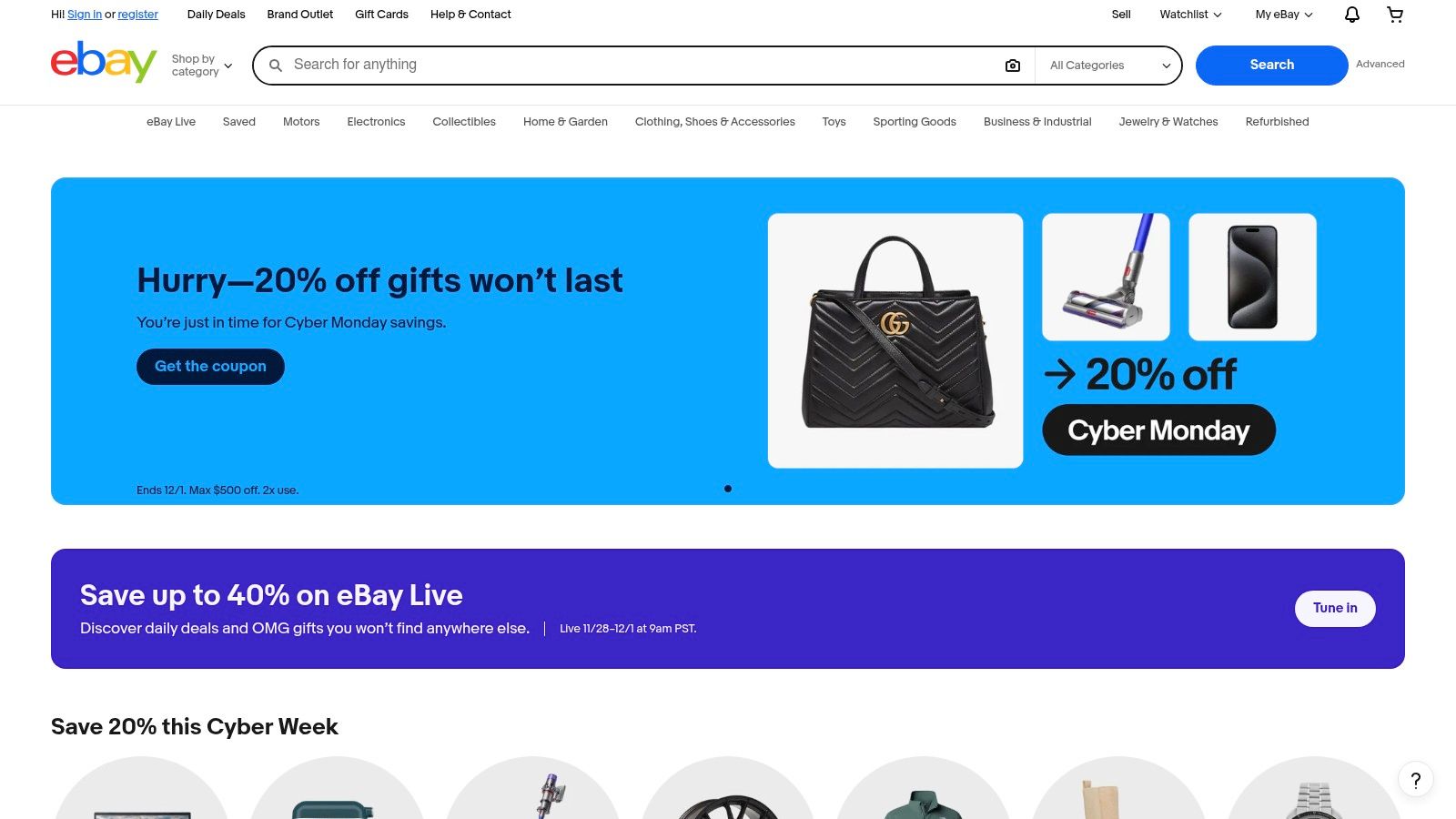
When considering where to sell antiques, eBay is often the first platform that comes to mind, and for good reason. As one of the original and largest online marketplaces, it offers unparalleled access to a global audience of millions actively searching for everything from antique furniture and fine china to rare collectibles and vintage jewelry. Its sheer scale makes it an essential channel for both new and experienced sellers.
eBay's strength lies in its flexibility and reach. You can list items in an auction format to let the market determine the price or set a fixed "Buy It Now" price for a straightforward sale. This dual approach allows sellers to tailor their strategy to the specific item, whether it's a common piece with established value or a unique find that could spark a bidding war. The platform's robust infrastructure supports sellers with integrated shipping tools, detailed analytics, and a massive database of past sales for research.
Key Features and How They Help Sellers
- Auction and "Buy It Now" Formats: The auction style creates excitement and can drive prices higher for in-demand items. The fixed-price format provides predictability and is ideal for items with a known market value, while the "Best Offer" option adds negotiating flexibility.
- Massive Buyer Traffic: With millions of active users, your listings are exposed to a vast pool of potential buyers, significantly increasing the chances of a quick sale compared to smaller, niche sites.
- Completed/Sold Listings Database: eBay's most powerful research tool allows you to search for items identical or similar to yours and see what they actually sold for. This real-world data is invaluable for setting a competitive price.
- Global Shipping Program (GSP): This program simplifies international sales by allowing you to ship items to a domestic hub. eBay then handles the customs forms, international postage, and final delivery, opening your shop to buyers worldwide.
Expert Insight: Success on eBay hinges on trust and detail. Use high-quality photos and write comprehensive descriptions based on the data from a tool like Curio. A well-researched listing not only attracts more bids but also reduces the risk of returns or disputes.
Practical Tips for Using eBay
Before listing, use the "Sold Items" filter to research pricing for comparable antiques. This will give you a realistic expectation of what your item can fetch. When creating your listing, use descriptive keywords in your title that a collector would search for, such as the maker, period, style, and material. For example, "Antique Victorian Sterling Silver Repoussé Locket, c. 1880" is far more effective than "Old Silver Locket." Always be transparent about an item's condition, noting any chips, cracks, or repairs to build buyer confidence. If you want to dive deeper into the platform, you can find a complete guide for selling antiques on eBay here.
eBay remains a dominant force in the antiques market due to its massive audience and versatile selling tools, making it a go-to choice for liquidating a wide range of antique and vintage items.
Learn more at eBay's Website.
3. Etsy: The Marketplace for Curated Vintage Finds
While often associated with handmade crafts, Etsy has carved out a significant niche as a leading marketplace where to sell antiques and vintage goods, making it a powerful platform for sellers with a keen eye for style. The key distinction is its "vintage" category, which requires items to be at least 20 years old. This rule creates a focused environment where buyers are specifically looking for nostalgic, unique, and curated pieces that tell a story.
Etsy thrives on aesthetics and lifestyle branding. It's less about raw historical data and more about how an antique or vintage item fits into a modern home or personal style. Sellers who excel on Etsy are those who can create beautiful, well-lit photographs and write descriptions that evoke a feeling, not just list facts. This makes it an ideal platform for selling decorative objects, vintage jewelry, retro clothing, and unique home décor.
Key Features and How They Help Sellers
- Dedicated Vintage Category: Etsy's 20-year rule filters the marketplace, attracting a global audience actively searching for vintage and antique items. This means your listings are seen by shoppers who already appreciate the value of older pieces.
- Simple Fee Structure: The platform has a straightforward fee model: a $0.20 USD listing fee that lasts for four months, a 6.5% transaction fee on the total sale price (including shipping and gift wrap), and a payment processing fee. This transparency makes it easy to calculate your potential profit.
- Integrated Tools: Etsy offers a user-friendly seller dashboard with built-in tools for managing orders, communicating with buyers, purchasing discounted shipping labels (Etsy Shipping Labels), and analyzing shop statistics. This streamlines the entire sales process from listing to delivery.
- Strong Community and Support: The platform has a vast resource library and active seller communities where you can find guidance and support. This network is invaluable for both new and experienced sellers looking to optimize their shops.
Expert Insight: Success on Etsy is driven by curation and presentation. Buyers aren't just purchasing an "old chair"; they're buying a "Mid-Century Modern Accent Chair" that completes their living room. Your photos and descriptions should sell a lifestyle, not just an object.
Practical Tips for Using Etsy
Before listing, use a tool like Curio to confirm your item's age and style. This helps ensure it meets Etsy's 20-year requirement and allows you to use descriptive keywords like "Art Deco" or "Victorian" in your title and tags, which is crucial for getting discovered in Etsy search. Stage your photos with complementary props to show the item in a real-life context. For instance, place a vintage vase on a modern bookshelf to show how it can be styled. For a deeper dive into platform specifics, you can learn more about how to sell vintage items on Etsy and other platforms.
Etsy is perfect for the seller who enjoys storytelling through visuals and wants to connect with buyers looking for items with character and history. Its focused audience and simple tools make it one of the best places to start selling your curated antique and vintage collection online.
Learn more at Etsy's Website.
4. Ruby Lane: The Vetted Marketplace for Serious Collectors
If you're looking for where to sell antiques to a discerning audience that values authenticity and quality, Ruby Lane is a premier destination. Unlike massive marketplaces that mix antiques with new goods, Ruby Lane is a curated platform dedicated exclusively to antiques, vintage collectibles, art, and jewelry. It attracts serious buyers who trust the platform's vetting process and are willing to pay for genuine, high-quality items.
Ruby Lane operates like a high-end online antique mall where you set up your own "shop." This model appeals to established dealers and serious sellers who want to build a brand. The platform enforces strict standards for item descriptions and authenticity, which helps maintain a high level of trust with its dedicated customer base. This focus on quality over quantity makes it an ideal venue for selling valuable, well-researched pieces.
Key Features and How They Help Sellers
- Curated & Vetted Environment: Every shop on Ruby Lane is reviewed, and items must meet specific age and category standards. This pre-vetting means your listings appear alongside other quality items, boosting buyer confidence and justifying premium prices.
- Targeted Collector Audience: Buyers come to Ruby Lane specifically for antiques and vintage goods. You don't have to compete with mass-produced items, ensuring your listings are seen by people actively searching for what you offer.
- Shop-Level Customization: Sellers get their own branded storefront, allowing them to build a following and encourage repeat business. You have control over your shop's policies, branding, and presentation within the platform's guidelines.
- Transparent Fee Structure: Ruby Lane charges a monthly maintenance fee to keep your shop open, plus a tiered service fee based on sales. This structure can be more cost-effective for sellers with higher-priced items compared to platforms with a flat percentage fee.
Expert Insight: Ruby Lane's strength is its reputation. Buyers know they are less likely to encounter fakes or misrepresentations. Selling on a platform with built-in trust allows you to focus on the quality of your items, not on proving your own legitimacy.
Practical Tips for Using Ruby Lane
Success on Ruby Lane hinges on professionalism. Your photography must be clear and detailed, showcasing the item's condition from all angles. Descriptions need to be thorough, accurate, and rich with historical context, leveraging the data you gathered from a tool like Curio. Be prepared to answer questions from knowledgeable buyers and engage with the collector community. Because there is a monthly fee regardless of sales, it's best suited for sellers with enough inventory to consistently list new items and keep their shop active and appealing.
Learn more at Ruby Lane's Website.
5. Chairish: The Curated Marketplace for Design Lovers
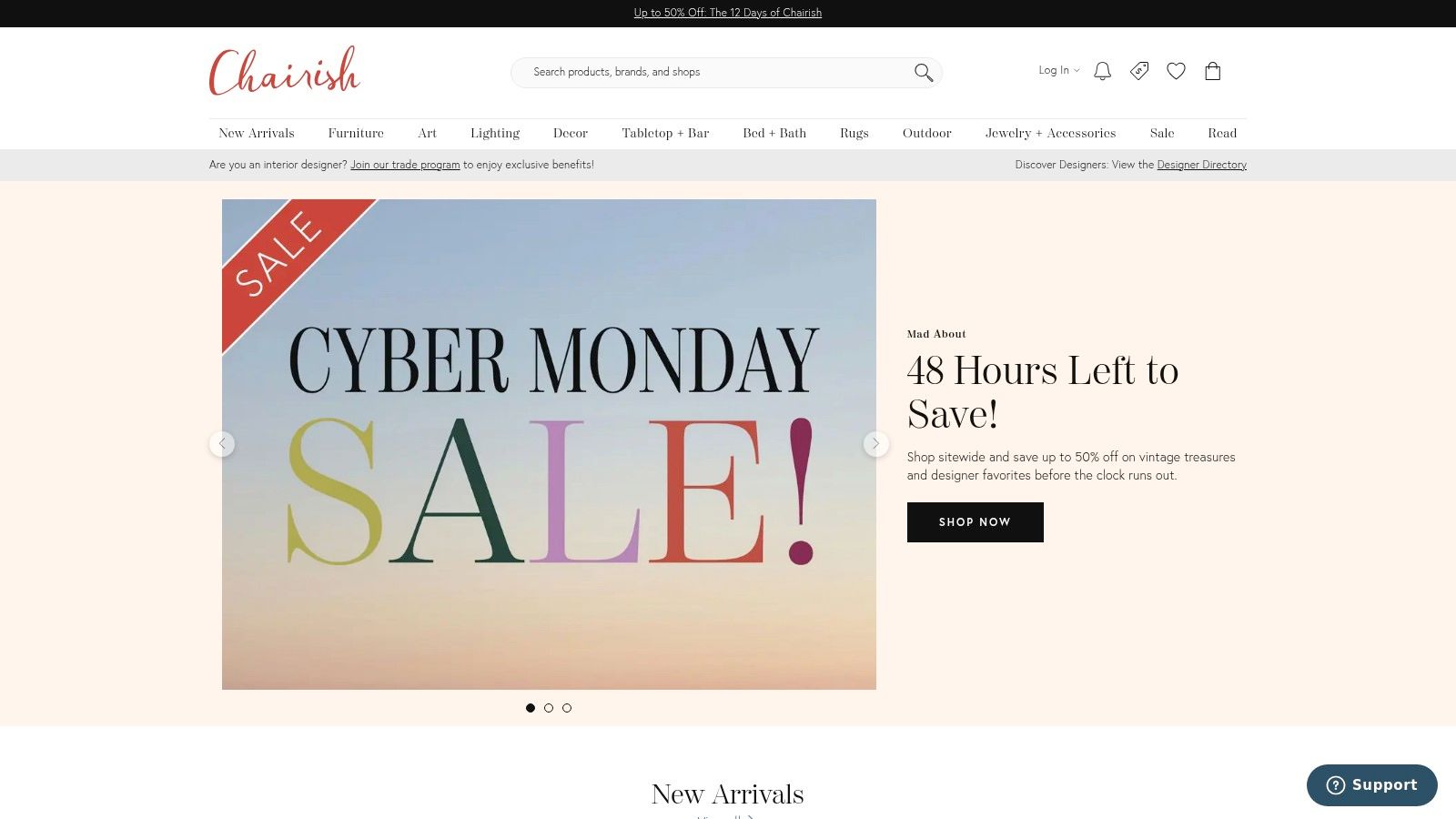
For sellers with antique or vintage furniture, lighting, and high-end decor, finding the right audience is key. Chairish is a design-centric marketplace that connects you with interior designers and discerning homeowners actively searching for unique, stylish pieces. This platform is an excellent choice for where to sell antiques if your items have a strong aesthetic appeal and you want to avoid the logistical nightmare of shipping large, heavy objects.
Chairish stands out by offering managed shipping solutions, including white-glove delivery, which takes the burden off the seller. This focus on premium home goods and a curated inventory means items often command higher prices than on generalist marketplaces. By listing here, you place your pieces in front of a motivated, design-savvy audience ready to invest in quality.
Key Features and How They Help Sellers
- Managed Shipping Options: Chairish coordinates shipping for you, offering everything from standard parcel service to in-home, white-glove delivery for large items like credenzas or armoires. This eliminates a major hurdle for furniture sellers.
- Tiered Commission Rates: The platform offers multiple seller plans. While the entry-level "Consignor" plan has a 40% commission, rates decrease as you move to professional plans or sell higher-priced items. This structure incentivizes high-volume and high-value sellers.
- Curated Inventory: All listings are reviewed by the Chairish curatorial team to ensure they meet the site's style and quality standards. This process elevates the entire marketplace, attracting serious buyers who trust the platform's selection.
- Targeted Audience: The site is a go-to resource for interior designers and affluent consumers. Listing your antique furniture here ensures it gets seen by people who appreciate its history and are willing to pay for its unique character.
Expert Insight: Selling large furniture online is all about logistics. A platform like Chairish that handles the complexities of white-glove shipping is invaluable. It opens up a national market that would otherwise be inaccessible for individual sellers.
Practical Tips for Using Chairish
To succeed on Chairish, high-quality photography is non-negotiable. Stage your items in a well-lit, attractive setting that highlights their design appeal. In your description, use the details you discovered with an app like Curio to tell a story about the piece’s history, style, and craftsmanship.
Be mindful of the commission structure when setting your price. Factor in the fees to ensure your final payout is profitable. For more guidance on this, you can explore detailed resources on how to value your items. For more information, check out this guide on how to price used furniture. While Chairish is ideal for statement pieces, it may not be the best fit for smaller collectibles or low-value decor due to the commission rates and shipping focus.
Learn more at Chairish's Website.
6. 1stDibs: The Premier Marketplace for Luxury and Design
For sellers with museum-quality antiques, iconic design furniture, or fine art, 1stDibs is the definitive high-end marketplace. This is not a platform for casual sellers; it is an exclusive, application-only environment that connects the world’s most respected dealers with a discerning clientele of interior designers, architects, and affluent collectors. If your item is a signed mid-century modern classic or a documented 18th-century masterpiece, this is where you’ll find buyers who understand and are willing to pay for its value.
1stDibs has built its reputation on trust and quality, thoroughly vetting every dealer to maintain its high standards. This curation creates a protected ecosystem where premium prices are the norm, not the exception. The platform functions as a full-service partner, handling secure payments, providing fraud protection, and offering logistical support to streamline complex international shipments.

Key Features and How They Help Sellers
- Vetted, Professional-Only Model: The strict application process, which requires references and proof of inventory quality, ensures you are selling alongside the best in the business. This exclusivity reinforces buyer confidence and supports premium pricing.
- Access to Trade and Luxury Buyers: 1stDibs has unparalleled reach into the professional design community. This provides direct access to high-volume trade buyers who are sourcing pieces for client projects and are less prone to price haggling.
- End-to-End Transaction Management: The platform manages the entire sales process, from secure payment processing to coordinating shipping and delivery. This removes significant administrative burdens from the seller, allowing you to focus on sourcing and curation.
- Flexible Fee Structures: Dealers can choose from different subscription plans that balance monthly fees against commission rates. This allows sellers to select a model that best fits their sales volume and business strategy.
Expert Insight: Selling on 1stDibs is less about finding a buyer and more about positioning your inventory within an elite global gallery. Price integrity is paramount here; buyers expect top-tier items and are prepared to pay for verified quality and provenance.
Practical Tips for Selling on 1stDibs
Success on 1stDibs requires a professional approach. Your application must showcase a cohesive and high-quality inventory, so curate your best pieces for the submission. Invest in professional photography, as visuals are critical for attracting designers. When writing descriptions, provide extensive detail on provenance, condition, and historical significance. Use the data from a tool like Curio to substantiate claims about an item's origin and era, as this level of accuracy is expected by the platform’s sophisticated buyers.
Learn more at 1stDibs' Website.
7. Facebook Marketplace: Master the Art of the Local Sale
For sellers with large, bulky items like furniture or those who prefer the speed and simplicity of a local transaction, Facebook Marketplace is a powerhouse. It leverages the platform's massive user base to give your antiques immediate visibility within your community, making it one of the best places where to sell antiques that are difficult or expensive to ship.
Facebook Marketplace functions as a highly localized classifieds board, connecting you directly with potential buyers in your area. The platform is designed for quick communication and easy coordination for in-person pickups, which is its primary strength. While shipping is an option, the platform’s true value for antique sellers lies in its ability to facilitate fast, fee-free local sales for items like armoires, dining sets, and heavy decorative pieces.
Key Features and How They Help Sellers
- Massive Local Reach: Your listing is instantly shown to a vast audience of potential buyers in your geographic area who are actively searching for items like yours. This is ideal for generating quick interest in common or large-scale antiques.
- Direct Buyer Communication: The integrated Messenger function allows for immediate and informal conversation with interested parties. You can answer questions, negotiate prices, and arrange pickup details without leaving the platform.
- Fee-Free Local Transactions: If you arrange a local pickup and the buyer pays you directly with cash or a peer-to-peer payment service (like Venmo or Zelle), Facebook charges no selling fee. This means you keep 100% of the profit.
- Optional Shipping (with Fees): For smaller items, you can offer shipping through Marketplace checkout. However, this comes with a selling fee (10% of the total sale price as of 2024, with a $0.80 minimum) and requires you to manage your own shipping labels and logistics.
Expert Insight: The key to success on Facebook Marketplace is speed and responsiveness. Buyers expect quick replies. Be prepared to answer messages promptly and have your item ready for a swift pickup to close the deal before they find another option.
Practical Tips for Using Facebook Marketplace
When listing, use high-quality photos that showcase the item in a clean, well-staged environment. For furniture, show it from all angles and include close-ups of any unique details or imperfections. Your title should be descriptive, such as "Vintage Mid-Century Modern Walnut Sideboard by Broyhill." In the description, clearly state "local pickup only" if you don't want to ship, and specify your preferred payment methods for in-person transactions. Always prioritize safety: arrange to meet in a public place or ensure you have someone with you for home pickups.
Learn more at Facebook Marketplace.
Where to Sell Antiques: 7-Platform Comparison
| Platform | Listing Complexity (🔄) | Resources / Costs (⚡) | Expected Outcomes (📊 ⭐) | Ideal Use Cases (💡) | Key Advantages |
|---|---|---|---|---|---|
| Curio | Low — snap photo, instant ID; occasional retakes for accuracy | Low time cost; free limited scans, subscription for full access | Strong ID + context; appraisal ranges indicative — verify high-value items ⭐⭐⭐⭐ | Quick research, thrifting, resellers, estate triage | Instant AI IDs, Visual Matches, collection management |
| eBay | Moderate — detailed listings, shipping setup, auction management | Listing and final value fees; shipping costs and time for order management | Very high visibility and sell-through potential; price discovery via auctions ⭐⭐⭐⭐ | Broad antiques, primitives to fine art; sellers seeking volume | Largest buyer pool, flexible formats, robust sold-listing data |
| Etsy | Low — simple shop/listing flow with vintage rules | Low upfront fee ($0.20) + 6.5% transaction fee; payment processing | Good conversion for lifestyle-vintage items; niche buyer fit ⭐⭐⭐ | Curated vintage (20+ yrs), jewelry, decor, ephemera | Audience primed for vintage aesthetics; easy shop tools |
| Ruby Lane | Moderate — shop setup plus vetting and category standards | Monthly maintenance + tiered fees; predictable but ongoing cost | Targeted collector interest; slower volume but quality leads ⭐⭐⭐ | True antiques, fine collectibles, repeat collector buyers | Curated marketplace with authenticity emphasis |
| Chairish | Moderate–High — consignment options, curated listings, shipping coordination | Commission-based (higher on entry tiers); managed shipping options add cost | Higher average order values for furniture/design; suited to large items ⭐⭐⭐⭐ | Vintage/antique furniture, lighting, design-forward pieces | White‑glove/in‑home delivery and design-focused audience |
| 1stDibs | High — application, vetting, professional onboarding required | Subscription or commission models; higher fees offset by luxury reach | Access to high‑spend trade/design buyers; strong price integrity ⭐⭐⭐⭐ | Dealers with museum‑quality or designer pieces; luxury market | Vetted dealer network, concierge support, luxury exposure |
| Facebook Marketplace | Very Low — rapid local listing and messaging | Minimal for local cash sales; 10% fee on shipped orders (seller provides labels) | Extremely fast local sales for bulky items; lower buyer guarantees ⭐⭐ | Local pickups, bulky furniture, immediate sales | Huge local reach, zero fee for in-person transactions |
Choosing Your Best Path to a Successful Sale
Navigating the world of antiques can feel like stepping into a vast, treasure-filled maze. With countless avenues for selling your items, the most challenging part is often simply deciding where to begin. As we have explored, the ideal platform is not a one-size-fits-all solution. The best place where to sell antiques depends entirely on what you have, who you want to reach, and your personal goals as a seller.
The journey from dusty attic find to successful sale is a strategic one. It starts not with a listing, but with knowledge. Your first, most critical step is understanding the true nature and value of your piece. This foundational insight empowers every subsequent decision, from setting a fair price to choosing the right marketplace.
A Quick Recap: Matching Your Item to the Right Market
Let's distill our findings into a simple decision-making framework. Your choice of platform should be a deliberate match between your antique and the platform's strengths:
- For broad reach and diverse items: eBay remains the undisputed giant, offering a massive global audience for everything from collectible toys to vintage postcards. It is your go-to for items with wide appeal where you want to cast the largest net possible.
- For handcrafted and vintage aesthetics: Etsy provides a dedicated community of buyers actively searching for unique, artistic, and vintage pieces. It excels for items that tell a story and fit a specific decorative style.
- For high-end, authenticated antiques: Ruby Lane and 1stDibs cater to serious collectors and designers who expect quality, vetting, and are willing to pay a premium. These are the platforms for your truly exceptional and valuable finds.
- For stylish furniture and home decor: Chairish offers a curated, design-focused marketplace. It is the perfect stage for high-quality, brand-name, or aesthetically pleasing furniture and decorative arts.
- For fast, local sales without fees: Facebook Marketplace is the modern-day classifieds, ideal for selling larger items like furniture locally, avoiding the complexities of shipping, and facilitating a quick transaction.
Your Actionable Path Forward
Knowing where to sell antiques is only half the battle. To ensure success, you need a clear, actionable plan. Before you list a single item, work through this simple checklist to set yourself up for the best possible outcome.
- Identify and Value First: Use a tool like Curio to get an accurate identification and data-driven valuation. This crucial first step prevents you from underselling a valuable treasure or overpricing a common piece.
- Define Your Goal: Are you looking for the highest possible profit, even if it takes time? Or do you need a quick, hassle-free sale? Your answer will immediately narrow down your platform options.
- Consider the Logistics: Factor in shipping costs, packaging materials, and platform fees. For a large, heavy armoire, the logistics of shipping may make Facebook Marketplace a far more practical choice than a national platform.
- Prepare Your Item: Clean your antique carefully and take high-quality photographs from every angle, in good lighting. Your photos are your most powerful selling tool.
- Craft a Compelling Story: Write a detailed, honest description. Include its dimensions, condition, and any known history or provenance. This builds trust and helps buyers connect with the item.
By following this structured approach, you transform a potentially overwhelming task into a manageable and profitable process. While we've covered some of the top contenders, the online antique market is always evolving. For an expanded list and detailed comparison of platforms, explore the 8 best places where to sell antiques online in 2025. This resource can provide even more options to ensure you find the perfect home for your treasured items.
Ultimately, selling antiques is about honoring an object's past while giving it a new future. Armed with the right information and the right tools, you are perfectly positioned to do just that, unlocking the value held within your collection and connecting your pieces with their next appreciative owner.
Ready to uncover the story and value of your antiques before you sell? Start with Curio, the essential tool for identifying and appraising your items with confidence. Visit Curio to turn your curiosity into currency.