Ever found yourself staring at an old painting in the attic or a quirky lamp from a flea market, wondering if you've stumbled upon a hidden treasure? That's where an antique value app comes in. Think of it as your personal pocket guide for answering that very question, using your phone's camera and some seriously smart tech to identify items, fill in their backstory, and give you a solid idea of their market value.
Your Attic's Hidden Treasures, Unlocked by an App

Most of us have stuff that's been passed down or picked up at a weekend sale, and we have no idea what it is or what it's worth. In the past, figuring that out meant a long, often expensive trip to a professional appraiser. Now, that expertise is right in your pocket.
An antique value app is essentially a digital treasure map. It takes you from "I wonder what this is?" to "Oh, I see!" by turning a simple photo into a detailed report. It's a game-changer that makes the world of antiques accessible to everyone, not just seasoned collectors.
Why Digital Valuations Are Taking Off
Let's be clear: collecting antiques isn't just a niche hobby anymore. It's a massive, booming industry. The global antique trade has already hit USD 700 billion and is expected to soar to USD 1170 billion by 2031. That kind of growth shows just how much people are craving unique, sustainable items with a story. You can dig into more data on the antique trade market growth to get the full scope.
This boom created a real need for faster, easier ways to value things. Antique value apps fill that gap perfectly, giving you instant insights when you need them most. Imagine you're:
- At a flea market: Trying to decide if that dusty find is a steal or a dud.
- Sorting through inheritance: Needing to catalog family heirlooms for insurance or just to be fair.
- Decluttering your home: Wondering if something should be sold instead of donated.
- Building a collection: Doing on-the-spot research before adding a new piece.
An app does more than just spit out a number. It tells you the story. It connects your find to a specific era, a maker, and a style, giving you a real sense of its place in history.
At the end of the day, these apps pull back the curtain on the often-intimidating world of antiques. They make it easier than ever to discover the value—and the history—that’s hiding right in front of you.
How AI Works as Your Digital Antiques Detective
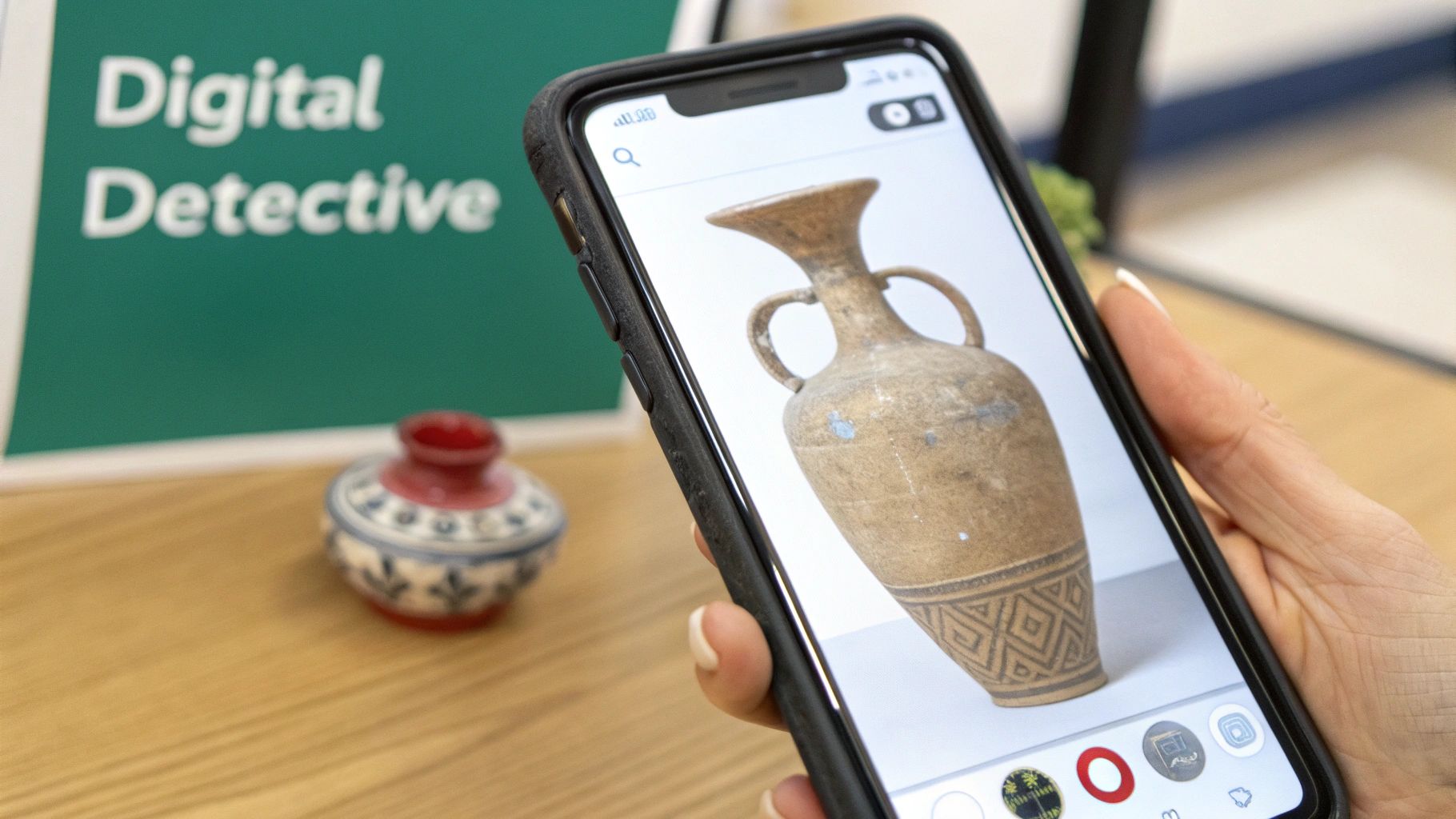
So, how exactly does an antique value app look at a simple photo and come up with a price? It’s not magic. Think of it like a team of highly trained digital detectives, each one a specialist, working your case in a matter of seconds.
It all starts the moment you tap the shutter. When you snap a picture, the app’s artificial intelligence doesn’t just see a "vase" or a "chair." It instantly breaks that image down into thousands of tiny data points, kicking off a sophisticated visual investigation.
The first detective on the scene is the Image Recognition Specialist. This AI's job is to scan for the crucial visual clues that define your item. It’s looking for things like:
- Distinctive Shapes: Is that the unique curve of a Queen Anne chair leg? Or the tell-tale silhouette of a piece of Fenton glass?
- Patterns and Colors: The AI can spot the intricate floral designs on a piece of Limoges porcelain or the specific cobalt blue of an old apothecary bottle.
- Maker’s Marks: It's also trained to find those tiny, often-hidden stamps or signatures that can instantly reveal an item's maker and origin.
The Data Detective Takes Over
Once the visual evidence is collected, the case file is passed to the second expert: the Data Analyst. This is where your photo gets compared to a colossal database filled with millions of records. This isn't just a quick Google Image search; it's a deep dive into historical auction results, museum catalogs, and sales records from marketplaces across the globe.
The real secret sauce of any good antique value app is its database. The AI connects the visual data from your photo to a massive library of what similar items have actually sold for.
The Data Analyst is like a forensics expert, sifting through all this information to find a match. It’s searching for identical or closely related items that have been bought, sold, or cataloged somewhere in the world.
From Clues to a Conclusion
Finally, the Valuation Expert puts all the pieces together. This is a smart algorithm that doesn't just look at the visual match; it also weighs critical market factors to come up with a realistic price range.
This algorithm considers how rare the item is by seeing how many similar pieces pop up in its search. It also gauges current market demand by checking how recently and for how much comparable items have sold. Even the condition of your item, based on what the AI can see in your photo, plays a huge role.
By combining sharp visual identification with hard sales data and current market trends, the app delivers a confident, evidence-based estimate. This kind of tech isn't just for antiques; you can see how various AI tools are being used in all sorts of industries. It’s this incredibly fast and complex process that lets you uncover the story—and the potential value—of your treasures with just a single snapshot.
Choosing the Right App: What Features Actually Matter?
With so many antique value apps out there, picking the right one can feel like a shot in the dark. They all promise the moon, but the quality of their results can be worlds apart. Think of it like hiring a detective; you need one with the best tools, the deepest files, and a solid reputation.
The best apps do more than just a quick image search. They blend smart AI with massive, reliable databases to give you an answer you can actually trust. To make a smart choice, you need to know which features are genuinely useful and which are just fluff.
Essential Features in an Antique Value App
When you're comparing apps, it's easy to get lost in marketing claims. The table below breaks down the must-have features that separate a good app from a great one.
| Feature | What It Does | Why It Matters |
|---|---|---|
| High-Quality Identification | Uses AI to recognize specific details like maker's marks, patterns, and construction styles from your photo. | An accurate ID is the bedrock of everything else. If the app misidentifies your item, the valuation will be completely wrong. |
| Vast Sales Database | Cross-references the identified item against a huge, up-to-date database of real auction results and sale prices. | This grounds the valuation in reality. It tells you what similar items have actually sold for, not just a random guess. |
| Access to Human Experts | Offers a way to connect with certified human appraisers for rare, complex, or high-value items. | AI isn't perfect. This feature gives you a "lifeline" for tricky items, providing peace of mind and professional validation when needed. |
| Collection Management | Lets you save your scans, add your own notes (like where you found it), and organize your items into a digital catalog. | Turns the app into your personal inventory tool. It's perfect for insurance records, tracking items for resale, or simply keeping a log of your collection. |
Ultimately, an app with these core features becomes more than just a quick lookup tool; it becomes a reliable partner in managing your collection.
High-Quality Identification: The Core Engine
The absolute heart of any antique value app is its ability to figure out exactly what you have. This isn't just a simple Google Image search. We’re talking about sophisticated AI that can spot the tiny, tell-tale details that define a piece—its maker, its origin, and its era.
A top-notch app should be able to pick up on a faint maker's mark on a piece of porcelain, the specific carving on a furniture leg, or the unique pattern in a bit of glassware. Without that kind of precision, any valuation you get is built on a house of cards.
A Vast Sales Database: The Foundation of Value
Getting the ID right is only the first step. The app then has to connect that ID to what’s happening in the real market. The most dependable apps are plugged into a massive, constantly updated database of auction results and sale prices from all over the world.
An app without a strong sales database is like a detective who identifies a suspect but has no access to their rap sheet. The bigger and more current the database, the more accurate the valuation will be.
This is what ensures the price estimate isn't just a wild guess. It's a reflection of what similar items have actually sold for, which is crucial whether you're a casual browser or a serious reseller needing reliable numbers.
Access to Experts: The Human Touch
As smart as AI is, some things just need a human eye. The best apps get this and offer a way to connect with certified human appraisers for those items that are especially rare, complicated, or potentially very valuable.
This kind of hybrid approach is a game-changer. It gives you a smooth path from a quick AI estimate to a formal appraisal right when you need it. It’s a huge relief, especially for people dealing with family heirlooms or major pieces they plan to sell.
Collection Management: Your Digital Catalog
A truly great antique value app also works as your personal inventory system. Look for a solid collection management feature that lets you save your scans, add notes, and organize all your finds.
This tool is incredibly useful for a few key reasons:
- For Insurance: You can quickly build a detailed inventory of your valuables.
- For Reselling: It helps you keep track of your stock and watch how its market value changes.
- For Family History: You can save the stories and provenance behind your heirlooms for the next generation.
This feature elevates the app from a simple gadget into a long-term tool for managing the history and value of your entire collection.
Understanding the Limits of a Digital Appraisal
An antique value app is an incredible tool for getting a first look at what you have, but it's important to think of its valuation as a starting point, not the final word. Picture the app as a sharp detective who can only work with the clues you give it. The quality of its conclusion depends entirely on the evidence it sees through your phone's camera.
Knowing these limits helps you use the app wisely. It gives you a powerful, data-driven estimate, but it has its boundaries. If you go in with realistic expectations, you'll know how to interpret the results and when it's time to bring in a human expert.
What Your Camera Cannot See
The biggest hurdle for any app is what a photo simply can't capture. The AI is fantastic at analyzing shape, pattern, and color, but it can't physically inspect an item.
Here are a few common issues a digital analysis will almost always miss:
- Internal Damage: Think of a hairline crack inside a porcelain vase or a clock with a faulty mechanism.
- Professional Restorations: High-quality repairs can be nearly invisible to the untrained eye but can dramatically change an item's value.
- Material Authenticity: The app can't feel the heft of a bronze statue or test the quality of the silver in a spoon.
- Hidden Marks: Maker's marks or signatures covered by decades of grime or wear might be completely overlooked.
An app provides a "fair market value" estimate—a snapshot of what an item might sell for today. This is not the same as a formal, certified appraisal required for insurance policies or legal matters.
This is why an app's estimate is a fantastic first step, but it shouldn't be the final word, especially if you think you're holding something truly valuable.
The Provenance and Authenticity Problem
Beyond the physical, an app has no way of knowing an item's history, or its provenance. To an AI, a simple wooden desk is just a desk. But if that same desk belonged to a famous author, its value could skyrocket. The story behind an object is completely invisible to a digital scan.
Authentication is another huge challenge. An item’s value can plummet by as much as 80% if its authenticity is successfully questioned. While an app can spot the characteristics of a genuine piece, it can't definitively authenticate it. For more on this, you can read about the complexities of the global antique market at 6wresearch.com.
This is where you need to draw the line. An app gives you the knowledge to have an intelligent conversation about your item. But for a conclusive valuation that accounts for history, repairs, and authenticity, you'll need a human expert. For items the app flags as potentially valuable or historically important, exploring professional antique appraisal services is the clear next step.
Getting Your Hands Dirty: How to Use an Antique App in the Real World
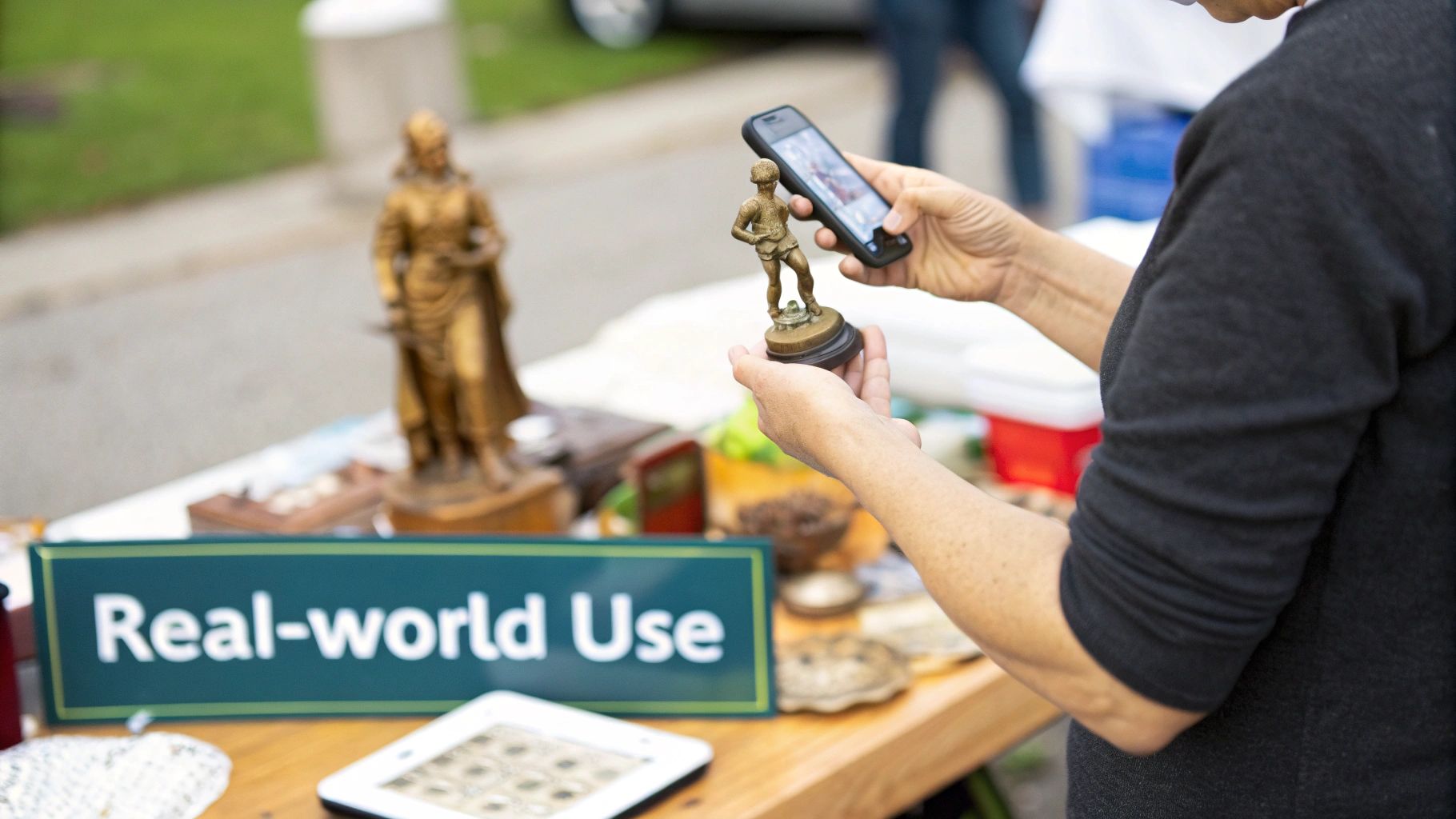
An antique value app isn't just a fun gadget—it's a seriously practical tool. But its real magic shines when you match its features to what you're actually trying to do, whether that's snagging a bargain at a flea market, documenting your family's history, or running a full-fledged resale business.
Think of it like a Swiss Army knife. For a thrifter, a quick camera scan is all about making a fast go/no-go decision. For an inheritor, that same scan is the first step toward creating a lasting digital record.
Let's break down how three different kinds of people can get the most out of their app.
Workflow 1: The Weekend Thrifter
When you're out there treasure hunting at dawn, speed is the name of the game. You have to sort the gems from the junk before the next person does. Your app is your secret weapon for making smart, snap judgments.
Your entire process should be built for the thrill of the hunt:
- Scan on Sight: The second something catches your eye, scan it. Don't hesitate. Use the app's camera right there in the aisle for the quickest feedback.
- Look for Key Clues: Zero in on the app’s identification of maker's marks, the estimated era, and where it came from. This is your fastest way to know if it's worth a second look.
- Check the Value Range: Glance at the appraisal range. Is the seller's price tag sitting comfortably below the low-end estimate? If so, you've probably hit the jackpot.
- Do a Quick Visual Check: Swipe through the visual matches to get a gut check on the ID. Seeing a few similar pieces gives you the confidence to trust the app's assessment.
This whole thing should take you less than a minute. In the fast-paced world of weekend markets, that’s a massive advantage.
Workflow 2: The Family Historian
If you're cataloging heirlooms passed down through generations, your mindset is completely different. You're not looking for a quick flip; you're building a detailed record for insurance, family archives, and future generations.
Here, a more methodical approach is best:
- Set the Stage: Find a spot with great, even lighting. Taking clear, high-quality photos is absolutely essential for an accurate identification. For a deep dive, check out our guide on photographing antiques for the best results.
- Scan and Save Each Piece: Snap a picture of each item and save it to your in-app collection. This is the foundation of your digital inventory.
- Add the Story: This is where the magic happens. Use the notes feature to document the provenance—the story behind the object. Who owned it? Where did they get it? What family memories are tied to it? This context is often more valuable than the item itself.
- Export for Safekeeping: Once you've cataloged everything, export the data. Now you have a clean digital and physical backup to share with insurance agents or estate planners.
Workflow 3: The Professional Reseller
For a pro, an antique value app is a core business tool. It helps you source smarter, price sharper, and market better. Here, accuracy and efficiency directly feed your bottom line.
Your workflow should focus on market analysis and inventory management. This involves not just identifying an item but understanding its place in the current market.
This is more important than ever. The online furniture resale market alone has ballooned to USD 34 billion and is on track to hit USD 56 billion by 2030. You can learn more about the growing interest in sustainable antiques and how it's shaping the market.
Here’s how resellers can weave an app into their daily grind:
- Sourcing Intelligence: Use the app in the wild to spot undervalued items with great resale potential. It's your eye in the field.
- Pricing Analysis: Go deep into the visual matches and historical sales data. This helps you land on a price that’s competitive but still profitable.
- Inventory Tracking: Use the collection feature as a lightweight inventory system. Log your purchase price, condition notes, and what it eventually sells for.
- Crafting Better Listings: Pull the rich historical details and descriptions straight from the app. This helps you write compelling product listings that grab the attention of serious buyers.
5. What to Do After You Get Your Digital Estimate
So, you've plugged your item into an app and have a number staring back at you. That jolt of discovery is exciting, but what's next? Think of that digital estimate not as the final word, but as the starting pistol for your item’s journey.
This valuation is a powerful clue. It gives you the confidence to make a smart decision, whether you're hoping to sell, get insurance, or just hang on to a piece of your family's story. The app has given you a map; now it's time to choose your destination.
Your next move really depends on what you want to do with the piece.
Turning Your Estimate into Action
If you're looking to sell, the app’s valuation is your first piece of market research. It helps you figure out where your item fits. Is it something that might sell quickly on a platform like Etsy, or is it a more serious piece that belongs in a specialized auction?
For a deeper dive into all your options, our guide on where to sell antiques is the perfect place to start.
But maybe selling isn't your goal. If you're focused on preservation or insurance, that digital estimate is still incredibly useful. It gives you a solid foundation for a few important next steps:
- Seek a Formal Appraisal: If the app suggests a high value, that's your cue. Use that initial estimate to justify the cost of getting a certified, in-person appraisal for your insurance policy.
- Build Your Inventory: Take advantage of the app’s collection management tools. Log the item’s details, its estimated value, and whatever you know about its history. This is invaluable for your personal records or for estate planning down the road.
- Connect with the Pros: Did the app flag your item as something special or rare? Consider reaching out to a local historical society or a collector's group. These folks live and breathe this stuff and can often share insights you won't find anywhere else.
Common Questions About Antique Value Apps
Jumping into the world of antiques can feel like learning a new language, and it's natural to have questions about the tools designed to help. If you're wondering how these apps really work, what they cost, or what to expect, you're in the right place. Let's clear up some of the most common questions.
How Accurate Are These Apps, Really?
This is the big one, isn't it? The short answer is: they're surprisingly good for getting a solid starting point. A quality antique value app isn't just guessing; it's crunching the numbers from millions of real-world auction results and sales records to give you a "fair market value." They're fantastic at identifying items that are common or even moderately rare, especially if they have clear, distinct features.
That said, an app's estimate is not the same as a formal, certified appraisal. If you need a value for insurance or legal reasons, you'll still need a certified professional to look at the item in person. Think of the app as your first step—a very smart, data-backed first step.
What Kinds of Things Can I Actually Scan?
You can scan a huge range of items. The visual recognition technology is pretty flexible and works well across many popular collecting categories.
- Ceramics and Glassware: Perfect for identifying maker's marks on porcelain or recognizing patterns on vintage glass.
- Furniture: It can help pinpoint styles, eras, and wood types just by analyzing the design.
- Jewelry and Coins: Great for spotting tiny details like mint marks on coins or designer signatures on jewelry.
- Art and Collectibles: It's often able to recognize an artist's style, different types of prints, and all sorts of memorabilia.
The trick is always a clear photo. Items with unique shapes, patterns, or markings almost always get the best results.
Are These Apps Genuinely Free to Use?
Many apps, like Curio, give you a few free scans to get started. This is a great way to kick the tires and see if you like how it works without pulling out your wallet. Once you've used your free credits, most switch to a subscription model, either monthly or yearly. A subscription typically unlocks unlimited scans and other useful tools, like features for managing your collection.
These apps are powerful tools that dig into historical sales data, like recent auction results, to figure out what something is worth. They often help people discover hidden gems that turn out to be worth 5 to 10 times more than they ever imagined. You can find more details on how market data shapes these values at asheford.com.
Is My Collection and Data Kept Private?
Absolutely. Any reputable app takes your privacy seriously. The photos you upload are used for one thing: to get you an identification and valuation. While they might be used anonymously to help train the AI to be even smarter, your personal collection and its value are kept private and never shared publicly.
Ready to find out what treasures are hiding in plain sight? With Curio, you can get instant, data-driven answers and start organizing your digital collection today. Download Curio and make your first scan!