
Ever walk past a table at a flea market and get that little tingle? That feeling you might be overlooking a hidden gem? You're not wrong to wonder. The most profitable flips often hide in plain sight, tucked away in categories people are clamoring for: think vintage clothing, Mid-Century Modern furniture, nostalgic collectibles, and brand-name electronics.
Success in this game isn’t about luck. It’s about knowing what to look for—and where to look.
Finding Treasures Where Others See Trash
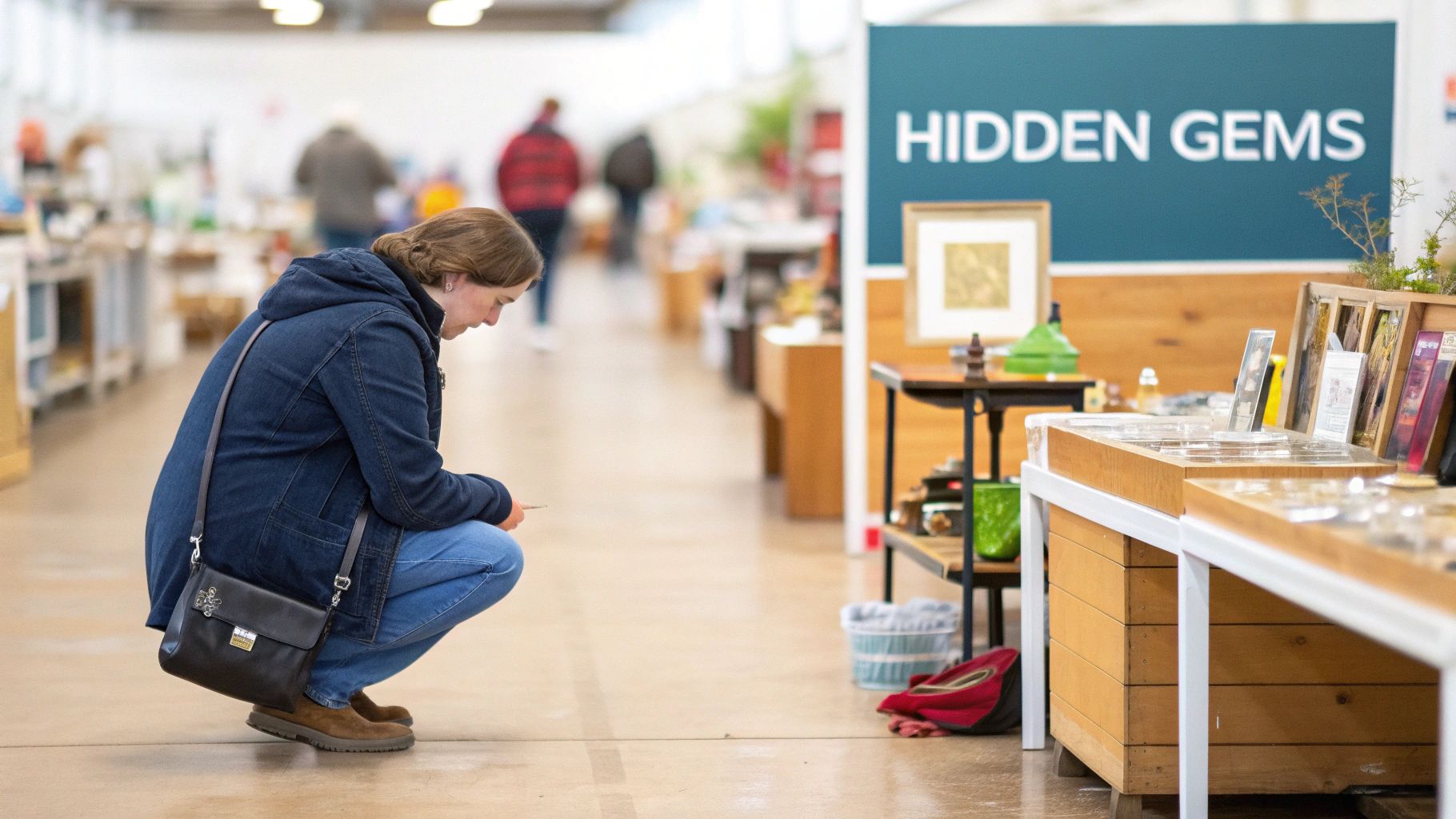
The real art of flipping is turning someone’s clutter into your cash. What started as a side hustle has exploded, thanks to people looking for sustainable, unique items that you just can't find in a big-box store. And it's not a small trend—the global secondhand market is on track to hit $289 billion by 2027.
This guide is designed to get you past the generic advice. We're going to dig into the actual strategies for spotting high-margin categories. You'll learn how to find everything from an antique dresser with "good bones" to that forgotten comic book that taps into powerful nostalgia.
The Mindset of a Successful Flipper
Before we get into the nitty-gritty of what to buy, let's talk about the right mindset. Great flippers see potential where everyone else just sees junk. It’s about training your eye for quality, keeping a pulse on what’s trending, and having the patience to wait for the right piece.
After all, some of the most valuable vintage items look pretty unremarkable at first glance.
This isn't just about "buy low, sell high." It's about becoming a curator. You're hunting for items with a story, things that have a built-in audience of buyers already searching for them. It’s a mix of good research, solid strategy, and having the right tools to make a smart call right there on the spot.
The real secret is finding things that are consistently undervalued where you buy them but have a proven, high-demand resale market. Think of it as arbitrage for physical goods. You’re the expert connecting a great find with its true market value.
To get you started, here’s a quick overview of the most promising categories for flipping.
Top Categories for Profitable Flips at a Glance
This table breaks down the most profitable item categories, giving you a snapshot of their typical profit potential and the best places to hunt for them.
| Item Category | Average Profit Margin | Best Sourcing Channels | Key Success Factor |
|---|---|---|---|
| Furniture | 100% - 400% | Estate sales, thrift stores, Facebook Marketplace | Identifying solid wood, brand names, and unique designs. |
| Vintage Clothing | 200% - 1000% | Garage sales, vintage shops, online auctions | Knowing high-demand decades (e.g., 70s, 90s) and brands. |
| Electronics | 50% - 200% | Flea markets, local classifieds, e-waste centers | Testing functionality and spotting sought-after models. |
| Collectibles | 300% - 2000%+ | Flea markets, online forums, estate sales | Deep niche knowledge (e.g., vintage toys, rare coins). |
| Home Decor | 100% - 500% | Thrift stores, garage sales, consignment shops | Recognizing quality materials and timeless styles. |
| Books | 500% - 5000%+ | Library sales, thrift stores, used bookstores | Finding first editions, signed copies, and rare niche topics. |
While these numbers are a great starting point, your success ultimately comes down to your ability to identify valuable items quickly and accurately.
Leveraging Technology to Gain an Edge
Back in the day, flipping meant having an encyclopedic memory or dragging guidebooks to every sale. Not anymore. Today's tech gives you a massive advantage in the field.
Think of it this way: what if you had an antiques expert in your pocket? That’s what modern tools can do.
For example, an app like Curio helps you:
- Identify Items Instantly: Just snap a photo to learn what something is, where it’s from, and when it was made.
- Get Quick Appraisals: Find out an item’s estimated market value before you even think about making an offer.
- Compare Visual Matches: See what similar items have sold for recently online to confirm your potential profit.
Whether you’re just starting out or you’ve been doing this for years, using technology like this takes a ton of the guesswork out of the equation, reduces your risk, and ultimately helps you make more money.
Turning Old Furniture into High-Value Decor
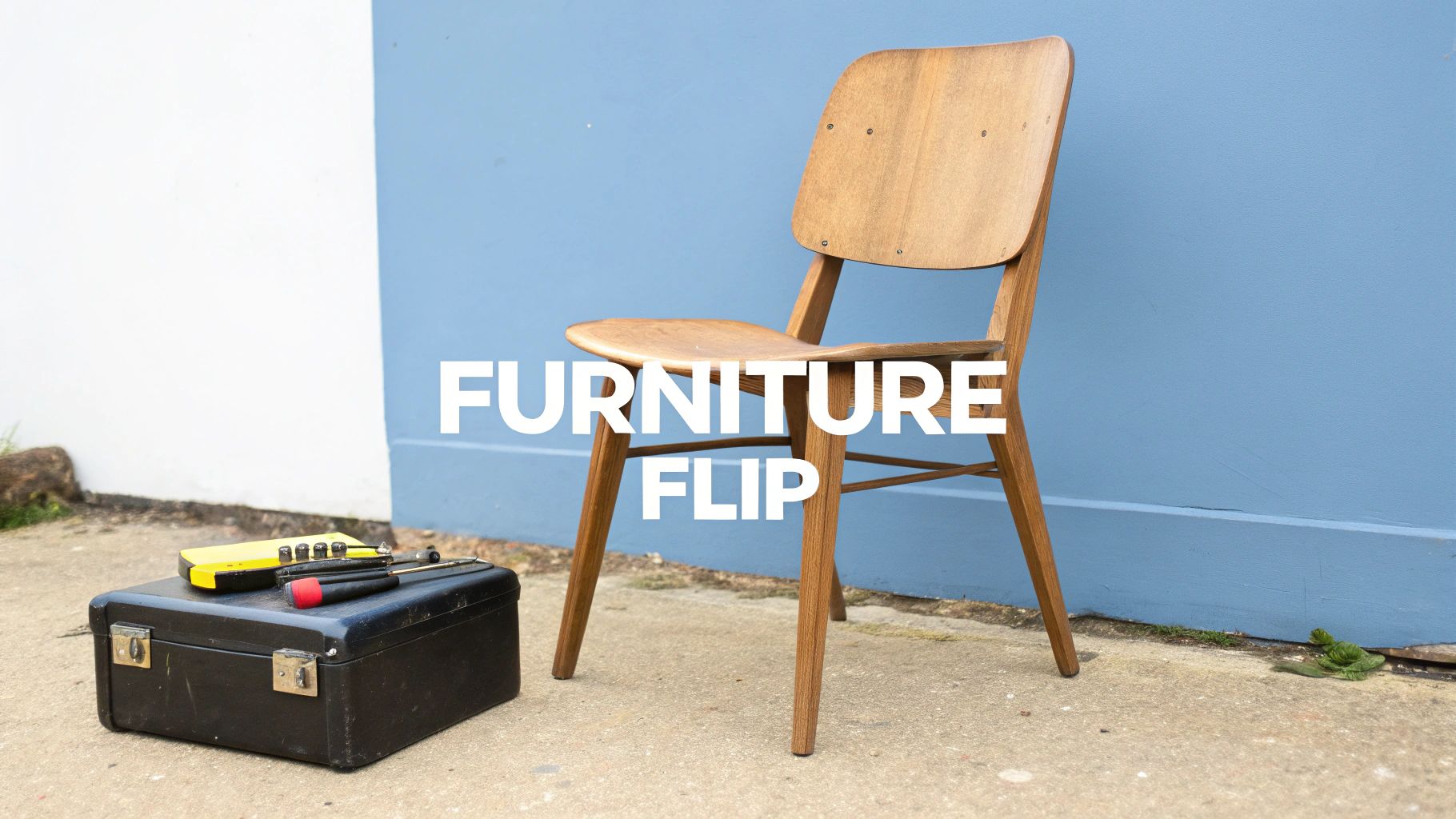
Flipping furniture has always been one of the most reliable and rewarding hustles out there. Why? Because the demand for unique, well-made pieces never really goes away, especially now that so many people are tired of mass-produced "fast furniture." With a bit of elbow grease and a good eye, you can take a dusty, forgotten item and turn it into the centerpiece of someone's home.
The real secret is learning to see potential where others just see damage. That solid wood dresser from the 60s might have some scratches, sure, but its "bones" are leagues better than a new particleboard version from a big-box store. Your profit lives in that gap—the space between its thrift store price tag and its true potential.
Identifying Quality Pieces in the Wild
The first skill you need to develop is telling quality construction from cheap knock-offs. Walking into a thrift store or an estate sale can be overwhelming, so here’s a quick cheat sheet for finding the pieces actually worth your time.
- Material Matters Most: Solid wood is always the goal. Look for real wood grain on the top, sides, and inside the drawers. If you see a uniform, sawdust-like texture on an unfinished edge, that’s particleboard or MDF—it’s heavy, and not what you want.
- Check the Joints: Good furniture is built to last. The gold standard is dovetail joints in the drawers (they look like interlocking puzzle pieces). Staples and glue are a dead giveaway of cheap construction.
- Hunt for Maker’s Marks: Always check the back, underneath, and inside drawers for any stamps, labels, or little metal plaques. Names like Drexel, Henredon, Ethan Allen, and Lane are signs of quality and have a built-in audience of eager buyers.
- Do the Wobble Test: Give the piece a gentle shake. If it feels like it’s about to fall apart, you’re looking at structural issues that can be a real headache to fix. A little sway is fine, but major instability is a red flag.
Right now, styles like Mid-Century Modern (MCM) are on fire. These pieces from the 1950s and 60s, known for their clean lines and tapered legs, are some of the absolute best items to flip for profit. They are in high demand and can fetch great prices.
Basic Restoration That Adds Big Value
You don't need a full-blown workshop to dramatically increase a piece's value. In most cases, a few simple, strategic fixes are all it takes. The golden rule here is to enhance the piece’s character, not erase it.
The biggest question you'll face is whether to paint or to preserve the original wood. For a genuinely rare or valuable antique, painting it can tank its value. But for a more common piece with a finish that's beyond saving, a fresh coat of paint in a modern color can be a total game-changer.
Pro Tip: If you find a piece with gorgeous wood grain—like walnut or teak—always try to restore that original finish first. A good cleaning and a fresh coat of furniture oil can work miracles and will almost always be worth more to a buyer than a painted surface.
Simple repairs make a huge difference, too. A little wood glue and a couple of clamps can fix wobbly legs overnight. Wood filler is your best friend for hiding deep gouges; once it’s dry and sanded, the damage practically disappears. If you've got a worn-out couch, learning how to choose the perfect fitted sofa slipcover can instantly boost its resale appeal.
Crafting Listings That Actually Sell
How you present your furniture online is just as crucial as the restoration itself. Think of your listing as your digital storefront—great photos are your number one salesperson.
- Stage It Right: Please, don't take photos in your cluttered garage. Find a spot with good natural light and a clean background. A simple prop, like a plant or a stack of books, helps buyers imagine the piece in their own space.
- Show Off the Details: Take photos from every angle. Get close-ups of the good stuff: the original hardware, that beautiful wood grain, the dovetail joints. It’s also smart to be honest and include a clear photo of any remaining minor flaws.
- Write a Compelling Story: Don't just list the dimensions. Tell a little story. Mention the style ("Stunning Mid-Century Modern nine-drawer dresser"), the materials ("solid walnut construction"), and the brand, if you know it. Use the keywords you think people are searching for.
When it comes to pricing, a little research goes a long way. Hop on Facebook Marketplace, Chairish, or eBay and search for comparable items. The key is to look at what similar pieces have actually sold for, not just what people are asking. Price your piece competitively based on its condition and the demand in your area.
If you’ve done a beautiful restoration and have great photos, don’t be afraid to price your item at the higher end of what you see. Quality will always find a buyer. For a deeper dive, you can learn more about how to use furniture polish to bring out a piece's natural beauty in our detailed guide: https://www.curio.app/blog/restoration-furniture-polish
Tapping into Nostalgia and Pop Culture
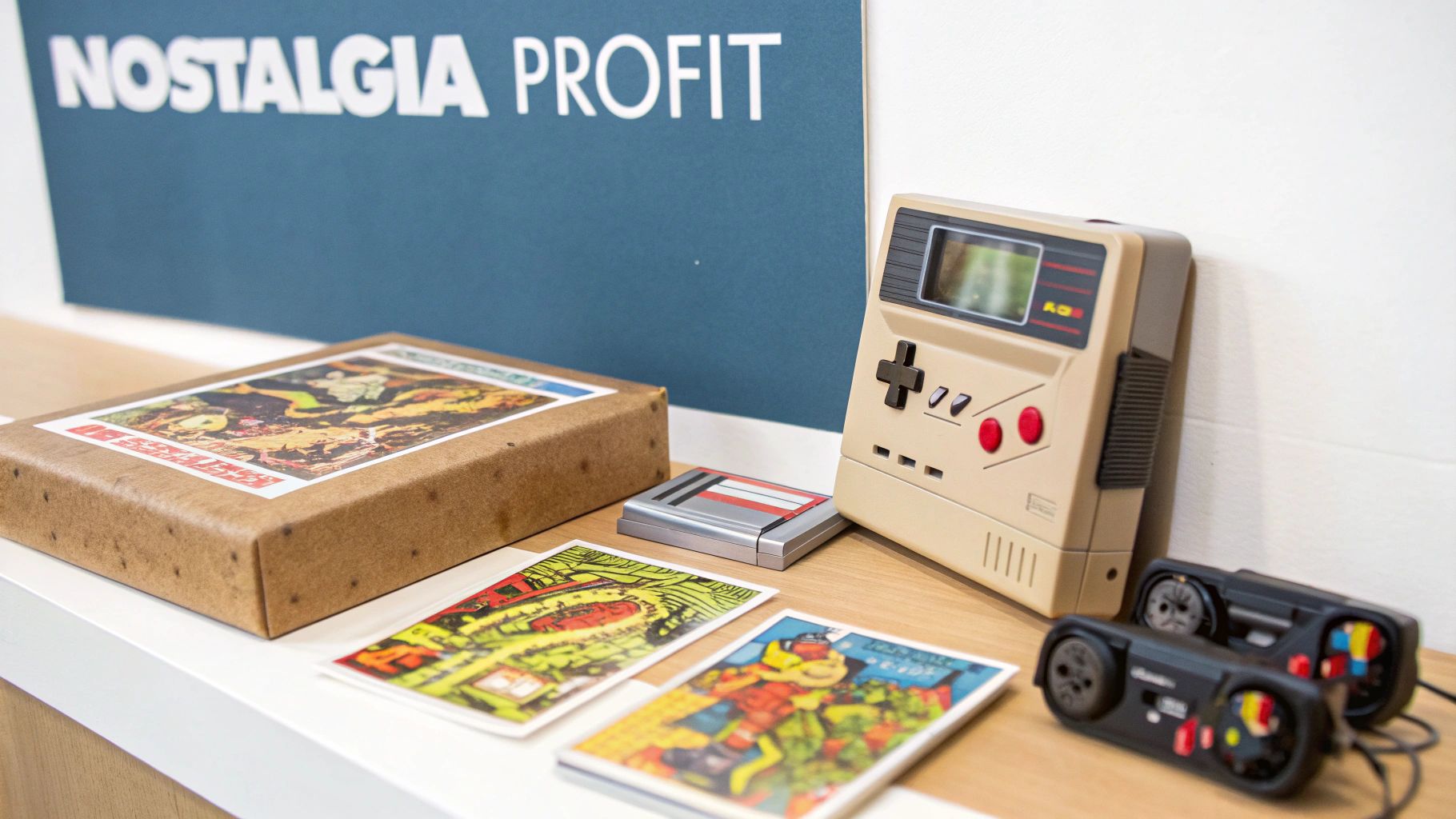
Nostalgia is a goldmine for flippers. It’s the invisible force that can turn a dusty old toy from someone's attic into a serious payday. For buyers, these aren't just objects; they're a direct line back to their childhood, and that emotional connection drives prices sky-high.
When you're dealing in this niche, remember you're not just selling a thing—you're selling a feeling. Iconic franchises from the 80s and 90s, obscure limited-edition runs, and forgotten pop culture artifacts all have passionate communities of collectors ready to pay up. Developing an eye for these items in a sea of junk at a garage sale is a skill that pays off, big time.
What Makes a Collectible Worth Flipping
Before you dive in, you need to get three things straight: condition, completeness, and authenticity. A tiny flaw or a missing piece can be the difference between a $10 novelty and a $1,000 grail.
- Condition is Everything: Always look for scratches, fading, dents, or tears. The closer it is to how it looked on the shelf back in the day, the more it’s worth.
- Don't Toss the Box: An item still sealed in its original packaging (known as "Mint in Box" or MIB) can be worth 10 times more than one without it. Sometimes, even an empty box in good shape can be sold for good money.
- Check for All the Parts: Got an action figure or a board game? Make sure all the accessories and pieces are there. A G.I. Joe without his rifle or a game missing a key token will take a major hit in value.
The real money in this game goes to the flippers who sweat the small stuff. A casual seller might see just another action figure, but a pro knows that a slight difference in paint application could be a rare variant worth a fortune.
Hot Items to Hunt For at Sales
Knowing what to look for gives you a massive edge. Trends come and go, but certain pop culture titans have proven they have lasting appeal and are consistently profitable flips.
Keep your eyes peeled for these categories:
- Vintage Video Games: Retro gaming is on fire. Look for original Nintendo (NES), Super Nintendo, and Nintendo 64 games, especially classics like Pokémon, Zelda, and Mario. A working console with its original controllers is also a fantastic find.
- Action Figures from the 70s-90s: We're talking original Kenner Star Wars, G.I. Joe, Transformers, and Teenage Mutant Ninja Turtles. These are the exact kinds of things people find tucked away in boxes at estate sales.
- Trading Cards: First-edition Pokémon and early Magic: The Gathering cards are huge right now. Always check for holographic cards and first-edition stamps. Even wacky non-sports cards like Garbage Pail Kids have a loyal following.
- Comic Books: The "Silver Age" (around 1956-1970) and "Bronze Age" (1970-1985) are prime hunting grounds. You're looking for key issues, like the first appearance of a major hero or villain.
Vintage toys are some of the absolute best items to flip, especially when you can snag them for cheap at thrift stores. For example, some early Star Wars figures from the late '70s have sold for insane amounts. A perfect 1978 Luke Skywalker in its original packaging once sold for over $25,000. Even more common figures bought for less than $5 can resell for $100-$500 after a good cleaning.
Your Secret Weapon in the Field
The world of collectibles is swimming with fakes and reproductions, so being able to verify something on the spot is crucial. Imagine you're at a flea market and find what looks like one of the most valuable Coca-Cola bottles. Is it real? Is it worth grabbing? You have to decide fast before someone else does.
This is where a tool like the Curio app becomes a game-changer. Instead of guessing, you can get instant intel right on your phone. Just snap a photo, and the app’s image recognition identifies the item, flags known fakes, and pulls up real-time market prices from recent sales. It lets you make a smart, data-driven decision in seconds, turning a risky gamble into a calculated score.
Going Beyond the Obvious: High-Profit Niche Markets
While everyone else is fighting over mid-century dressers and brand-name clothes, the real money is often hiding in plain sight. I’m talking about specialized niche markets—the kind most flippers walk right past because they seem too complicated or obscure.
This is where deep knowledge pays off, big time. Venturing into niches like antique porcelain, rare coins, or vintage electronics requires a more discerning eye, but the payoff can be huge. Success here isn't about guesswork; it's about spotting the tiny details that separate a common find from a rare treasure. A simple manufacturer's stamp on a vase or a minor minting error on a coin can be the difference between a $10 sale and a $1,000 score. These are the details that turn a good flipper into a great one.
The Surprisingly Lucrative World of Antique Porcelain
Antique porcelain and ceramics are a fantastic niche if you're willing to learn. A lot of resellers are scared off by the fragility and the sheer number of fakes, which is great news for you—it means less competition. The key is knowing what to look for, and it almost always starts with the maker's mark.
Here’s how I quickly vet a piece:
- Flip It Over: The first thing you should always do is turn a piece over to look for the maker's mark. Prestigious names like Meissen (look for the iconic crossed swords), Limoges, or Royal Doulton have distinct marks that scream quality.
- Check the Condition: Hold the piece up to a light source to spot any faint hairline cracks. Then, run your finger gently along the edges and rim to feel for chips. Mint condition is the gold standard.
- Look for Hand-Painted Details: Mass-produced stuff often has uniform, almost pixelated patterns. Real hand-painted porcelain will have slight imperfections and visible brushstrokes that add to its character and value.
The ceiling in this market can be shockingly high. Common finds from makers like Lladro and Hummel can sell for hundreds, but the truly rare stuff is life-changing. An 18th-century Meissen figurine, for example, recently sold for $1.2 million at auction. More realistically, you might find 19th-century Chinese export pieces at an estate sale for under $100 that can resell for thousands. Experts are even predicting a 25% value spike in this category, which you can read more about at Country Living.
Digging for Gold: Rare Coins and Currency
Coin collecting might sound like a dusty old hobby, but it’s a red-hot market. Most flippers ignore coins because they don't understand grading or rarity, but you don't need to be a numismatist to make money. You just need to know what to look for beyond the date.
Focus on these three value-drivers:
- Mint Marks: A tiny letter on a coin (like 'S' for San Francisco or 'D' for Denver) can dramatically change its value. Some mints produced far fewer coins in certain years, making them instant collectibles.
- Error Coins: Keep an eye out for mistakes. Things like double strikes, off-center images, or missing elements are highly sought after by collectors who love these oddities.
- Key Dates: For any given coin, certain years are known as "key dates" due to low production numbers. These are the holy grails for that particular series.
A perfect example is the 1943 copper penny. Wartime copper shortages meant almost all pennies that year were made of steel. If you ever find a real copper one, you've hit the jackpot—one sold for over $1 million. You truly never know what's hiding in an old coffee can full of change.
The Cult Following of Vintage Electronics
Most people see old electronics as junk, but there's a passionate community of collectors chasing the superior build quality and unique vibe of retro tech. From chunky stereo receivers to classic video game consoles, nostalgia sells.
Here are a few things that always move:
- Vintage Stereo Receivers: Brands like Marantz, Pioneer, and Sansui from the 1970s are legendary for their warm sound and built-like-a-tank construction. A working unit can easily flip for several hundred dollars.
- Early Personal Computers: An Apple II or a Commodore 64 in good working condition is a museum piece for the right buyer.
- Retro Gaming Consoles: Original systems like the Atari 2600 or Sega Genesis are always in demand, especially if you can find them with the original boxes and manuals.
The biggest challenge here is testing. I always try to plug an item in before buying. If you can't, you have to factor the risk of it being dead into your offer price. Don't forget that even broken units sold "for parts" can fetch decent money from hobbyists who need them for repairs.
When you’re out in the field, trying to identify these specialized items on the fly can feel overwhelming. This is where a tool like Curio becomes your secret weapon. It uses your phone's camera to help you distinguish a priceless vase from a modern knockoff or spot a rare coin variant in seconds.
Below is an example of what an antique identification tool can show you, giving you the key details you need on the spot.
Having that kind of instant analysis in your pocket gives you the confidence to make smart buying decisions right then and there, turning what feels like a risky guess into a calculated, profitable investment.
Mastering Sourcing and Smart Negotiation

Finding the right items to flip is only half the game. The real money is made when you master the art of sourcing—getting your hands on those items for a price that leaves plenty of room for profit. This is where a little strategy and know-how can separate the pros from the hobbyists.
Remember, your profit is made when you buy, not when you sell.
Different hunting grounds offer unique pros and cons. Thrift stores have a constantly rotating stock, but you have to be there often to snag the good stuff. Estate sales, on the other hand, can be a goldmine for entire collections, but they're often crowded and competitive. Learning the nuances of each channel is a core skill for anyone serious about flipping.
Finding Deals Before Anyone Else
Your best friends in this business are timing and consistency. If you're hitting the thrift stores, get to know their restocking schedules. A lot of shops put out fresh inventory on Mondays and Tuesdays, which means you can get first dibs before the weekend crowd picks everything over.
Estate sales are a different beast. The first day has the best selection, but it's also a madhouse. The real bargains often show up on the last day when sellers are desperate to clear out the house. That's when you'll see deep discounts, often 50% or more.
A few more tips from the field:
- Garage Sales: Get there early for the best stuff, but also swing by an hour before they pack up. Most people would rather give you a steal than haul everything back inside.
- Online Auctions: Sites like eBay give you access to a huge market, but watch out for bidding wars that can kill your profit. Know your maximum price and walk away if it goes higher.
- Facebook Marketplace: This is my go-to for local deals, especially on bigger pieces like furniture. You have to be quick, though—the best listings are often gone in minutes.
Your goal isn't just finding cool things; it's about finding undervalued assets. The smartest flippers build relationships with thrift store managers and estate sale organizers. A friendly heads-up about a great piece coming in is worth its weight in gold.
The Art of Polite Negotiation
Negotiating doesn't have to be a big, confrontational event. Outside of major retail thrift chains, most prices are flexible. A polite, reasonable offer is almost always welcome, but the trick is to have a good reason for it.
Just asking "What's the best you can do?" is lazy and rarely works. You need to be specific and confident. When you spot a potential flip, do a quick bit of research right there. This is where having a tool like the Curio app on your phone gives you a huge leg up. In seconds, you can see what similar items have actually sold for recently.
Now you can make a data-backed offer. Instead of just pulling a number out of thin air, you can say something like, "I see this model has been selling online for about $150. Based on that, would you be able to do $40?"
This simple shift shows you've done your homework and makes your offer feel fair and informed, not just cheap. It's an approach that will massively boost your buying power and, ultimately, your profits.
Your Flipping Toolkit: Working Smarter, Not Harder
You've learned how to spot quality furniture, identify valuable collectibles, and sniff out high-profit niches. That's the core skill. But the real secret to turning this from a fun hobby into a real business is building an efficient process, and that means having the right tools.
Think of it this way: the most successful flippers aren't just relying on a good eye. They use specific tools to make faster, smarter decisions that protect their bottom line. It’s all about giving yourself an edge.
Your Expert in the Field
The biggest hurdle for any flipper, new or seasoned, is making a quick, confident decision on the spot. You find something that looks promising, but hesitation is the enemy. While you're second-guessing, someone else who knows exactly what they're looking at can swoop in and grab the deal.
This is where having an "expert in your pocket" completely changes the game.
An app like Curio was built to solve this exact problem. It's designed to give you critical information right when you need it most—standing in a thrift store, at a flea market, or in someone's garage.
- Instant Identification: Snap a photo of that weird lamp or unmarked chair, and the app can tell you what it is, its potential origin, and its backstory. No more fumbling through Google searches in a crowded estate sale trying to describe what you're seeing.
- On-the-Spot Appraisals: This is the big one. You get a real-time market value estimate before you make an offer. This data gives you the confidence to negotiate a good price and, more importantly, ensures you're leaving plenty of room for profit.
- Inventory Management: You can use its collection feature to log your finds right after you buy them. Keep a running record of what you have, what you paid, and its estimated resale value.
A tool like this isn't just about convenience—it's your best defense against bad buys. By validating an item's worth before you pull out your wallet, you dramatically reduce the risk of overpaying or getting duped by a clever reproduction.
At the end of the day, efficiency separates a side hustle from a scalable business. To really grow your earnings, it’s crucial to focus on improving profit margins, and that's where technology helps. Tools like Curio cut down your research time from hours to seconds, giving you the data you need to make more profitable moves. It's about taking the guesswork out of the hunt so you can build a smarter, more successful flipping operation.
Common Questions About Flipping for Profit
Even with a solid plan, you're going to have questions. It's just part of the process. Whether you're just starting to dip your toes in or you're a seasoned pro looking to tighten up your game, getting good answers to common roadblocks can be a game-changer.
Let's dig into a few of the questions I hear all the time.
What Are the Biggest Mistakes to Avoid When Starting Out?
The classic rookie mistake? Overpaying for inventory. You get a rush of excitement, that "I found a treasure!" feeling, and you pull the trigger without doing the research right then and there. It happens to everyone at first, but it can sink you.
Another one that'll get you is underestimating shipping costs. It’s a silent profit-killer. You think you’ve made a great sale, then a $40 shipping bill eats your entire margin.
A few other traps I see people fall into:
- Bad Photos: Your pictures do the selling. If they're dark, blurry, or have your messy laundry in the background, buyers will just scroll right past.
- Ignoring the Heavy Lifting: That massive armoire looks amazing at the estate sale, but how are you getting it home? And where will it live until it sells? Think logistics before you buy.
- Forgetting the Fees: Platform commissions, payment processing fees, shipping supplies... they all add up. You have to bake these into your price from the start.
The single best piece of advice I can give is this: verify an item's value before you hand over any cash. A quick search or a tool that gives you a data-backed appraisal can save you from a costly gut decision.
How Can I Tell if an Item Is Authentic?
Spotting a genuine antique from a modern knockoff is a skill you build with experience. It’s like developing a sixth sense, but it starts with knowing what to look for.
The first thing to do is hunt for maker's marks. These are the stamps, signatures, or labels that tell you who made the piece. A quick Google search of that mark can tell you a lot.
Then, get your hands on it. Feel the materials. Old wood has a certain patina—a feel and look that only comes with age. Vintage furniture often has tell-tale construction, like dovetail joints, that you won't see on mass-produced modern stuff. Reproductions, on the other hand, often feel a little too perfect or have fake aging that looks uniform and painted on.
What Is the Best Platform to Sell Flipped Items On?
There’s no magic bullet here. The "best" platform really, truly depends on what you're selling. The smartest move is usually to spread your items across a few different marketplaces to see what sticks.
For smaller collectibles, vintage clothes, and general goods, eBay and Etsy are powerhouses. They have enormous, built-in audiences looking for exactly that kind of thing. But if you're flipping a heavy dresser or a big piece of art, Facebook Marketplace is your best friend for local sales—no shipping nightmares.
And for the really good stuff, like high-end designer bags or serious antiques? Niche sites like Chairish or 1stDibs will connect you with buyers who are ready to pay a premium.
Ready to stop guessing and start knowing what things are worth? Curio is like having an expert appraiser in your pocket, giving you instant identification and real-time market data on the spot. Download the app from Curio's website and start making smarter, more profitable flips today.