For many, collecting oil lamps is so much more than a hobby. It's about holding a real piece of the past in your hands, connecting with the warm, flickering light that filled homes long before electricity ever did. Every lamp, whether it's a simple, functional model or a fancy parlor piece, tells a story of craftsmanship, innovation, and daily life from another time.
The Timeless Appeal of Collecting Oil Lamps
Long before we could just flip a switch, the soft glow of an oil lamp was the heart of the home. It lit up family dinners, quiet evenings with a book, and late-night chats. That gentle, living light sparks a powerful sense of nostalgia and calm, a welcome break from our hyper-connected world. This feeling is at the core of why so many people are drawn to collecting oil lamps. It's a passion that beautifully marries history, art, and function.
I like to think of each lamp as its own little time capsule. A brass lamp with an ornate, floral font can instantly take you back to a Victorian parlor. A sleek, unadorned lamp might speak to the practical elegance of the early 20th century. It’s a hobby that welcomes everyone, whether you’re just looking for one beautiful piece for your mantel or you’re a serious collector on the hunt for rare finds.
More Than Just a Light Source
The magic of these objects goes far beyond just providing light. For many enthusiasts, collecting is about admiring the incredible artistry and clever engineering of a forgotten era. The level of craftsmanship you'll find is often stunning—showcasing skills in glassblowing, metalwork, and decorative painting that are hard to come by today.
When you collect, you become a custodian of history. Every lamp you add to your collection is an artifact saved, a story that won't be forgotten. You're actively participating in preserving functional art.
This journey connects you with the past in a way that’s incredibly personal. You aren't just reading about history; you’re holding it, cleaning it, and giving it a new life. This guide is here to give you the foundation you need to start your own collection with confidence. We’ll walk through everything from identifying makers and determining value to proper care, turning your curiosity into a truly rewarding passion.
Your adventure into the world of antique lighting begins now.
A Journey Through Oil Lamp History
To really get into collecting oil lamps, you first have to appreciate their incredible story. This journey doesn’t start in a fancy Victorian parlor but thousands of years ago with the most basic designs imaginable. The very first lamps were just hollowed-out stones or terracotta dishes that held animal fat or vegetable oil, lit by a simple plant-fiber wick. It's these humble tools that gave humanity its first reliable, portable light, changing civilization forever.
For centuries, this simple design barely changed. Roman potters cranked out countless terracotta lamps, many decorated with intricate cultural motifs, but the light they gave off was still pretty dim and smoky. That was just the reality of artificial light for most of human history.
The first real breakthrough didn't happen until the late 18th century with the invention of the Argand lamp. The change was as dramatic as going from a single candle to a modern lightbulb. The Argand lamp introduced a revolutionary circular wick and a glass chimney, which massively improved the airflow to the flame. This one innovation created a light that was 10 to 12 times brighter than a candle, completely transforming how people lit their homes and paving the way for the golden age of the oil lamp.
The Dawn of the Kerosene Era
The true explosion in popularity, however, came in the mid-19th century when kerosene became widely available. It was cheaper, burned cleaner, and was far more efficient than the whale oil it replaced, quickly becoming the fuel of choice for everyone. This new fuel kicked off a massive wave of innovation and production, especially in America and Europe.
Suddenly, an oil lamp wasn't just a utilitarian object; it was a statement piece, a centerpiece of home decor. Manufacturers fell over themselves to create the most beautiful and elaborate designs, catering to the tastes of a growing middle class. To really grasp the history, you need to understand the difference between vintage and antique items, as these terms really matter when it comes to historical context and value.
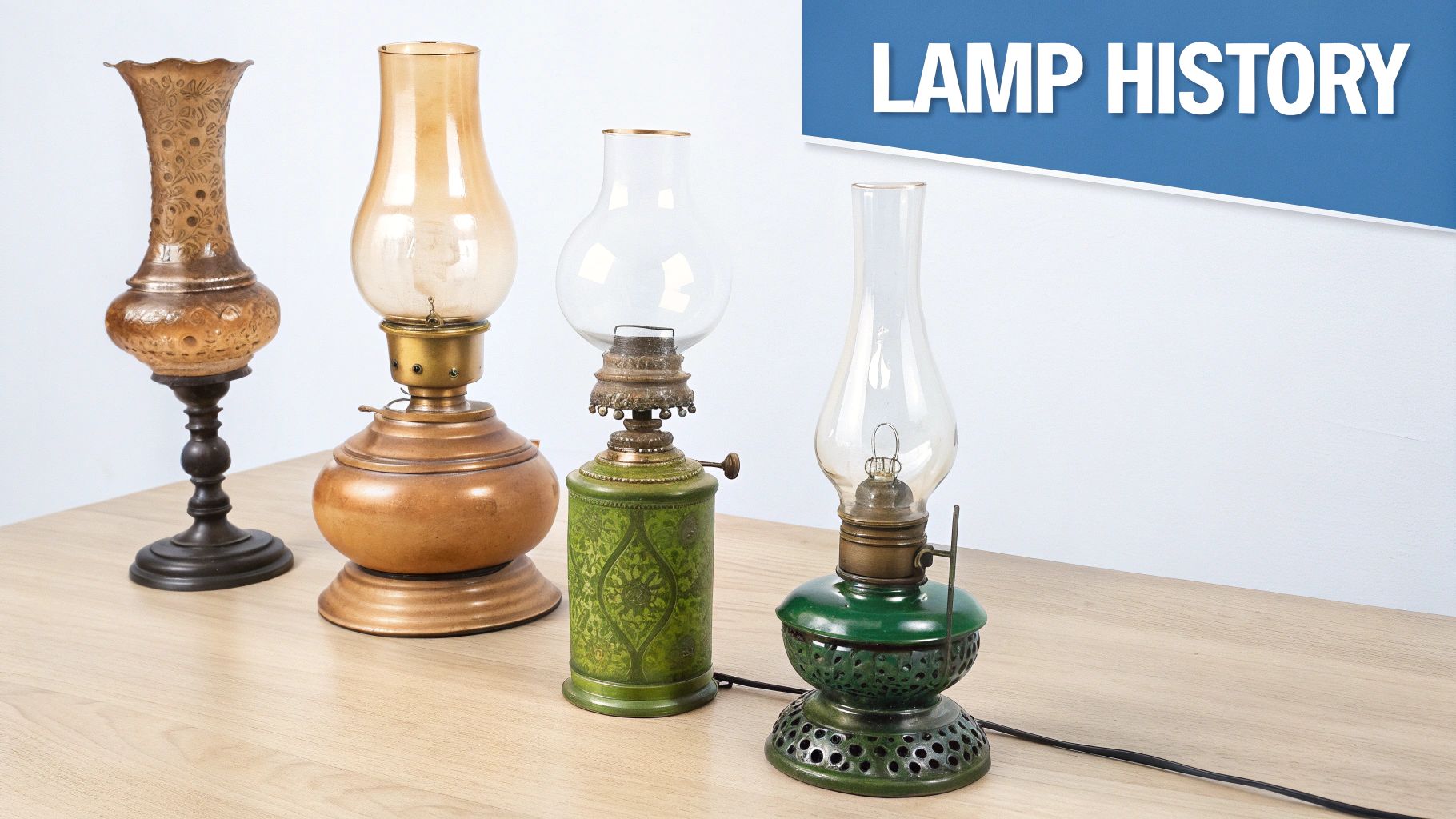
The Victorian era (1837-1901) is often seen as the absolute peak of oil lamp artistry. During this time, lamps were made with an incredible variety of materials and in countless styles.
- Ornate Brass: You'll see tons of polished brass fonts, often set on intricate bases and decorated with detailed floral or geometric patterns.
- Colorful Art Glass: Companies like Hobbs, Brockunier & Co. were famous for producing stunning lamps in cranberry, opalescent, and frosted glass.
- Hand-Painted Shades: Delicate milk glass or porcelain shades were often hand-painted with beautiful little scenes of flowers, landscapes, and even portraits.
The nostalgia for this pre-electric world is what keeps the collector's market alive and well. Before Thomas Edison's light bulb showed up in 1879, oil lamps lit an astonishing 95% of households. By 1900, there were over 1.5 billion of them in use around the world.
To help you get a feel for how these lamps changed over time, here’s a quick guide to the major eras.
Key Eras in Oil Lamp Design
This table breaks down the defining characteristics of oil lamps from different historical periods. Think of it as a cheat sheet to help you start identifying potential finds out in the wild.
| Era | Time Period | Common Materials | Key Design Features |
|---|---|---|---|
| Early Utilitarian | Antiquity - 1780s | Terracotta, Stone, Iron | Simple, open-flame dish or vessel design; minimal decoration. |
| Argand & Early Kerosene | 1780s - 1860s | Brass, Tin, Pewter, Glass | Introduction of glass chimneys, central draft tubes, functional forms. |
| High Victorian | 1860s - 1901 | Art Glass, Brass, Cast Iron, Porcelain | Highly ornate and decorative; complex bases, hand-painted shades, elaborate metalwork. |
| Art Nouveau | 1890 - 1910 | Bronze, Iridescent Glass (e.g., Tiffany, Loetz) | Organic, flowing lines inspired by nature (vines, flowers); asymmetrical forms. |
| Art Deco | 1920s - 1930s | Chrome, Bakelite, Frosted/Etched Glass | Bold geometric shapes, clean lines, streamlined and symmetrical designs. |
Learning to spot these key features is your first step toward becoming a knowledgeable collector. Each detail tells a piece of the lamp's story.
From Art Nouveau to Art Deco
As the world moved on from Victorian clutter, lamp designs changed, too. The early 20th century ushered in new artistic movements that left their own unique stamp on lighting.
The design of an oil lamp is a direct reflection of the period in which it was made. By learning to read its style—from the curve of its base to the pattern on its shade—you can place it in its historical context and better appreciate its story.
The Art Nouveau period (circa 1890-1910) was all about organic, flowing lines inspired by the natural world. Lamps from this era often have winding, plant-like metalwork and beautiful iridescent glass shades from famous makers like Tiffany and Loetz. Right after that came the Art Deco movement (1920s-1930s), which brought in bold geometric shapes, sharp lines, and a feel of streamlined modernity, even as electric lighting was becoming the norm. Getting a handle on these distinct design periods is the foundation for becoming a skilled oil lamp collector.
How to Identify Your Oil Lamp's Origin and Age
Figuring out where an oil lamp came from and how old it is feels a bit like detective work. Every lamp has a story, and the clues are usually hiding in plain sight—you just need to know what you’re looking for. Learning to spot these details is one of the most satisfying parts of collecting. It’s what turns an old lamp into a real piece of history.
The best way to start is by looking at the lamp's individual parts. Don’t just see it as one object; break it down. The font (the reservoir for the oil), the burner, and even the glass chimney can all offer hints about who made the lamp and when.
Finding the Maker's Mark
The single best clue you can find is a maker’s mark. This is the manufacturer's signature—a logo, a name, or a patent date stamped right onto the lamp. Think of it as a 19th-century brand name.
These marks are often small and tucked away, so you'll need to look closely. Manufacturers had a few favorite spots to leave their mark.
- The Wick Adjustment Knob: This is the first place I always check. It's common to find names like "Aladdin," "Miller," or "P&A" (for Plume & Atwood) stamped right on the little metal wheel.
- The Burner Assembly: The flat metal part of the burner, called the gallery, is another hot spot. You might find a full company name or patent information pressed into the metal.
- The Font Cap or Base: It’s less common, but some makers stamped their logo on the metal cap of the font or on the underside of the base, especially on lamps with heavy cast-iron bottoms.
For all-glass lamps, identification can be trickier since marks aren't always present. The design or pattern itself often becomes your primary clue. You can learn a lot by studying different antique glass makers' marks and the distinct styles they used.
Distinguishing Antiques from Reproductions
Like any popular collectible, oil lamps have their share of modern fakes. It can be tough for a new collector to tell a genuine 19th-century piece from a 20th-century copy, but there are some tell-tale signs to watch for.
An authentic antique lamp usually shows its age gracefully. Look for a natural patina on the brass and metal—a soft, warm luster that only comes from decades of existence. Reproductions, on the other hand, often have a uniform, almost unnaturally shiny finish.
The key to identification lies in the details. A genuine antique was made with the tools and techniques of its time, leaving behind subtle imperfections that modern manufacturing can't replicate.
Pay close attention to the glass. Glass from the 19th century often has tiny imperfections like small air bubbles, faint lines called "straw marks," or a slight waviness to the surface. Modern glass is almost always perfectly clear and flawless. The weight can also be a dead giveaway; old glass just feels heavier and more substantial in your hands.
A Checklist for Authenticity
When you're out hunting for lamps, keep this quick checklist in mind. It will help you focus on the little things that separate a true antique from a convincing look-alike.
- Check the Seams: On pressed glass lamps, find the mold seams. True Victorian-era lamps often have three or even four mold lines. Many modern copies only have two.
- Inspect the Threads: Take a look at the metal collar where the burner screws into the font. On older lamps, these collars are typically plaster-filled brass and will show some wear and age. New ones look pristine and are often made from cheaper modern alloys.
- Feel the Weight: An authentic antique lamp, particularly one with a cast-iron or heavy brass base, should feel substantial. If it feels surprisingly light, you might be holding a reproduction made with thinner, less expensive materials.
By combining the search for a maker’s mark with a keen eye for these construction details, you’ll start to build the confidence to accurately identify and date almost any lamp you come across. It’s a skill that truly forms the foundation of any great collection.
So, What's My Oil Lamp Actually Worth?
Once you’ve figured out what kind of lamp you have, the next question is always the big one: "What's it worth?" There’s no simple price tag for an antique oil lamp. Figuring out its value is more like being a detective, piecing together clues that tell the full story of its worth.
Think of it like buying a classic car. You're not just buying four wheels and an engine; you're looking for original paint, a pristine interior, and a rare model. Oil lamps are exactly the same. The single most important factor is its condition. A tiny chip on the edge of a glass shade or a hairline crack in the font can slash its value, sometimes by 50% or more. Collectors are looking for survivors—lamps that have made it through a century or more without a scratch.
More Than Just Bumps and Bruises
Beyond its physical shape, rarity is the next huge piece of the puzzle. A plain, mass-produced lamp from the early 1900s might look nice, but thousands just like it are probably sitting on shelves around the world. But find one made with an unusual color of glass, like a deep cranberry or a glowing vaseline, and you’re in a different league. Lamps with intricate, unique patterns from a famous glasshouse are what really get a collector's heart racing.
The lamp's pedigree matters, too. If you can find a clear maker's mark from a big name like Aladdin, Bradley & Hubbard, or Pairpoint, you're in luck. These companies were the best in the business, known for their craftsmanship and beautiful designs. Their name on a lamp is like an artist's signature on a painting—it instantly adds credibility and value.
The holy grail for any collector is finding a lamp that is "all original." This means every single part—the font, the burner, the shade, and the chimney—came from the same factory at the same time. A "married" piece, cobbled together from different lamps, will almost always be worth less.
Reading the Market
The love for oil lamps isn't just a niche hobby; it's a global passion. Just look at Cyril Barla from Slovakia, who holds the Guinness World Record for his collection of 1,857 unique oil lamps. His collection, ranging from simple $50 lamps to ancient examples worth over $5,000, shows just how diverse this world is. This kind of enthusiasm has driven real growth, with some reports showing a 21% increase in antique lamp auctions worldwide. You can explore the details of the world's largest oil lamp collection to see what dedication looks like.
If you're curious about the real-world market, a great way to get your bearings is to see what similar lamps are actually selling for. Learning how to price items on eBay gives you a fantastic window into what people are willing to pay right now, which is often the most honest measure of a lamp’s value.
At the end of the day, a lamp’s worth is a blend of all these factors. You have to weigh each one to get a clear picture.
- Condition: Any chips, cracks, or serious dents?
- Rarity: Is the pattern, color, or maker hard to find?
- Maker: Does it have a mark from a respected company?
- Originality: Are all the pieces a perfect match?
Learning to spot these four things is what separates a casual browser from a savvy collector. It’s how you’ll learn to spot a true treasure and understand its place in history.
Where to Find and Buy Antique Oil Lamps
This is where the real fun begins—the hunt. Knowing where to look is half the battle in collecting, and the right spot can be the difference between finding an overpriced reproduction and unearthing an authentic, undervalued treasure.
Your strategy will change depending on whether you're sifting through dusty local shops or scrolling through online listings late at night. Both paths can lead to incredible finds, but they require very different approaches.
Hitting the Pavement: Local Hunting Grounds
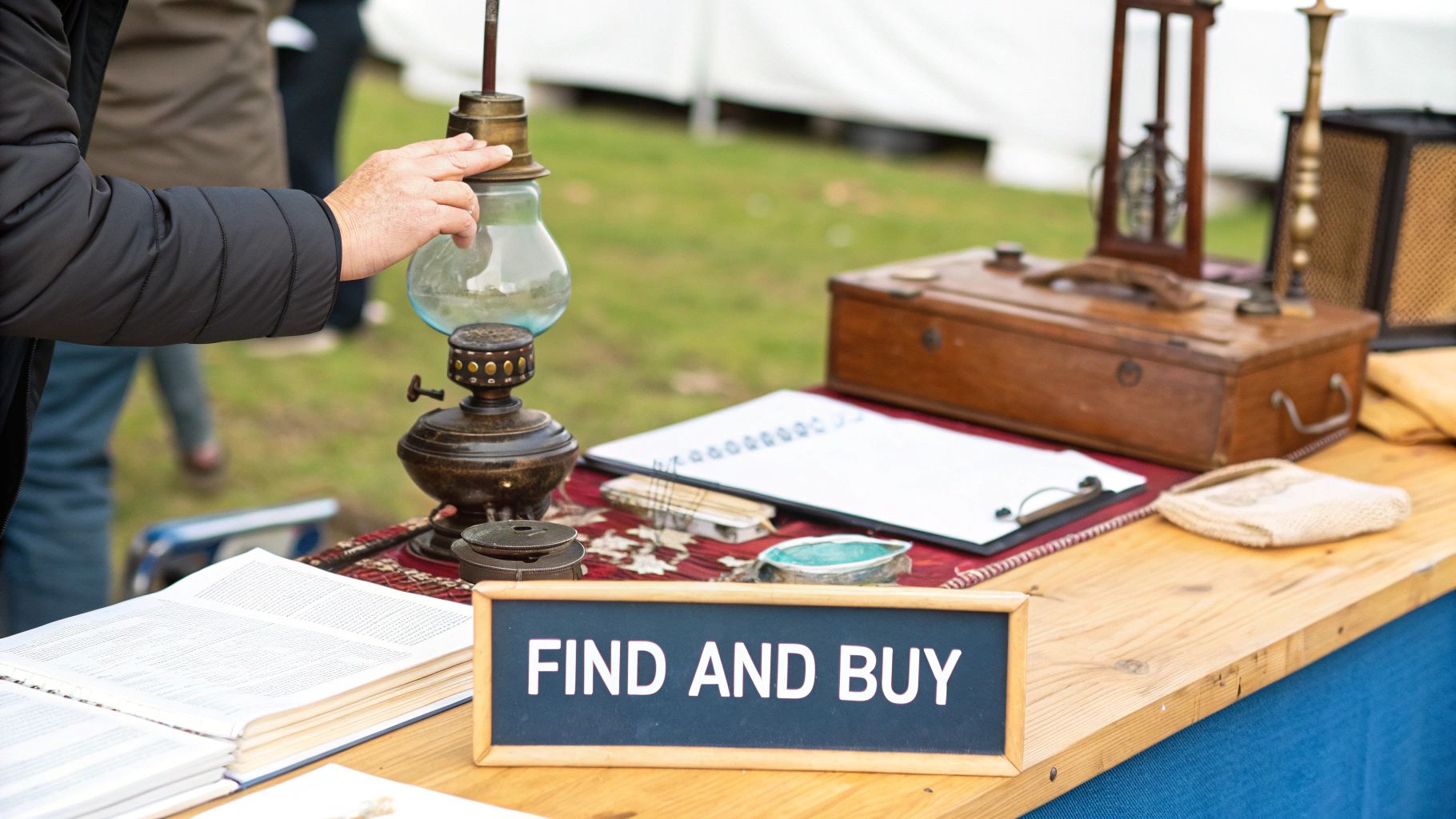
The journey often starts close to home. Local antique stores, sprawling flea markets, and weekend estate sales are classic hunting grounds for a reason. These places offer the priceless advantage of letting you physically inspect a lamp before you buy it.
You get to feel its weight, check for hidden cracks, and get a real sense of its age and condition. There's just no substitute for holding a piece of history in your hands.
When you're shopping in person, patience is your best friend. Don't just glance at a lamp on a crowded table; pick it up. Run your fingers along the glass seams and squint at the burner, looking for a maker's mark. Estate sales can be gold mines, since you're often seeing items that have been in one family for generations.
Before you pull out your wallet, run through a quick mental checklist. A little prep work can save you from a costly mistake.
Your In-Person Buyer's Checklist:
- Inspect for Damage: Hold the font and shade up to a light source. You're looking for those sneaky hairline cracks and nearly invisible chips.
- Check for Originality: Do the burner, font, and shade look like they belong together? Mismatched "married" pieces are extremely common.
- Verify the Burner: Does the wick knob turn? Does it have a maker's mark? A lamp with a signed burner is always easier to identify and date.
- Negotiate Politely: If you spot a minor flaw, you can use it as respectful leverage for a better price. Most dealers expect a bit of friendly haggling.
The ability to physically handle a lamp is your greatest advantage when buying locally. Trust your hands as much as your eyes—the weight, texture, and subtle imperfections can tell you more about a lamp's authenticity than a photo ever could.
Navigating the Digital Marketplace
For those who prefer to treasure hunt from the comfort of their couch, online platforms like eBay, Etsy, and specialty auction sites offer a staggering selection. The sheer volume is incredible; you can find lamps from all over the world with just a few clicks.
But buying online requires a different kind of diligence. Since you can't touch the item, high-quality photos and detailed descriptions are your best friends. Scrutinize every single picture. If a seller only provides a couple of blurry shots, don't hesitate to ask for more. A good seller will happily send extra photos of key areas like the burner, the base, and any potential damage.
This is especially true when searching for some of the most valuable vintage items, where documentation is everything.
Always read the full description and check the seller's return policy and reviews. A long history of positive feedback is a good sign you're dealing with someone trustworthy. When it comes to collecting oil lamps online, asking the right questions is crucial. Inquire about any repairs, ask if all parts are original, and confirm the lamp’s working condition before you commit.
Here's a quick look at how the different sourcing options stack up against each other.
Comparing Sourcing Locations for Oil Lamps
| Sourcing Location | Pros | Cons | Best For |
|---|---|---|---|
| Antique Stores | Curated selection; knowledgeable owners; can physically inspect items. | Higher prices; less room for negotiation; inventory can be slow to change. | Beginners looking for guidance and high-quality, vetted pieces. |
| Flea Markets | Potential for amazing bargains; wide variety; fun, treasure-hunting atmosphere. | Inconsistent quality; lots of reproductions to sort through; can be overwhelming. | Patient bargain hunters who enjoy the thrill of the chase. |
| Estate Sales | Items often have provenance; prices can be very low, especially on the last day. | Competitive and crowded; limited time to browse; need to act fast. | Finding unique, family-owned pieces with a story. |
| Online Marketplaces | Massive global selection; can shop anytime; easy to compare prices. | Can't inspect items in person; risk of damage in shipping; photos can be misleading. | Collectors searching for very specific models or international pieces. |
| Auctions | Access to rare and high-end lamps; potential for good deals; professional appraisals. | Can be intimidating; "buyer's premium" fees; fast-paced and competitive bidding. | Serious collectors looking for investment-grade or rare lamps. |
Ultimately, a mix of both in-person and online hunting will give you the best shot at building a diverse and interesting collection. Happy hunting
5. Caring For and Preserving Your Collection
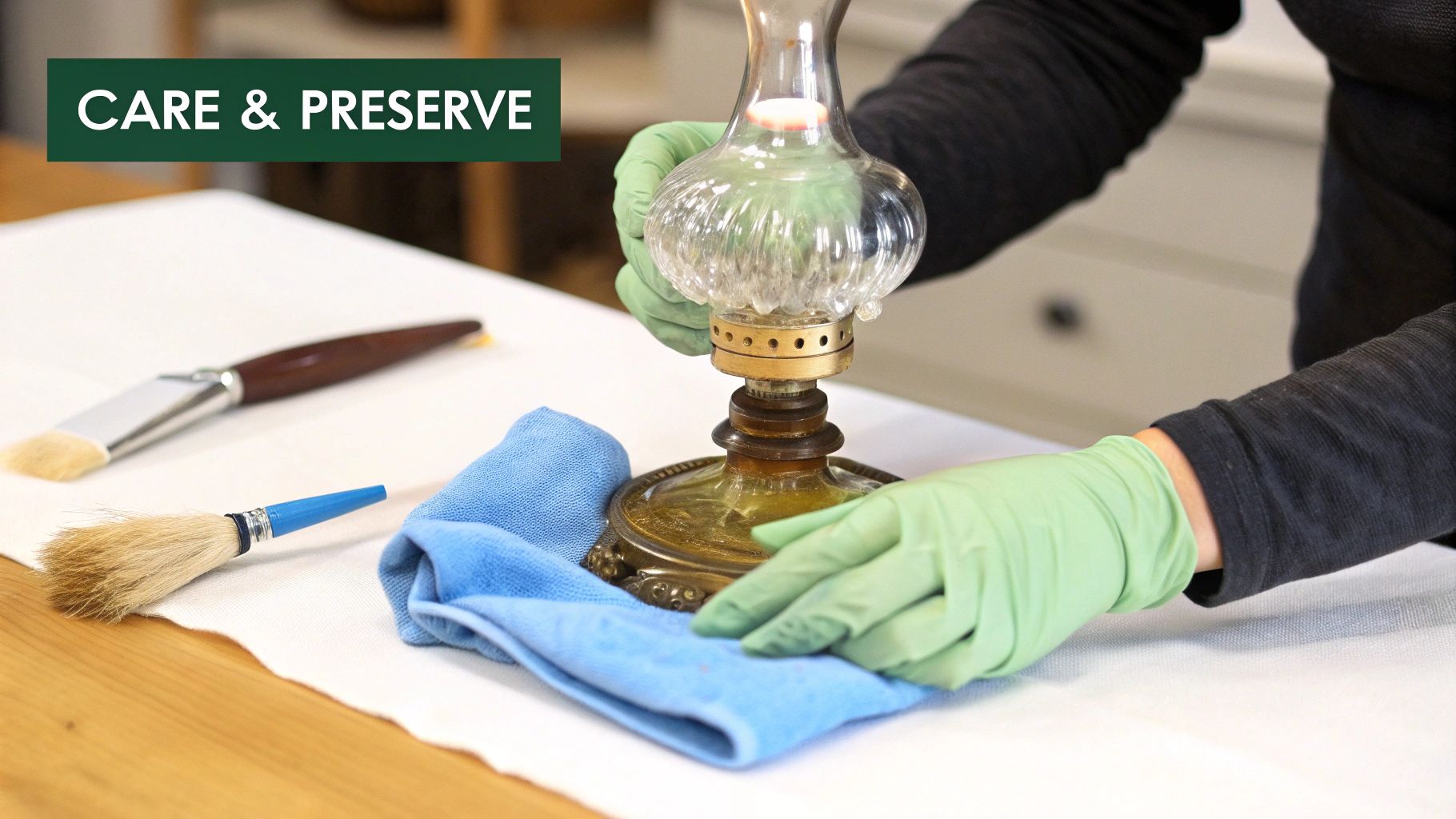
Bringing an antique oil lamp into your home is just the start of its journey with you. True collectors understand that they are more than just owners; they're caretakers of history. Proper care is all about knowing how to handle these delicate objects without accidentally erasing their past.
The goal here is always preservation, not a factory reset. Think of it like dusting a fragile old book rather than pressure washing it. Harsh cleaning can strip away the beautiful, time-worn patina on metal or chip the delicate paint on a glass shade, which can seriously diminish its character and value.
Gentle Cleaning for Different Materials
Each piece of an oil lamp tells a different story and needs a unique approach. What’s safe for a solid brass base could be a disaster for its hand-painted shade. Before you even think about cleaning, carefully take the lamp apart, separating the chimney, shade, burner, and font.
For glass parts like chimneys and unpainted fonts, keep it simple. A soft cloth with a bit of warm, soapy water (gentle dish soap is your friend here) followed by a thorough rinse does the trick. Whatever you do, never put antique glass in a dishwasher. The intense heat and harsh detergents can cause thermal shock, which means tiny, irreversible cracks.
Metal components are a different ball game. When it comes to brass, you want to remove the grime but keep that rich, warm glow it's earned over the decades. Overly aggressive polishes will strip that right off, leaving the metal looking sterile and new. You can find some great techniques for cleaning antique brass that respect its age and finish.
Simple Restoration and Everyday Upkeep
Beyond a good cleaning, a little routine maintenance goes a long way. The most common job you'll face is replacing the wick. An old, gunked-up wick can't draw fuel efficiently, leading to a smoky, sad-looking flame. New wicks are cheap and easy to find.
Just make sure to measure the width of the burner's wick channel so you buy the right size. A fresh wick, trimmed straight across, makes a world of difference in a lamp's performance and safety.
Another simple habit is to regularly polish the metal parts with a soft, dry cloth. This quick buff removes dust and fingerprints, preventing buildup and keeping your collection looking fantastic without needing to break out the heavy-duty cleaners.
"Your touch should be that of a conservator, not a cleaner. The aim is to stabilize and protect the object, ensuring it can tell its story for another hundred years."
What to Avoid at All Costs
Knowing what not to do is just as critical as knowing the right way to do things. Some common cleaning mistakes can cause permanent, heartbreaking damage to an antique oil lamp.
Here are the hard and fast rules:
- No Harsh Chemicals: Stay far away from ammonia-based cleaners, oven cleaners, and abrasive powders. These will eat away at metal and can permanently etch the surface of the glass.
- Handle Painted Surfaces with Care: For any shades or fonts with painted or enameled details, do not submerge them in water. The paint can flake right off. A gentle dusting with a dry microfiber cloth is all they need.
- Step Away from the Power Tools: It might be tempting to use a Dremel or a buffing wheel for a quick shine on brass, but this is a fast track to ruining the lamp. It obliterates the original patina and can leave deep scratches.
By taking a thoughtful, gentle approach, you ensure your collection not only looks beautiful but also holds its value and integrity. This is what separates a casual buyer from a serious collector—someone dedicated to preserving these little pieces of history for generations to come.
Got Questions About Oil Lamps? We've Got Answers
Stepping into the world of antique oil lamps is exciting, but it's natural to have questions pop up along the way. Whether you're just getting your feet wet or you're a seasoned collector, getting good answers can make the whole experience more enjoyable.
Here are a few of the most common things people wonder about.
Are Old Oil Lamps Actually Safe to Use?
The short answer is yes, but with some very important "ifs." You absolutely can use an antique lamp, as long as you treat it with the respect any open flame deserves. First things first, give it a thorough inspection. Check the font—that's the part that holds the fuel—for any hairline cracks or leaks.
Make sure the burner screws on tightly and fits the collar perfectly. A wobbly burner is a bad sign.
Fuel choice is everything. Stick to high-quality, clear lamp oil or kerosene. Never, ever use gasoline, alcohol, or any other volatile fluid. Doing so is an extreme fire risk. Also, keep your wick trimmed to about 1/8 of an inch to get a clean, steady flame without a lot of smoke.
Here's the golden rule: Never leave a lit lamp unattended. Keep it well away from kids, pets, and anything flammable (think curtains or stacks of paper). To be honest, many collectors prefer to keep their most cherished lamps purely as display pieces to preserve them perfectly.
How Do I Start a Collection Without Breaking the Bank?
You don't need a massive budget to start a beautiful collection. In fact, some of the most satisfying finds are the ones you score for a bargain.
- Hunt in the Right Places: Flea markets, yard sales, and local thrift shops are treasure troves. Sellers in these places often aren't lighting experts and might price a real gem for a song.
- Start with Common Beauties: Don't feel pressured to find a rare, signed lamp right away. Focus on lovely, well-made glass lamps from the late 1800s or early 1900s. They are plentiful, authentic, and much easier on the wallet.
- Look for Potential: A lamp that’s just a little grimy or needs a new wick will almost always be cheaper. These simple cleanup projects are a fantastic way to learn the ins and outs of your new hobby.
What’s the Smartest Way to Keep Track of My Collection?
Keeping a good record of your collection is a must-do. It’s crucial for insurance purposes, your own reference, and understanding the value of what you have. For every lamp, you'll want to note a description, its size, any maker's marks you find, where you got it, and what you paid.
Good, clear photos from a few different angles are also a game-changer. You could use a basic spreadsheet, but a dedicated app for collectors really simplifies things. These tools help you build a digital inventory with photos, notes on its history, and appraisal data, making it easy to manage and protect your collection as it grows.
Ready to identify that mysterious lamp you just found? Curio makes it easy. Snap a photo, and our app instantly provides you with its origin, history, and an estimated value. Download Curio today and let your antiques tell their story