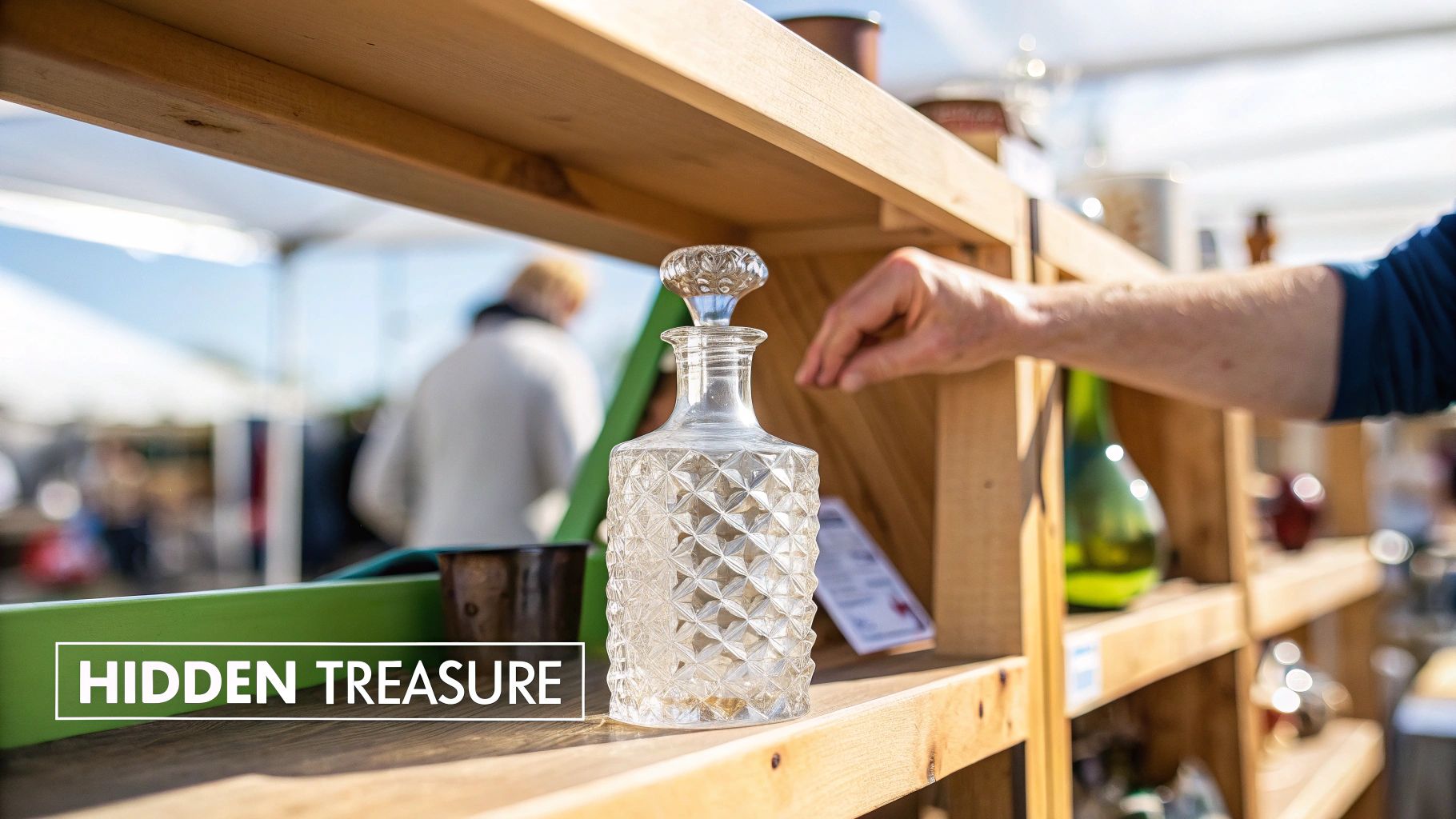
You spot it from across the aisle at a flea market—a dusty glint of light from a cluttered shelf. Could it be the real deal? If you've ever felt that jolt of excitement, this guide is for you. We're moving past the guesswork to give you the skills and confidence to identify genuine crystal glass antique pieces.
Whether you're holding a family heirloom or starting a new collection, you're about to learn how to spot, identify, and truly appreciate these beautiful objects.
Unlocking the Stories Behind Your Crystal Finds
The magic of antique crystal is about so much more than its sparkle. Every piece is a direct connection to the past, a tiny time capsule reflecting the style, skill, and even the social norms of its day. What really sets it apart from modern glass is its key ingredient: lead oxide. This is what gives traditional crystal its signature weight, its incredible brilliance, and that clear, bell-like ring when you tap it.
This guide will walk you through the simple, hands-on tests you can do anywhere, helping you separate historical treasures from everyday glassware and turning you into a much savvier collector.
What Makes Antique Crystal Special?
Knowing what makes old crystal different is the first, most important step. The secret lies in its material and the way it was made, which you can actually see, feel, and hear.
The Lead Content: Real lead crystal, especially the older European pieces, usually contains 24% or more lead oxide. This is the magic ingredient that makes the glass softer and easier to carve with those stunning, intricate patterns. It also gives the glass a higher refractive index, which is what creates that brilliant rainbow sparkle when it catches the light.
The Weight and Feel: Go ahead and pick it up. If you think it might be crystal, it should feel surprisingly heavy for its size compared to a regular glass object. That density from the lead is a dead giveaway.
The Prismatic Sparkle: Hold a piece up to the light. True crystal acts like a prism, breaking the light into a beautiful rainbow of colors. Normal glass just doesn't do this; the light passes right through without the dazzling show.
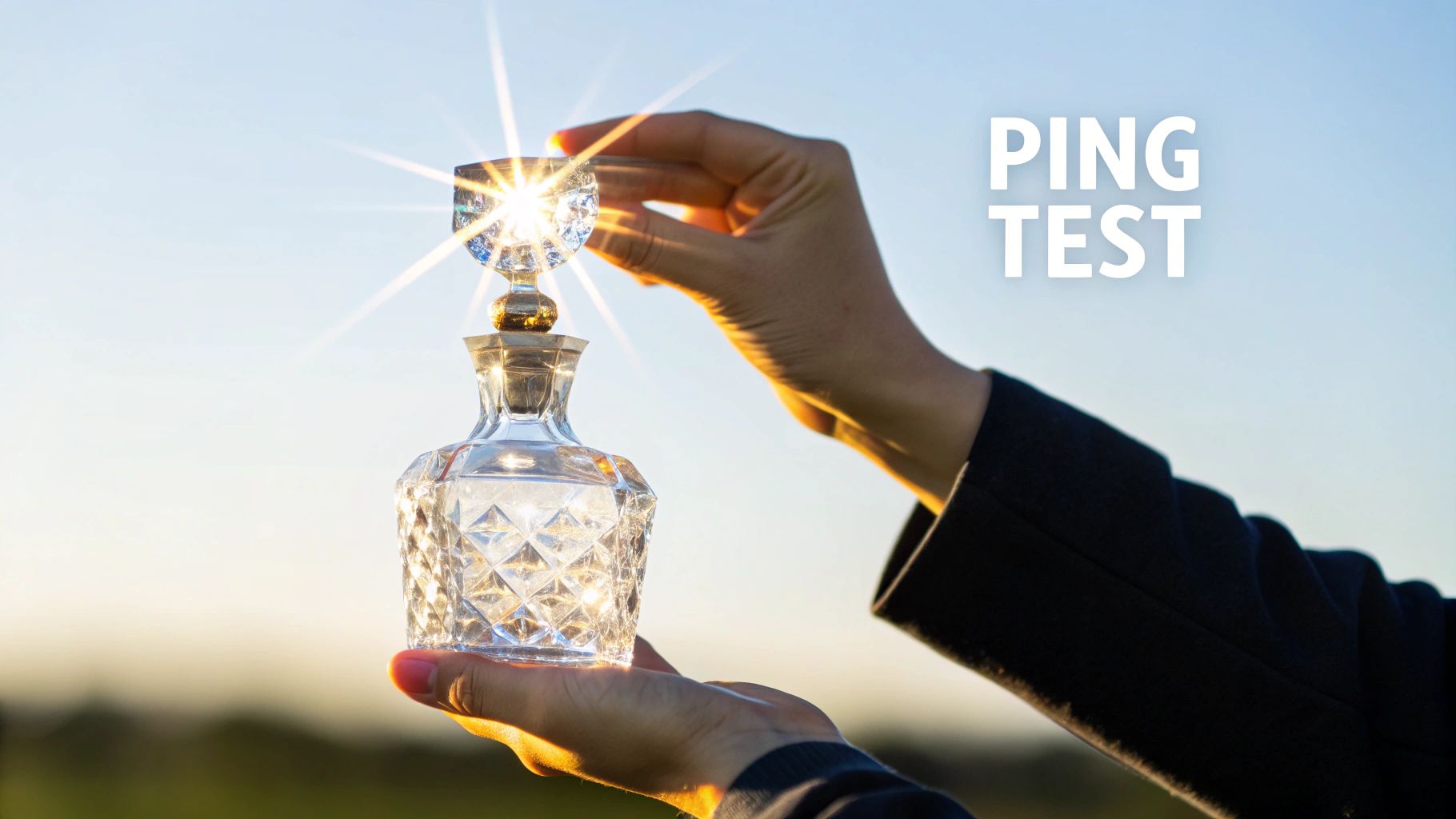
The most satisfying and often most reliable trick in the book is the sound check. Give the rim of a crystal glass a gentle flick or tap with your fingernail. You should hear a clear, musical "ping" that rings on for a few seconds. Ordinary glass, on the other hand, will just make a dull thud. This simple 'ping test' is a collector's best friend at antique shops and estate sales.
Your Journey as a Collector
Learning to spot genuine crystal is a skill you'll build over time, mixing a little bit of knowledge with a lot of hands-on practice. It turns a weekend shopping trip into a full-blown treasure hunt, where any piece could have a fascinating history just waiting to be discovered.
By getting comfortable with these basic characteristics, you're doing more than just buying an object—you're saving a small piece of art. This guide will give you the step-by-step techniques to sharpen your eye and build your confidence.
How to Distinguish True Crystal From Ordinary Glass
Your first hands-on assessment is often the most revealing, giving you immediate clues about whether you're holding a piece of ordinary glass or a true crystal glass antique. Imagine you're at a crowded estate sale, eyeing a beautiful decanter. You don't have time for extensive research, so you need fast, reliable techniques.
This is where your senses become your best tools. The weight, the look, the sound—each provides a piece of the puzzle. These simple, tool-free tests are what I rely on to make confident, on-the-spot decisions during my treasure hunts.
Feel the Difference in Weight and Smoothness
The first thing I always do is simply pick up the piece. True antique lead crystal feels surprisingly heavy for its size, much heavier than a similarly sized glass item. This noticeable density comes from its lead oxide content, which can be 24% or higher in high-quality pieces.
If you pick up a glass tumbler and then a crystal one, the crystal tumbler will have a substantial, solid feel in your hand. This heft is one of the first and most reliable signs you're dealing with something special.
Beyond the weight, run your fingers along the cuts and edges. The lead content makes crystal softer, which allowed artisans to carve deep, intricate patterns. Those cuts should feel incredibly smooth and rounded, almost silky to the touch, not sharp or angular like you'd find on etched glass.
Look for the Prismatic Sparkle
One of the most captivating qualities of crystal is its brilliance. This isn't just a simple shine; it's a vibrant, rainbow-like sparkle when light hits it. The lead oxide increases the glass's refractive index, essentially turning the object into a prism.
To see this for yourself, hold the piece up to a light source—a sunny window or even your phone's flashlight works perfectly.
- Crystal: You should see a distinct rainbow effect as the light scatters. The facets will throw colorful sparkles around the room.
- Glass: The light will mostly pass straight through. It might shine, but it won’t produce that signature rainbow flare.
This visual check is a quick and effective way to distinguish a crystal glass antique from a less valuable lookalike. A piece that doesn't create a prism is almost certainly not lead crystal.
When you're out hunting, sometimes the quickest way to tell crystal from glass isn't with your eyes, but with your hands. This table breaks down the key differences I look for on the spot.
Quick Identification Crystal vs Glass
| Characteristic | Antique Lead Crystal | Modern Glass |
|---|---|---|
| Weight | Surprisingly heavy and dense for its size. | Feels light, consistent with its size. |
| Sound | Produces a clear, musical "ping" that rings. | Makes a dull "thud" or clunk with no resonance. |
| Light Refraction | Creates a brilliant, rainbow-like prism effect. | Light passes through with minimal sparkle. |
| Cut Edges | Smooth, rounded, and polished to the touch. | Can feel sharper and less refined. |
| Clarity | Exceptionally clear and brilliant. | Can have a slight green or blue tint, especially at the rim. |
Keep these pointers in mind, and you'll be able to quickly size up a piece, even in a bustling market.
The next time you're evaluating a piece, listen closely. The sound it makes is one of the most reliable and discreet tests you can perform. It’s a trick that seasoned collectors have used for generations to quickly identify true crystal.
Listen for the Signature Ping
This is the classic test every collector needs to master. Gently tap the rim of the glassware with your fingernail. If you're holding stemware, you can get an even better result by wetting your finger and carefully running it around the rim.
What you're listening for is a clear, resonant, bell-like "ping" that sustains for a few moments. This musical sound is a direct result of the lead within the crystal. Ordinary glass, lacking this composition, will just produce a dull, short "thud" with no ring to it.
This simple sound check is invaluable at a flea market or antique shop. It's a subtle yet definitive way to confirm your suspicions without drawing too much attention. The difference is so distinct that once you hear it, you'll never forget it.
Finding Maker's Marks and Recognizing Patterns
Alright, so you've done the "ping" test and felt the weight, and you're pretty sure you have a piece of real crystal on your hands. Now for the fun part—the detective work. This is where we start to uncover its story by hunting for two crucial clues: the maker's mark and the pattern.
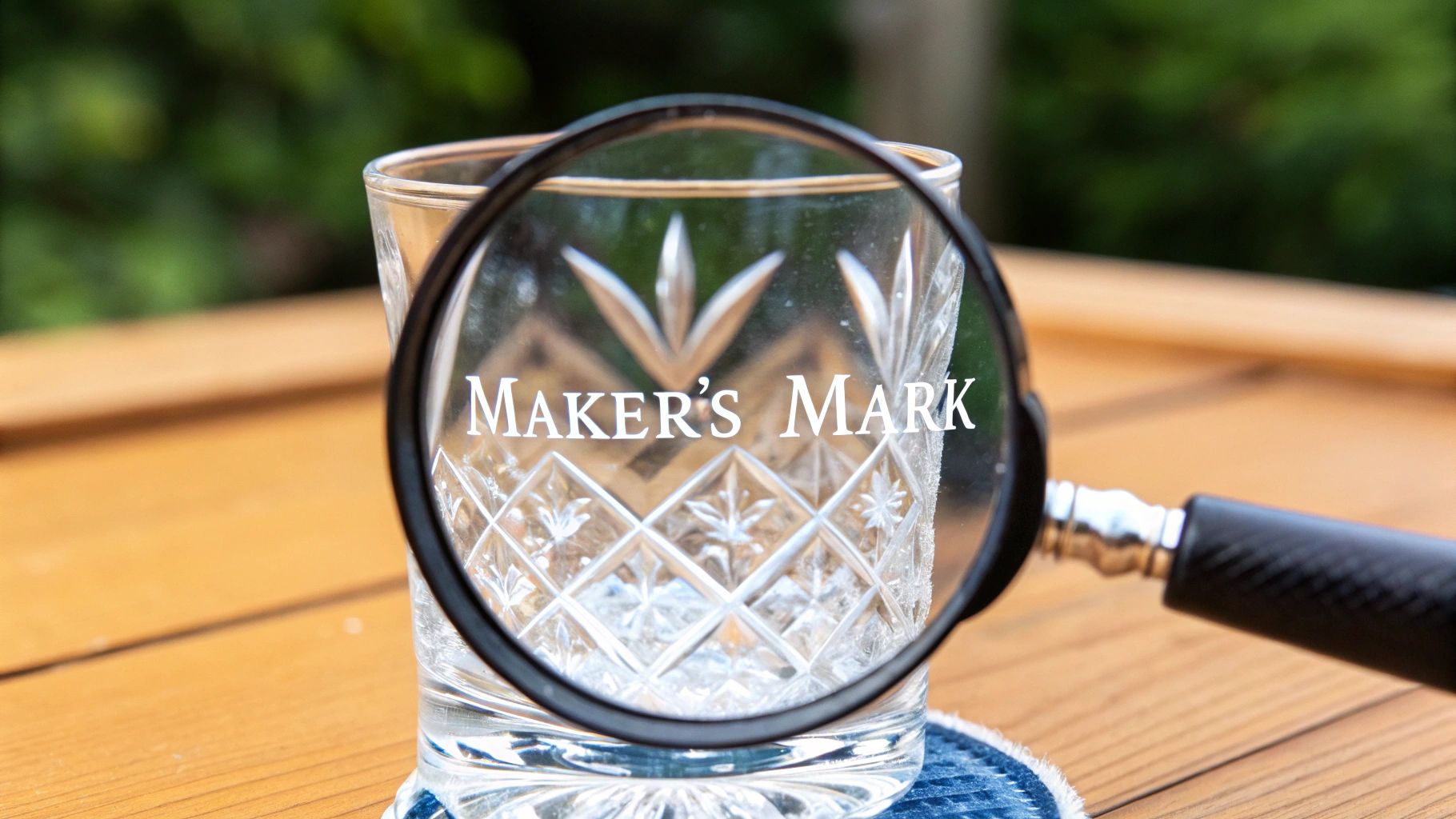
A maker's mark is the holy grail. Think of it as a signature from the manufacturer, a stamp of authenticity that can instantly link your piece to a legendary glasshouse like Waterford, Baccarat, or Lalique. Finding one transforms a beautiful object into a documented piece of history.
These marks are often tiny and cleverly hidden, so you'll need a good light, a magnifying glass, and a bit of patience. This is the best place to start if you want to accurately date and value your crystal glass antique.
Hunting for Hidden Signatures
Most glassmakers placed their marks where they wouldn’t spoil the design, so the first place you should always check is the base. Flip the piece over and examine it closely.
You’re usually looking for an acid-etched mark, which appears as a faint, frosted logo or script. The trick is to tilt the piece under a bright light; this will help the subtle texture difference catch your eye. Some of the big names had very distinct marks:
- Waterford: You'll often find the word "Waterford," sometimes in a Gothic-style script. Newer vintage pieces might also include a small seahorse logo.
- Baccarat: Their classic mark is a circle containing a decanter, a goblet, and a carafe, with "BACCARAT FRANCE" written around it.
- Lalique: Typically signed "Lalique France" in an elegant, flowing script. Finding this mark is a real thrill for any collector.
Don't just look at the bottom, though. Artisans sometimes hid their signatures within the pattern itself, along the stem, or near the rim. Run your fingers gently over the surface; sometimes you can feel a subtle etched mark before you can see it. For a deeper dive, our guide on antique glass makers marks has more examples to help you out.
A quick tip from the field: Don't be discouraged if you can't find a mark. Many older pieces were sold with paper labels that washed off or disintegrated decades ago. The absence of a mark doesn't mean it isn't valuable—it just means the pattern becomes your primary clue.
Recognizing Iconic Patterns
When a maker's mark is missing in action, the pattern becomes your roadmap. For a seasoned collector, certain cuts and motifs are as good as a signature, pointing directly to a specific maker or era.
A great example is the American Brilliant Period (ABP), which ran from roughly 1876 to 1917. This era is defined by jaw-droppingly intricate geometric patterns. Look for deep, sharp cuts like hobstars, fans, and fine diamonds that cover nearly every inch of the glass, creating an incredible sparkle.
Identifying patterns is a bit like being a historian. You’ll need to compare your piece to online databases or reference books. Ask yourself what you see. Are the lines clean and minimalist, suggesting a Scandinavian design? Or is it covered in ornate, heavy cutting typical of Victorian crystal? Every detail helps you narrow down its origin.
This skill is especially crucial when you stumble upon highly sought-after styles. Pieces from the Art Nouveau and Art Deco periods, crafted by masters like Émile Gallé and Lalique, are some of the most coveted antiques today. Their value is projected to keep climbing through 2026, prized for their exceptional craftsmanship and designs inspired by nature.
With premium glass art fetching average order values around USD 4,500 on major platforms, knowing how to spot these styles can turn a flea market find into a truly valuable treasure.
Keeping Your Antique Crystal Sparkling for Years to Come
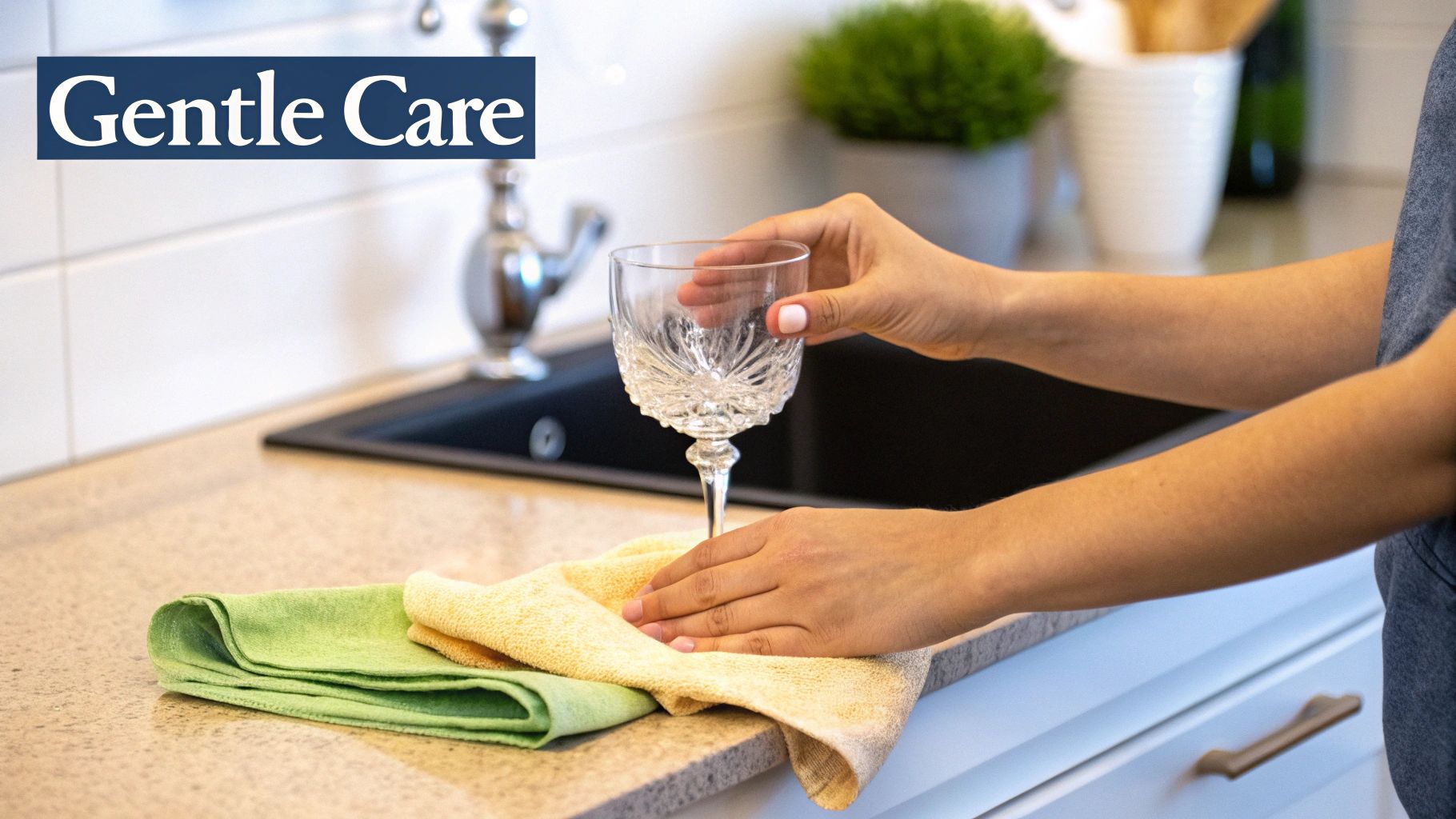
Finding a stunning piece of crystal glass antique is one thing, but keeping it in pristine condition is another. These delicate treasures need a much gentler touch than your everyday glassware. Forget everything you know about modern cleaning shortcuts.
The number one rule? Never put antique crystal in a dishwasher. The combination of intense heat, harsh detergents, and forceful water jets is a recipe for disaster. It can cause permanent cloudiness, scratches, and even cracks from thermal shock.
Think of it this way: abrasive sponges and citrus-based soaps are just as bad. They can slowly etch the surface over time, robbing your crystal of its brilliant shine.
The Right Way to Wash Your Crystal
Washing antique crystal should be a careful, almost meditative process. Your toolkit is simple: soft cloths and gentle soap. I always recommend lining your sink with a rubber mat or a thick towel—it's a simple step that has saved me from countless heartbreaks over chipped rims.
Here’s my tried-and-true method:
- Prep the Water: Fill a plastic wash basin (it’s softer than a ceramic sink) with lukewarm water. Extreme temperatures, hot or cold, can stress the glass. Add just a couple of drops of a mild, pH-neutral dish soap. A little goes a long way.
- One at a Time: Wash each piece individually. Use a soft microfiber cloth to gently clean the surface. For those hard-to-reach spots inside a decanter or a vase, a soft-bristled bottle brush is your best friend.
- Rinse and Dry Immediately: Rinse each piece under a gentle stream of lukewarm water. To avoid those pesky water spots, dry it right away with a lint-free microfiber or flour sack towel. When drying stemware, hold the bowl of the glass—not the stem—to prevent it from snapping.
Expert Tip: If you're dealing with stubborn cloudiness from hard water minerals, a quick bath in a solution of one part white vinegar to three parts warm water can make a huge difference. Just give it a good, clear rinse afterward to remove any vinegar residue.
Smart Storage for Lasting Beauty
How you store your crystal is just as crucial as how you clean it. The biggest mistake I see collectors make is stacking their glassware. Those delicate rims are the most fragile part of the piece and can chip under the slightest pressure.
Always store your glasses and stemware upright, never on their rims. A closed cabinet is ideal, as it protects them from dust, kitchen grease, and the risk of being accidentally knocked over.
For your most valuable or sentimental pieces, a lockable glass cabinet can provide an extra layer of security and peace of mind. If your crystal has delicate gold or platinum trim, be extra gentle during cleaning and avoid scrubbing those areas.
For more specialized advice on older glassware, our guide on how to clean antique glass bottles has some great tips that also apply here.
How to Determine the Value of Antique Crystal
Once you’ve successfully identified your crystal, the big question pops up: "What is this thing actually worth?" Finding the value of an antique crystal piece isn't about pulling a number out of thin air. It’s a careful process, a mix of art, history, and a good dose of market savvy.
Any appraiser worth their salt will tell you that a piece's value stands on four pillars: the maker's reputation, how rare the pattern is, the current condition, and its provenance. Each one of these plays a vital part in what someone will ultimately pay.
The Critical Role of Condition and Maker
Of all the factors, condition is the most brutal. I've seen a beautiful piece's value get slashed by 50% or more just because of a tiny, barely-there chip or a faint scratch. Collectors are chasing perfection; they want the flawless sparkle and clean lines that make crystal so stunning, and any damage just gets in the way.
A "mint condition" piece is the holy grail—no chips, no cracks, no scratches, and no "sick glass," which is that permanent, milky cloudiness you sometimes see. Even "fleabites," those minuscule chips along a rim that you can often feel better than you can see, will bring the value down considerably.
Provenance—the documented history of an item—can turn a pretty piece into a historically significant one. That simple crystal vase suddenly becomes a whole lot more valuable if you have a letter proving it was a wedding gift from a prominent family, or if it’s still sitting in its original, branded box from a hundred years ago.
The maker's mark is your next big clue. A signature from a legendary glasshouse like Baccarat, Lalique, or Moser immediately puts your piece in a higher league. These are names synonymous with quality, and they have loyal collectors willing to pay a premium. An unsigned piece, no matter how lovely, will almost always fetch less than a comparable signed one. To see just how much maker marks can matter, check out our guide on the most valuable antique glassware and the prices they can command.
Assessing Rarity and Market Demand
Rarity is just basic supply and demand. Was this pattern only made for a couple of years? Is it an unusual color? Common patterns, like Waterford's iconic "Lismore," are absolutely beautiful but were made in huge numbers. This makes individual pieces less valuable than something from a limited-run design.
Finally, you have to look at what’s happening in the market right now. The good news is that the overall interest in crystal has stayed strong. In fact, the global crystal glass market is expected to grow from USD 12.04 billion in 2025 to over USD 31.51 billion by 2035. This steady growth is driven by people having more to spend and a real appreciation for luxury goods, which helps keep high-quality antique crystal a solid collectible. Discover more insights about the crystalware market on researchnester.com.
It’s also worth remembering that styles come and go. One year, the incredibly ornate, heavy cuts of the American Brilliant Period might be all the rage. The next, everyone might be after the clean, minimalist lines of Scandinavian crystal. Keeping an eye on these shifts helps you understand not just what your piece was worth, but what it’s worth today.
Frequently Asked Questions About Collecting Antique Crystal
As you get more into collecting, you'll find certain questions pop up again and again. It's totally normal. Getting a handle on things like authenticity, repairs, and what a piece is actually worth can be tricky, but it's all part of the fun. Let's tackle some of the most common questions I hear from fellow collectors.
What Should I Do with a Chipped or Damaged Piece?
It’s a heart-sinking moment: you find a stunning piece, but it has a chip. What now? Can it be fixed, and is it even worth it?
For small "fleabites" or minor chips along a rim, the answer is often yes. A skilled glass restorer can carefully grind down and polish the edge, making it smooth and usable again. But—and this is a big but—you have to know that any repair or alteration will affect its value. Serious collectors always prefer a piece in its original, untouched condition.
Major repairs, like trying to fix a large crack in a decanter, are a different story. They're expensive, difficult, and rarely worth the cost unless the piece is incredibly rare or means the world to you personally.
Is It Safe to Use Old Lead Crystal Decanters?
This question comes up all the time, especially when people find gorgeous old decanters for whiskey or wine.
The simple answer is that you shouldn't use them for long-term storage. Studies have confirmed that lead can leach out of the crystal and into liquids over time.
However, that doesn't mean they're just for display! It's perfectly fine to use a decanter to serve drinks for a few hours during a party. The trick is to empty it and wash it out right after your guests leave. Don't let your best scotch sit in it for weeks on end.
One of the biggest mistakes new collectors make is assuming all beautiful old glass is valuable lead crystal. Many gorgeous items are actually high-quality pressed or cut glass. Always do the quick weight, sound, and light tests to be sure before you buy.
Is This a Good Time to Invest in Antique Crystal?
Everyone wants to know if their passion is also a good investment. Right now, the antiques market is buzzing. Projections show the secondary luxury market could nearly double to USD 98.3 billion by 2031.
This boom is coming from younger buyers who love the sustainability of vintage items and from seasoned collectors looking for tangible assets. This creates a really healthy market for high-quality crystal glass antique pieces. You can read more about the growth and opportunity in the antiques market on ronati.com.
Feeling ready to figure out the story behind your own treasures? With the Curio app, you can identify antiques, learn their history, and get an estimated value just by snapping a photo. Download Curio today and let your antiques tell their story!