If you've ever come across a piece of silver stamped with the initials "CW," you're not alone. This is a common mark, but it can be a real head-scratcher for collectors because it doesn't point to one single, famous workshop. Instead, these initials were used by a whole host of different silversmiths over several centuries, mostly in Great Britain and the United States. This guide will help you sort through the possibilities.
What a CW Silver Mark Reveals
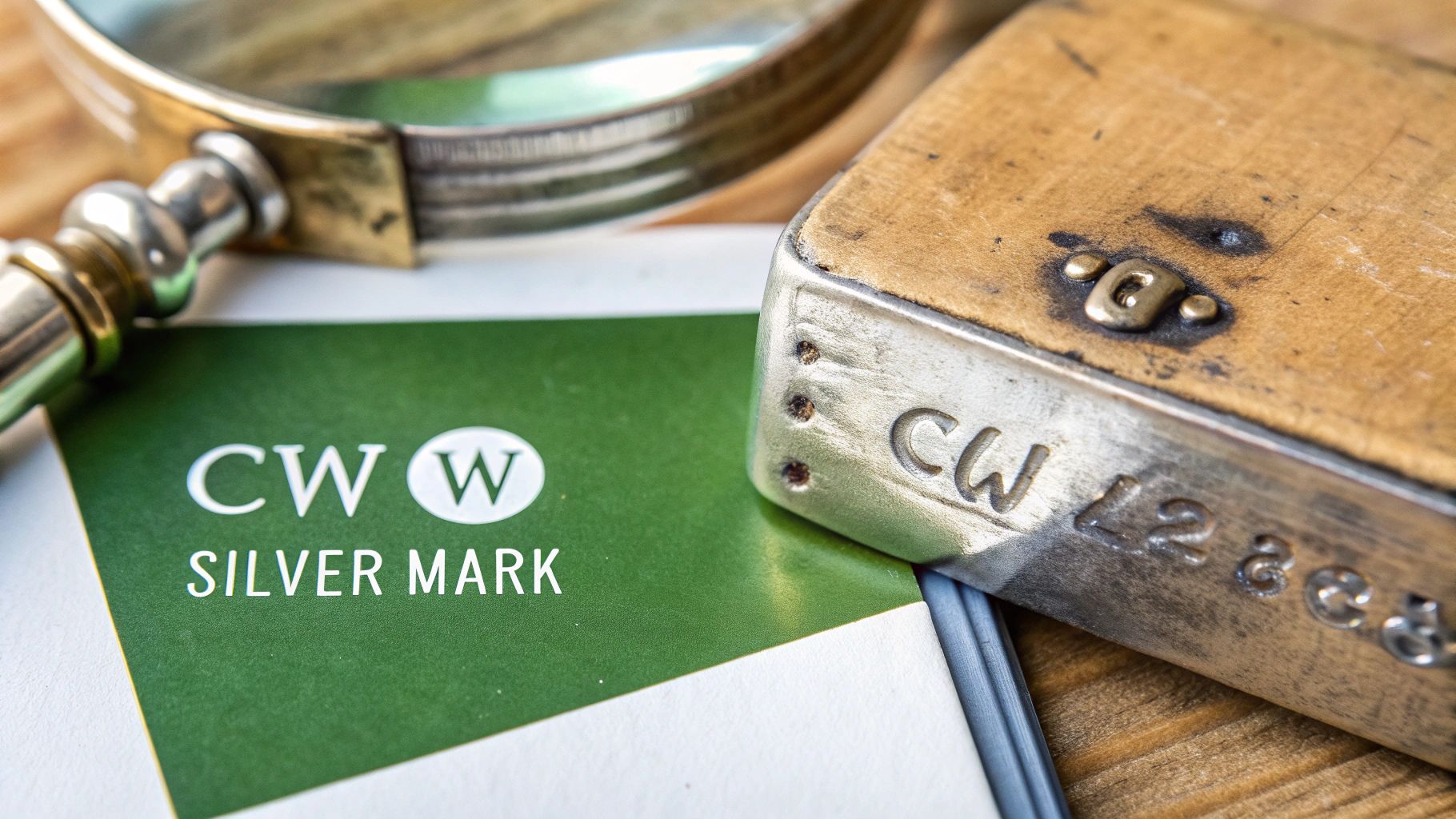
Finding a "CW" or "C.W." mark is really just the first step in a bit of detective work. Since so many artisans used this stamp, the initials alone are only one piece of the puzzle. To figure out where your piece came from and what it's worth, you have to look at the other hallmarks stamped alongside it. These other marks provide the context you need to tell the full story.
Looking at the full set of marks is how you can often pinpoint the specific maker, the year it was made, and even the city where it was assayed.
Contextual Clues Are Crucial
Think of the CW silver mark like a common last name; it gets you into the right ballpark, but you need more details to identify the exact person. With silver, those extra details come from the other hallmarks. For instance, a piece marked "CW" right next to a lion passant (a walking lion) and a leopard's head is almost certainly English sterling silver from London.
This guide will walk you through how to read these crucial supporting marks, which typically include:
- Assay Office Stamps: These are symbols that tell you which city tested and verified the silver's purity. A classic example is the anchor for Birmingham.
- Date Letters: A letter, often in a unique shield or font, that corresponds to the specific year the piece was hallmarked.
- Purity Marks: These guarantee the silver content. The British lion passant, for example, confirms the piece is sterling silver, meaning it's 92.5% pure silver.
Once you learn to read this system of marks together, a simple set of initials like "CW" transforms into a rich historical record, telling you exactly where your silver has been.
Quick Reference of Common CW Makers

When you're trying to quickly identify a silver piece stamped with "CW," this section is your starting point. Think of it as a cheat sheet for the most common makers who used this mark.
The key to a successful ID often comes down to comparing the style of the "CW" on your item to known examples, while also considering where it was made and when. This table brings all that information together for a quick look.
How to Use This Table
Use the details below to make a preliminary match. For instance, if you see a "CW" mark right next to a London assay mark (the leopard's head), your best bet is Charles Wright. But if the piece has the feel of early American colonial silver and lacks other hallmarks, you should probably be looking at C. Warner.
Prominent Silversmiths Using the CW Silver Mark
To help you narrow down the possibilities, here’s a breakdown of the key silversmiths, their active periods, and the unique characteristics of their marks. This is the first place to look when you start your research.
| Maker's Name | Active Period | Primary Location | Distinctive Mark Features |
|---|---|---|---|
| Charles Wright | c. 1754–1796 | London, England | Simple block letters, usually inside a rectangular punch. Associated with high-quality Georgian silver. |
| Charles Wheeler | c. 1838–1883 | Birmingham, England | A C.W mark, often found within a rectangular cartouche. Known for his Victorian-era silver manufacturing. |
| C. Warner | c. 1810–1830 | Baltimore, USA | Stamped as C.WARNER in a rectangle. He's a key figure in early American silver, so his mark often stands alone. |
| Charles Wilkes | c. 1770–1785 | Birmingham, England | His mark is frequently seen alongside the anchor assay mark from the early days of the Birmingham office. |
Remember, this table is just the beginning of your investigation. It’s designed to give you a solid lead to follow.
Pro Tip: Don't just look at the letters! The shape of the punch—the little box or outline around the "CW"—is just as important. Silversmiths registered unique punch shapes like rectangles, ovals, or squares with clipped corners. These details are crucial for telling one maker from another.
Once you have a potential match from this table, jump to our detailed profiles later in the guide. There, you'll find more specific examples and historical context to help confirm your attribution.
Identifying British Silversmiths with the CW Mark
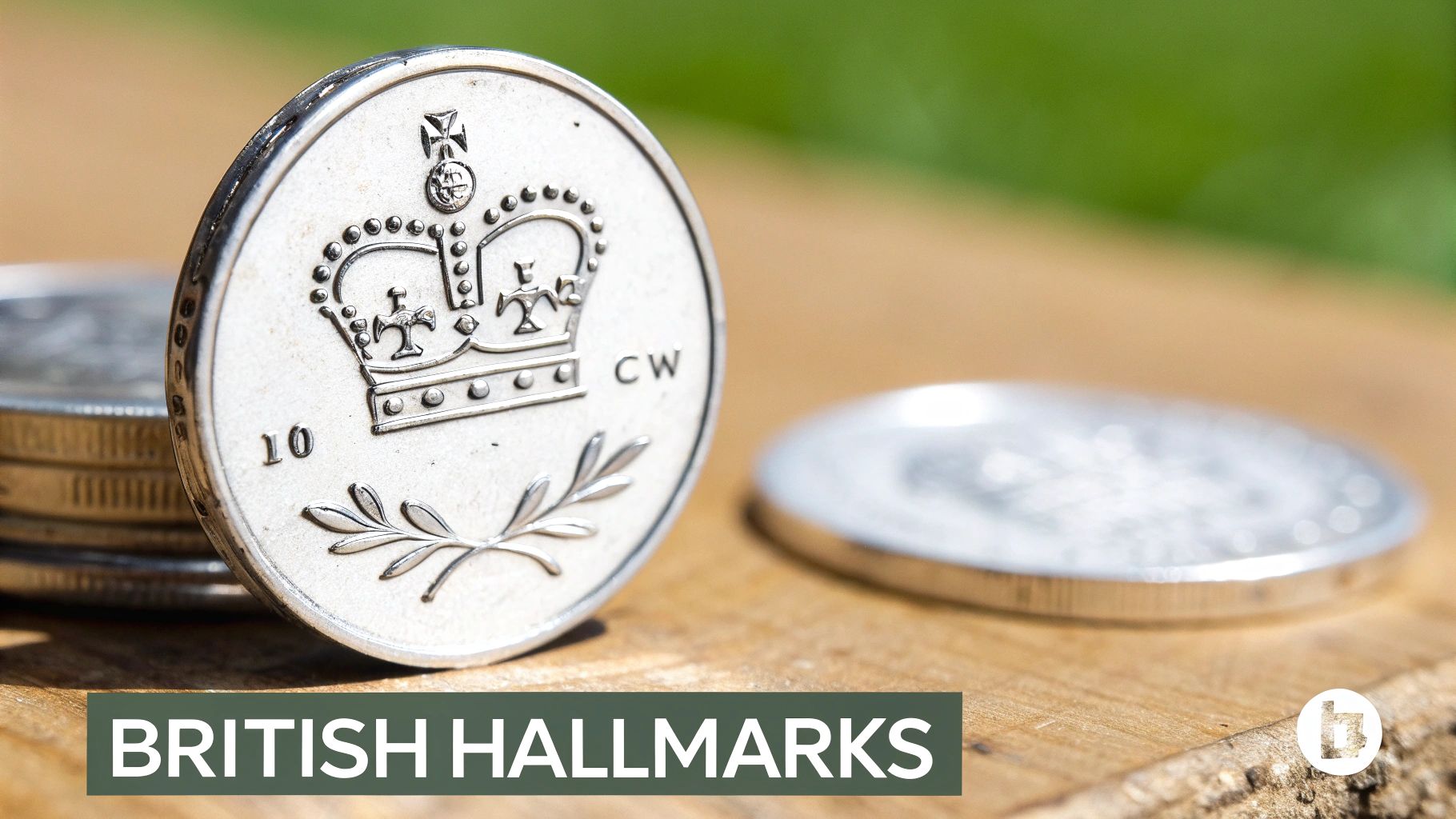
When you spot a CW silver mark next to a full set of British hallmarks, you're in a great position to pinpoint the maker. The UK’s hallmarking system has always been incredibly thorough, giving us a clear roadmap to a piece's history. Several well-known silversmiths used these initials, and by looking at the "CW" alongside the other marks—like the assay office and date letter—you can usually figure out exactly who made it and when.
The trick is to never look at the "CW" in isolation. It's the entire sequence of marks that tells the real story, especially since different makers registered similar marks over the years.
Charles Wright (London)
Charles Wright is probably the most significant silversmith you'll come across using the CW silver mark. He was a major player in London from about 1754 to 1796, producing an incredible amount of high-quality holloware during the Georgian period.
His mark is usually a straightforward "CW" in uppercase block letters, typically set inside a rectangular punch. If you find this mark, look for the classic London hallmarks from that era to confirm it's his work:
- The Leopard's Head: This is the stamp for the London Assay Office.
- The Lion Passant: This is your guarantee of sterling silver (92.5% pure).
- A Date Letter: This letter changes annually and tells you the exact year the piece was assayed.
Because Wright was so highly regarded, correctly identifying his mark can make a big difference in an item's value. His craftsmanship shines through in everything from elegant teapots and coffee pots to grand serving platters and tureens.
Charles Wheeler (Birmingham)
Jumping forward to the Victorian era, we find another important "CW": Charles Wheeler. He worked out of Birmingham from around 1838 to 1883. His output often reflects the more mechanized production of the 19th century and includes a lot of flatware and smaller decorative items.
Wheeler’s mark is often seen as "C.W" and is usually found in a rectangular cartouche, sometimes with clipped or shaped corners. What really sets his work apart from Wright's is the city mark. To confirm a piece is by Wheeler, look for the anchor symbol of the Birmingham Assay Office.
That anchor is your key clue. Seeing it next to a "C.W" stamp immediately tells you the piece is from Charles Wheeler in Birmingham, not his earlier London counterpart, Charles Wright. This one symbol completely changes the context, placing the item in a different city and a different century.
Learning these small but crucial differences is what silver identification is all about. The combination of the maker’s initials, the city mark, and the date letter acts like a unique fingerprint, letting you trace a piece’s origin with amazing accuracy. Always, always examine the full set of marks before making a final call.
Cracking the Code of American "CW" Silver Marks
Trying to identify a CW silver mark on an American piece is a whole different ball game compared to British silver. The United States never had a centralized hallmarking system like the Brits. That means you won't find those helpful assay office stamps, date letters, or sterling guarantees that make identifying British silver so much easier.
Because there was no official system, the maker's mark is everything. American silversmiths just stamped their initials or name on their creations. So, the specific font, shape, and placement of a CW silver mark are your biggest clues. You have to play detective, relying on the mark itself, the style of the piece, how it was made, and any known history to figure out who made it.
Well-Known American Makers to Look For
Since there's no national database, identifying these marks means hitting the books—or at least, specialized guides on American silversmiths. A great example is C. Warner, a silversmith working in Baltimore, Maryland, back in the 1810s and 1820s. His mark is usually a straightforward "C.WARNER" set inside a rectangular punch.
Unlike in British silver where "CW" is just one part of the story, an American mark like Warner's often stands alone. The style of the object itself becomes a critical secondary clue; for Warner, his work fits squarely into the Federal period aesthetic.
Understanding Pseudo-Hallmarks and Retailer Stamps
To give their work an air of quality and build customer trust, some American makers got creative and used what we now call pseudo-hallmarks. These are little symbols—maybe an eagle, a star, or a shield—stamped next to their initials. They look like official British hallmarks but were just a clever marketing tactic to suggest a certain standard.
You'll also frequently find a retailer's mark stamped right next to the maker's. A fancy silver shop or jeweler would often have their own name put on pieces they commissioned. These extra marks can be a fantastic bonus, sometimes helping you pinpoint a date or trace the item's journey through different owners.
Key Takeaway: When you're looking at American silver, the maker's mark is king. Without official date or city stamps, you have to analyze the "CW" mark's unique style, consider the design era (like Colonial or Federal), and look for any other stamps, such as pseudo-hallmarks or retailer marks. It's a process of careful comparison against known examples in reference guides and online databases.
Using Supporting Hallmarks for Accurate Identification
The "CW" silver mark is a great starting point, but it's rarely the whole story. To truly pin down a piece's origin, you need to look at the full set of symbols stamped alongside it. These supporting hallmarks are a kind of historical fingerprint, giving you clues that can point to the exact city and even the year it was made.
Think of "CW" as a first name. The other hallmarks fill in the rest of the details—the last name, address, and date of birth. This is especially true for British silver, where the hallmarking system is incredibly thorough and reliable. Learning to read these marks together is the key to solving most identification puzzles with confidence.
The Key Components of British Hallmarking
To get beyond just the maker's initials, you'll need to get familiar with the other critical marks found on British silver. Each one tells a different part of the story, and when you put them all together, you can confirm a piece's authenticity and provenance.
- Purity Mark (Standard Mark): This is your guarantee of silver content. The most common one you'll see is the lion passant—a walking lion—which has certified sterling silver (92.5% purity) since 1544.
- Assay Office Mark (Town Mark): This symbol tells you which city tested and stamped the piece. A leopard's head means London, for example, while an anchor points to Birmingham.
- Date Letter: This is a letter of the alphabet, often inside a uniquely shaped shield, that corresponds to the specific year the item was hallmarked. Each assay office had its own distinct sequence of letters and shields.
- Duty Mark: If your piece was made between 1784 and 1890, you might find a stamp of the reigning king or queen's head. This simply showed that a tax had been paid on the item.
The iconic lion passant hallmark has been a fixture on British silver since it was introduced during the reign of Henry VIII, guaranteeing that the metal meets the 92.5% sterling standard. Finding a duty mark is another fantastic clue, as it instantly places your item within that specific 106-year window.
As you dive into the world of CW silver marks, it helps to understand other common terms and symbols. For example, many people wonder about the number "925" often seen on silver; this article provides a great explanation of What Does 925 Mean On Jewelry: A Guide To Sterling Silver. For a more general overview of these fascinating symbols, our guide on what are hallmarks on silver is the perfect place to start.
How a CW Mark Influences the Value of Silver
Seeing a CW silver mark on a piece doesn't automatically assign it a specific value. Think of it more as the first clue in a detective story. The initials themselves have no built-in worth; the real value is tied to the specific artisan behind that mark, along with a few other crucial details.
Put simply, a piece crafted by a master silversmith will always fetch a higher price. For instance, a Georgian-era teapot by the famous London silversmith Charles Wright is in a completely different league than a similar teapot from a little-known provincial maker who also happened to use a CW mark. The Charles Wright piece is actively sought by collectors for its superior craftsmanship, historical significance, and stellar reputation in the antiques world.
Key Valuation Factors Beyond the Mark
When an appraiser looks at a piece of silver, they see the whole picture, and the maker's mark is just the first chapter. Several other factors carry just as much, if not more, weight.
Here’s what they’re looking for:
- Condition: Is the piece pristine or has it lived a hard life? Scratches, dents, poorly done repairs, and even over-polishing can seriously drag down the value. Crisp, original details are what everyone wants to see.
- Rarity and Provenance: An unusual design or a piece with a well-documented history—especially one that belonged to a notable person or family—can send its value soaring.
- Craftsmanship: The quality of the work itself is a huge deal. This includes the piece's weight, balance, and the skill shown in any decorative elements.
- Age and Period: Pieces from highly desirable periods, like the Georgian or early American Federal eras, are often more valuable than items from the later Victorian period, which saw more mass production.
The bottom line is that value is a mix of who made it, when they made it, its current condition, and its overall rarity. A CW mark on a common, dented Victorian spoon is a world away from the same mark on a flawless Georgian coffee pot.
Beyond the artistry and history, it's also smart to have a general understanding the intrinsic value of silver, such as 925 sterling silver, as this melt value forms the baseline worth of any piece. For larger collections, like a full tea set, the market dynamics can be even more complex. You can learn more in our detailed guide to silver tea service value.
Avoiding Common Misidentifications and Forgeries
As any seasoned collector will tell you, navigating the world of antique silver takes a sharp eye. The potential for honest misidentification—and outright forgery—is always there, waiting to trip up the unwary.
One of the most common mix-ups, especially for newcomers, is confusing a British CW silver mark with an American one. It's an easy mistake to make, but it can lead you to completely misjudge a piece's age, origin, and, of course, its value.
The real key is to look beyond the "CW" and examine the entire marking system. A genuine British piece is almost always going to have a full set of hallmarks: city, purity, and date letter. An American piece from the same era, however, might just have the maker's stamp and nothing else. Knowing that difference is half the battle.
Identifying Fakes and Alterations
Beyond simple mix-ups, you have to be on guard for deliberate forgeries. Deceptive practices have been around for as long as silver has been valuable, with fakers trying to cash in on a famous maker's reputation. Learning to spot their tricks is crucial for protecting your investment.
When you're looking at a piece, keep an eye out for tell-tale signs that something isn't right. Here are three critical things to check:
- Inconsistent Wear: Real antiques have wear patterns that tell a story. The bowl of a spoon will be thinner, and engravings will be soft from a century of polishing. If a maker's mark looks perfectly sharp on an otherwise heavily worn item, that's a huge red flag—the mark might have been added recently.
- Poorly Struck Marks: Silversmiths took pride in their work, and that included their hallmarks. Forgeries often betray themselves with messy, shallow, or unevenly struck stamps that just don't have the crisp, professional clarity of an original punch.
- Signs of Electroplating: Always be wary of marks like "EPNS" (Electro-Plated Nickel Silver) or just "EP". These stamps tell you the item is silver-plated, not sterling silver. Finding a famous sterling maker's mark on a plated piece is a dead giveaway that something is wrong.
One of the most devious forgeries to watch out for is the transposed mark. This is where a crook will physically cut the hallmark from a small, genuine but damaged item (like a spoon handle) and solder it onto a much larger, more valuable piece. This trick can inflate the price dramatically. Always run your fingers over the marks and look for faint solder lines or discoloration around the hallmark area.
Common Questions About the CW Silver Mark
When you're digging into the world of antique silver, it's natural to have questions, especially with a mark as common as "CW." I've put together some quick answers to the questions I hear most often from collectors. Think of this as a final run-through to help you feel more confident about identifying your pieces.
After all, the real work of collecting often means dealing with pieces that aren't perfect or have confusing marks. Knowing how to navigate these situations is just as crucial as identifying a clear, textbook hallmark.
Does a CW Mark Always Mean Sterling Silver?
Not always, and this is a really important distinction. While many pieces with a CW silver mark are sterling, the initials by themselves don't guarantee it. For British silver, you need to look for the lion passant hallmark right next to the CW. That's your absolute confirmation of 92.5% sterling silver.
American silver is a different story. Purity marks weren't standardized for a long time, so a CW piece could be "coin" silver (roughly 90% pure) or another alloy entirely. If you have an American item that isn't clearly stamped "Sterling" or "925," the only way to be certain of its silver content is to have it professionally tested.
What Should I Do If My CW Mark Is Worn?
A worn mark is one of the most common frustrations for collectors. But don't despair—a faint stamp doesn't mean it's a lost cause.
- Get a Better Look: Start with a good 10x jeweler's loupe and a bright, direct light source. Sometimes, just changing the angle of the light is enough to make a weak impression pop.
- Use Your Phone's Camera: Take a sharp, high-resolution photo of the mark. You can then zoom in and play with the contrast and brightness on your screen. This little trick often reveals details your eye might have missed.
- Look Beyond the Mark: If the maker's mark is still a mystery, shift your focus. The piece's overall style, how it was made, its form, and any other visible marks can give you more than enough clues to narrow down the potential maker and era.
Once you know what you have, taking care of it is the next step. For some solid advice on keeping your silver in great shape, have a look at our guide on how to clean antique silver.
How Important Is the Shape of the Punch?
The shape of the punch—what we call the cartouche—is incredibly important. In fact, it’s one of the most critical parts of the puzzle. Silversmiths had to register their unique punch shapes with the assay office, making the cartouche just as distinct as a signature.
Think of it this way: you might find two silversmiths named Charles Wilson who both used a "CW" mark. But one might have registered his mark inside a simple rectangle, while the other used an oval or a shield with clipped corners. This small detail is often the key that helps experts tell two very similar marks apart. Always pay close attention to the cartouche shape when you're researching a piece.
Are you curious about the history and value of your own heirlooms? The Curio app is like having an antique expert in your pocket. Just snap a photo to instantly identify items, get an estimated appraisal, and uncover the fascinating stories behind your treasures. Download Curio today and let your antiques tell their story!