
Ever stumbled across an old, dusty item and had that nagging thought: is this treasure or trash? Not too long ago, answering that question meant tracking down an expensive expert and waiting, sometimes for weeks. Now, that expertise is right in your pocket. A good free antique appraisal app uses smart technology to give you a quick read on an item's identity, history, and what it might be worth.
Why Your Smartphone Is the New Magnifying Glass
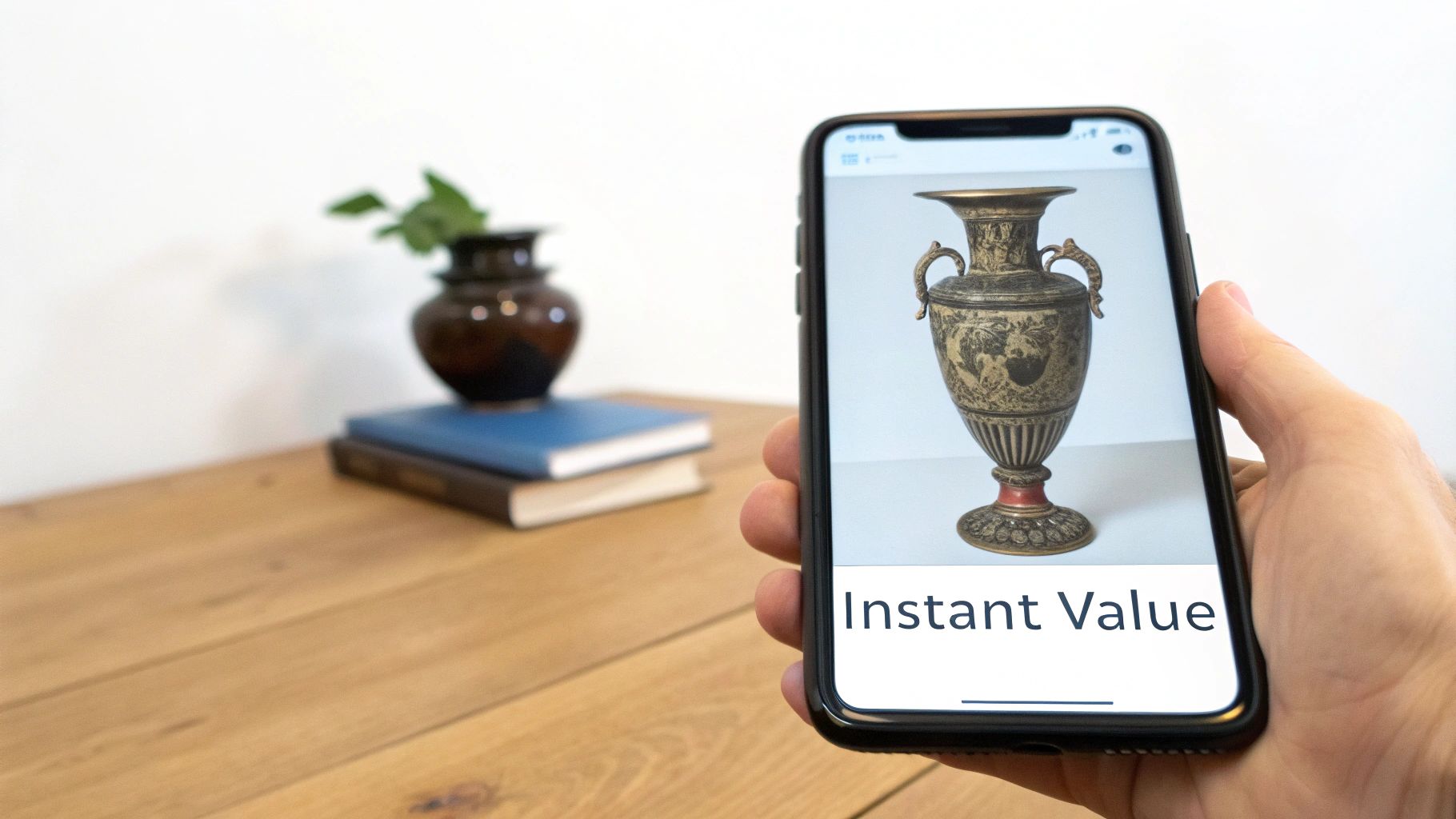
Forget lugging around heavy reference books or just plain guessing. Your phone is a seriously powerful tool for uncovering the stories—and the value—hiding in your finds. Apps like Curio connect you instantly to a world of market data and historical context.
This isn't just a minor convenience; it's a huge shift. Here’s why it works so well:
- It’s for everyone. You don't need to be a seasoned pro. Anyone with a smartphone now has access to powerful identification tech.
- It's fast. Instead of waiting forever for an opinion, you get AI-powered results in seconds. This is a game-changer when you're standing in a flea market deciding if something is worth buying.
- It's based on real data. These apps don’t just guess. They crunch numbers from millions of past sales and auction results to give you a solid market estimate.
This change is shaking up the entire collectibles market. We're talking about a global market valued somewhere between $300 billion and $450 billion, with the antiques segment growing at about 15% each year. This boom is being driven by a new generation of collectors who are comfortable using a free antique appraisal app for on-the-spot valuations.
Of course, to get the most out of this, your phone needs to be up to the task. A clean, clear photo is everything for an accurate appraisal, so a cracked screen can really get in the way. If your screen has seen better days, checking out a complete guide to replacement phone screens can help get your pocket appraiser back in top shape.
For a deeper dive, take a look at our guide on using an antique identification app.
Getting Your Digital Appraisal Tool Ready
Getting started with a free antique appraisal app like Curio is surprisingly easy. The first thing you'll want to do is grab your phone and head to the app store—that's the Apple App Store for iPhone users or the Google Play Store for Android. Just search for "Curio."
The download and installation are quick and automatic, usually wrapping up in under a minute.
Once it's installed, open the app. It'll walk you through a simple account setup. You'll just need an email and a password. This step is important because it's how the app saves your appraisal results and lets you build a personal digital collection. No tech wizardry required.
Finding Your Way Around the App
After you log in, you’ll land on the main dashboard. We designed it to be clean and straightforward, so you won't get lost. The most important button, either “Scan” or “Identify,” is right there in the center. This is your gateway to every appraisal.
Before you jump into scanning your first item, I suggest taking a quick look around. The main menu has other useful spots, like the section where all your saved items live and another for your account settings.
Your initial setup is a breeze, but the quality of your first appraisal really hinges on your photos. A well-lit, clear image is the single most important factor for getting an accurate AI evaluation.
Taking great pictures of antiques is a bit of an art, but it's not hard to learn. To make sure your first scan goes smoothly, we highly recommend checking out our guide on photographing antiques for the best results. It’s packed with tips to help you avoid common pitfalls like bad lighting, shadows, and blurry details, giving the app the best possible view of your item.
Getting Your First Free Appraisal in Seconds
Alright, let's get to the fun part—turning that dusty find into an actual valuation. I’ve learned over the years that getting a good result from an app like Curio all comes down to the quality of your photos. Think of the AI as your personal detective; the more clues you give it, the more accurate it's going to be.
Let's say you've stumbled upon an old ceramic vase at a flea market. It has this fantastic glaze, but you can't tell if it's a cheap modern piece or a genuine vintage treasure. The first thing you need to do is find some good, bright, natural light. Get it away from harsh shadows or direct sunlight, which can completely wash out the important details.
Next, snap several pictures from different angles. You'll want one of the entire vase, another from the side to capture its unique shape, and definitely a close-up of the bottom. That's where a maker's mark is often hiding. Trust me, a tiny, blurry signature can be the difference between an appraisal of $20 and $2,000.
From Photo to Valuation
Once you have your photos ready, the rest is a breeze. Just pop open the app, tap the big "Scan" button on the home screen, and upload your clearest shot. Curio's AI immediately gets to work, sifting through its massive database of millions of items to find a match.
This is what you’ll see—a clean, straightforward upload screen.
The interface is built for speed, letting you either snap a new photo on the spot or grab one you’ve already taken. It’s perfect for when you're out treasure hunting and need answers fast.
In just a few seconds, you'll have your results. But it's not just a number. The app gives you a complete story.
- Estimated Value Range: This is a realistic market price, pulled from recent auction sales.
- Item Origin: You'll get details on where and when it was likely made.
- Historical Context: A little backstory on the item’s style or the artist behind it.
That flea market vase? It might turn out to be a mid-century piece from a specific German pottery studio. The app will give you its estimated value and even show you similar items for sale. This kind of instant feedback is what makes a great free antique appraisal app so incredibly useful.
Pro Tip: Don’t just rely on a single photo. If the first result feels a bit generic, try uploading another one. Sometimes a slightly different angle or better lighting helps the AI notice a specific detail you might have missed.
Curio really shines among the free appraisal apps because it combines that smart AI identification with rich historical context and a neat digital collection system. They give you three free scans to start, which is perfect for trying it out on the go. To see what makes it such a solid choice, you can explore the features of a top free antique appraisal app.
Making Sense of Your Appraisal Results

Getting that appraisal number is a real thrill, but that figure is only the beginning. The real story is in the context behind the number. Curio gives you an estimated value range pulled from real-time market data, including what similar items have recently fetched at auction. This gives you a fantastic snapshot of what your piece is likely worth right now.
One of the most useful features to check out is Visual Matches. This tool is your personal window into the current market. It pulls up similar items that are for sale or have recently sold, letting you visually confirm the app's identification. I always think of it as a second opinion that helps me see how my antique stacks up in price, condition, and rarity.
Interpreting Curio's Appraisal Data
The report you get from Curio is packed with useful information. At first glance, it might seem like a lot of numbers and terms, but each data point tells a part of your antique's story. Let's break down what you're looking at.
| Data Point | What It Means | How to Use It |
|---|---|---|
| Estimated Value Range | This is the likely price your item would sell for on the open market today, based on current sales data. | Use the low end for quick sales and the high end for items in pristine condition sold through specialized dealers. |
| Visual Matches | Images of comparable items found online, complete with their sold prices or current listings. | Compare the condition, details, and seller reputation of these matches to your own item to refine your price expectations. |
| Confidence Score | The app's percentage of certainty that it has correctly identified your antique. | A score above 90% is a strong indicator. If it's lower, you may need to provide clearer photos or do more research. |
| Historical Sales Data | A chart or list showing the prices for similar items sold at auction over the past several months or years. | Look for trends. Is the value of your item increasing, decreasing, or holding steady? This helps with timing a sale. |
Understanding these components turns a simple number into a powerful tool. It helps you decide whether to sell now, hold on to your item, or even get a more formal valuation.
AI Estimate Versus Formal Appraisal
It's really important to know the difference between an AI-powered estimate and a formal, certified appraisal. What a free antique appraisal app like Curio provides is an estimate of fair market value. Think of it as an educated guess of what your item might sell for between a willing buyer and a willing seller.
This kind of estimate is perfect for:
- Finally satisfying your curiosity about that old family heirloom.
- Figuring out how to price things for your Etsy shop or a garage sale.
- Making smart, on-the-spot decisions at a flea market or estate sale.
On the other hand, a formal appraisal is a legally recognized document. You'd need one for things like insurance coverage, tax purposes, or legal matters. It always involves an in-person inspection by a certified human appraiser and comes with a fee.
The app equips you with powerful, data-driven information to make everyday decisions. For highly specialized items like luxury watches, it also pays to understand what goes into a professional valuation. You can check out a quick guide to professional watch valuation to get a feel for how experts approach these high-value collectibles.
Managing Your Collection Like a Pro

A really good free antique appraisal app should do more than just spit out a number. It ought to help you create a living history of everything you own. That's where Curio moves beyond being a simple valuation tool and becomes your personal digital catalog.
This is where the app becomes indispensable, whether you're a serious collector or just the keeper of your family's history. Once you get an appraisal back, you can save the entire thing—pictures, history, and value—into a private collection inside the app. Just like that, you have a permanent, organized record you can pull up anywhere.
Building Your Digital Archive
But that's just the beginning. I like to think of each entry as a mini-dossier for every piece. You can add your own personal notes, like the story of how your grandmother got that old porcelain doll or the dusty flea market where you found a sterling silver locket for a steal.
This digital record-keeping turns your phone into a surprisingly powerful collection management tool.
One of the most practical features is its 'Visual Matches' tool. It scours global marketplaces for similar items currently for sale, letting you compare prices and even get a better feel for authenticity by looking at active listings. Beyond just giving you a value, Curio helps you build and maintain these detailed catalogs—a must for resellers and passionate collectors. You can learn more about how Curio's features support collectors on their blog.
Having a detailed digital catalog is no longer a luxury—it's essential for proper insurance coverage and simplifies estate planning immensely. It turns a hobby into a well-documented asset.
Ultimately, it’s about making sure the story and value of every single piece are preserved for the future.
Questions You Might Have About Antique Appraisal Apps
Stepping into the world of a free antique appraisal app is exciting, but it’s totally normal to have a few questions. You're basically putting an expert's brain in your pocket, so let's talk about what that really means.
How Accurate Is It, Really?
This is usually the first thing people ask. An app like Curio gives you a solid estimate of fair market value by digging through millions of real-world auction results and sales records. It’s fantastic for getting a quick ID on a thrift store find, satisfying your own curiosity, or figuring out how to price something for your Etsy shop.
But, it's good to know the difference between this and a formal, certified appraisal. If you've got a potentially high-value piece that needs official papers for insurance or estate purposes, you'll still want to see a certified human appraiser. Think of the app as your incredibly smart first step—it gets you in the right ballpark instantly.
What Kinds of Things Can I Scan?
People are often curious about what the app can actually "see." The good news is the technology is impressively versatile and can identify a huge range of items.
- Ceramics and Glassware: It’s great at recognizing everything from porcelain maker's marks to specific patterns on Depression-era glass.
- Jewelry and Coins: The app can spot tiny details like mint marks, designer signatures, and specific settings that determine value.
- Furniture: By analyzing details like the style of a leg, the wood grain, or the type of joinery, the AI can get a surprisingly good read on a piece's age and origin.
The system is at its best with objects that have distinct visual characteristics. While it knows millions of items, a truly one-of-a-kind or super obscure piece might stump it. My best tip? Always use good lighting and take clear photos from a few different angles. It makes a massive difference in getting a quick, accurate match.
A Quick Note on Privacy: It’s smart to wonder where your photos go. Reputable apps take your privacy seriously. The pictures you upload are only used to get you an appraisal and help train the AI to be even better. Your collection stays your business and isn't shared publicly unless you say so. It never hurts to give the privacy policy a quick scan for peace of mind.
Ready to figure out what your heirlooms are worth? Download Curio and get instant answers about the hidden treasures in your home. https://www.curio.app