Ever flipped over a piece of pottery and stared at the jumble of symbols on the bottom, wondering what they mean? Those little markings are a hidden language. They tell a story, revealing who made the piece, where it came from, and sometimes, even when.
What Are the Markings on the Bottom of My Pottery
Think of pottery marks as a birth certificate for your ceramic. They’re what separates a simple vase from a documented piece of history, giving you clues to its entire journey from the potter's wheel to your shelf. This guide is your decoder ring, turning you from a curious owner into a knowledgeable detective.
We’ll dig into everything from a simple artist’s initial to a complex factory stamp. Once you understand what to look for, you can start appreciating the rich history sitting in your collection. For example, some American potteries, like Camark, had their own unique marking systems that tell a very specific regional story. You can see what I mean by checking out these Camark pottery marks in our detailed guide.
Common Pottery Mark Types at a Glance
To get you started, here’s a quick rundown of the most common types of marks you’ll come across. Think of this table as a cheat sheet to begin figuring out what your pottery is trying to tell you.
| Mark Type | What It Indicates | Common Formats |
|---|---|---|
| Maker's Mark | Identifies the individual artist, studio, or factory that created the piece. | Initials, signatures, logos, or symbols. |
| Date Mark | Shows when the piece was made or the design was registered. | Specific years, date codes, or symbols. |
| Pattern Mark | Indicates the name of the specific decorative design on the piece. | Names (e.g., "Blue Willow") or numbers. |
| Country of Origin | Notes the country where the pottery was manufactured, often for import/export laws. | "Made in England," "Japan," etc. |
| Artist's Cypher | A specific mark or initial showing which artist decorated the piece. | Small, hand-painted initials or symbols. |
Getting familiar with these basic categories is the first step. It gives you a framework to start piecing together the history of any item you find. Each mark is just one piece of a much larger puzzle, and now you know how to start solving it.
Learning the Language of Pottery Marks
Think of the markings on the bottom of a piece of pottery as its own unique language. At first, it might just look like a jumble of symbols, names, and numbers. But once you learn to read it, each mark tells a piece of the object's story.
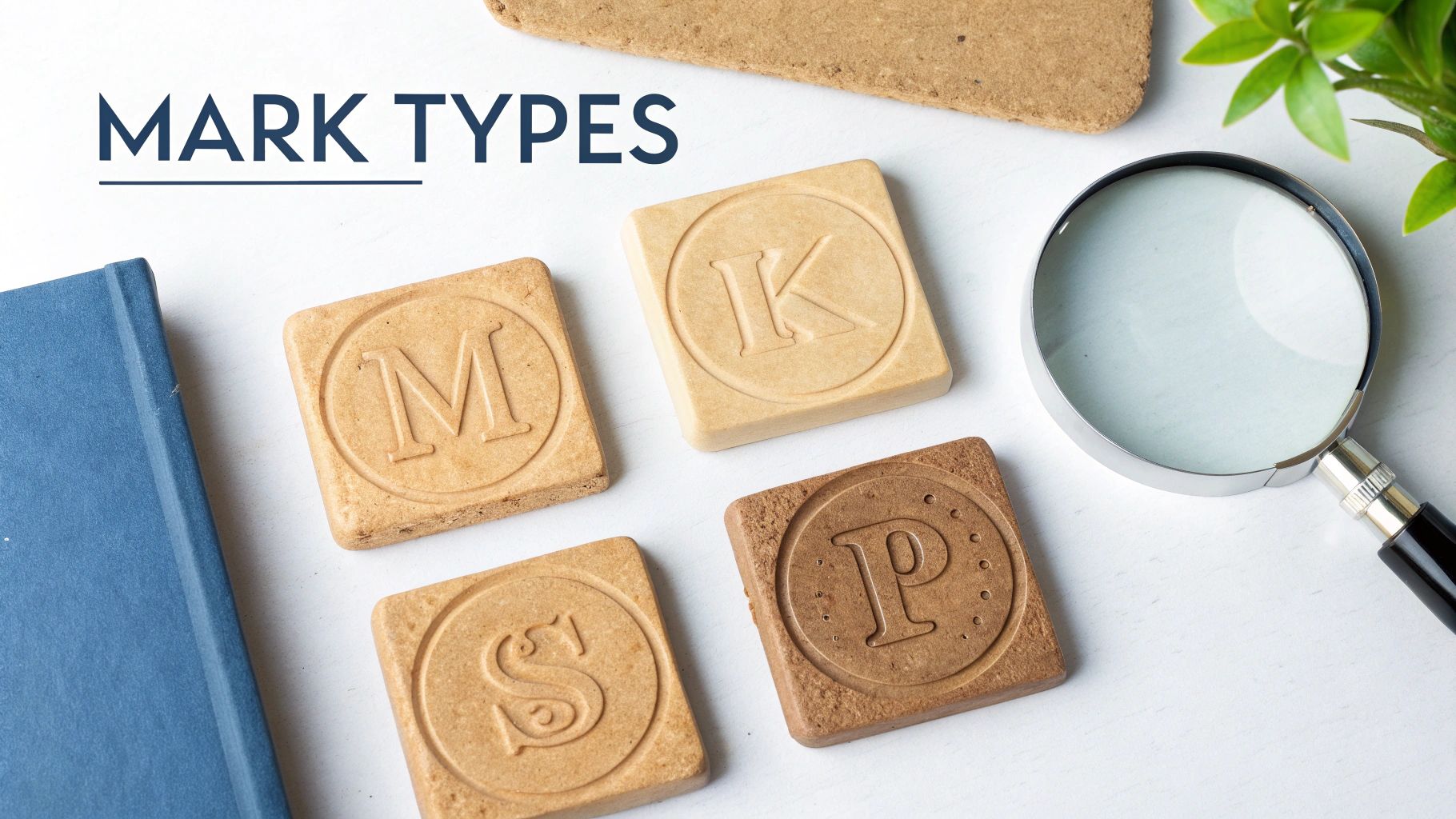
The trick is to break down the language into its core components. By figuring out what each type of mark means, you can start putting those clues together to build a complete picture of where your piece came from, who made it, and when.
Maker's Marks: The Signature
First up is the maker's mark. This is the potter's signature, plain and simple. It's the most direct clue you'll find, telling you exactly who is responsible for the piece.
This could be the official stamp of a huge factory like Wedgwood, the simple initials of a small-town studio, or even the handwritten signature of a single artist. No matter the form, its job is the same: to claim authorship and connect the work to its creator. It’s the starting point for almost all research.
Date and Pattern Marks: The When and What
Beyond the "who," you'll often find marks that tell you the "when" and the "what." These are the details that give a piece real context.
- Date Codes: Think of these as the pottery's timestamp. Sometimes it's a straightforward year, but often it’s a more cryptic system of letters, numbers, or symbols that a factory used to track production periods. Cracking these codes can pinpoint a piece's age with surprising accuracy.
- Pattern Names: If a piece belongs to a specific dinnerware set or decorative series, it will usually have a pattern name. This could be a famous name you recognize, like "Blue Willow," or just a reference number that identifies the design.
Finding a maker's mark alongside a date code and pattern name is like hitting the trifecta. It's the piece's birth certificate, family tree, and portrait all rolled into one.
Impressed vs. Printed Marks: The How
How the mark was put on the piece is another important clue. This detail can tell you a bit about the production process and even help with dating. There are two main methods you'll see.
- Impressed Marks: These are pressed or stamped right into the clay while it's still soft, before the first firing. It leaves a permanent indentation, almost like a fossil in the ceramic. You can feel it with your fingertip.
- Printed Marks: Often called backstamps, these are applied with ink on top of the glaze, usually after the final firing. Because they sit on the surface, these marks can sometimes fade or wear off over decades of use.
Getting a handle on these key differences—the who, what, when, and how—gives you a solid foundation. You're no longer just staring at squiggles on the bottom of a vase. You're starting to read the story.
How Pottery Marking Systems Evolved Through History
The little marks you find on the bottom of a piece of pottery didn't just pop up out of nowhere. They're the product of centuries of change, telling a story that mirrors major shifts in trade, technology, and even the law. What started as a simple signature has grown into a complex code.
In the very beginning, a potter might just add a personal symbol to their work. This wasn't about branding; it was about ownership or a quiet sense of artistic pride—a simple way of saying, "I made this." These marks were as unique as the potters themselves, sometimes just an incised line, a thumbprint, or a specific geometric doodle.
This worked just fine when pottery was made and sold locally. But as the world got smaller and production ramped up, this casual system couldn't keep up. The Industrial Revolution changed the game completely, ushering in an era of factories that could churn out ceramics on a massive scale.
The Rise of Systematic Factory Marks
With mass production came the need for a more organized system. The individual potter's signature started to disappear, replaced by official factory marks. These were stamps or logos that identified the company, not just the person, behind the piece.
This was a huge deal for business. It allowed giants like Wedgwood and Spode to build a reputation for quality that went far beyond any single artisan. Customers learned to recognize and trust these factory brands, turning the maker's mark into a powerful tool for marketing and quality control. These new marks often included more than a name—they might have the factory's location, a royal warrant, or symbols that became instantly recognizable.
A Turning Point in Pottery Marking
The 19th century introduced a new problem: copycats. When a design became a bestseller, rival factories would quickly knock it off, leading to all sorts of disputes. This headache led to one of the biggest developments in the history of pottery markings.
A landmark change came in 1842 with the British Registry Office mark. This system, often called the 'British Registry Lozenge,' was designed to protect patterns from being copied. It was a diamond-shaped stamp with coded letters and numbers in its corners that told you the exact date a design was officially registered. You can dig deeper into how these specific makers' marks protected intellectual property on madelena.com.
This registry system was a huge step forward. For the first time, a marking on pottery wasn't just an identifier; it was a legally binding copyright notice pressed directly into the clay.
This journey from a simple personal sign to a complex legal mark shows just how much these symbols can tell us. They are historical fingerprints, reflecting the economic and legal forces that shaped the ceramics industry. Understanding this evolution gives you the context you need to place a piece of pottery in its proper time.
A Practical Guide to Identifying Pottery Marks
Alright, you've got the basics down on the history and types of markings on pottery. Now, it's time to put on your detective hat. I know that deciphering a tiny, faded mark can feel overwhelming at first, but it's really just a repeatable process. With a good system, you can turn a confusing squiggle into a clear answer.

Think of it like putting together a puzzle. Each step gives you another piece, and pretty soon, you'll see the whole picture. This guide will walk you through a practical, step-by-step method for tackling any mark you come across, giving you the confidence to start your investigation.
Preparing Your Piece for Inspection
Before you can even think about identifying a mark, you have to be able to see it clearly. This first step is crucial and can make all the difference, especially with older, grimy pieces.
Start by gently cleaning the base of the pottery. A soft, damp cloth is usually all you need to wipe away any dirt that's hiding the mark. Be sure to avoid any harsh chemicals or abrasive scrubbers—those can easily damage the pottery and the mark itself.
Next, get some good light. Bright, indirect, natural daylight is your best friend here, but a well-positioned desk lamp works too. Sometimes, the trick is to hold the piece at an angle to the light, which can make faint impressions pop. Finally, snap a clear, focused photo with your phone. A sharp image is one of the most valuable tools you'll have for your research.
Analyzing the Mark
With a clean piece and a clear view, it's time to play detective and analyze the clues. Answering a few simple questions right from the start will help you narrow down your search and use online resources way more effectively.
Here’s a quick checklist to guide you:
- Text, Symbol, or Both? First things first, figure out if you're looking at letters, a logo, a picture, or some combination of them all.
- How Was It Applied? Is the mark impressed (pushed into the clay) or printed (inked on the surface)? This little detail can be a big hint about the piece's age.
- What's the Style? Pay attention to the font or lettering. Is it a clean, modern sans-serif font, an ornate script, or simple block letters?
- Any Numbers? Look closely for any numbers. These could be a date, a pattern number, or even a registration code.
If you’re struggling with a mark that’s hard to read, try a simple pencil rubbing. Just place a thin piece of paper over the mark and gently rub the side of a pencil lead across it. This old-school trick is fantastic for highlighting the details in impressed marks that are otherwise impossible to make out.
Using Online Resources Effectively
Once you've gathered your clues, you're ready to head online. The internet is an incredible resource, packed with huge databases dedicated to documenting pottery marks from all over the world.
Websites like The Potteries have massive visual libraries where you can search by symbol, name, or initials. These digital archives are fantastic because they let you compare your mark directly against thousands of verified examples.
Don't overlook collector forums and online communities, either. These places can be goldmines of information. Never be afraid to post your photo and ask for help; you'll find that experienced collectors are often more than happy to share what they know. This guide provides a practical approach to identifying pottery marks; for those looking to further develop their general practical skills, various resources are available.
Recognizing Common Marks From Around the World
Theory is a great start, but nothing beats seeing the real thing. Pottery marks are a bit like regional dialects—they share some common ground but have their own unique local flavor. Once you start recognizing these visual signatures from famous makers around the globe, you'll find yourself identifying pieces much faster and with more confidence.
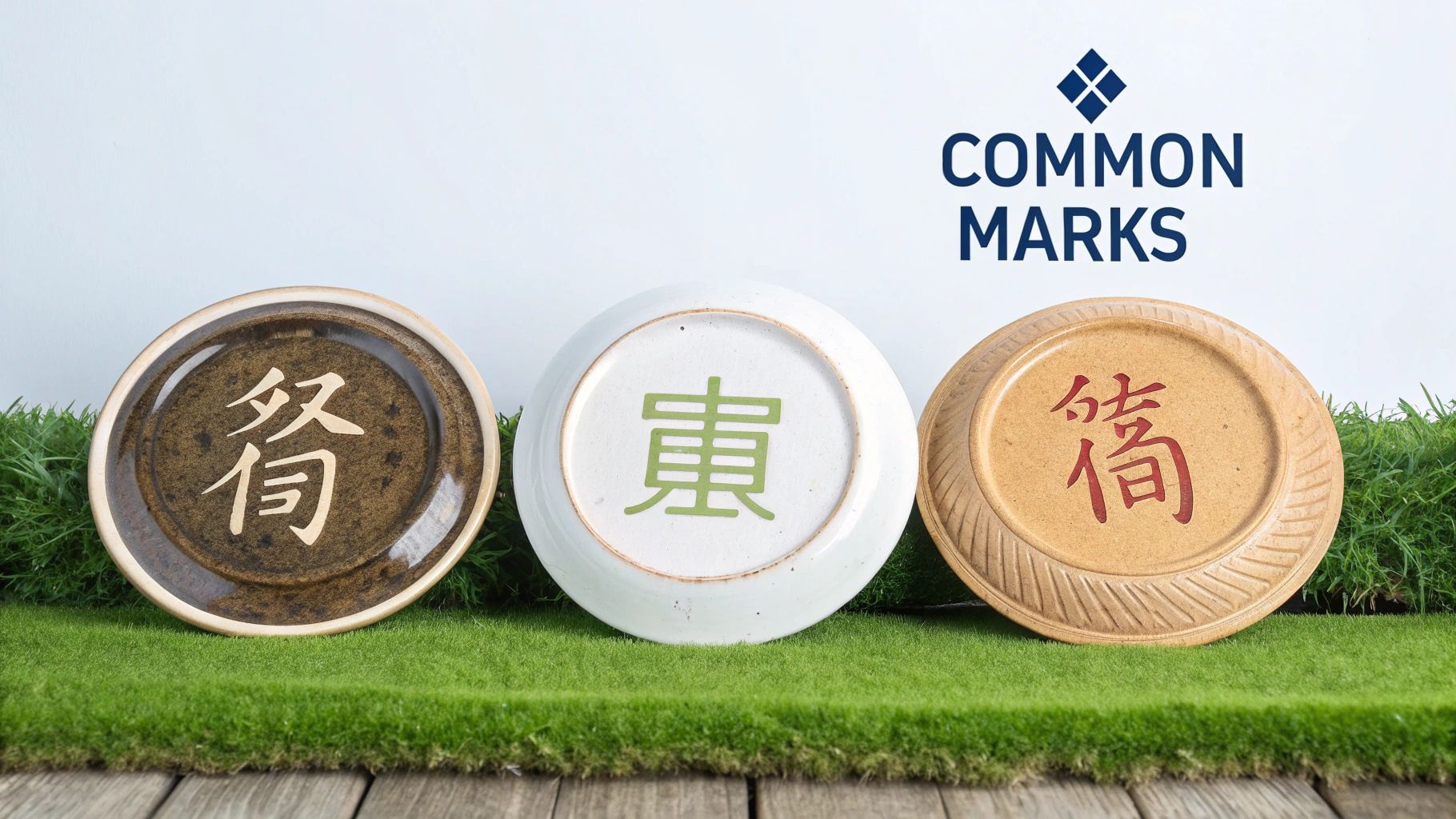
Think of this section as a visual tour to help you build a mental library of iconic marks. From the legendary factories of Europe to the scrappy workshops of early America, every mark tells a story about where it came from and who it was made for. Let's dive into some of the most famous examples you're likely to find.
European Pottery Powerhouses
With centuries of ceramic innovation under its belt, Europe produced some of the most recognizable marks in the world. These symbols became household names, synonymous with luxury, quality, and specific artistic styles. Knowing them is essential.
- Meissen's Crossed Swords (Germany): First used way back in 1722, the blue crossed swords of Meissen are one of the oldest and most respected trademarks out there. The subtle changes in the style of the swords over the years can help you date a piece with incredible accuracy.
- Wedgwood's Impressed Mark (England): The simple, pressed-in "Wedgwood" mark has been a stamp of Neoclassical quality since the mid-18th century. Over time, they added "England" and various date codes, giving you even more clues to work with.
- Limoges Marks (France): "Limoges" isn't one company but a whole region known for its brilliant hard-paste porcelain. You'll often see the factory name (like Haviland) paired with "Limoges, France" to signal its prestigious origin.
American Marks and British Influence
American pottery developed in a really interesting way. Through the mid and late 19th century, American buyers were crazy for British wares, which put local potters in a tough spot. To compete, many either used marks that looked English or left their pieces unmarked altogether.
This practice eventually blurred the lines, and many British and American potteries even merged, adopting the same marks.
This competitive pressure created a fascinating chapter in pottery history, where a mark might be intentionally misleading to meet consumer demand for European goods. It’s a reminder that marks are not just for identification but were also powerful marketing tools.
Understanding these global nuances is key. For example, Irish Belleek pottery created its own beautifully complex backstamp system to track production periods. You can sharpen your skills by checking out our complete guide to Belleek backstamp dates. Getting familiar with these famous examples is the best way to train your eye and make identifying your own treasures feel second nature.
Solving the Mystery of Faded or Missing Marks
It’s one of the most frustrating moments for any collector: you find a beautiful piece of pottery, flip it over with anticipation, and discover the maker’s mark is just a faint, unreadable smudge. But don't despair. A worn or missing mark isn’t a dead end—it’s just an invitation to put on your detective hat.
Before you give up on a faded mark, try to bring it out of hiding. Sometimes, a little change in perspective is all it takes. Grab a flashlight and hold it nearly parallel to the base of the piece. As you slowly rotate the pottery, this technique, known as raking light, casts shadows that can make even the shallowest impressed marks suddenly pop into view.
You can also call in some simple digital backup. A clear, focused photo is your best friend here, because it lets you play around with editing tools right on your phone.
- Go Black and White: Stripping the color away often boosts the contrast of a faint ink stamp, making it much easier to read.
- Tweak Brightness and Contrast: Slide these settings back and forth. You'll be surprised how often this makes a mark stand out against the clay.
- Sharpen the Image: A little bit of sharpening can help define the edges of letters and symbols, clarifying what was once a blur.
For more great advice on getting the perfect picture, check out our guide to photographing antiques.
What to Do When the Mark is Gone
But what if there's no mark at all? That's when you have to look beyond the base and really see the piece itself. The physical traits of the pottery are packed with clues.
Think about its weight and balance. Run your fingers over the texture of the glaze. Look closely at the color of the unglazed clay, which we call the paste. The shape of a handle, the curve of a spout, or a distinctive footrim can be just as telling as a factory stamp.
A missing mark doesn't mean a piece is worthless. Some highly valuable items from famous factories were intentionally left unmarked, especially if they were part of a larger dinner set where only the main serving dishes were stamped.
Ultimately, identifying pottery is all about gathering evidence. When the most obvious clue is missing, you learn to see the entire object as a collection of hints. By analyzing the form, material, and decoration, you'll develop a more holistic approach to identification—turning a frustrating mystery into a rewarding discovery.
Common Questions About Pottery Marks
As you start digging into the world of pottery identification, a few questions pop up time and time again. These are the little roadblocks that can make the process feel tricky, but don't worry—the answers are usually pretty straightforward. Let's tackle some of the most common puzzles.
Does an Older Mark Mean It’s More Valuable?
Not necessarily. It’s easy to assume older means better, but that’s rarely the whole story when it comes to value.
Age is a factor, sure, but it’s often overshadowed by things like the maker's reputation, the rarity of a specific pattern, and the piece's overall condition. Current demand from collectors is also a huge driver. A flawless, hard-to-find designer piece from the 1950s could easily fetch more than a common, mass-produced item from the 19th century.
What if My Pottery Has No Marks at All?
Don't give up on a piece just because its bottom is blank! Plenty of authentic and valuable pottery comes without a single mark.
For very old pottery, marks simply weren't standard practice. Sometimes, in large dinner sets, only the big serving platters or tureens got a stamp. When you find an unmarked piece, you just have to become more of a detective, relying on other clues like the style, the type of clay, the weight, and the form to figure out its story.
An absence of a mark isn't an absence of history. It simply means you need to look at the object's physical characteristics—the shape, glaze, and clay—to read its story.
Can I Always Trust the Mark?
Unfortunately, no. Forgeries are out there, especially for big names that command high prices, like Meissen or Wedgwood.
Some fakes use marks that are almost right but have tiny, deliberate differences that can fool an untrained eye. That's why it's so important to always compare a mark to verified examples from a trusted online database or a good reference book. If you think you've stumbled upon something truly valuable, getting an expert appraisal is always your safest bet.
Feeling a bit lost with your mysterious finds? Let Curio be your guide. Just snap a photo, and our app can instantly identify your item, telling you its history, origin, and an estimated value. Download Curio today and start turning those questions into answers. Find out more at https://www.curio.app.