Reed & Barton's sterling silver patterns make up a huge and impressive catalog from one of America’s most legendary silversmiths. Since their start way back in 1824, they've been known for top-tier craftsmanship, creating iconic patterns like the lavish Francis I and the refined Burgundy. It’s no wonder their silverware has become a cherished heirloom in so many families.
The Legacy of Reed and Barton Sterling Silver
To really get a feel for the artistry in every Reed & Barton piece, you have to look at the company's long and fascinating history. It all started in Taunton, Massachusetts, where the firm first made its name with more affordable Britannia metalware before growing into a giant of American silver.
This wasn't just a simple business pivot; it mirrored a shift in America itself. As the nation grew more prosperous, people's tastes changed. The company, officially taking the names of Henry G. Reed and Charles E. Barton in 1834, initially focused on Britannia metal and, a bit later, silverplate.
From Britannia Metal to Sterling Silver
The real game-changer came in 1889 when Reed & Barton went all-in on sterling silver. This move was spurred on by a few key things, especially the 1859 discovery of the Comstock Lode, which flooded the market with silver and made it much more affordable. Suddenly, the price difference between silverplate and real sterling wasn't so vast, and the growing middle class could afford a touch of luxury.
This timing was perfect. The elaborate American wedding tradition was taking off, and sterling silver flatware became the go-to gift for newlyweds. Because of this, Reed & Barton’s beautiful patterns were gracing the tables of tens of thousands of homes by the early 1900s. You can dig deeper into the company’s history over at the business encyclopedia.
Enduring Craftsmanship and Design
But Reed & Barton's legacy is built on more than just good timing. The name became a byword for quality and classic design. They created patterns that appealed to everyone, from those who loved over-the-top Victorian styles to those who preferred the clean lines of mid-century modern.
What makes their legacy so strong? It comes down to a few key things:
- Design Versatility: With hundreds of patterns, they truly had something for everyone. Whether you wanted something highly decorative or elegantly simple, they had you covered.
- Unwavering Quality: Every fork, spoon, and knife was made to incredibly high standards. This silver was built to last, meant to be used and enjoyed for generations.
- Cultural Significance: Owning Reed & Barton silver became a part of American life—a symbol of family gatherings, special occasions, and fine dining.
For any collector, understanding this background is the essential first step. It gives you the context to identify your pieces, understand their value, and appreciate that you're holding a genuine piece of American history.
How to Identify Reed and Barton Sterling Hallmarks
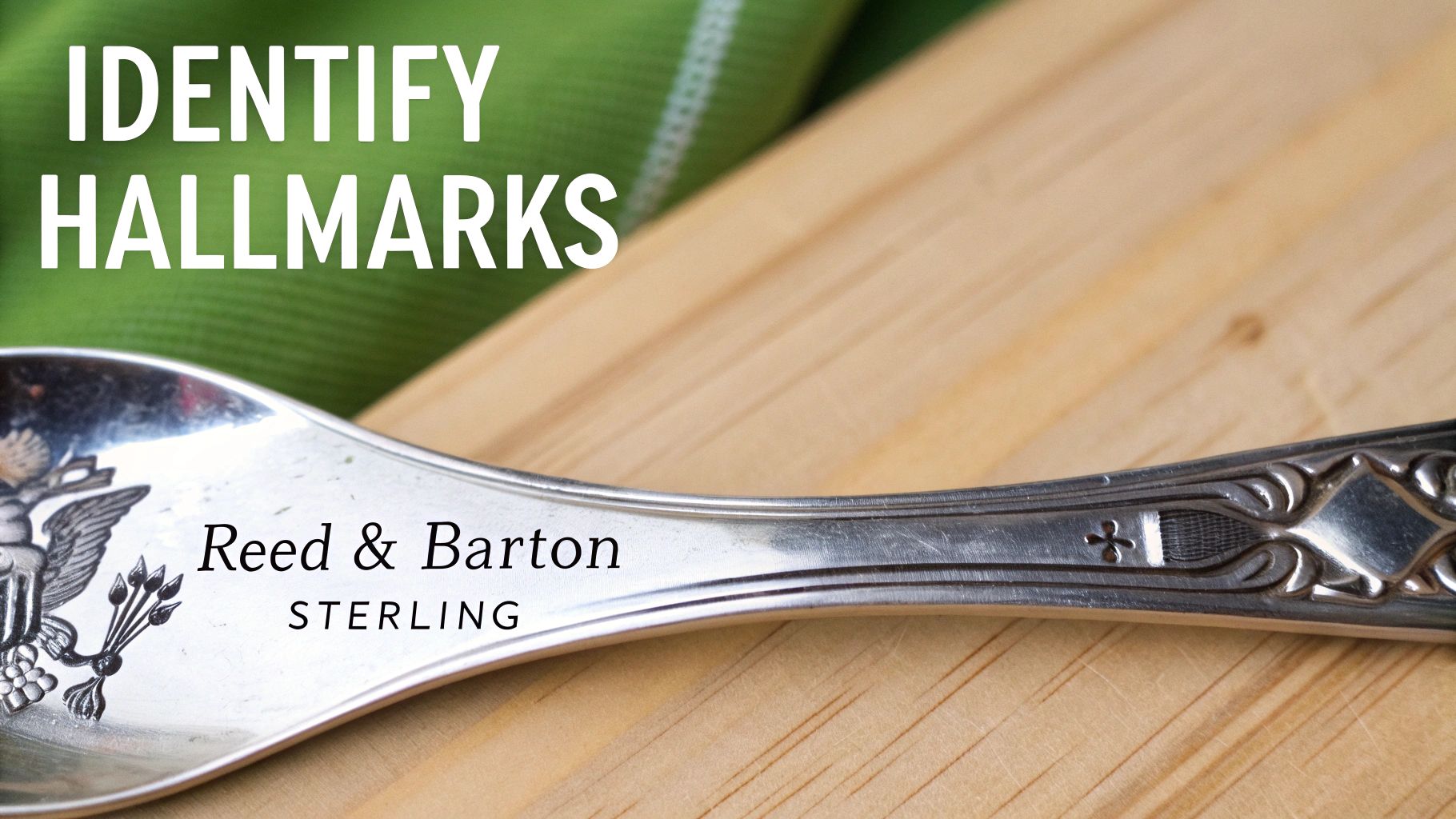
Figuring out what you have starts with the hallmarks. These tiny stamps are your roadmap to a piece's age, origin, and authenticity. For anyone holding a piece of Reed & Barton silver, learning to read these marks is the first and most important step.
Think of hallmarks as the silver's own language. They tell a story about who made it and what it's made of. If you're new to silver, getting familiar with these marks is key. You can get a great overview by reading our guide on what hallmarks on silver are.
The Primary Maker's Mark
The classic Reed & Barton maker's mark used on sterling silver after 1889 is hard to miss. It's a crest featuring an eagle, the letter 'R' (for Reed), and a lion passant—that's a walking lion, in silver terms. If you see this, you're on the right track.
On much older items or different lines, you might just find the name "Reed & Barton" spelled out. But for their famous sterling flatware and hollowware, that eagle-R-lion crest is the one you'll see most often.
Confirming Sterling Purity
Right next to the maker's mark, you need to find one crucial word: "STERLING." This is your confirmation that the piece is made of 92.5% pure silver. If it doesn't say "STERLING," you're likely looking at silverplate, even if it has the Reed & Barton name.
Quick Tip: Hallmarks are small and can wear down over the years. Always use a jeweler's loupe or a good magnifying glass for a clear look. You'd be surprised what you're missing with the naked eye!
Decoding the Date Mark System
Here's where it gets interesting. Reed & Barton made it fairly easy to figure out the age of many of their pieces. From 1928 through the late 1950s, they stamped a unique symbol on their sterling hollowware for each year of production.
This system turns dating from a guessing game into a simple matching exercise. Once you know the symbols, you can pinpoint the exact year.
A quick-reference chart is the best way to make sense of these date marks. Below is a table covering some of the key symbols used by Reed & Barton to help you identify the production year of your sterling pieces.
Reed and Barton Sterling Date Marks Quick Reference
| Year | Date Mark Symbol |
|---|---|
| 1940 | Helmet |
| 1941 | Candlestick |
| 1942 | Lamp of Knowledge |
| 1943 | Genie's Lamp |
| 1944 | Fleur-de-lis |
| 1945 | Anvil |
| 1946 | Goblet |
| 1947 | Trophy Cup |
| 1948 | Ship's Lantern |
| 1949 | Bell |
| 1950 | Lyre |
| 1951 | Maltese Cross |
| 1952 | Anchor |
| 1953 | Pineapple |
| 1954 | Key |
| 1955 | Shield |
| 1956 | Trumpet |
| 1957 | Arrowhead |
By matching the tiny symbol on your silver to this list, you can know exactly when it left the factory. This kind of detail is what really brings a collection to life, giving context to specific Reed & Barton sterling silver patterns and adding to their story—and often, their value.
A Visual Guide to Popular Reed and Barton Patterns
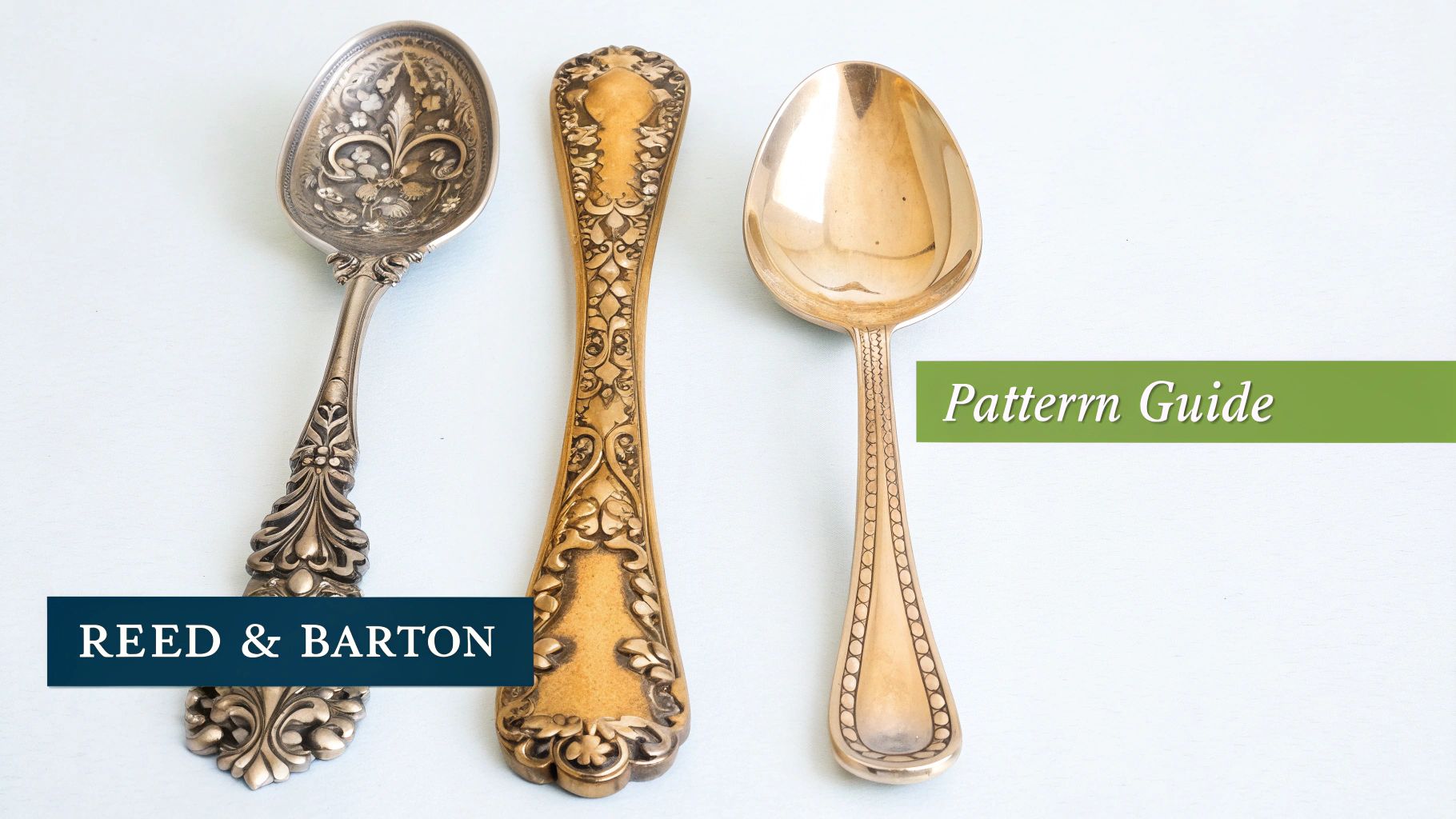
Trying to navigate the world of Reed & Barton sterling can feel a bit like stepping into a museum of American design. They produced hundreds of patterns over more than a century, so figuring out which one you have requires a good visual reference. This guide breaks down some of the most well-known patterns by their design era, making it much easier to put a name to your collection.
Every single pattern tells a story, reflecting the artistic moods and trends of its time. From the incredibly detailed designs of the Victorian age to the clean, simple lines of the Mid-Century Modern movement, this visual catalog is your best starting point. Use the descriptions and production dates to narrow things down and discover where your silver fits into the Reed & Barton legacy.
The Opulent Victorian Era
The late 19th and early 20th centuries were all about intricate, nature-inspired designs, and Reed & Barton's patterns from this time are perfect examples. These pieces are often heavy, covered in detailed scrollwork, and have a grand feel that was right at home in Victorian parlors.
One of the most jaw-dropping patterns from this era has to be Love Disarmed, introduced in 1899. This isn't just flatware; it's a piece of art you can hold. Featuring a stunningly detailed scene of Cupid and Venus, it’s one of the most elaborate Art Nouveau designs ever made in American silver. Because it was so complex to produce, it’s quite rare today and commands incredibly high prices from serious collectors.
Another key pattern is Les Six Fleurs, which came out in 1901. The name means "The Six Flowers," and true to its name, each type of piece in the set features a different, beautifully rendered flower—poppies, orchids, and more. This was a unique idea at the time and made the pattern a hit with anyone who loved botanical art.
The Grandeur of the Early 20th Century
As the Victorian era faded, new artistic movements emerged, and Reed & Barton kept producing patterns that would become true classics. This period gave us what is arguably the most famous sterling silver pattern in American history.
Francis I, first made in 1907, is the undeniable icon of the Reed & Barton catalog. Inspired by the richness of the French Renaissance, its trademark is the cluster of fruits and flowers at its center, which is different on each type of utensil. The dinner fork's motif isn't the same as the teaspoon's, for instance. This amazing attention to detail has made Francis I a symbol of luxury and a top choice for wedding gifts for over a century.
For collectors, Francis I is really the high-water mark of American silver craftsmanship. It has always been popular, so while pieces are easy to find, a complete set in great shape will always sell for a significant premium over its basic silver value.
Coming right after this classic is Pointed Antique, introduced in 1910. This pattern couldn't be more different from the opulence of Francis I. Its simple, clean lines and elegant, unadorned shape offered a more reserved and timeless look that has kept it in demand for decades.
Mid-Century Modern and Beyond
The post-war years brought a huge shift in design, moving away from heavy ornamentation toward sleek, functional styles. Reed & Barton adapted brilliantly, creating some of the most elegant and enduring modern patterns.
Burgundy, introduced in 1949, is a perfect example of this change. It keeps a little bit of its classic French influence with graceful scrolls and subtle flowers, but the overall shape is beautifully balanced and refined. Burgundy hit the sweet spot between traditional elegance and modern simplicity, becoming a staple in countless mid-century homes.
A year later, the company brought out Georgian Rose in 1950. This pattern glances back to classic 18th-century English silver, with a delicate rose and scroll design. It appealed to those who wanted a more traditional, romantic look for their table and is still a popular collectible today.
A Quick Pattern Identification Table
To help you quickly sort through these different styles, here's a handy reference table.
| Pattern Name | Year Introduced | Defining Aesthetic |
|---|---|---|
| Love Disarmed | 1899 | Highly sculptural Art Nouveau with cherub and floral motifs. Extremely rare and valuable. |
| Les Six Fleurs | 1901 | Ornate and botanical, with six different flower designs across the various pieces. |
| Francis I | 1907 | Lavish fruit and flower clusters inspired by the French Renaissance. The brand's most iconic pattern. |
| Pointed Antique | 1910 | Classic and simple with clean lines and an unadorned, elegant shape. |
| Burgundy | 1949 | A balanced, graceful design combining French-inspired scrolls with mid-century simplicity. |
| Georgian Rose | 1950 | A romantic, traditional pattern featuring delicate rose and scroll motifs reminiscent of English silver. |
Of course, this guide only scratches the surface of the hundreds of patterns Reed & Barton created. But it covers the heavy hitters and the ones you're most likely to come across. By comparing your silverware to these examples, you can start the fun process of identifying your own collection. For a faster approach, pattern-finder tools like the Curio app can give you an answer with just a quick photo.
How to Figure Out What Your Silver Pattern is Worth
Figuring out the value of your Reed & Barton sterling silver goes well beyond its weight. While the "melt value"—what the silver itself is worth—sets the floor price, several other factors can send the final price much higher. The big three are rarity, condition, and whether you have a complete set.
For instance, a single teaspoon in the famous Francis I pattern will always fetch a nice premium over its basic silver value. On the other hand, a more common or plainer pattern might sell for a price much closer to the spot price of silver. The difference comes down to collector demand and the design's historical importance.
How to Judge Your Silver's Condition
The physical shape of your silver is a huge deal. Even the most desirable patterns lose value if they're beat up from years of use. When you're looking over your pieces, keep an eye out for these specific flaws.
- Monograms: It's a bit of a debate, but most buyers see monograms as a drawback. While a beautifully engraved, period-appropriate initial can add a bit of charm, it also personalizes the piece. That often lowers the value because it's harder for a new owner to feel like it's truly theirs.
- Garbage Disposal Damage: This one is painfully common for forks and spoons. Check for chewed-up tines, deep gouges, and bent bowls. That kind of damage is really tough, if not impossible, to fix properly.
- Pitting and Wear: Aggressive polishing over the decades can literally wear away the beautiful details of a pattern. Bad storage can also cause pitting or corrosion. Pieces with sharp, crisp details are always worth more.
Expert Insight: It’s not uncommon to see sought-after Reed & Barton patterns sell for 2 to 5 times their melt value on major online marketplaces. The most iconic or hard-to-find patterns in great shape will definitely push the higher end of that range, which just goes to show how much collectors love this brand.
Rarity and What the Market Wants
In the antique silver game, it all comes down to supply and demand. Patterns that were only made for a few years or were incredibly expensive to produce are, naturally, much harder to find today—and therefore more valuable.
You have to think about the history. By the end of the 20th century, formal dining just wasn't as common. In fact, by 1996, Reed & Barton was selling more stainless steel flatware than sterling for the first time. This means patterns made in huge numbers between 1900 and 1990 are generally easier to find. For a deeper dive into the company's story, the Reed & Barton Wikipedia page is a great resource.
To get a real feel for today's market, check out what pieces are actually selling for on sites like eBay, Replacements, Ltd., and live auction platforms. This gives you hard data on what people are willing to pay for specific Reed and Barton sterling silver patterns. The value isn't just a number in a book; it's what someone just paid for it. You'll also notice that complete sets often command a premium over the sum of their individual pieces. This is particularly true for hollowware—you can learn more in our guide on estimating a silver tea service's value.
The Top 5 Most Collectible Reed and Barton Patterns
While Reed & Barton rolled out hundreds of stunning designs over the years, a handful have become true legends in the collecting world. These aren't just forks and spoons; they're icons of American silver artistry, constantly in demand for their history, beauty, and lasting charm.
Figuring out what makes these specific Reed and Barton sterling silver patterns so desirable is the first step to understanding why they often fetch such high prices. This list breaks down the best of the best, from the world-famous Francis I to the incredibly rare Love Disarmed.
Francis I: The Undisputed King
Introduced way back in 1907, Francis I isn't just Reed & Barton's most famous pattern—it's arguably the most celebrated sterling pattern ever made in America. It was inspired by the opulent style of the French Renaissance, and you can see it in the rich fruit and flower clusters decorating each handle.
The real magic is in the details. Each type of utensil, from the dinner fork to the teaspoon, features a slightly different fruit grouping. This remarkable level of craftsmanship cemented Francis I as a symbol of luxury, keeping it in production for over a century. A full, well-kept set is a true treasure.
Burgundy: A Mid-Century Classic
Hitting the market in 1949, the Burgundy pattern perfectly captured the post-war mood. It blended traditional French-inspired scrolls and florals with a sleeker, more refined silhouette that felt completely modern at the time.
Burgundy quickly became a top seller and a go-to on wedding gift registries for generations. Its timeless design still works beautifully today, easily fitting in with both formal dining rooms and more casual, contemporary tables. It's mid-century elegance at its finest—classy, practical, and effortlessly chic.
Spanish Baroque: A Bold Statement
If you love silverware with some real heft and drama, Spanish Baroque is your pattern. Launched in 1965, this design is heavy, ornate, and impossible to ignore. It's covered in grand scrolls, plumes, and shells that call to mind the lavish art of 17th-century Spain.
This is not a pattern for the faint of heart; it commands attention. The substantial weight and deep, almost sculptural details are a masterclass in silverwork. Collectors hunt it down for that luxurious feel and powerful look, making it a very valuable and sought-after set.
Love Disarmed: The Ultimate Rarity
Often called the "holy grail" by serious collectors, Love Disarmed is one of the most complex and breathtaking Art Nouveau patterns ever designed. It first appeared in 1899 and features an incredibly detailed scene of Venus and Cupid wrapping around the handle.
Because it was so difficult and costly to produce, very little of it was ever made.
Finding a single piece of Love Disarmed is a major score for any collector. A complete service is almost unheard of and can fetch astronomical prices at auction, sometimes running into the tens of thousands of dollars.
Georgian Rose: A Romantic Favorite
Making its debut in 1950, Georgian Rose channels the romantic, refined style of 18th-century English silver. The design is defined by a lovely rose and scroll motif at the tip, giving it a look of classic, understated elegance.
It was an instant hit with buyers who wanted something more traditional than the modern styles of the day. Its delicate but detailed design has made it a perennial favorite for collectors who want to set a timeless and romantic table.
Top 5 Most Collectible Reed and Barton Sterling Patterns
To help you see how these iconic patterns stack up, here’s a quick comparison. Each has its own story and unique appeal that continues to capture the attention of silver enthusiasts everywhere.
| Pattern Name | Year Introduced | Key Design Features | Collector Appeal |
|---|---|---|---|
| Francis I | 1907 | Ornate fruit and flower clusters; unique design on each piece type. | Iconic status, continuous production, and exceptional detail make it a must-have. |
| Burgundy | 1949 | Graceful scrolls and florals with a clean, mid-century silhouette. | Versatile and timeless; popular for its blend of classic and modern aesthetics. |
| Spanish Baroque | 1965 | Heavy, bold, and dramatic with deep scrolls, plumes, and shells. | Its substantial weight and opulent, three-dimensional design appeal to those seeking drama. |
| Love Disarmed | 1899 | Intricate, sculptural Art Nouveau scene of Venus and Cupid. | Extreme rarity and stunning, complex artistry make it the ultimate collector's prize. |
| Georgian Rose | 1950 | Delicate rose and scroll motif inspired by 18th-century English silver. | A romantic and classic choice, sought after for its traditional, timeless elegance. |
From the regal complexity of Francis I to the understated romance of Georgian Rose, these five patterns represent the pinnacle of Reed & Barton's design legacy. They remain the most sought-after for a reason: they are true works of art you can bring to your table.
Proper Care and Storage for Your Sterling Silver
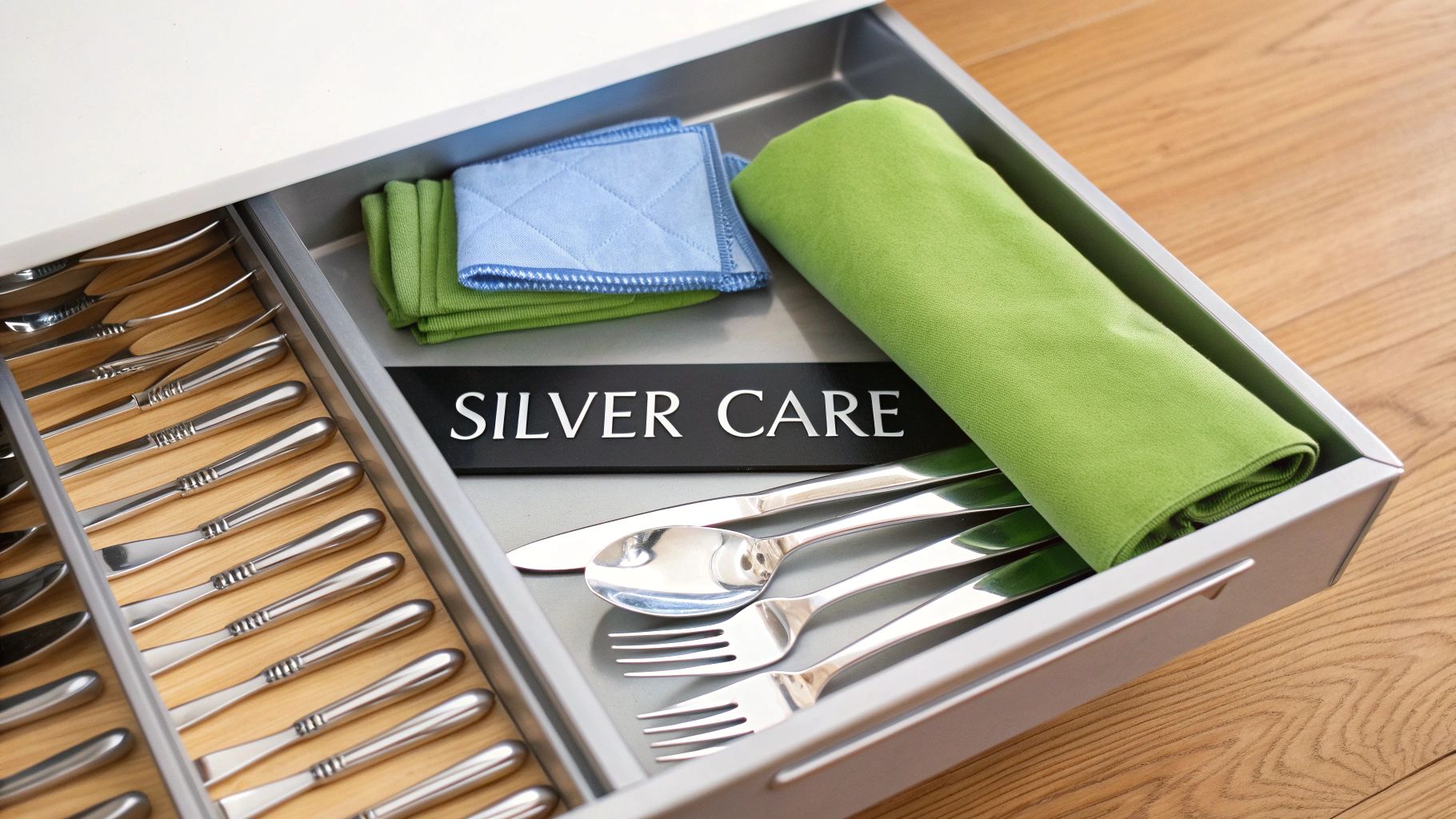
Keeping your Reed and Barton sterling silver patterns looking brilliant comes down to a bit of regular, gentle attention. While sterling is built to last, it can tarnish and scratch without the right handling. The whole point is to keep that beautiful shine while protecting the intricate details of your specific pattern.
Believe it or not, one of the best things you can do for your silver is to use it. Regular use and hand-washing prevent tarnish from getting a foothold in the first place.
Cleaning and Polishing Best Practices
When it's time for a wash, stick to warm water and a simple, phosphate-free soap. Stay far away from harsh detergents or anything with lemon, and never, ever put your sterling in the dishwasher. The intense heat and aggressive chemicals can do irreversible damage.
Always dry your pieces right after washing with a soft, lint-free cloth—think flannel or cotton—to stop water spots from forming. When you need to polish, grab a good quality silver polish made for sterling. Use a soft cloth and wipe in straight, back-and-forth motions. Wiping in circles can create tiny, web-like scratches.
- Do: Hand-wash using mild soap and warm water.
- Do: Dry every piece right away with a clean, soft cloth.
- Don't: Put it in the dishwasher. The detergents are just too abrasive.
- Don't: Use scratchy materials like scouring pads or old toothbrushes.
Proper cleaning is really the secret to keeping your Reed and Barton sterling patterns in top shape. A general-purpose jewelry cleaner kit can also be handy for maintaining the shine on smaller pieces. If you want a deeper dive, our guide on how to clean antique silver covers techniques specifically for preserving heirlooms.
Effective Storage to Prevent Tarnish
Good storage is your number one weapon against tarnish, which is just a natural reaction between silver and sulfur in the air. The key is to store it somewhere dry with low humidity.
The best method is to wrap each piece of silver separately in acid-free tissue or unbleached cotton flannel. Then, place them in a silverware chest lined with a tarnish-resistant cloth. That special lining is designed to soak up airborne sulfur, slowing down the tarnishing process significantly.
Important Tip: Whatever you do, don't wrap your sterling in plastic wrap or bundle it with rubber bands. Both contain sulfur and will actually speed up tarnish, sometimes leaving permanent black marks that are impossible to remove.
If you don’t have a formal chest, individual flannel bags work great, too. Just try to avoid storing your silver directly in oak cabinets or drawers, as the wood itself can emit fumes that accelerate tarnishing. Follow these simple rules, and your treasured Reed & Barton collection will stay beautiful for generations to come.
Reed & Barton Sterling: Your Questions Answered
When you're dealing with a brand as historic as Reed & Barton, a few questions are bound to come up. Whether you've just inherited a set or you're a long-time collector, getting straight answers can make all the difference.
Here, we’ll tackle some of the most common questions people have about their Reed & Barton silver. Think of it as a quick guide for everything from telling sterling from plate to figuring out what that monogram means for the price.
Is All Reed and Barton Silverware Sterling Silver?
No, and this is a critical point for anyone trying to determine value. While Reed & Barton is famous for its gorgeous sterling silver, the company also crafted excellent silverplate and, in later years, stainless steel.
So, how can you be sure? You have to look for the hallmark. For a piece to be sterling, it must be stamped with the word "STERLING" or marked with the company's well-known eagle-R-lion symbol. If you only see the "Reed & Barton" name, chances are you have a silverplate item.
Does a Monogram Decrease the Value of My Silver?
Usually, yes, but it’s not a simple answer. For most buyers looking for a set to use at their dinner table, a monogram is a deal-breaker. They want a "clean" set that feels like it belongs to them, so a previous owner's initials tend to lower the resale value.
On the other hand, some collectors see things differently. A beautifully engraved, period-correct monogram can add a layer of history and charm. For extremely rare or antique Reed and Barton sterling silver patterns, a monogram might barely affect the price because the value is really in the pattern's scarcity and the weight of the silver itself.
Collector's Note: Without a doubt, the most celebrated Reed & Barton sterling pattern is Francis I. Introduced back in 1907, its lavish design—with a different fruit-and-flower cluster on every single handle—makes it one of the most iconic patterns in American silver. It's still a top-tier collectible today.
How Can I Identify My Reed and Barton Pattern Quickly?
The best way to skip the headache of scrolling through hundreds of online images is to use a good visual reference guide or a dedicated identification app. Trying to match it by eye alone can be a real rabbit hole.
Modern tools have made this so much easier. An app can often nail the pattern name from just one photo, giving you instant access to its history and what it's currently worth on the market.
Ready to finally know what’s in your silver chest? The Curio app can identify your Reed & Barton sterling patterns in seconds. Just take a picture to learn the pattern’s name, story, and value. Download it today and satisfy your curiosity. Visit https://www.curio.app to get started.