If you've ever flipped over a piece of antique-looking silverware and found the letters EPNS stamped on the back, you've stumbled upon a key clue to its identity. Those letters stand for Electro-Plated Nickel Silver, and they tell you that the item is not solid sterling silver. Instead, it's made from a sturdy base metal alloy that has been coated with a very thin layer of real silver.
Knowing this is the first crucial step in understanding what you have, how to care for it, and what it might be worth.
What Silver EPNS Marks Mean
That simple "EPNS" stamp reveals a lot about how an item was made. It's a sign of a manufacturing breakthrough that brought the look and feel of silver to households that couldn't afford the real thing. It changed everything.
The electroplating process was first patented in Birmingham, England, way back in 1840. Within a decade, factories were churning out beautiful electroplated goods that looked almost exactly like sterling silver but cost a tiny fraction of the price. Suddenly, things like elaborate tea sets and full cutlery services became attainable for the growing middle class, often selling for 40–80% less than solid silver pieces. For a deeper dive into this history, the American Silver Plate Marks guide is an excellent resource.
Why Nickel Silver Was Used
There's a good reason manufacturers settled on nickel silver as the go-to base metal for electroplating. This alloy, which is a mix of copper, nickel, and zinc, had a few key advantages that made it perfect for the job.
- Durability: It's a tough material, much harder than pure silver, so it could stand up to daily use without easily denting or bending.
- Appearance: The alloy itself has a silvery-white color. This was a clever choice because as the outer silver plating inevitably wore thin from years of polishing, the base metal showing through wasn't nearly as obvious as a yellow brass or reddish copper would have been.
This practical combination of strength and good looks made EPNS the top choice for mass-produced "silver" for much of the late 19th and early 20th centuries. You'll often see other letters stamped on pieces, too, so here’s a quick guide to help you decipher them.
Common Electroplate Abbreviations Quick Reference
This table breaks down some of the most common abbreviations you'll find on electroplated items. While EPNS is standard, makers used other marks to denote different base metals or plating qualities.
| Abbreviation | Full Term | Base Metal |
|---|---|---|
| EPNS | Electro-Plated Nickel Silver | Nickel Silver |
| EPBM | Electro-Plated Britannia Metal | Britannia Metal (Pewter-like) |
| EP | Electro-Plated | Varies (often Nickel Silver or Copper) |
| A1 / AA | Superior Quality Plating | Nickel Silver |
Knowing these variations can help you get a better handle on what your specific piece is made of, even if it doesn't say EPNS outright. Marks like A1 or AA were often used by manufacturers to signal a thicker, more durable layer of silver plating.
Decoding Common Electroplate Mark Variations
While seeing EPNS stamped on a piece is the most straightforward sign of electroplated nickel silver, it’s really just the tip of the iceberg. Silversmiths used a whole range of abbreviations to signal the type of base metal they used and, just as importantly, the quality of the silver plating itself. Getting a handle on these subtle differences is crucial if you want to know exactly what you're looking at.
Think of these marks as a kind of shorthand. They immediately tell you an item isn't solid sterling silver, but they also offer a peek into its construction and how well it was made. Some marks point to a different base metal altogether, while others were a maker's way of boasting about a higher grade of plating.
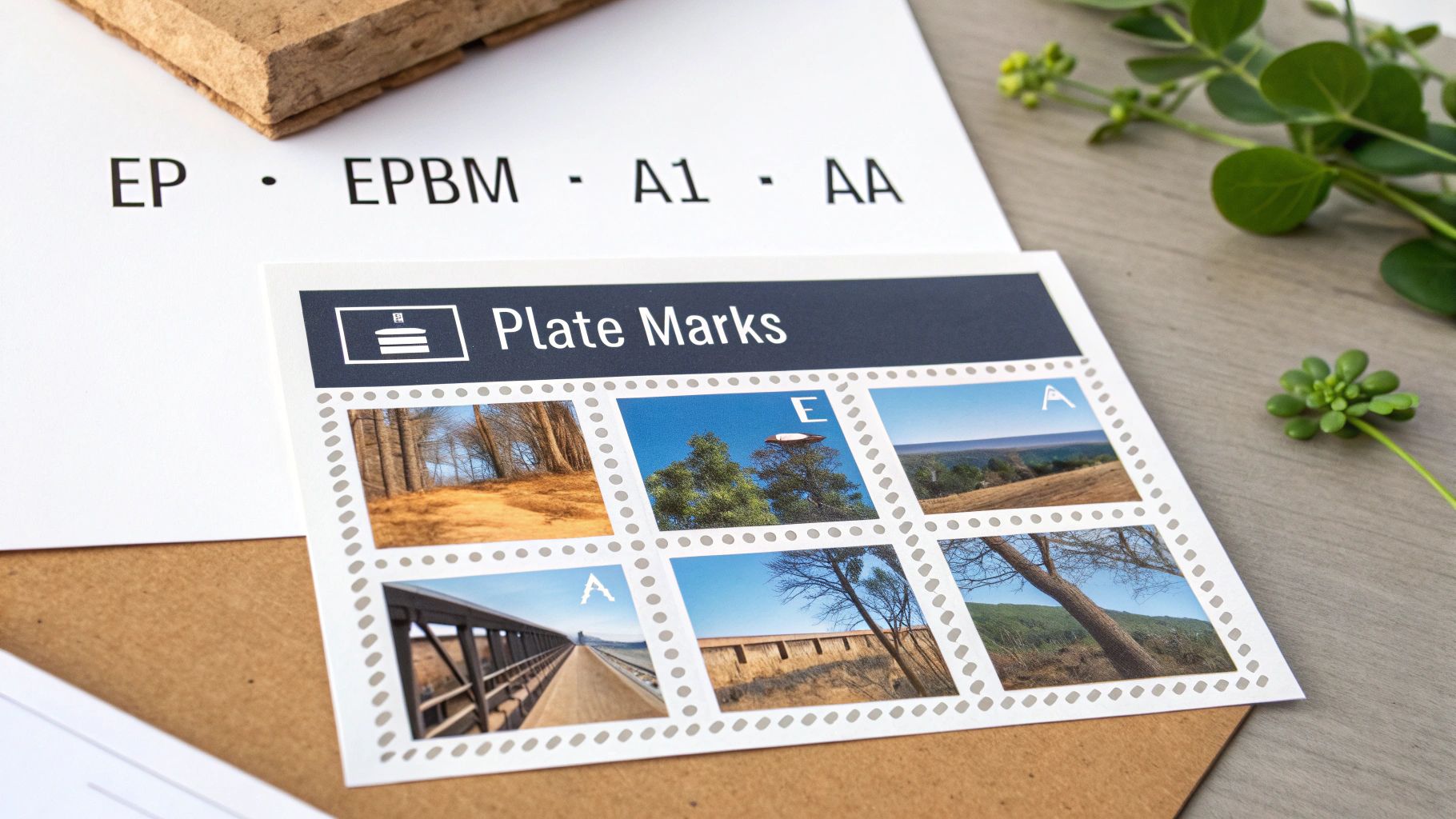
This collection of common electroplate markings helps sort out the alphabet soup of silver plate terms, making it much easier to connect a stamp to its actual meaning. Let's break down the most common variations you're likely to stumble upon during your hunts for antique and vintage pieces.
Understanding Base Metal Marks
Often, the letters stamped on an item give away the secret of what’s hiding underneath the silver. Nickel silver was the go-to base for its durability, but it certainly wasn't the only metal in the silversmith's playbook.
One of the most frequent alternatives you'll come across is EPBM, which stands for Electro-Plated Britannia Metal. Britannia Metal is a pewter-type alloy made mostly of tin, and it was a popular choice for hollowware items like teapots, sugar bowls, and pitchers. Because it's a softer metal than nickel silver, you won’t often find it on flatware like forks and spoons that need to be more rigid. You might also spot a simple EP stamp, which is a catch-all for "electroplated" and usually points to a base of either nickel silver or copper.
Deciphering Plating Quality Grades
Beyond just identifying the base metal, some silver epns marks give you clues about the thickness and quality of the silver layer itself. This was how manufacturers created different product tiers, offering more robust—and more expensive—options to their customers.
These quality marks were, in essence, a marketing tool. A thicker coating of silver meant the piece could survive years of polishing and daily handling before the base metal started peeking through. For the buyer, it signaled a longer lifespan and better value.
Keep an eye out for these common quality grades:
- A1 or AI: This indicates a standard, good-quality layer of silver plating.
- AA: This mark was used for a superior, heavier coating of silver.
- Triple Plate: Just like it sounds, this stamp means the item was plated with three separate layers of silver, making it incredibly durable.
Finding one of these quality stamps, especially on a piece from a well-known maker, is a good sign that it was considered a premium item back in its day. These little details help you piece together the full story of your silver-plated treasures.
How to Identify Key Maker's Marks
While the EPNS stamp tells you what an item is, the maker’s mark tells you its story. Think of this tiny symbol or set of initials as the artist's signature. It reveals who made the piece, their reputation for quality, and often, where it came from. For collectors, this mark can be the most important factor in figuring out an item's history and value.
Identifying these marks is how you connect a random find to a world-renowned workshop. Suddenly, your piece isn't just "silver-plated"—it's a specific, historical artifact from a famous company like Elkington & Co. or Reed & Barton. That's when things get interesting.
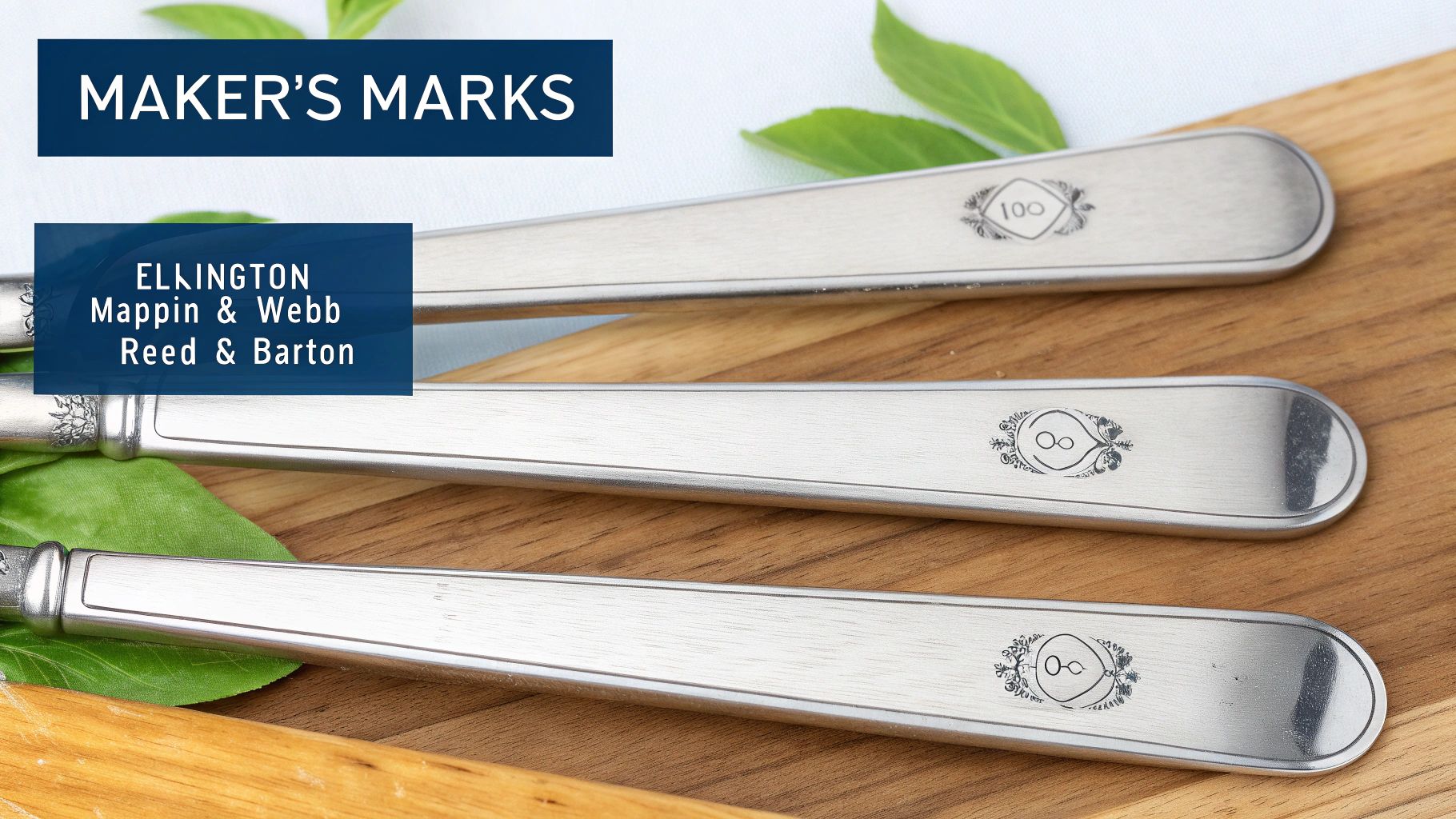
Prominent UK Makers You Should Know
The United Kingdom, especially the cities of Sheffield and Birmingham, was the absolute heart of the electroplating industry. It's no surprise that many of the most common and valuable silver epns marks belong to British firms.
Elkington & Co. These are the pioneers. They patented the electroplating process back in 1840, so their marks are historically a big deal. You'll often find "E & Co" inside a shield, sometimes with a crown. They even used a date letter system, which can help you nail down the exact year it was made.
Mappin & Webb Another heavyweight, Mappin & Webb was known for exceptionally high-quality pieces. Their marks might spell out the full name or just use the initials "M&W." Keep an eye out for their special brand names, like "Princes Plate" or "Mappin Plate," which also point right back to them.
Walker & Hall This Sheffield firm was a true giant, one of the biggest silverware manufacturers of its time. Their trademark is easy to spot: a pennant flag with the letters "W&H" inside.
Expert Tip: British makers loved their unique symbols. A pennant flag, a crown, or a particular shield shape can be a dead giveaway for a specific company, even if you can't quite make out the initials anymore.
Key American Manufacturers
Of course, the industry wasn't just in the UK. American companies produced enormous amounts of top-notch electroplated silver, creating their own marking systems along the way.
Reed & Barton Hailing from Massachusetts, Reed & Barton is a huge name in American silver. For their electroplate, look for their full name or their knight's helmet logo. They were famous for creating stunning, fashionable designs that gave the British makers a run for their money.
Gorham Manufacturing Company Gorham is legendary for its sterling silver, but they also produced a massive amount of electroplate. Crucially, their plated items will never say "Sterling" or have their iconic lion-anchor-G hallmark. Instead, you'll see stamps like "Gorham Plate," "EP," or the names of specific product lines. To dig deeper, check out our guide on the C.W. silver mark, which sometimes appears on their pieces.
Oneida Community Oneida has a fascinating history, starting as a utopian community before becoming a silverware powerhouse. Thankfully, their marks are usually straightforward, often stamped with "Community Plate," "Tudor Plate," or "Oneida Community."
Learning to spot these key maker's marks is a fundamental skill. It’s what turns a generic piece of EPNS into something with a clear identity and a rich past, letting you truly appreciate the craftsmanship behind your find.
Distinguishing EPNS Marks from Sterling Silver Hallmarks
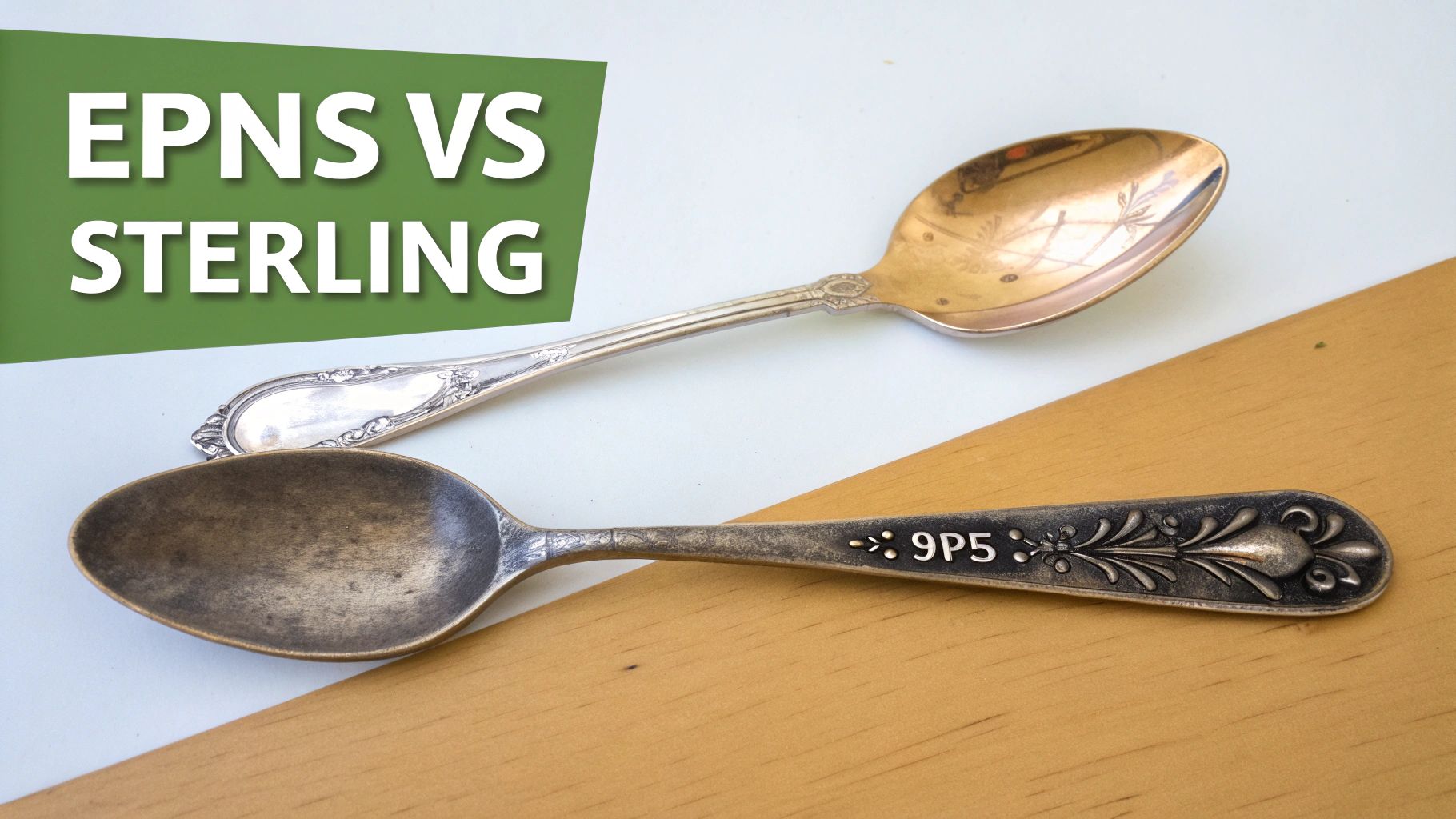
Learning to tell EPNS from sterling silver is probably the single most important skill for any collector or reseller. It’s not just a subtle difference; it’s a massive gap in material, craftsmanship, and ultimately, value. One is a plated base metal, while the other is a precious metal alloy. Get this wrong, and you could make a very costly mistake.
The surest way to know what you have is to look at the markings. An EPNS piece is usually stamped with those very letters, or sometimes EP, A1, or another plating grade. Sterling silver, on the other hand, is legally required in many countries to carry official hallmarks that guarantee its purity. These are the marks you're really hoping to find.
Key Hallmarks of Sterling Silver
Sterling silver hallmarks are a system of official, stamped symbols—not just a manufacturer's brand. They act as a guarantee of the metal's quality, stamped by an independent assay office.
- Purity Marks: The most common sign is the number "925" or ".925", which certifies the item is 92.5% pure silver. The word "Sterling" itself is another dead giveaway. For a closer look, it's worth understanding sterling silver hallmarks like the '925' mark.
- Assay Office and Date Letters: Genuine British sterling, for instance, will also have a symbol for the city where it was tested (like a lion for London) and a letter representing the year. Our complete guide explains in detail what hallmarks on silver are and how to decipher them.
Physical Clues Beyond the Marks
What if the marks are worn away or just too hard to read? You can fall back on a few physical clues.
EPNS items often feel lighter than a sterling piece of the same size would. But the biggest tell is wear. Check high-contact spots—the edges of a tray, the back of a spoon's bowl, or the tines of a fork. If you see a yellowish or greyish base metal peeking through the silver coating, you're definitely looking at a plated item.
The difference in value is huge. A Victorian sterling silver place setting can easily be worth 3 to 8 times more than a similar EPNS set. This is because silver epns marks mean the item has virtually no melt value, which is what underpins the price of any precious metal object.
Valuing and Caring for Your EPNS Finds
So, you've successfully deciphered the silver epns marks on your piece. That's the fun part! Now, you're probably asking two things: "What's it worth?" and "How do I clean it without ruining it?" These are the most common questions, and getting them right is key to enjoying your collection.
First things first: EPNS isn't sterling silver. Because it's just a thin layer of silver over a base metal like nickel, it doesn't have a high melt value. Instead, its worth comes from other things—its history, craftsmanship, and how rare it is.
What's My EPNS Piece Worth?
Most EPNS items are fairly common and won't make you rich, but some are definitely collectible and can be quite valuable. It all boils down to a few key factors:
- The Maker: A name brand always helps. A piece clearly marked by a famous maker like Elkington & Co. or Mappin & Webb will generally be worth more than something from an unknown workshop.
- Design and Rarity: Is it an unusual shape? Part of a complete set? An intricate, artsy design will always catch a collector's eye and fetch a higher price than a plain, mass-produced spoon.
- Condition: This is the big one. The value is in the silver plating. Pieces with their original plating intact, with no major dings or ugly patches of worn-through base metal, are what people want.
Condition really is everything. Think about it—that silver layer is incredibly thin. Research suggests that with normal family use, the plating could wear away in as little as 30–80 years. It all depends on how thick it was to begin with and how often it was polished. This is why so many antique EPNS pieces you see today have that tell-tale brassy or grey metal showing through, which dramatically lowers their value. For a deeper dive, conservation resources like these silver plating longevity and care guides are fantastic.
How to Properly Care for EPNS Items
Because that silver layer is so delicate, you have to be careful. You can't treat EPNS like solid silver. Aggressive cleaning is the fastest way to strip off the plating and destroy the piece for good.
Crucial Care Tip: Whatever you do, stay away from harsh, abrasive polishes and chemical silver dips. They are way too aggressive for plated items and will eat right through the silver, leaving you with a dull, worthless piece of base metal.
A gentler approach is what's needed. Just follow these simple steps:
- Wash First: A quick wash with mild soap and warm water gets rid of any surface grime.
- Use a Gentle Polish: Find a quality, non-abrasive silver polish—creams and foams are usually a good bet. Use a soft cloth and a light touch.
- Rinse and Dry: Rinse every bit of polish off with clean water. Then, dry it immediately and thoroughly with a soft, lint-free cloth to avoid water spots.
A little bit of mindful care goes a long way. By treating your EPNS pieces gently, you’ll preserve their finish and keep them looking beautiful for years to come.
Using Technology to Confirm Your Findings
Even with a good reference guide, sometimes you just get stumped. A worn mark or an unfamiliar symbol can leave you guessing. This is where technology can really come in handy, turning your smartphone into a pocket-sized expert.
Modern identification apps are fantastic for getting a quick second opinion. You can snap a photo of a confusing mark and often get instant information about the maker, where it came from, and maybe even a rough idea of its value. It takes a lot of the guesswork out of the equation.
The image above shows a typical app interface where you can upload a photo for analysis. Whether you're a casual collector or a seasoned reseller, these tools can save you a ton of time and help you feel more certain about what you've found.
Taking a Deeper Dive with Digital Tools
Identification apps are especially helpful when you're dealing with a really faint stamp or a maker you've never heard of. If you're curious about how these platforms operate, checking out a guide on a top-rated antique identification app can give you a better feel for their features.
For those really tough cases, some folks go a step further and use more sophisticated AI image analysis tools. These programs can analyze high-resolution photos of a mark, sometimes picking out tiny details that are nearly invisible to the naked eye. It’s an extra layer of scrutiny that can help lock in an identification with much greater confidence.
Your EPNS Identification Checklist
When you're out treasure hunting at an antique shop or flea market, you need to make decisions fast. This simple, four-step process is your field guide to quickly identifying silver epns marks on the spot. Think of it as a mental cheat sheet to help you confidently separate the plated pieces from the real deal.
I've designed these steps to move from the most obvious stamps to the more subtle physical clues. Following this order will help you work efficiently and avoid missing key details.
The Four-Step Field Test
With a little practice, you can run through this entire process in under a minute. It’s a practical way to apply what you know when time is tight and a potential treasure is in your hands.
Search for Key Abbreviations: Start by looking for the dead giveaways of electroplate. Stamps like EPNS, EPBM, EP, or even quality grades like A1 and AA are immediate confirmation that you're holding a silver-plated item, not solid sterling.
Identify the Maker's Mark: Next, hunt for a maker’s mark. A distinct symbol, like the famous Walker & Hall flag or Elkington & Co.'s crowned shield, tells you who made it. Finding a known electroplate manufacturer's mark is another solid piece of evidence.
Inspect for Physical Wear: Now, let your eyes and fingers do the work. Check the high-wear spots—the edges of a handle, the bowl of a spoon, or the tines of a fork. If you see a yellowish (brass) or dull grey (nickel) color peeking through, that’s definitive proof the silver plating has worn away.
Differentiate from Sterling Hallmarks: Finally, do one last check to confirm the absence of sterling hallmarks. If a piece is sterling, it will have official marks like “925,” the word “Sterling,” or a national symbol like the English lion passant. If you don't see any of these, it's not sterling silver.
This structured approach helps you cover all your bases methodically. To make the distinction even clearer, here’s a side-by-side comparison.
EPNS vs. Sterling Silver At a Glance
This table breaks down the core differences between EPNS and sterling silver, giving you a quick reference for the most important characteristics to look for.
| Characteristic | EPNS (Electroplated Nickel Silver) | Sterling Silver |
|---|---|---|
| Composition | Base metal (nickel, copper, zinc) with a thin silver coating. | 92.5% pure silver alloyed with 7.5% other metals. |
| Common Marks | EPNS, EPBM, A1, AA, EP, Maker’s logos. | "925," "Sterling," Lion passant, other official hallmarks. |
| Wear Pattern | Silver layer wears away, exposing a different colored base metal. | Scratches and dents but remains silver throughout; no peeling. |
| Intrinsic Value | Low; value is based on maker, condition, and collectibility. | High; value is based on its significant precious metal content. |
Ultimately, recognizing these differences is the key to identifying pieces correctly and understanding their true value.
Your Top Questions About EPNS Marks Answered
Even after you've spent some time with this guide, a few questions always seem to come up when you're holding a piece of antique silver plate. Let's tackle some of the most common ones I hear, so you can feel more confident identifying, valuing, and caring for your items.
Is EPNS Actually Real Silver?
The short answer is no, it's not solid silver. EPNS stands for Electro-Plated Nickel Silver, which is a fancy way of saying it's an item made from a base metal alloy (typically nickel, copper, and zinc) that has been coated with a very thin layer of pure silver.
So, while there is genuine silver on the surface, it’s just a plating. This means it isn’t sterling silver and its value comes from its history and craftsmanship, not from the precious metal content.
Can You Tell EPNS from Sterling Just by Weight?
You might be able to, but I wouldn't bet on it. As a general rule, sterling silver is denser and often feels heavier than a similar-sized EPNS piece.
However, this isn't a foolproof method. A really well-made, heavy-gauge EPNS fork can feel just as substantial as a lighter sterling one. The only surefire way to know for certain is to look for the hallmarks or stamps.
What Is My EPNS Silverware Worth?
The value of EPNS items is all about their collectibility, not their scrap metal price. A few key things determine what a piece is worth:
- The Maker: A piece from a famous name like Elkington & Co. or Mappin & Webb will almost always fetch more than one from an unknown workshop.
- Condition: This is a big one. The quality of the silver plating is critical. Pieces with minimal wear, no deep scratches, and fully intact plating are always more valuable.
- Rarity and Style: Is it a unique, beautifully decorated piece? Or part of a complete, matching set? These are the items collectors are looking for, and they'll pay more for them than for common, everyday single forks or spoons.
Most single pieces of EPNS flatware sell for just a few dollars. But don't be discouraged—a high-quality decorative piece or a full canteen from a top maker can easily be worth hundreds.
Why Is My EPNS Piece Turning Yellow or Grey?
That's the tell-tale sign of the silver plating wearing off. Years of polishing and handling eventually rub away the thin silver layer, revealing the base metal underneath.
If you see a yellowish tint, the base is likely a brass or copper alloy. A dull, greyish color usually means the nickel silver (also called German silver) base is showing through. Unfortunately, once the plating is gone, polishing won't bring the silver back.
Still staring at a mysterious mark and feeling stuck? Curio can make short work of that. Just snap a photo of the mark, and our app can give you the maker's details, historical context, and even a value estimate in seconds. Give it a try by downloading Curio today and get the confident answers you're looking for.