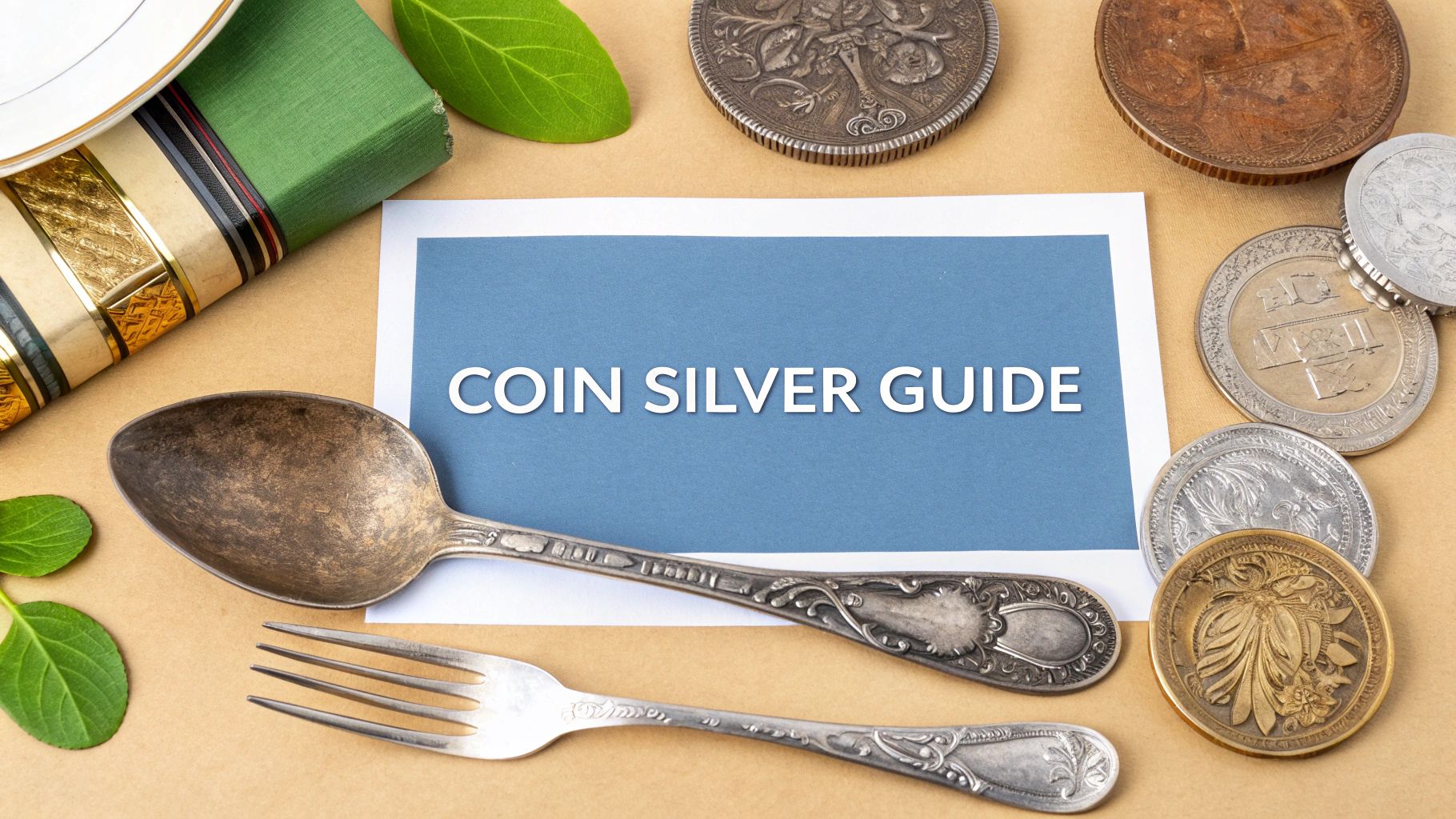
So, what exactly is coin silver? Put simply, it’s an American silver alloy created by melting down silver coins. This was a common practice from the late 1700s through the mid-1800s, a time when pure silver bullion was hard to get but foreign currency was readily available.
A Practical Guide to Coin Silver
Picture a time before big banks and digital currency. A family's wealth wasn't just a number on a screen; it was something you could actually hold in your hands. This is the world that created coin silver.
In early America, silversmiths faced a real challenge. They needed raw silver to craft their goods, but silver bars weren't easy to come by. What they did have was a jumble of silver coins from all over the world—Spanish reales, French francs, and Mexican pesos were all in circulation.
Ever the innovators, these craftsmen came up with a clever solution: melt the coins. They transformed this assortment of foreign money into beautiful and sturdy household goods. Everything from spoons and forks to intricate teapots was fashioned from this repurposed currency. This was more than just recycling; it was a way to convert unstable foreign money into a tangible, valuable asset for the family.
The Composition of Coin Silver
The name "coin silver" tells you everything about its origins. Since it was made from melted-down money from various countries, the exact silver purity could differ from piece to piece in the earliest days. Over time, however, an American standard took hold.
The standard for coin silver settled at a precise mixture of 90% silver and 10% copper. This alloy perfectly matched the silver content of United States coins minted before 1965. You can dive deeper into the makeup of precious metal alloys with arbitrage and trade resources.
Why add the copper? Pure silver is beautiful but far too soft for a fork or spoon that gets used every day. That small amount of copper gave the metal the strength and durability it needed to last for generations.
Think of it this way: Owning a set of coin silver spoons was like having a savings account you could eat with. It was a functional, beautiful, and liquid asset that represented a family's wealth and stability.
Here's a quick summary of what defines coin silver.
Coin Silver at a Glance
| Characteristic | Description |
|---|---|
| Silver Content | Typically 90% pure silver. |
| Alloy Metal | The remaining 10% is usually copper for strength. |
| Era of Production | Primarily from the late 18th to the mid-19th century. |
| Source Material | Crafted from melted silver coins from various nations. |
This unique backstory is what makes these pieces so compelling for collectors and historians alike.
Each item is a direct link to the economic realities and resourcefulness of early American life. It’s more than just an antique—it’s a piece of history, representing a craftsman's skill in turning spare change into a lasting legacy.
The Story of Coin Silver in American History
Coin silver is much more than just an antique—it’s a genuine piece of early American history, born from sheer necessity and ingenuity. To really get a feel for what it is, you have to imagine a time long before today's easy supply chains, back in the world of craftsmen like Paul Revere.
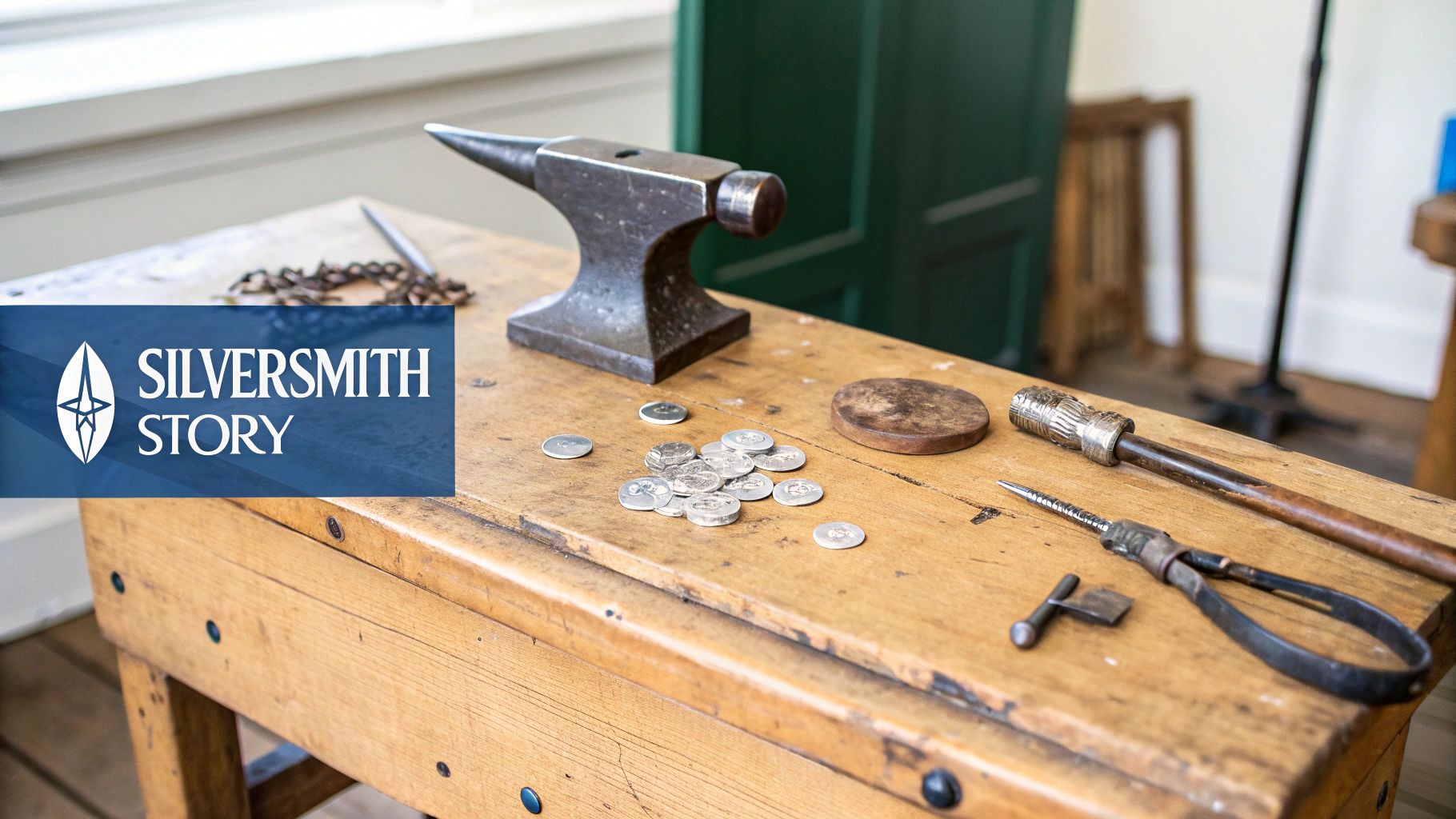
In the colonial era and the early years of the United States, a silversmith couldn't just order a shipment of pure silver bullion. There were no major mines or a steady local supply of the raw metal. But America was a hotbed of global trade, and that meant one thing was easy to find: foreign coins.
The pockets of colonists and merchants were filled with a hodgepodge of international currency. Spanish "pieces of eight," French ecus, and German thalers were all circulating as common forms of payment. For silversmiths, this jumble of money was a golden opportunity. They became America's original recyclers, melting down these coins to forge their wares.
From Currency to Keepsakes
This wasn't just some clever workaround; it was the main way silver goods were made for generations. A family who wanted a new set of spoons or a teapot would literally bring a bag of assorted silver coins to their local silversmith. The artisan would melt them down, shape the molten metal, and create a beautiful, functional heirloom.
This whole process tells you a lot about life back then:
- A Store of Wealth: Long before we had stable banks, coin silver items were essentially a family's savings account. They were real, tangible assets that held their value.
- A Symbol of Status: Owning a fine collection of silver was an obvious sign of wealth and social standing in the community.
- Emergency Cash: If a family hit hard times, their silver teapot or spoons could be sold or even melted back down, providing a critical financial safety net.
The entire system was built on a foundation of trust between the customer and the silversmith. An artisan's reputation was everything, as clients had to trust them to use their precious coins honestly and craft something that would last.
The very act of transforming a jumble of foreign currency into a matching set of family silver was a powerful statement. It was about turning the chaos of the outside world into the order, stability, and enduring legacy of a home.
The Shift to a Sterling Standard
So if coin silver was so practical, why did we stop using it? The change didn't happen overnight. It was a gradual shift driven by the country's own growth and industrialization.
As the 19th century wore on, the United States started to find its footing. The game-changer was the discovery of massive silver deposits, most famously the Comstock Lode in Nevada in 1859. All of a sudden, America had its own vast, reliable supply of silver. Silversmiths no longer had to melt down coins to get their raw material.
At the same time, the world was standardizing. The sterling silver standard, with its fixed 92.5% silver content, was already the benchmark in Great Britain. It was quickly gaining a reputation for its higher purity and brilliant shine.
Big American silver companies like Tiffany & Co. and Gorham jumped on board, adopting the sterling standard in the 1850s and 60s. They marketed their sterling products as a superior, more refined option, and public tastes followed. By the 1870s, the old way of making items from coin silver had all but disappeared, making authentic coin silver pieces the treasured relics of a bygone era they are today.
Coin Silver vs. Sterling Silver: A Practical Comparison
If you spend any time around antique silver, you'll quickly hear three terms pop up again and again: coin silver, sterling silver, and silverplate. They might all look the same at first glance, but knowing the difference is the key to understanding what you're holding. It's a bit like telling the difference between a solid gold ring and a gold-plated one—the value and history are worlds apart.
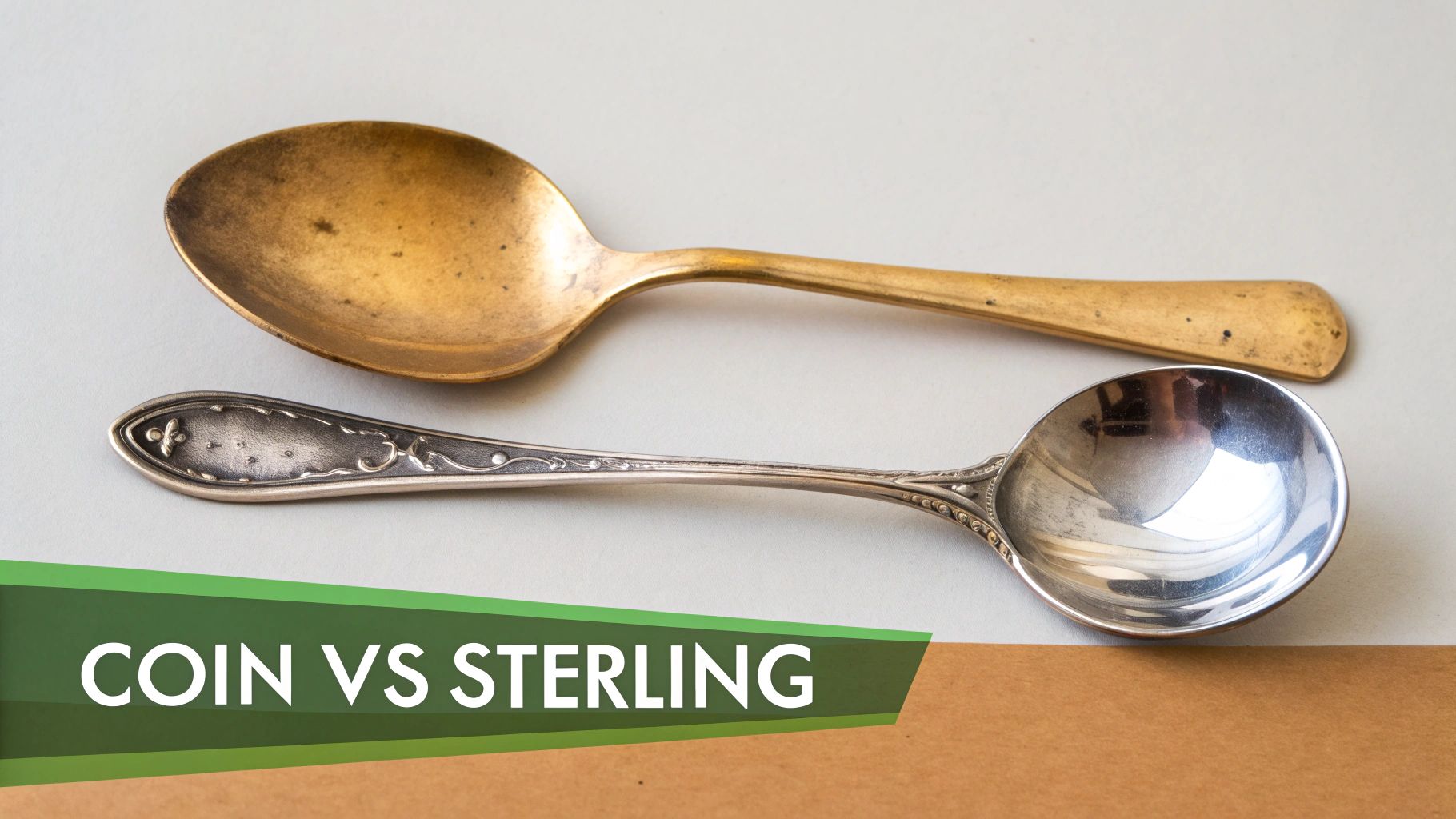
Let's clear up the most common point of confusion right away: coin versus sterling. Both are solid silver alloys, which means the silver is mixed all the way through the piece, not just sitting on the surface. The real difference between them comes down to one thing: purity.
Purity and Composition
The easiest way to think about it is that each type of silver follows a specific recipe.
- Coin Silver: This is an alloy made of 90% pure silver and 10% copper. It gets its name from its origin story—it has the exact same silver content as the United States silver coins minted before 1965.
- Sterling Silver: This is the big one, the international standard for quality silver. It’s made of 92.5% pure silver mixed with 7.5% other metals, usually copper. That little bit of extra silver gives sterling its famous bright, cool-toned shine.
That tiny 2.5% difference in silver content is what separates the two. It might not seem like a lot, but it makes a real difference in the item's color, feel, and history.
A good way to think about it is like different grades of coffee. Both are real coffee, but one has a brighter, bolder profile (sterling), while the other has a classic, robust flavor rooted in its unique heritage (coin).
Visual and Physical Differences
While it takes a trained eye to spot the differences immediately, there are some subtle clues. Because of its slightly higher copper content, coin silver often develops a warmer, softer glow as it ages. Sterling, on the other hand, tends to have a brilliant, almost white sheen.
In your hand, coin silver can feel a bit denser and more substantial. That extra copper makes it an incredibly tough and resilient alloy, which was perfect for the hard-knock life of everyday items in early America. Sterling is plenty durable, too, but it's slightly softer, making it a better canvas for the delicate, intricate designs you often see in fine silver.
Of course, then you have silverplate, which is a whole different ballgame.
The Outlier: Silverplate
Silverplate isn’t a solid silver alloy at all. It’s made of a common base metal—like copper, brass, or nickel—that has been coated with an extremely thin layer of pure silver through electroplating.
Think of it like a car's paint job. The car is made of steel, but the color you see is just a thin coat on the surface. That's exactly how silverplate works. It looks and shines like silver, but the item's core is something else entirely. This makes it far less valuable because its actual silver content is tiny. Over time, this thin silver layer often wears away, exposing the darker base metal underneath—a dead giveaway that you're not dealing with a solid silver piece.
To help you keep these straight, here’s a quick cheat sheet that breaks down the key differences.
Comparing Coin Silver, Sterling Silver, and Silverplate
This table breaks down the key differences between the three main types of antique silverware to help with quick identification.
| Attribute | Coin Silver | Sterling Silver | Silverplate |
|---|---|---|---|
| Silver Content | 90% pure silver | 92.5% pure silver | A very thin outer layer |
| Base Metal | 10% copper | 7.5% copper | Copper, brass, or nickel |
| Typical Marks | "COIN," "PURE COIN," "900" | "STERLING," "925" | "EPNS," "A1," "Plate" |
| Value | High (based on rarity) | High (based on weight/maker) | Low (minimal silver) |
Once you get a feel for these distinctions, you'll start spotting them everywhere. It’s all about knowing what to look for
How to Identify Coin Silver Markings
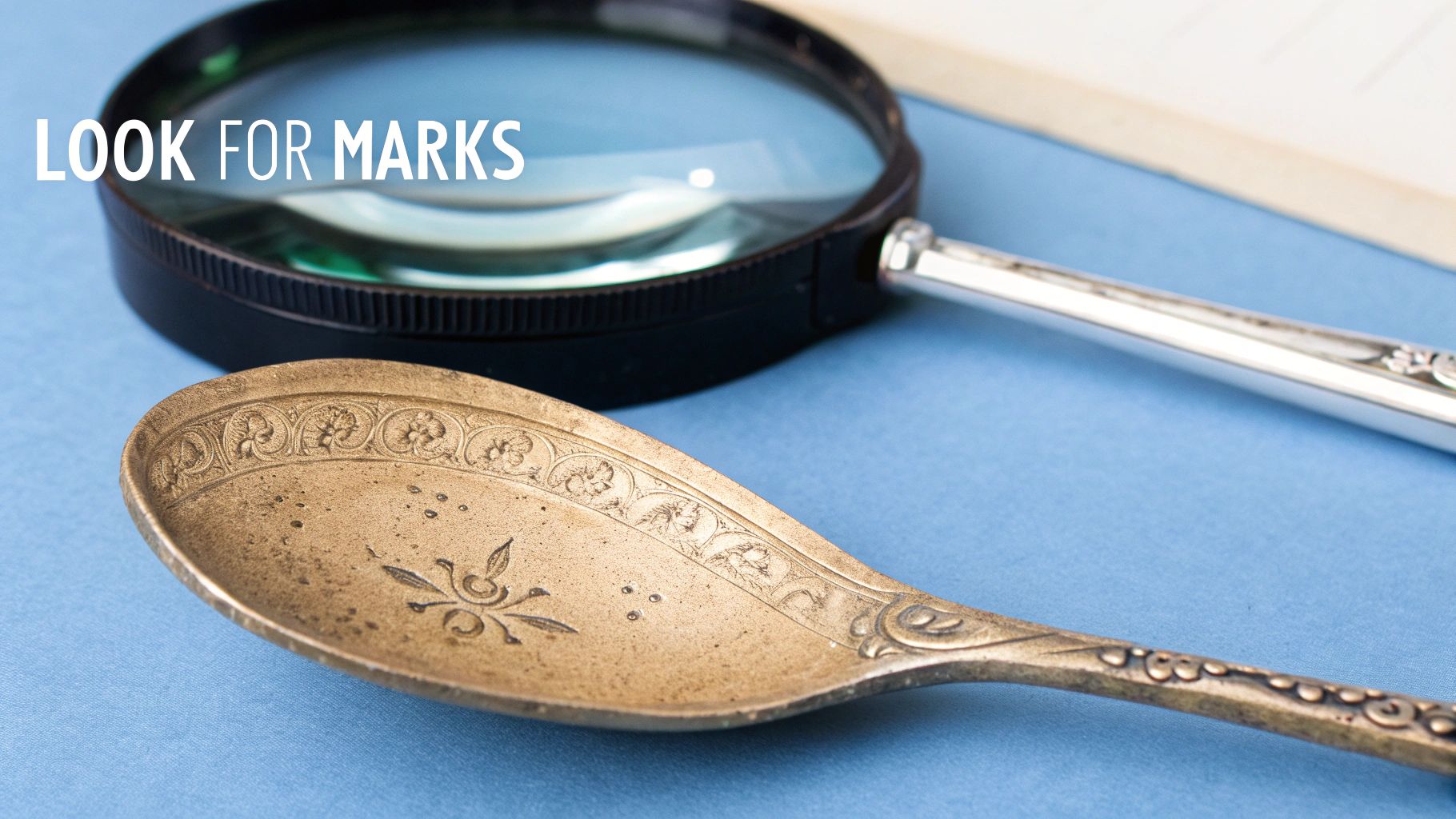
Ready to play detective? While the history is fascinating, the real fun begins when you pick up a piece and start piecing together its story. The tiny stamps, subtle wear, and overall feel of an item are all clues left behind by the maker, and learning to read them is what identification is all about.
The most obvious clues, if you're lucky enough to find them, are the purity marks. Since early America had no legal requirement for marking silver, these stamps aren't on every piece. But when they are present, they're a fantastic starting point because they're a direct guarantee of the silver standard.
Common Purity Marks
A clear, stamped declaration of silver content was the silversmith's way of building trust. It was an assurance to their customers that the item was made from quality material, not something of a lesser grade.
Keep an eye out for these key indicators:
- "COIN" or "PURE COIN": These are your dead giveaways. Finding either of these stamped on a piece is the strongest sign you're holding genuine coin silver.
- "900": This number represents 900 parts per thousand pure silver, the exact 90% standard. Sometimes you'll see it as "900/1000."
- "STANDARD" or "DOLLAR": A little less common, but these terms were also used to reference the silver content of the U.S. dollar, effectively meaning the same thing as "COIN."
Think of these marks like a brand's promise of quality. In an unregulated market, this was how a silversmith told you exactly what you were buying, staking their reputation on it.
Knowing how to verify artisan authenticity is a crucial skill for any collector, and it applies just as much to silver as it does to any other craft.
The Importance of Maker's Marks
With coin silver, the maker’s mark is often more telling than a purity stamp—and sometimes it’s the only mark you'll find. Many early American silversmiths simply stamped their name, initials, or a unique symbol (called a "touchmark") into their work.
This mark was their signature. A piece from a well-regarded silversmith can be incredibly valuable, far beyond its weight in silver. Items from legendary artisans like Paul Revere are museum-quality treasures today. To get a better handle on these, our guide on what hallmarks on silver are is a great resource.
What If There Are No Marks at All?
Don't panic if you find a piece with no marks. Many early or rural smiths didn't mark their work at all. This is where you have to put down the magnifying glass and rely on your other senses.
Look for these other vital clues:
- Color and Patina: Coin silver often has a slightly warmer, almost grayish hue compared to the brilliant, cool white of sterling. That subtle difference comes from the extra copper.
- Weight and Feel: Coin silver pieces usually feel heavier and more solid than later, mass-produced items. The construction is often simpler and more robust.
- Construction Style: Search for tell-tale signs of hand-craftsmanship. You might see a faint seam where a handle was joined to a cup or notice that the finishing isn't as perfect as a modern, machine-made piece. These little "flaws" are actually good signs!
- Form and Design: The shape tells a story. For example, many early spoons have a distinctive "fiddle" or "coffin" handle, styles that were popular during the prime coin silver era (roughly 1790-1860).
By combining all these clues—marks, color, construction, and style—you can build a really strong case for a piece's identity. It's a rewarding process that connects you directly to the artisan who crafted it centuries ago.
How to Determine the Value of Coin Silver
Figuring out what a piece of coin silver is worth isn't as simple as tossing it on a scale. While its silver content gives you a starting point, the real value is often wrapped up in its history. A tiny, simple spoon could easily be worth many times more than a larger, heavier bowl if it has the right story.
When you start to understand what drives the value, you stop seeing these items as just old metal. You see them as artifacts, each with a unique place in history. Valuing coin silver is a fascinating mix of what it’s made of and what it represents.
Beyond Melt Value
The first thing to get straight is the difference between melt value and collectible value. Melt value is just the raw price of the silver in the item if you were to melt it down. Think of this as the absolute floor—the lowest possible price it could be worth. For genuine coin silver, however, this is rarely the whole story.
Collectible value, on the other hand, is everything else that makes a piece special. It's like comparing a regular quarter in your pocket to a rare one with a minting error. Both are technically worth 25 cents, but to a collector, that rare one is in a different league. The same idea applies here.
The economic significance of coin silver in 19th-century America underscores its role as both currency precursor and wealth preserver. Its 90% silver content was directly tied to the U.S. Mint's output of over 500 million silver dollars between 1794 and 1935, many of which were melted for household use. You can explore more on the economic role of silver in early America on the Lehigh University news site.
Key Drivers of Value
So, what exactly pushes an item's value far beyond its basic silver content? It comes down to a few key factors, each adding another layer to the piece's story and appeal.
Here’s what appraisers and seasoned collectors are always looking for:
- The Maker (Silversmith): This is often the biggest deal. A piece made by a famous or well-regarded silversmith like Paul Revere, Myer Myers, or a member of the Tiffany family can be incredibly valuable. An item with a clear maker's mark is almost always worth more than an unmarked piece.
- Rarity and Form: Some shapes and items are just harder to find. For example, early American coin silver forks are much rarer than spoons from the same period. Unusual forms, like a specialized serving piece or a child's cup, can also fetch high prices simply because there aren't many of them out there.
- Condition: How well has it held up? While a little wear and tear from use is perfectly normal, serious damage like deep dents, broken handles, or clumsy repairs will definitely bring the value down. A crisp, easy-to-read maker's mark is also a huge plus.
- Provenance: This is the item's life story. If you have documents or solid proof that a set of spoons belonged to a famous historical figure or has been passed down in the same family since it was crafted, that history adds tremendous value.
If you’re looking for a more precise valuation, specialized tools can be a huge help. You can learn more about the process by reading our guide on how an antique value estimator works.
In the end, the true worth of a piece of coin silver is a beautiful combination of its physical makeup and the human story it has to tell.
How to Care for Your Coin Silver
When you own a piece of coin silver, you're not just a collector—you're the caretaker of a small piece of American history. The good news is, preserving its story for future generations is simpler than you might think. The golden rule is to be gentle and avoid harsh methods that could strip away its unique character.
A key part of that character is its patina, that dark, subtle shading you see in the crevices of an antique piece. This is the result of decades of slow, natural oxidation. Collectors prize patina because it highlights the intricate details and serves as a testament to the item's age. Your goal is to lift the surface tarnish, not scrub away the history.
A common mistake I see all the time is people reaching for abrasive household products like toothpaste or baking soda pastes. While they might seem to get the job done, these are far too harsh and will leave tiny scratches all over the surface, permanently damaging its value.
Safe Cleaning Practices
The best approach is always the gentlest one first. A simple, careful cleaning can restore a beautiful shine without harming the silver. All you need are a few basic supplies.
For light tarnish, a quick hand wash is often all it takes:
- Start with warm water and a tiny amount of mild, phosphate-free dish soap.
- Gently wash the item with a soft cloth. Never use a brush or an abrasive sponge.
- Rinse it completely with clean, warm water to get all the soap residue off.
- Immediately dry the piece with a soft, lint-free cloth like flannel or microfiber. This prevents water spots from forming.
If you're dealing with more stubborn tarnish, a quality silver polish is your best friend. Apply a small amount with a soft cloth, rubbing gently in straight, back-and-forth motions—not circles. For a complete walkthrough, check out our guide on how to clean antique silver without causing damage.
Proper Storage to Prevent Tarnish
How you store your coin silver makes the biggest difference in slowing down tarnish. The main culprits are humidity and airborne sulfur, which cause that chemical reaction we see as discoloration.
- Avoid Problem Areas: Keep your silver away from rubber (like rubber bands), wool, and felt. Certain foods like eggs and onions also release sulfur compounds, so keep them separate.
- Use Protective Materials: Wrap each piece individually in acid-free tissue paper or unbleached cotton flannel.
- Store in a Dry Place: A sealed bag or a felt-lined storage chest is perfect for keeping the air out. Tossing in a piece of chalk or a silica gel packet can also help absorb excess moisture.
Got Questions About Coin Silver? We've Got Answers.
We get a lot of questions about coin silver, so we've rounded up some of the most common ones here. These quick answers should clear up any confusion and help you feel more confident when you're looking at these historic pieces.
Is Coin Silver Worth More Than Sterling Silver?
That’s the million-dollar question, isn't it? If we're talking purely about the silver content, then no. Sterling silver is 92.5% pure, while coin silver clocks in at 90%.
But here’s the thing: the real value of a coin silver piece almost never comes down to its melt weight. A rare spoon made by a famous 18th-century silversmith can be worth exponentially more than a mass-produced sterling fork from the 20th century. It all comes down to age, rarity, craftsmanship, and historical significance. Think of it less as a lump of metal and more as a piece of history.
Why Is Some Coin Silver Not Marked?
Finding an unmarked piece is actually pretty common, so don't be alarmed. Before the 1850s, the United States had no federal laws requiring silversmiths to stamp the purity of their work. It was a bit of a Wild West situation.
Many artisans would simply stamp their own maker's mark and call it a day. Smaller, rural craftsmen might not have used any marks at all. So, just because a piece isn't stamped "COIN" or "900" doesn't mean it's not the real deal. It just means you have to play detective and look at other clues like the item's style, construction, and known maker's marks.
Can I Use Coin Silver Flatware Every Day?
Please do! This stuff was made to be used. Coin silver is a tough, durable alloy that was crafted for the rigors of daily life, long before dishwashers were even a dream.
Using your coin silver flatware is one of the best ways to enjoy it. Just remember to hand-wash it with a mild soap soon after you're done eating. Keep it out of the dishwasher—the intense heat and harsh detergents can cause serious damage over time. And a pro tip: try to avoid letting it sit for too long with salty or sulfurous foods like eggs or mayonnaise, as they can speed up tarnishing.
Stumped by a mystery mark or an unusual pattern? Take the guesswork out of your next find with Curio. Just snap a photo, and our app can help you identify its history, origin, and even give you a value estimate in seconds. Download Curio today and let your antiques tell their story.