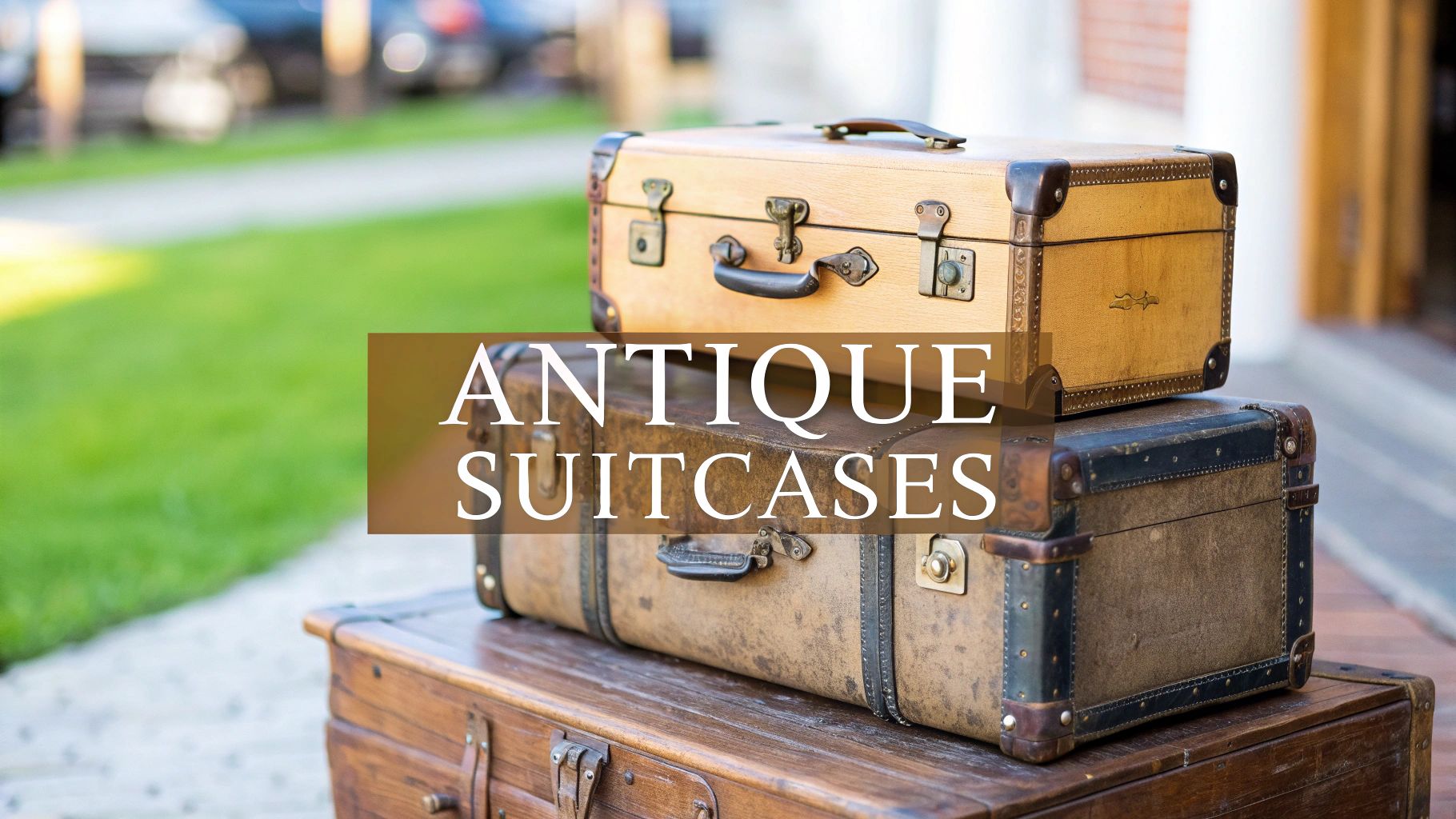
More than just luggage, antique leather suitcases are time capsules. They're real, touchable pieces of history from an era of glamorous travel and painstaking craftsmanship. Each one tells a story of adventure and elegance, from a time when the journey itself was just as exciting as the destination. For collectors and decorators, they're more than just old bags; they're symbols of a bygone golden age.
The Story Behind Antique Leather Suitcases

Picture the golden age of travel—grand ocean liners slicing through the Atlantic, luxurious steam trains chugging across continents. In that world, your luggage wasn't just a box for your clothes. It was a statement piece, a mark of your status and how well-traveled you were. The antique leather suitcases we love today were born right out of this era, evolving from heavy, awkward trunks into something both elegant and practical.
Before the late 19th century, most people hauled around dome-topped trunks. The curved top was great for shedding rain on a bumpy carriage ride, but it was a nightmare for stacking. As train and ship travel took over, being able to stack luggage became a must. This simple problem led innovators like Louis Vuitton to create the flat-topped trunk, a small change that completely revolutionized how people packed and moved.
That shift set the stage for the sophisticated leather suitcases we now collect. Made from thick, tough cowhide and finished with gleaming brass or nickel hardware, these pieces were built to last through long, demanding journeys. They quickly became an essential for any serious traveler, carrying not just belongings but a certain air of adventure.
A Symbol of the Roaring Twenties
Antique leather suitcases really took off during the Victorian and Edwardian eras, but their production hit an all-time high between 1900 and 1930. This was when transatlantic voyages were the pinnacle of luxury. By 1910, over 80% of high-end luggage was crafted from top-grain cowhide or Connolly leather. The tanning process was incredibly slow and meticulous, sometimes taking up to six months for a single hide. This guaranteed the kind of durability you'd need for an ocean crossing that could easily last 7-10 days. You can dig deeper into their history over at SellingAntiques.co.uk.
These suitcases weren't just containers; they were silent storytellers. Every scuff, scratch, and faded travel sticker tells a tale of a journey taken, from the grand hotels of Paris to the bustling ports of New York.
Why They Capture Our Imagination
Today, these old suitcases are our connection to that romantic past. Maybe you found a forgotten heirloom tucked away in an attic or you're on the hunt for the perfect one at a flea market. Either way, understanding their history is the first step to truly appreciating them. These items carry a legacy of craftsmanship and adventure that modern luggage just can't match.
This guide will help you unpack the rich history behind these timeless travel companions. We’ll walk through everything you need to know:
- Identification and Dating: You'll learn how to read the clues left behind in the hardware, materials, and construction techniques.
- Valuation: We'll help you figure out if you've got a charming decorative piece or a valuable collector's item on your hands.
- Restoration and Care: Discover the right way to preserve your find so it can be enjoyed for generations to come.
By the end, you’ll have the confidence to appreciate, identify, and care for these beautiful artifacts, connecting you to the incredible stories they hold within their worn leather walls.
How to Identify and Date Your Suitcase
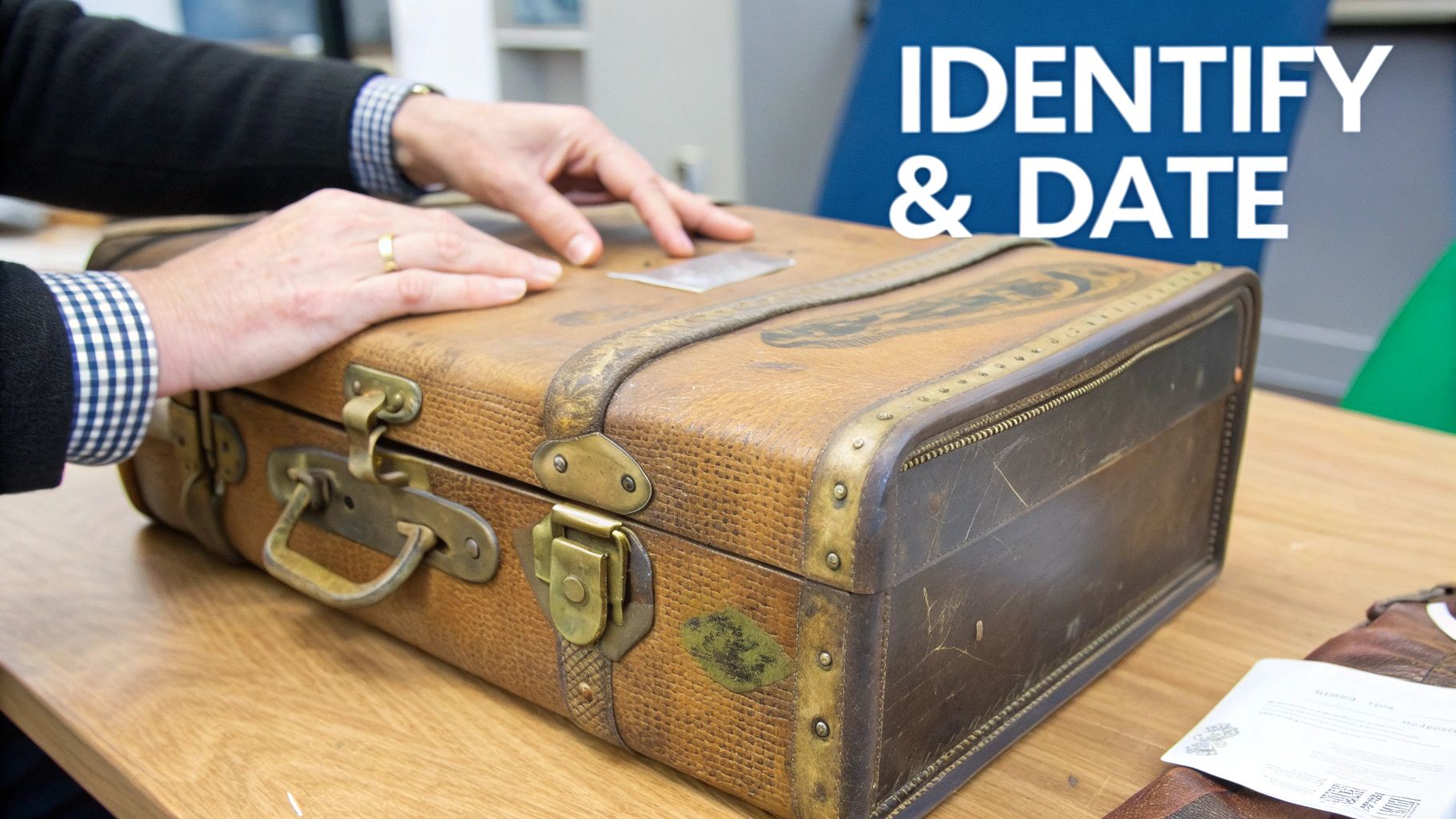
Think of yourself as a suitcase detective. Every antique leather case is a puzzle, with clues embedded in its materials, hardware, and the way it was built. When you learn to read these signs, you can start to peel back the layers of its history and get a real sense of its age and origin.
The process is a lot like a real investigation, where you gather evidence one piece at a time. You don’t have to be a seasoned expert to start—you just need to know what to look for.
Start with the Leather Itself
The most obvious clue is right in front of you: the leather. Authentic antique leather tells its own story through touch, smell, and sight. Real, aged cowhide develops a gorgeous patina—a soft sheen and rich darkening that only comes from decades of use, sunlight, and the oils from people's hands.
Modern reproductions try to fake this look with dyes and artificial scuffing, but the result is usually flat and unconvincing. A genuine patina is uneven, with darker spots on handles and corners where it was touched most. It should also have a distinct, earthy smell, completely different from the chemical odor of modern treated leathers.
Gently run your hand over the surface. Aged leather often feels a bit dry but should still have some suppleness. If it feels plasticky, overly stiff, or is actively flaking, it might be a lower-quality piece or one that's been stored poorly.
Examine the Hardware and Fastenings
Hardware is one of the most reliable tell-tale signs of age. The metals, styles, and manufacturing methods for locks, latches, and hinges changed dramatically over the decades. It's like a technological timeline for luggage.
Here's what to keep an eye on:
- Early 1900s: Heavy, solid brass was the gold standard for quality pieces. It has a deep, warm glow and feels substantial in your hand. You might also find iron hardware on more utilitarian trunks.
- 1920s-1930s: Nickel plating became quite popular, giving a silvery, tarnish-resistant finish over brass or steel. Look for spots where the plating has worn away, revealing the warmer brass metal underneath.
- 1940s and Beyond: As mass production took over, chrome plating and lighter-weight steel became common. Zippers also started appearing more frequently, often with chunky, metal teeth that look very different from today’s nylon ones.
The style of the locks can be a dead giveaway, too. Early suitcases often had elaborate external clasps that needed a separate key. Later on, designers moved toward integrated lock mechanisms.
Key Takeaway: The type of metal and complexity of the hardware can often narrow down a suitcase's creation to a specific decade. Solid brass points to an earlier, more handcrafted piece, while plated steel suggests a later, mass-produced era.
Look Inside for Linings and Labels
Don’t forget to open it up! The interior lining can tell you a lot about a suitcase's age and its original price point. High-end cases from the early 20th century often had luxurious linings of silk, linen, or even patterned paper that looked like the wallpaper of the era.
By the mid-century, sturdier materials like rayon or cotton canvas became the norm. While you’re in there, hunt for the ultimate prize: a maker's mark.
For a quick reference, this table breaks down the common features you'll find from different periods.
| Era | Common Materials | Hardware Style | Typical Interior Lining |
|---|---|---|---|
| Late Victorian (1880-1901) | Thick, heavy cowhide or alligator | Solid brass, intricate clasps | Patterned paper, silk, or linen |
| Edwardian/Early 20th C. (1901-1920) | Sturdy cowhide, canvas accents | Heavy brass or iron latches | Linen, plaid fabric, simple paper |
| Art Deco (1920s-1930s) | Grained leathers, exotic skins | Nickel-plated or stylized brass hardware | Geometric-patterned fabric, satin |
| Mid-Century (1940s-1960s) | Smooth cowhide, lighter leathers | Chrome-plated steel, early zippers | Rayon, canvas, simple cotton |
This is just a guide, of course, as styles often overlapped. But it's a great starting point for placing your find in the right context.
Find the Maker's Mark and Travel Clues
The clearest piece of evidence you can find is a maker's mark, label, or stamp. Famous brands often embossed their logo into the leather, attached a small metal plate, or stitched a fabric label inside. These marks are your direct link to the manufacturer and can instantly help you date the piece with a little research.
Finally, look for signs of its past life. Old paper travel stickers from railways, ocean liners, and historic hotels are a fantastic bonus. They not only add incredible character but also provide provenance—a record of its history that can seriously increase a suitcase's value. Each sticker is a postcard from the past, cementing its place in time.
The skills used to date these pieces are similar to those used for other antiques. For a broader perspective, you might find it interesting to learn more about how experts date antique furniture using parallel clues in construction and style.
Iconic Brands That Shaped Travel History

While countless anonymous artisans built sturdy luggage over the years, a handful of visionary brands turned the simple suitcase into a symbol of status and high society. These weren't just luggage makers; they were pioneers who defined the golden age of sophisticated travel. For any serious collector, knowing these names is essential—a branded piece can be worth exponentially more than an unmarked one.
These legendary houses catered to an exclusive world of royalty, intrepid explorers, and celebrities, crafting bespoke pieces that were as much a part of the journey as the destination. They transformed practical travel goods into timeless emblems of wealth and adventure.
Louis Vuitton: The Original Innovator
You can't talk about antique luggage without starting with Louis Vuitton. Founded in Paris in 1854, the brand’s first game-changing creation was the flat-topped trunk. It sounds simple now, but it was revolutionary. It allowed luggage to be stacked neatly in the cargo holds of ships and trains, a huge leap forward from the clumsy, rounded trunks that were common at the time.
But that was just the beginning. Vuitton became famous for its incredibly tough, waterproof coated canvas and patented, unpickable locks. These features made the brand the first choice for serious travelers who needed their belongings to survive long, demanding journeys.
Luxury brands completely upended the market for antique leather suitcases in the second half of the 19th century. Louis Vuitton's 1854 flat trunk design cut travel weight by 40% compared to older domed models, causing a stir among the elite. By 1895, their zinc-covered 'Explorer' Cabin Trunk was a must-have for adventurers like Henry Morton Stanley. One recently sold for £66,000 at a 2023 auction—more than ten times its original 1890s production cost of £60. You can find more great insights into the world of vintage luggage valuation.
Goyard: The Master of Personalization
Maison Goyard has been around even longer than its famous rival, starting out as a packer and trunk maker in Paris way back in 1792. Goyard is instantly recognizable for its iconic, hand-painted chevron pattern—the "Goyardine" canvas—which they introduced in 1892. This durable, waterproof blend of linen and cotton became the house's calling card.
What truly made Goyard stand out was its passion for personalization. The brand gave its elite clients the chance to have their luggage customized with hand-painted monograms, family crests, and colorful stripes. This made every piece one-of-a-kind and turned a simple trunk into a personal statement.
A Goyard trunk wasn't just luggage; it was a bespoke piece of art that announced its owner's identity from across a bustling train platform or hotel lobby. This level of customization made their pieces highly sought-after heirlooms.
Hermès: The Equestrian Standard
Although famous for its handbags today, Hermès started in 1837 as a workshop making harnesses and bridles for European nobility. This deep expertise in saddle-stitching and high-end leatherwork was a natural fit for producing exceptional luggage. Their first bag, the Haut à Courroies (or HAC), was actually designed in 1900 to carry saddles and riding boots.
This equestrian heritage shaped their entire approach to design. The hallmarks of Hermès luggage include:
- Saddle Stitching: A hand-sewn stitch prized for its incredible strength—far tougher than anything a machine can produce.
- Superior Leather: Hermès used only the absolute finest, blemish-free hides, setting a quality standard that still holds today.
- Understated Design: Unlike the monogram-covered canvases of its competitors, Hermès focused on clean lines that let the natural beauty of the leather shine through.
For a collector, finding a genuine antique piece from one of these top-tier makers is like striking gold. The craftsmanship, the history, and the quality of the materials make them the crown jewels of the antique luggage world.
What's My Old Suitcase Really Worth?
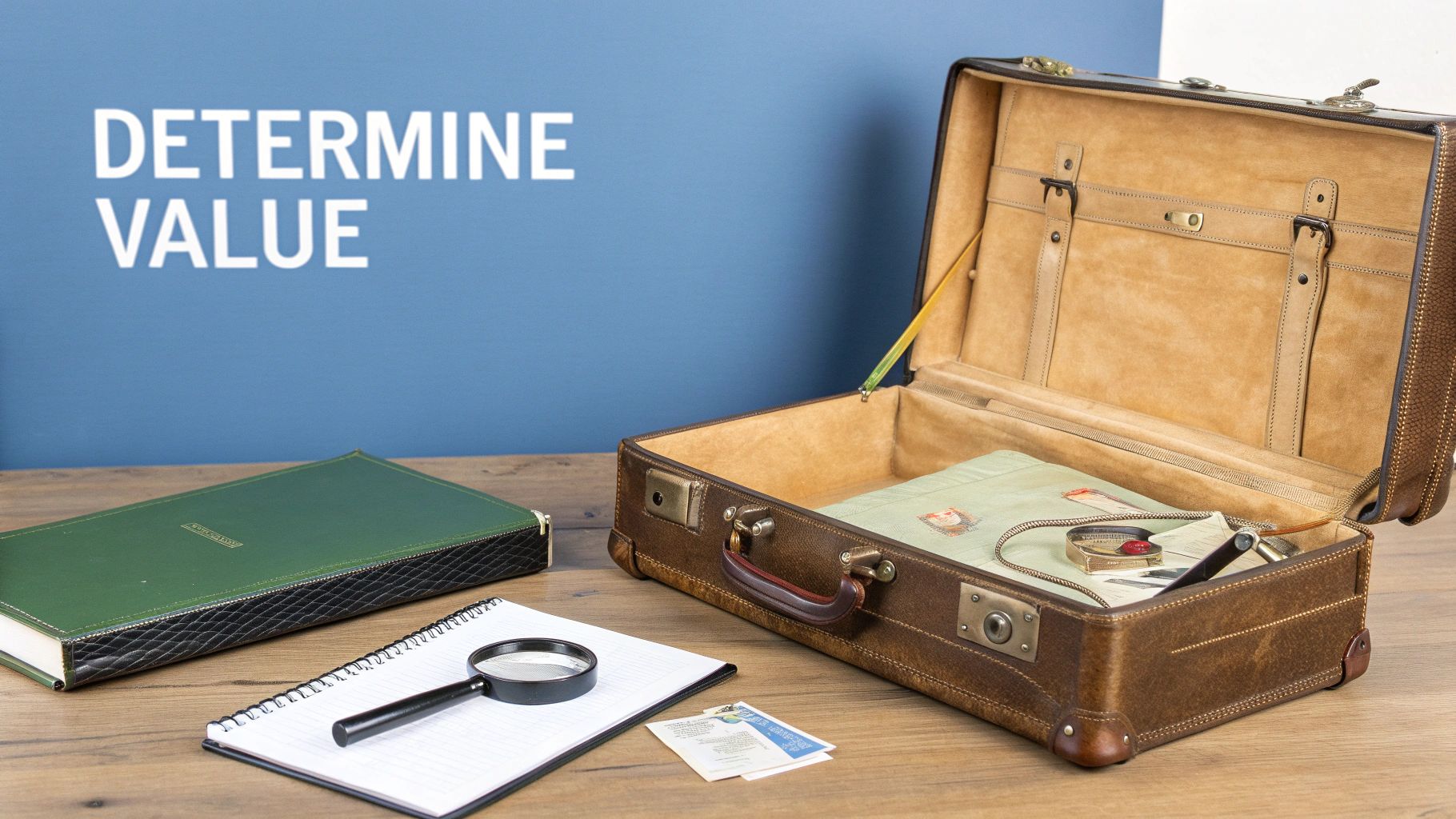
So, you've stumbled upon a fantastic old leather suitcase. The million-dollar question (or maybe just the hundred-dollar question) is: what's it worth? Pinning down the value isn't just a random guess. It's more like being a detective, where you need to look closely at four key clues: its condition, rarity, brand, and unique history.
Getting a handle on these factors is the only way to know if you're holding a charming bit of home decor or a serious collector's piece. Each piece of the puzzle helps build the case for its final price tag.
Condition Is Everything
In the world of antiques, condition is king, and with leather, that's doubly true. A bit of wear isn't just acceptable; it's often desirable. That soft, warm glow that leather develops over decades of handling is called patina, and it tells a story collectors love.
But there’s a big difference between a lovely patina and outright damage. Here’s what you need to watch out for, as these issues can send the value plummeting:
- Torn or Cracked Leather: Minor surface scuffs are one thing, but deep cracks that threaten the suitcase's structure are a major problem.
- Mold or Mildew: That musty "old suitcase smell" is normal. Visible splotches of mold, however, mean irreversible damage and potential health hazards.
- Missing or Replaced Hardware: Original brass latches, locks, and hinges are a huge part of the appeal. Swapping them out for modern replacements can slash its worth.
- Damaged Interior: A pristine, original lining is a big plus. If it's torn, heavily stained, or missing entirely, the value takes a serious hit.
The market for these pieces is surprisingly robust. Top-quality suitcases from 1900-1950 can fetch prices 5-10 times higher than their modern counterparts, driven by a global collector base spending over $30 billion a year on antiques. Even common finds can be valuable—a simple Lady Baltimore makeup case sold for $89.99 on eBay in 2023. At the high end, rare Victorian trunks made from thick 4-6 oz cowhide have sold for over $1,000.
The Allure of a Great Brand and a Rare Find
Next up, think about how many of these are still out there. A standard, mass-produced suitcase from the 1940s just won't be as valuable as a rare doctor’s bag from the turn of the century. It's simple supply and demand—the fewer that have survived, the more a collector is willing to pay.
This is where the maker's name plays a massive role. A suitcase stamped with a legendary brand like Louis Vuitton, Goyard, or Hermès is in a completely different ballpark. These makers were famous for their incredible craftsmanship, which is why their pieces are so sought after today. An unmarked but well-made case might sell for $100-$300, but stick a famous logo on a similar piece, and the price could easily jump into the thousands. The qualities that make a new suitcase last are often the same ones valued in antiques, which you can learn more about by reading up on how to choose luggage that will last a lifetime.
Valuation Tip: The holy grail for any collector is a rare design from a top-tier brand in excellent condition. If you have that combination, you've hit the jackpot.
The Power of Provenance: Every Suitcase Has a Story
Finally, we have provenance—the story behind the object. This is what can transform a simple old bag into a piece of history. Does it have old travel stickers from the RMS Titanic or the Orient Express? That's provenance, and it adds incredible character and monetary value.
Original receipts, letters that mention the luggage, or even a clear line of ownership (like being passed down through a notable family) can all give its value a serious boost. These details create a tangible link to the past, making the suitcase so much more than just a thing. For a deeper look into the valuation process, our guide on using an antique value estimator can help you get a much clearer picture of what your piece might be worth.
How to Restore and Care for Your Suitcase
When you own an antique leather suitcase, you're holding a piece of history. These pieces have stories to tell, and our job is to be good stewards of that legacy. The goal isn't to make it look brand new—that would strip away its soul—but to gently stabilize it so it can be enjoyed for generations to come.
Remember, when it comes to restoration, "less is more." Aggressive cleaning and harsh chemicals can easily destroy the beautiful, time-worn patina that makes a piece valuable and unique. Always start with the gentlest method first.
The First Step: Gentle Cleaning
Before you can do anything else, you need to start with a clean surface. Decades of dust and grime have to be carefully removed. Start by emptying the suitcase and giving the inside and outside a good vacuuming with a soft brush attachment.
For the leather exterior, simple is usually best. A solution of equal parts white vinegar and water works wonders as a mild cleaner. Dampen a soft, lint-free cloth—never soak the leather—and gently wipe down the surface. This lifts away the dirt without stripping the leather of its essential oils. Getting a handle on how to clean leather the right way is the foundation of any good restoration project.
A Word of Caution: Always, always test your cleaning solution on a small, hidden spot first, like the very bottom of the case. This quick check ensures you won't cause any unexpected discoloration before tackling the whole thing.
Once you’re done wiping it down, let the suitcase air dry completely. Keep it in a well-ventilated room, far away from direct sunlight or a heater, which could cause the old leather to warp and crack.
Conditioning and Bringing Leather Back to Life
Old leather gets thirsty. Over many years, its natural oils evaporate, leaving it feeling stiff, brittle, and prone to cracking. A good conditioning treatment is like a drink of water for tired leather, restoring its flexibility and protecting it from future damage.
Your best friend here is a high-quality, wax-based leather conditioner. I'm partial to products with a beeswax base, as they not only moisturize but also create a light, protective barrier against moisture.
- Put a small amount of conditioner on a clean, soft cloth.
- Work it into the leather with gentle, circular motions.
- Give a little extra attention to the high-stress areas, like the corners, straps, and the base of the handle.
- Let the conditioner really soak in for at least an hour—or whatever the product label suggests.
- Finally, grab another clean cloth and buff the entire suitcase to a soft, beautiful sheen.
This isn't a one-and-done job. Plan on repeating this process every six to twelve months, or any time the leather starts to look a bit dull or feel dry. This simple routine is truly the most important thing you can do to preserve your antique leather suitcases.
Addressing Common Issues
A great-looking suitcase is more than just healthy leather. The hardware and interior need a little love, too.
- Tarnished Hardware: You can gently polish brass and nickel latches using a good metal cleaner and a soft cloth. Just be careful not to get the polish on the leather itself. For those small, detailed spots, a cotton swab is perfect. The idea is to clean the tarnish, not scrub away the aged character.
- Musty Odors: That old, stuffy smell is a common problem. An easy fix is to place an open box of baking soda or a small bowl of activated charcoal inside, close the lid, and let it sit for a few days. It works like a charm to absorb those odors.
- Stiff Hinges: For hinges and locks that don't want to move, a tiny drop of lubricating oil (like 3-in-1) applied with a toothpick can make all the difference. Use it sparingly to avoid any risk of staining the interior lining.
If you're interested in learning more about preserving aged finishes, our guide on restoration furniture polish has some great tips that apply just as well to vintage luggage.
Tips for Buying and Selling Antique Suitcases
Whether you’re hunting for a treasure or selling a family heirloom, navigating the market for antique leather suitcases can be a real adventure. The key to success, on either side of the transaction, is knowing what you're looking at and how to talk about it. With the right approach, you can avoid the common traps and feel good about the deal you make.
For buyers, the thrill is in the chase, but you have to be able to tell real history from a clever fake. For sellers, it's all about storytelling—that's what gets serious collectors interested and willing to pay what your piece is truly worth.
Advice for the Savvy Buyer
When you're hoping to add an antique leather suitcase to your collection, your mission is simple: find the real deal and avoid costly mistakes. The market has its share of reproductions and botched repair jobs, so a healthy dose of skepticism is your best friend.
Here's what to keep a sharp eye on:
- Inspect the Hardware Closely: Old hardware tells a story. Look for a consistent, natural patina on brass and steel that's built up over decades. If you see shiny, flawless latches or mismatched locks, it's a good sign that parts have been replaced, which can really hurt the value.
- Trust Your Nose: This might sound odd, but it works. A genuine antique has a very distinct, earthy smell—a mix of old leather, wood, and maybe a hint of must. A strong chemical or glue smell is a massive red flag. It usually points to a modern reproduction or a shoddy repair job.
- Look for Consistent Wear: A suitcase that’s been around the world will show it in logical places. The handle will be darker from years of being carried, the corners will have scuffs, and the leather will have a gentle fade. If the wear looks too perfect or uniform, it was likely faked to make a new piece look old.
Buyer's Tip: Never be afraid to walk away from a deal. If your gut tells you something is off—maybe the lining fabric looks suspiciously new or the travel stickers are too perfect for the case's supposed age—it’s better to pass. You'll be glad you waited for a piece with a clear, honest history.
How to Sell Your Antique Suitcase
When you’re selling an antique suitcase, you’re not just selling an object; you're selling its history. The best way to attract the right kind of buyer is to tell that story in a way that captures their imagination. A fantastic listing does more than state the facts—it paints a picture.
First things first: photography is everything. Get your camera and find some good, natural light. Take clear shots from every single angle—top, bottom, sides, inside. Get close-ups of the hardware, the maker's mark, and any interesting details like old travel stickers. Don't forget to photograph the flaws, too.
Next, write a description that pops. Don't just give the dimensions. Talk about the suitcase's character. Mention the deep, rich patina on the leather, the satisfying click of the solid brass latches, or the stories hinted at by the faded labels. And be completely honest about any damage. Building trust is crucial, and it prevents headaches later on. Sprinkle in keywords like "antique leather suitcase," "vintage luggage," and "early 20th-century travel" to help the right people find you.
Finally, do your homework on pricing. See what similar suitcases in comparable condition have actually sold for recently on auction sites and antique marketplaces to land on a competitive price.
Got Questions? We've Got Answers
Even after diving deep into the world of antique luggage, a few specific questions always seem to surface. Let's tackle some of the most common ones that come up when you're handling these incredible pieces of history.
How Can I Tell if a Smell Is Just Old or Damaging Mold?
This is a big one. You need to learn the difference between the smell of an old library and a damp basement. A faint, dry, musty scent is just part of the territory—it's the smell of old leather, wood, and paper aging gracefully. Usually, a good airing out is all it needs.
But if you get a whiff of something sharp, pungent, or persistently damp, that’s a major red flag for active mold. Trust your nose, but also look for visual cues:
- Fuzzy spots in white, green, or black on any surface.
- Dark, speckled stains that look like they've soaked into the fabric lining.
- An interior that feels even slightly damp to the touch.
If you find any of these signs, isolate the suitcase immediately. Mold can cause permanent damage and isn't great for your health, so professional cleaning is your best bet.
Are Old Travel Stickers on a Suitcase Valuable?
You bet they are! Those original travel labels from classic steamship lines, grand old hotels, or forgotten railways can seriously boost the value of an antique leather suitcase. They aren't just decoration; they're provenance—the tangible story of where that bag has been.
Think of travel stickers as a passport from the past. They’re a collector's dream because they help date the suitcase and connect it to the golden age of travel. Whatever you do, don't try to peel them off. You'll strip away its history and a lot of its value.
Can I Use an Antique Leather Suitcase for Modern Travel?
It’s a romantic idea, isn't it? Waltzing through the airport with a gorgeous, century-old suitcase. But honestly, it's a terrible idea. These pieces were built for a different era of travel and just can't handle the brute force of modern baggage carousels.
The old leather can be brittle, and the original locks and latches are no match for today's security needs. Save it for gentler journeys, like a weekend road trip where it stays safely in your car. They also make fantastic home decor—perfect for storing blankets or displaying as a one-of-a-kind accent piece. If you love the look, grab a modern, vintage-style case for flights and keep the real deal safe.
Ready to uncover the history and value of your own finds? The Curio app puts an antique expert in your pocket. Download Curio today and let your antiques tell their story!