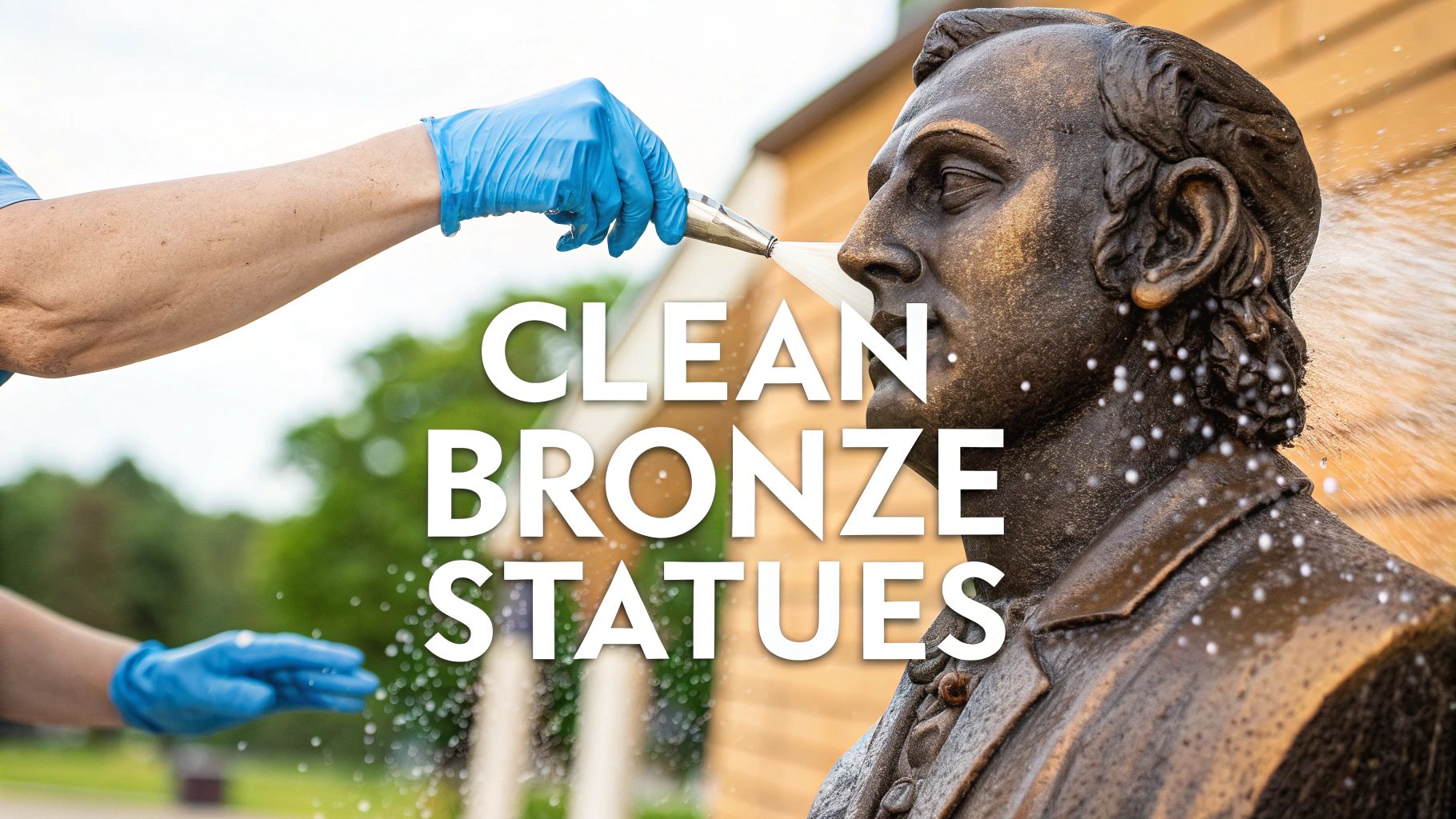
Before you even think about cleaning a bronze statue, you need to play detective. The first and most important step is figuring out exactly what's on the surface, because how you clean it depends entirely on what you find.
Jumping in too quickly is the most common mistake I see, and it can strip a piece of its character—and its value—in an instant.
Reading the Surface: What to Clean and What to Leave Alone
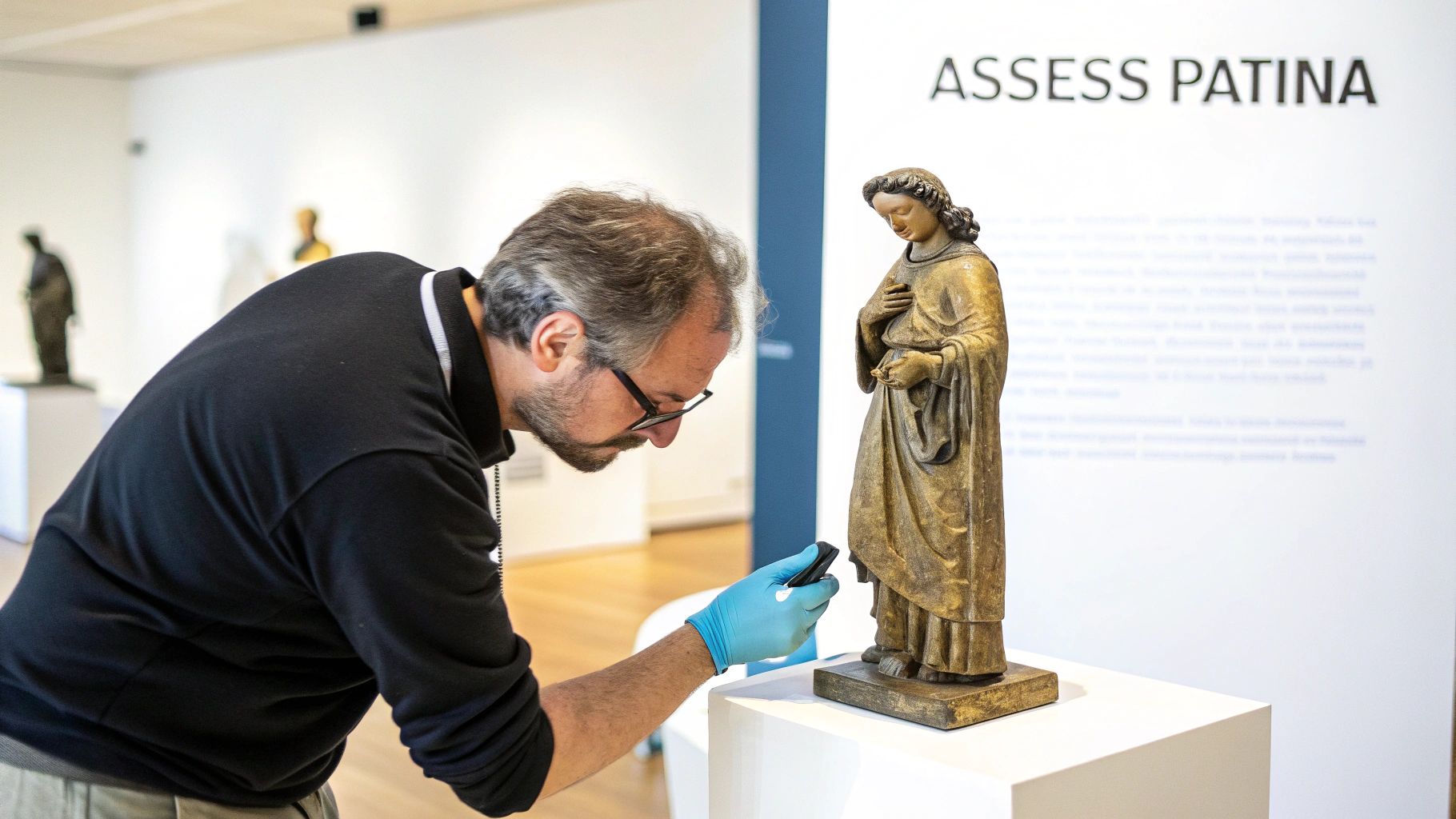
So, what are you looking for? Your goal is to identify one of three things:
- Simple Dust and Grime: This is just a loose layer of dirt sitting on the statue. It dulls the surface but hasn't bonded with the metal itself.
- Patina: This is the beautiful, stable layer—often a rich brown, black, or even a deep blue-green—that develops over many years. Think of it as the statue's protective skin. It’s a sign of age and authenticity, and a stable patina should never be removed.
- Active Corrosion (Verdigris): This is the bad stuff. It shows up as bright, powdery, or flaky green spots. Unlike patina, this is an aggressive chemical reaction that's actively eating away at the bronze.
Telling a Good Patina from Bad Corrosion
So, how do you tell them apart? It really comes down to texture and color. A healthy patina looks and feels integrated into the surface. It's generally smooth with deep, rich tones that compliment the sculpture's form.
Active verdigris, on the other hand, looks out of place. It might appear fuzzy, chalky, or crusty, and you can often gently flake a bit off with a fingernail. Knowing a little about how a bronze statue is made can also give you clues about the artist's intended finish, helping you distinguish the original patina from later damage.
It's a huge myth that all green on bronze is damaging. A stable, dark turquoise or deep green can be an absolutely stunning and protective patina. The real red flag is if that green is powdery and flaky—that’s when you have a problem.
If you’ve determined it’s just a layer of dust, a simple, gentle cleaning is all you need. If you're seeing those bright, flaky green spots, you'll need a more careful, targeted approach.
But if you see a beautiful, stable finish—even if it has variations in color—the best thing you can do is often nothing more than a light dusting. Protecting that history is everything.
Everyday Care for Dust and Surface Grime
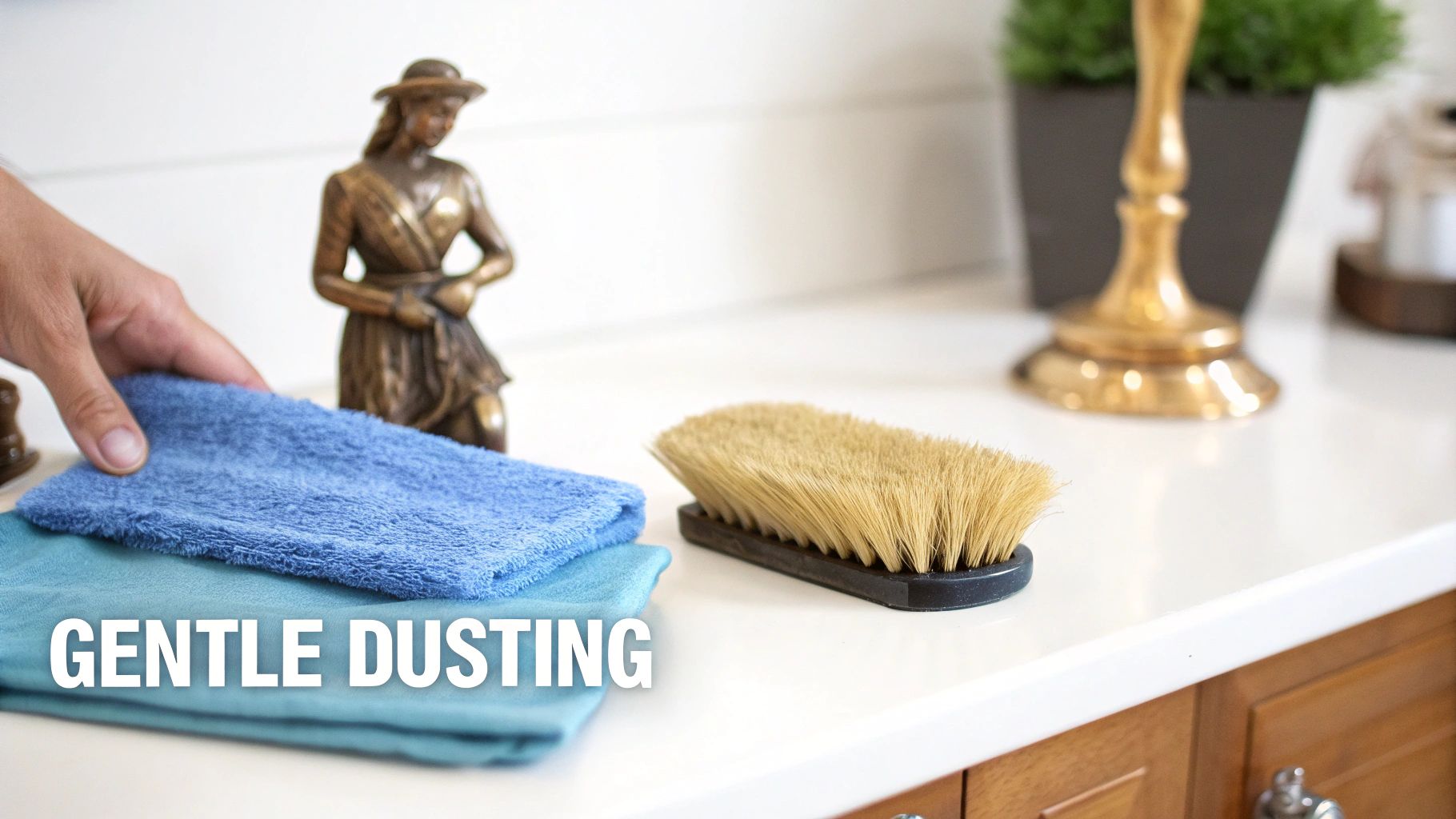
For most bronze statues kept indoors, the best approach is usually the gentlest one. Routine care isn't about some deep, dramatic cleaning; it's simply about keeping dust and grime from settling in. Honestly, this light, regular maintenance handles over 90% of what your indoor bronze will ever need.
The most critical part of this process is knowing what not to do. The single biggest mistake I see people make is grabbing a standard household cleaner. Products with ammonia or harsh abrasives are made to strip surfaces clean, and that's exactly what they'll do to your bronze—taking the precious patina right off and potentially damaging its history and value.
Your Go-To Dusting Technique
First things first, start with a simple dry dusting. Your best friends here are a soft, natural-bristle brush (think hog bristle or a sable paintbrush from an art store) and a clean, dry microfiber cloth. Use the brush to gently get into all the nooks and crannies where a cloth just can't reach.
Then, give the larger, smoother surfaces a light pass with the microfiber cloth. This one-two punch is incredibly effective at lifting that dulling layer of dust without harming the piece at all.
For collectors and anyone who's inherited a piece, this conservative method is, without a doubt, the safest bet. Professional conservators consistently warn that aggressive cleaning with commercial polishes can tank a statue's value. In fact, some dealers report value reductions of 30–50% when an original patina is stripped away. You can find more expert advice on bronze sculpture conservation and care.
When to Use a Touch of Water
What if dry dusting doesn't quite cut it? If you have some stubborn surface grime, you can introduce a tiny bit of moisture. But the kind of water you use is absolutely crucial.
Never, ever use tap water. It's full of minerals and chlorine that can leave behind ugly white spots. Over time, those deposits can even react with the bronze itself.
The right way to do it is to lightly dampen a clean microfiber cloth with a small amount of distilled water. It should only be damp enough to grab the dirt, not so wet that it leaves beads of water behind. Gently wipe the surface and immediately follow up with a separate, completely dry cloth to make sure no moisture is left.
This simple routine—gentle dusting, and a careful wipe with distilled water only when needed—is the foundation for keeping your bronze statue looking its best for years to come. It's all about respecting the object's history while keeping its beauty intact.
Tackling That Nasty Green Stuff: Removing Verdigris and Corrosion
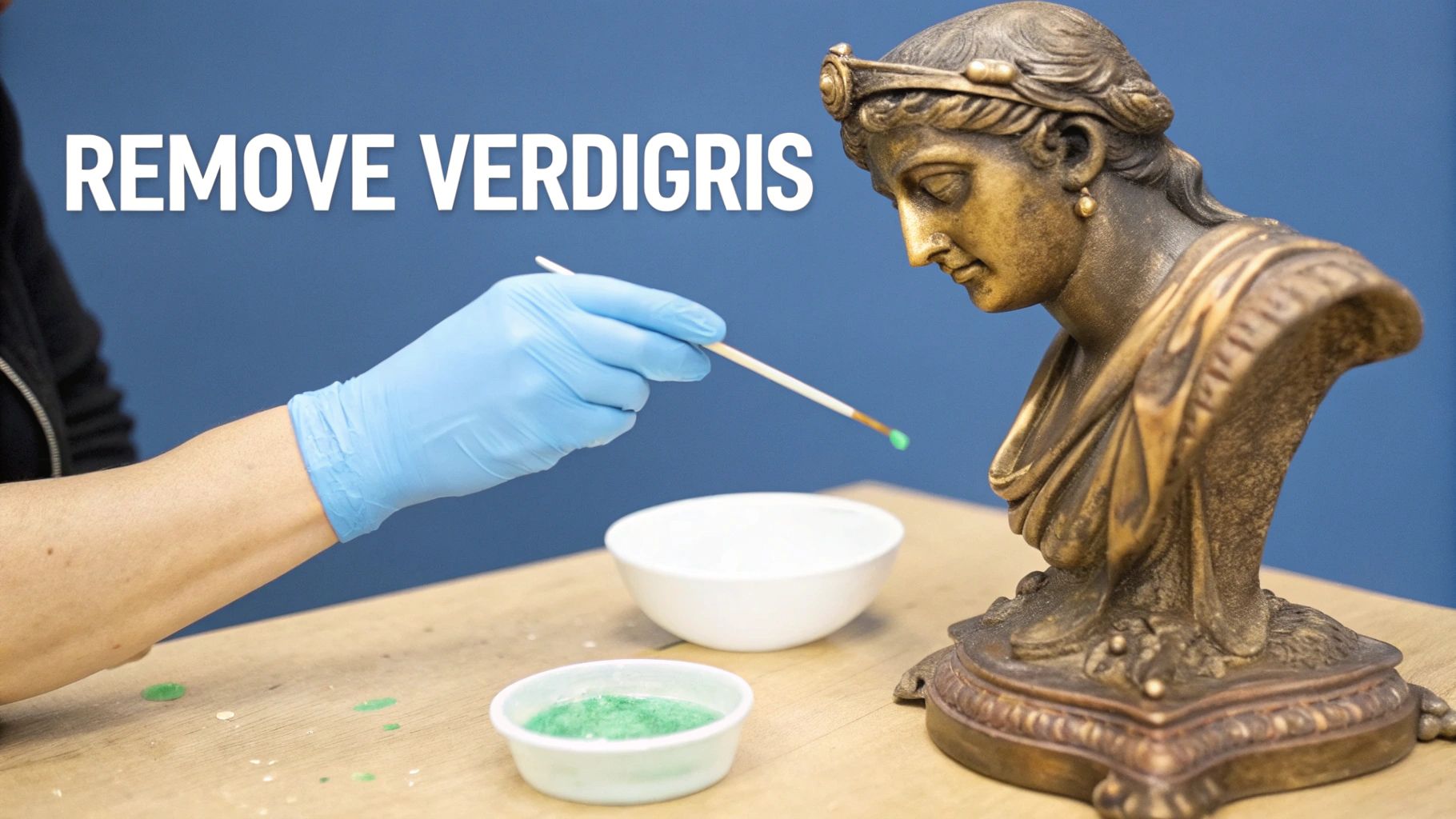
Seeing those bright, almost fuzzy green spots on your bronze statue is always a bit alarming. That’s verdigris, and it’s a form of active corrosion. Think of it as a chemical reaction that is literally eating away at the metal.
It's crucial to understand that verdigris is completely different from the desirable, stable patina that gives bronze its rich character. Verdigris is the bad guy here, and it needs to be dealt with—but very carefully.
The whole game here is a gentle, targeted approach. You want to remove the harmful corrosion without stripping away the healthy patina underneath. Reaching for aggressive chemicals or scrubbing too hard will cause far more damage than the verdigris ever could. We'll start with the least invasive method that actually works.
Your Go-To Cleaning Solution
To get rid of active corrosion on bronze, you need a solution that’s just strong enough to do the job but won’t harm the stable surface. Please, step away from the household cleaners and metal polishes. Professional conservators use a surprisingly simple and effective mixture.
You only need two things:
- Distilled Water: This is a must. Tap water is full of minerals that can leave ugly deposits or even speed up corrosion. Don’t skip this.
- A Non-Ionic Detergent: This is a fancy term for a specialized, neutral pH soap that cleans without leaving a reactive film behind. A classic in the conservation world is Orvus Paste, but any gentle, pH-neutral soap without dyes or fragrances will do the trick.
Mix just a tiny dab of the detergent into a small bowl of warm distilled water. You’re looking for a slightly sudsy solution, not a bowl full of foam. This mild concoction is perfect for breaking down the powdery corrosion without attacking the good patina.
The Gentle Application Process
Once your solution is mixed, it's all about precision and patience. You are not scrubbing the whole statue. Instead, you're performing a bit of spot treatment only on the areas with that bright green verdigris.
Get your tools ready—they're pretty simple:
- Cotton Swabs or Small, Soft Brushes: Dip a cotton swab into your cleaning solution and gently dab or roll it over a green spot. A small, soft artist's brush also works well.
- Let It Work: Allow the solution to sit on the verdigris for a minute or two. This gives it time to soften the corrosion. You’ll likely need to make a few gentle passes.
- Lift, Don't Scrub: The corrosion should start to lift off the surface and stick to your swab. Keep using fresh swabs until no more green comes off.
- Rinse, Rinse, Rinse: This is the most important part. Dip a clean swab in fresh distilled water and rinse the area you just cleaned. Do this several times to remove every last trace of detergent.
- Dry Immediately: Pat the area dry with a clean, soft microfiber cloth. Never let water air-dry on the surface, as this can lead to new spots.
Stay far away from abrasive tools like steel wool, stiff brushes, or scouring pads. These will permanently scratch the bronze and obliterate the patina, which can seriously damage the statue’s beauty and value.
By working methodically and focusing only on the problem areas, you can halt the corrosion in its tracks. This careful process is at the heart of understanding how to clean bronze statues correctly and preserve them for years to come.
Caring for Outdoor Bronze Statues
Bronze statues living outside are in a constant fight against the elements. Unlike their indoor relatives, they’re exposed to everything from acid rain and city pollutants to bird droppings and wild temperature swings. This constant barrage means they need a much more robust cleaning and maintenance plan.
With an indoor piece, a light dusting is often all it takes. But outdoor statues accumulate stubborn layers of grime that can chemically react with the bronze itself. The real challenge is removing these harmful deposits without stripping away the beautiful, protective patina that has taken years to develop. It's a delicate balance, and professional conservators have honed their techniques to get it just right.
Modern Conservation Techniques
So, how do you properly clean a bronze statue that's been out in the weather? The pros have moved on from the harsh, old-school methods like sandblasting, which we now know caused irreversible damage. Today, the approach is all about being effective yet gentle enough to preserve the statue's integrity.
Low-Pressure Heated Water: One of the most common first steps is a wash with heated water at a low pressure. This isn't your weekend power washer. The pressure is carefully controlled to avoid pitting or damaging the metal.
Gentle Abrasives: For tougher grime, conservators turn to mild abrasives. A fantastic example is walnut-shell blasting. Finely ground walnut shells are used at an incredibly low pressure to gently lift dirt without etching the bronze surface.
This shift in cleaning methods is a huge deal. The U.S. National Park Service, which looks after over 5,000 outdoor monuments, now relies on low-pressure washing (around 250°F and 300–500 psi) with non-ionic detergents. For the really tough jobs, they use systems like walnut-shell blasting at a whisper-light 25–30 psi. This careful approach directly protects the value of these historic pieces—in fact, an over-cleaned bronze can lose 20–40% of its market value.
Understanding these professional methods is crucial for anyone who owns an outdoor bronze sculpture. It's a perfect lesson in using the least aggressive approach necessary to get the job done, preserving both the beauty and the financial worth of the art.
When to Bring in the Professionals
While you can certainly perform a gentle annual wash on a garden statue with some mild soap and distilled water, any significant cleaning or restoration of an outdoor piece is best left to an expert.
If a bronze statue is part of a larger historic property or needs more than just a routine cleaning, consulting with historic preservation architecture firms is a wise move. They have the expertise to manage the project correctly and can connect you with qualified conservators who have the right tools and experience to treat your valuable artwork safely, ensuring it stands up to the elements for generations.
Applying a Protective Wax Coating for Longevity
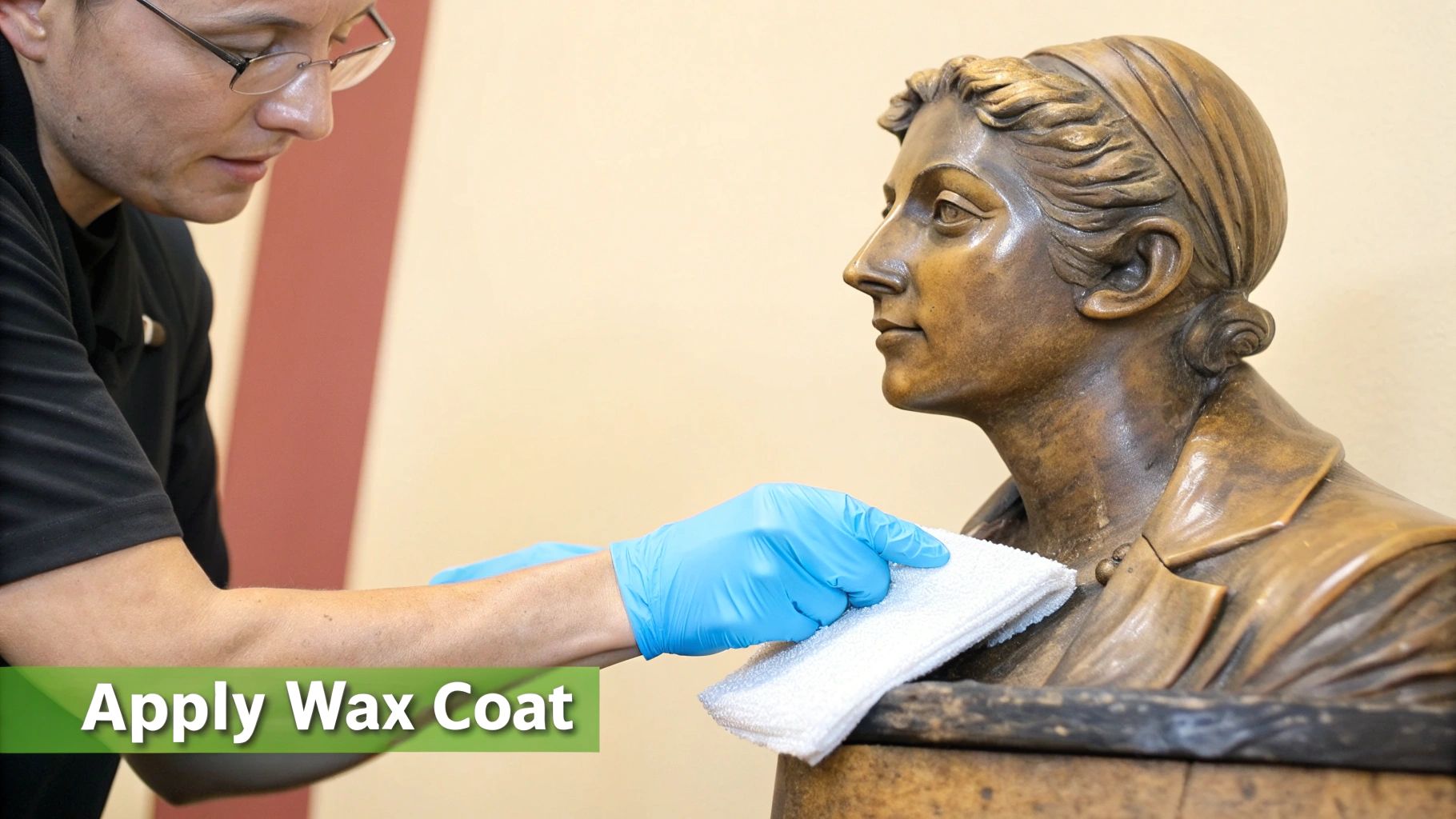
Once your statue is beautifully cleaned, you’re on the final and most crucial step: sealing the deal with a protective coating. I always tell people to think of it as a clear shield for the bronze. This sacrificial layer takes the hit from fingerprints, airborne pollutants, and moisture, so the metal doesn't have to.
This step is non-negotiable if you want to prevent future corrosion and lock in that gorgeous patina you've just revealed. A good wax coat also brings out a deep, soft luster that enhances the statue’s color and form without giving it a fake, glossy shine.
Choosing the Right Wax
This is where you need to be picky. Grabbing the wrong product off the shelf can do more harm than good, and some common household waxes are a definite no-go.
- Steer Clear of Car Wax: These almost always contain silicones and other additives. They can trap moisture right against the metal, which ironically causes the very corrosion you're trying to prevent.
- Say No to Furniture Polish: Most of these products have oils and solvents that can react badly with the bronze patina, leading to blotchy discoloration over time. They also tend to leave a sticky film that attracts dust.
The only product trusted by professional conservators is microcrystalline wax. It's a highly refined petroleum-based wax that’s incredibly stable and offers fantastic moisture resistance. Best of all, it dries perfectly clear, won't yellow, and is completely reversible—a core principle of professional art conservation.
The goal is to protect the bronze with a coating that can be safely removed later without altering the statue itself. Microcrystalline wax is the only choice that truly fits the bill.
The Application Process
Applying the wax isn't complicated, but the secret lies in working with thin, even layers. If you slop it on too thick, you'll end up with a cloudy, uneven finish that just attracts dirt.
First, make absolutely certain the statue is clean and 100% dry. I can't stress this enough. Any tiny bit of moisture you trap under the wax creates a mini-greenhouse for corrosion to start all over again.
Grab a clean, soft, lint-free cloth (an old cotton t-shirt is perfect) and dab a tiny amount of wax onto it. Work in small sections, rubbing the wax into the surface with a gentle circular motion. You're aiming for a film so thin it’s almost invisible. For a deeper look into the best practices for applying protective sealers on various surfaces, there are great resources that cover common pitfalls.
Let the wax sit and haze over for about 15-20 minutes. Then, take a separate clean cloth or a very soft-bristled shoe brush and gently buff the surface to a subtle sheen. This final buff is what gives you that beautiful, protected finish that will keep your bronze looking its best for years to come.
Your Go-To Bronze Cleaning Toolkit
Before you even think about touching that statue, let’s talk about tools. Honestly, having the right supplies ready to go is half the battle. When you’re figuring out how to clean bronze statues, grabbing the wrong thing—like a kitchen sponge or plain tap water—can do more harm than good, sometimes permanently.
Your toolkit doesn’t need to be fancy or expensive. It just needs to be correct. We're talking about conservation-safe materials: soft, non-abrasive tools and pure, neutral solutions that won’t react badly with the bronze’s delicate surface.
Safe Tools vs. Damaging Alternatives
I've put together a simple table to show you exactly what to have in your kit and, just as importantly, which common household items to keep far, far away from your bronze.
Bronze Statue Cleaning Toolkit
This checklist covers the must-have supplies for cleaning bronze safely and highlights the everyday items that can cause unexpected damage.
| Recommended Tool | Purpose | Household Item to Avoid |
|---|---|---|
| Soft, Natural-Bristle Brushes | Perfect for gently getting dust out of all those little nooks and crannies without leaving a scratch. | Stiff Nylon Brushes or Scouring Pads. These will absolutely scratch the bronze and can easily strip away that beautiful patina you want to keep. |
| Microfiber Cloths | Use these for everything: dusting, applying water, and buffing wax. They won't leave lint behind. | Paper Towels. They seem soft, but they're surprisingly abrasive and can leave tiny fibers that trap moisture against the metal. |
| Distilled Water | This is your go-to for damp-cleaning. It's free from minerals that cause spotting and long-term corrosion. | Tap Water. It's loaded with chlorine and minerals that will leave ugly white deposits and can damage the surface over time. |
| Non-Ionic Detergent | A pH-neutral soap that cuts through grime without leaving a reactive film on the bronze. | Dish Soap or Ammonia Cleaners. These are way too harsh and will strip the protective patina right off your statue. |
| Microcrystalline Wax | A stable, museum-quality wax that creates a clear, protective barrier against dust and moisture. | Car Wax or Furniture Polish. These often contain silicones or oils that can trap moisture, attract dirt, or discolor the bronze. |
Think of this as your recipe for success. Getting these simple items together first prevents you from making a split-second bad decision later.
Even the pros stick to this gentle approach. Official conservation guidelines, like those from the U.S. General Services Administration, often specify using a weak 3–5% non-ionic detergent solution applied with soft brushes, followed by a thorough rinse with distilled water.
While those guidelines are for massive architectural projects, the core idea is exactly the same for your statue at home: always start with the gentlest materials possible. For more insights on this, you might find our guide on cleaning antique brass helpful, as many of the same principles apply.
Answering Your Top Bronze Cleaning Questions
Even with the best instructions, you're bound to have questions once you get started. What if the statue is incredibly old? How often is too often when it comes to cleaning? Let's walk through some of the most common things people ask.
The biggest question I always hear is about using store-bought polishes. My advice is simple and firm: don't do it. Commercial brass and bronze polishes are built to be abrasive. They’re packed with chemicals that will strip away the beautiful, protective patina—the very layer that holds the statue's history, character, and much of its value. Using one of these is one of the fastest ways to permanently damage your piece.
How Often Should a Bronze Statue Be Cleaned?
When it comes to bronze, the best philosophy is almost always "less is more."
For Indoor Statues: A gentle dusting with a soft brush every couple of weeks is plenty. A more detailed cleaning with distilled water and a soft cloth is really only necessary about once a year, or if you spot a specific buildup of grime.
For Outdoor Statues: These pieces are constantly exposed to the elements, so they need a bit more attention. A gentle wash followed by a fresh coat of microcrystalline wax once a year is a solid routine to keep them protected.
The biggest takeaway here is that over-cleaning is a far greater danger than under-cleaning. Aggressive scrubbing is the quickest route to stripping a statue of its historical and financial worth. When in doubt, a light dusting is all you need.
If you're looking at a piece that's a valuable antique, seems particularly fragile, or has markings you don't recognize, just stop. You can try to learn more by checking our guide on identifying bronze foundry marks, which might give you some clues.
But for any piece where the stakes are high, the smartest and safest thing you can do is call a professional art conservator before you touch it.
Have a bronze statue you can't identify? Curio puts an antique expert in your pocket. Just snap a photo to uncover its history, origin, and value in seconds. Download Curio today and let your antiques tell their story.