So, you've found a beautiful bronze piece, but you're hesitating. You're worried you might clean it the wrong way and cause permanent damage. That's a good instinct.
The secret to cleaning bronze safely isn't about finding one magic formula. It’s about understanding what you're working with, starting with the gentlest methods, and knowing that preserving its history is often more important than making it look brand new.
The Art of Caring for Bronze
That moment of hesitation is one I've seen countless times. The wrong cleaner or a bit too much elbow grease can strip away a century's worth of character, tanking its value and changing its look forever.
I wrote this guide to give you the confidence to do it right. We'll move past generic tips and get into practical, safe techniques that respect the metal's story. Think of it as learning to be a caretaker for these beautiful objects, ensuring they'll be around for generations to enjoy.
Before you even think about grabbing a cloth, the first step is always to stop and look. Bronze isn't just one thing; its surface tells you everything you need to know about how to proceed.
- Patina is History: That beautiful greenish or deep brown layer on an old piece of bronze? That's its patina. It forms naturally from oxidation over decades, and collectors value it highly. Scrubbing it off is like tearing a page out of a history book—it can absolutely destroy the item's value.
- Lacquers as a Shield: Many newer bronze items, and even some older ones, have a clear lacquer coat. It's there to stop tarnish before it starts. If you use an abrasive cleaner on a lacquered piece, you'll scratch and destroy that protective barrier, leaving it vulnerable.
- Character vs. Corrosion: There's a big difference between a stable, handsome patina and active corrosion. That bright green, fuzzy stuff is called verdigris, and it's a problem that needs to be addressed. Learning to spot the difference is crucial.
What to Expect From This Guide
I'll walk you through the whole process, from the initial inspection to the final protective finish. We'll look at how to figure out what kind of finish your bronze has, cover simple cleaning for regular upkeep, and discuss how to handle tough tarnish without wrecking that precious patina.
The goal here is to help you make informed choices, not just follow a rigid list of rules. The way you’d clean a 19th-century sculpture is completely different from how you'd polish a modern decorative bowl.
If you remember only one thing, let it be this: do no harm. Always start with the least aggressive cleaning method, and always, always test any new product on a small, hidden spot first. This one simple habit can save you from a world of regret and expensive restoration bills.
We'll get into the specific tools and materials that are safe to use, with instructions tailored to different types of bronze. Whether you're a long-time collector, a flea market hunter, or you've just inherited a family heirloom, you'll find real, practical advice here. By the end, you'll know how to care for your bronze not just as stuff, but as tangible pieces of history.
First, Figure Out What Kind of Bronze You're Dealing With
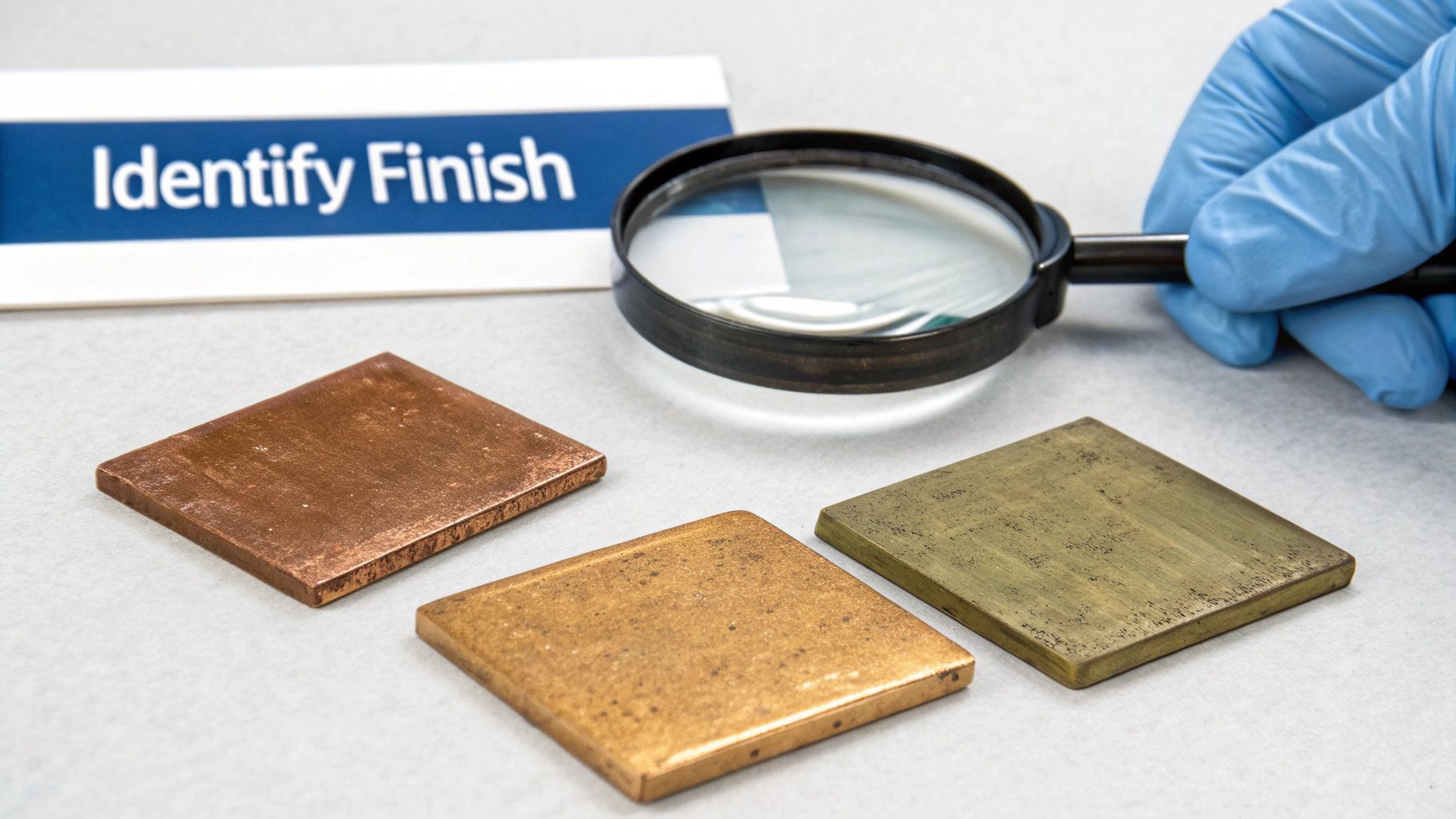
Before a single drop of cleaner touches your bronze piece, you have to play detective. This is the most important step, period. Getting it wrong can permanently damage your item, so take a moment to really look at what you have.
You’re trying to determine the finish. Is it a raw, aged piece with a deep patina? Or is it something more modern with a shiny, protective lacquer? Maybe it's even gilt bronze, with a delicate layer of gold. Each one needs a completely different touch.
Is It Raw or Patinated Bronze?
This is the classic look most of us imagine when we think of an old bronze statue. The surface will have a rich, complex color—anything from a deep chocolate brown to a mottled green or even a reddish-brown. This beautiful coloration is the patina, a natural layer of oxidation that forms over time. Sometimes, artists will even apply a patina chemically to achieve a specific look.
Patinated bronze won't be shiny. Instead, it has a soft, velvety luster and can feel slightly textured. For collectors, this patina isn't dirt; it's the piece's history, and it's a huge part of its character and value. To get a better sense of how these finishes are achieved by artists, you can dig into this guide on how bronze statues are made.
Is It Lacquered Bronze?
If your item has a distinctly smooth, glossy appearance, you're probably looking at lacquered bronze. This clear coat is often applied to newer decorative pieces—think lamps, door knockers, or bookends—to keep them bright and prevent tarnishing.
The feel is often a dead giveaway. It will be slick to the touch, almost like plastic. If you're still not sure, check for tiny chips or flakes, especially around edges or crevices. Over time, lacquer can also yellow, which is another telltale sign that a protective coating is present.
Is It Gilt Bronze?
Gilt bronze, also known as ormolu, is a whole different animal. This is bronze that has been coated with a very thin layer of gold, a technique that was incredibly popular for fancy 18th and 19th-century items like clocks, candelabras, and furniture mounts.
Its defining feature is an unmistakable golden sheen. Even if it's dirty or tarnished, the underlying color is a brilliant, warm yellow—not the earthy brown of raw bronze. This gold layer is incredibly fragile. Rub too hard, and you can easily wear it away, exposing the darker metal underneath and tanking the item's value.
Crucial Takeaway: Don't guess. Polishing a historic patina can strip away decades of character and value. Using the wrong cleaner on a lacquered piece can eat away the protective coat, inviting corrosion.
To help you out, here’s a quick-reference table to identify what you're working with.
Identifying Your Bronze Finish
Use this quick guide to determine the finish on your bronze item by its look and feel, and understand the primary goal for cleaning it.
| Finish Type | What It Looks and Feels Like | Your Main Cleaning Goal |
|---|---|---|
| Patinated Bronze | Deep, uneven color (brown, green). Matte or low-luster finish. May feel slightly textured. | To gently remove dust and grime while preserving the historic patina. |
| Lacquered Bronze | Smooth, glossy, and reflective surface. Feels slick to the touch. | To clean the protective lacquer layer without scratching or stripping it. |
| Gilt Bronze | Bright, golden-yellow sheen. Can appear dull when tarnished but is distinctly gold-colored. | To carefully lift dirt without rubbing away the fragile gold layer. |
Once you've confidently identified the finish, you're ready to choose the right tools and techniques for the job.
Gentle Cleaning for Everyday Upkeep
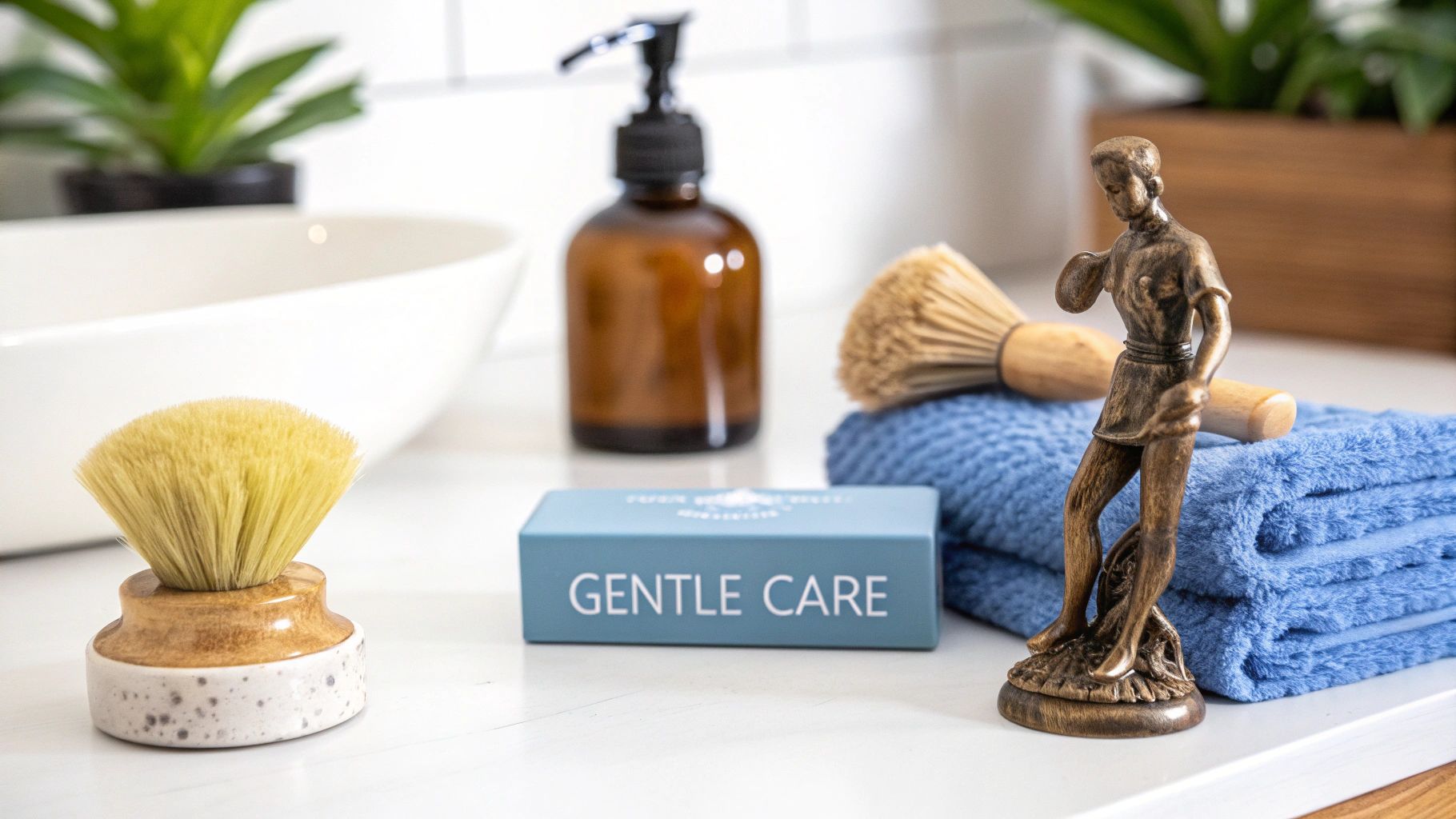
When you're dealing with valuable bronze, especially pieces with a beautiful, stable patina or a protective lacquer, remember this: less is always more. I’ve seen it time and again—aggressive cleaning is the quickest way to strip an item of its character and value. For routine care, your approach should always be a gentle one.
Think of it as light housekeeping, not a major deep clean. This simple mindset helps preserve the finish, whether it's a historic patina that took a century to develop or a delicate modern lacquer.
The most basic, and frankly most important, task is regular dusting. Dust is more than just an eyesore; it’s a tiny sponge for moisture and airborne pollutants. When left to sit on a bronze surface, it can speed up the corrosion process.
The Right Tools for Dry Dusting
Your first line of defense should always be a dry one. Before you even consider using water, a thorough dusting will often be all it takes to bring back your piece's shine. The key is to use tools that won't scratch or wear away the surface.
Here's what you'll want in your toolkit:
- Soft, lint-free cloths: A good microfiber cloth is perfect. It grabs dust effectively without leaving annoying fibers behind.
- Natural bristle brushes: If your piece has intricate details or a textured surface, a soft-bristled brush (think hog or goat hair) is your best friend. It gets into all those nooks and crannies without being harsh. Stay away from stiff nylon bristles.
This isn't just my opinion; it’s what the pros do. A 2009 survey from the American Institute for Conservation found that 51% of experienced conservators prefer natural bristle brushes for gentle cleaning. It’s a serious matter—improper methods can slash an item's value by up to 50%. Sticking to these trusted tools is a smart move. You can read more in these professional conservation insights.
When you're dusting, use light, gentle strokes. Don't apply a lot of pressure. You're just trying to lift the dust off, not scrub it in.
Using Water Safely on Lacquered Bronze
Sometimes dry dusting just won't cut it, especially on lacquered pieces that might have fingerprints or a bit of grime. If you've confirmed your bronze has a lacquer finish, you can carefully introduce a mild cleaning solution.
The key is control. Your cleaning solution should be nothing more than a couple of drops of a pH-neutral, mild dish soap in a small bowl of distilled water. It must be distilled water. Tap water is full of minerals that will leave behind white spots and can even promote corrosion.
Expert Tip: Never spray a cleaning solution directly onto a bronze piece. You have zero control over where the liquid pools, and it will inevitably get into crevices where it can cause real damage. Always, always apply the solution to your cloth first.
Here’s the right way to handle a wet clean:
- Dampen, Don't Soak: Dip a soft microfiber cloth into your soapy, distilled water solution. Then, wring it out until it’s just barely damp to the touch.
- Wipe Gently: Carefully wipe the lacquered surface using gentle, even strokes.
- Rinse with a Clean Cloth: Immediately go over the area with a separate, clean cloth that's been dampened with only distilled water. This removes any lingering soap residue.
- Dry Immediately: This is the most important step. Take a third, completely dry microfiber cloth and buff the piece until it's totally dry. Never let it air dry—that’s a guaranteed recipe for water spots.
This careful, controlled process is the secret to cleaning lacquered bronze without hurting its protective coat. For unlacquered, patinated bronze, you should avoid water entirely unless it's absolutely necessary, as moisture is the number one cause of corrosion.
How to Tackle Tarnish and Green Corrosion
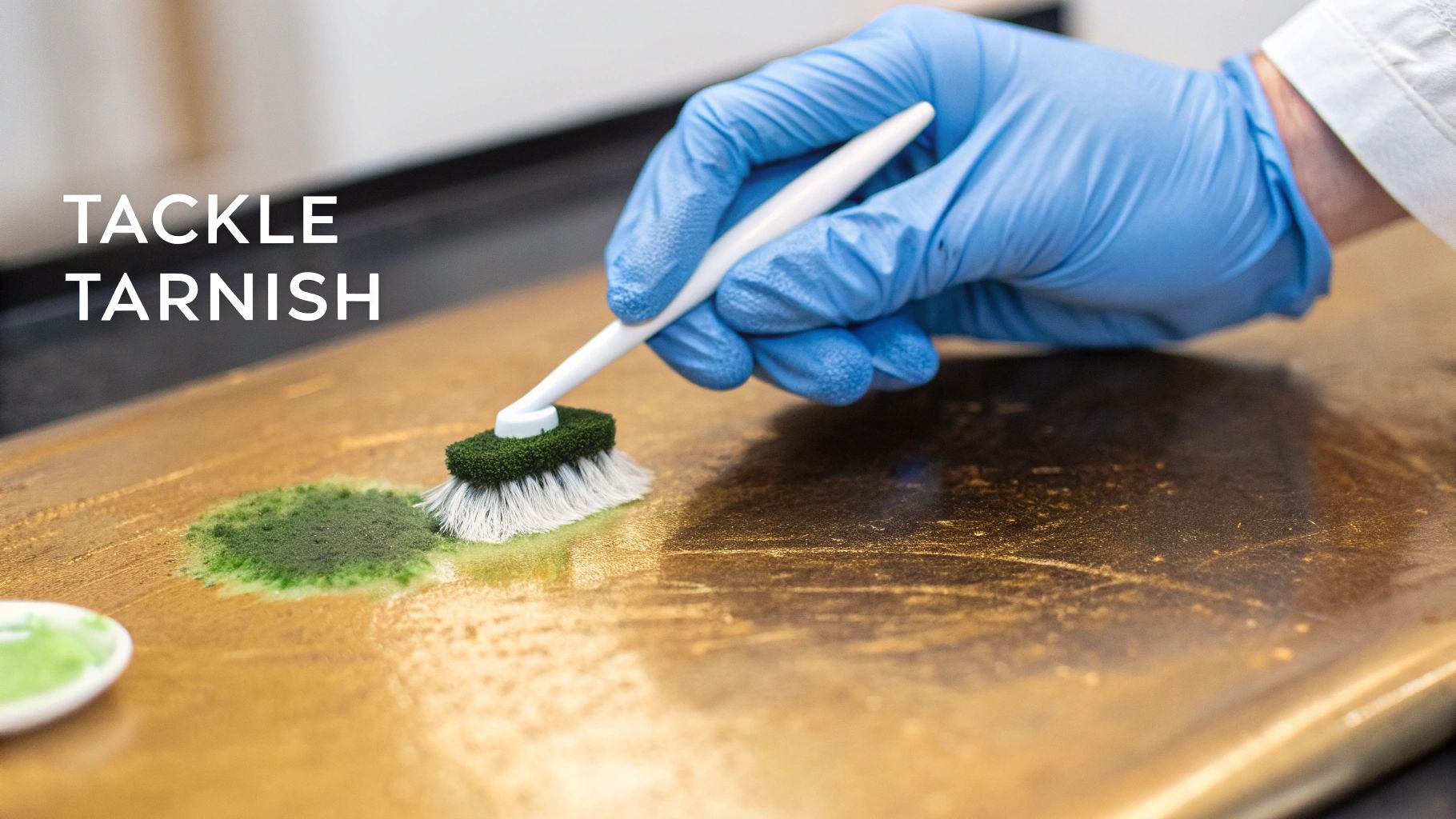
It can be alarming to see those fuzzy, bright green patches or stubborn black spots appear on your unlacquered bronze. This isn't the beautiful, distinguished patina you want. It's active corrosion, commonly known as verdigris.
This happens when bronze meets moisture and air, and it's a problem you need to handle carefully. If left alone, it can spread and permanently pit the metal. The idea here isn't to scrub away every sign of age but to stop the damage while keeping the healthy, stable patina intact. Think of it as a targeted treatment, not a deep clean.
A Gentle At-Home Paste Solution
For small spots of verdigris or heavy tarnish, a simple homemade paste often does the trick. I prefer this method because it gives you precise control, letting you treat just the problem areas without harming the surrounding patina. My go-to recipe is a simple mix of lemon juice and baking soda.
The mild acid from the lemon juice gets to work dissolving the corrosion, while the baking soda acts as a soft abrasive and neutralizes the acid.
Here’s how to mix and use it correctly:
- Mix Your Paste: In a small bowl, combine about two tablespoons of baking soda with just enough fresh lemon juice to create a thick paste—the consistency should be like toothpaste.
- Apply It Carefully: Use a cotton swab or a soft cloth to dab the paste directly onto the green or black spots. Be careful not to smear it onto the clean, patinated areas.
- Let It Work: Allow the paste to sit on the corrosion for about 20-30 minutes. You might even see it fizz a little as it reacts.
- Gently Scrub: Grab a soft-bristled toothbrush (one you won't use again for your teeth!) and gently scrub the spot in small, circular motions.
- Rinse and Dry Immediately: Use a clean cloth dampened with distilled water to completely remove all of the paste. This is a critical step. Right after, buff the area completely dry with a clean microfiber cloth.
The Golden Rule of Bronze Cleaning: Always, always test any cleaning solution on a small, hidden spot first. The underside of a base or the back of a sculpture is perfect. This one little step can save you from a huge, irreversible mistake.
When to Consider a Commercial Cleaner
Sometimes, a homemade paste just doesn't have the muscle to cut through years of buildup. If your gentle approach isn't making a dent, you may need to look at a commercial bronze cleaner. But you have to choose wisely.
The most important thing is to find a cleaner that is ammonia-free. Ammonia is incredibly harsh and can strip a patina in seconds, leaving you with a raw, splotchy, and unnatural-looking surface. Read the label carefully and find a product specifically formulated for bronze or copper alloys. For a wider perspective on dealing with tarnish, check out this general guide on cleaning tarnished jewelry and restoring its shine.
The Professional Approach to Cleaning Bronze
It helps to know how museum and architectural conservators handle bronze. It really puts our gentle methods into perspective. For example, some early 20th-century electrolytic cleaning techniques were so aggressive they completely stripped patinas, in some cases devaluing historical artifacts by as much as 40-60%.
Today, professional standards are far more refined. Government Standards Agency (GSA) guidelines for cleaning architectural bronze now specify using just a mild 3-5% non-ionic detergent scrub with soft brushes. It’s a powerful reminder to always start with the least aggressive method possible when you're trying to figure out how to clean bronze safely at home.
Should You Polish Bronze or Preserve the Patina?
This is probably the single most important question you'll face when caring for bronze, and my answer is almost always the same: when in doubt, don't polish. Deciding whether to bring out a brilliant shine or to preserve the natural patina is a major turning point. It can completely change the character, story, and even the financial value of your piece.
A patina isn't just tarnish or dirt. It's the beautiful, colored film that develops on the surface of bronze over many years—sometimes centuries—through natural oxidation. You'll see it in a whole spectrum of colors, from a deep, rich chocolate brown to mottled greens or even reddish hues. This layer is a physical record of the object's life and a key sign of its authenticity.
For collectors and anyone who appreciates antiques, a stable, even patina is incredibly desirable. Wiping it away with polish is like tearing the most interesting pages out of a history book. In the antiques world, this can slash an item's value, because the patina is often the very thing that proves its age and origin. A stripped, brightly polished antique just looks wrong to a trained eye—it looks damaged.
Understanding the Value of Patina
The best way to think about patina is as the bronze's original, time-earned finish. You wouldn't strip the original paint off an 18th-century chair, would you? The same principle applies here. The unique color and texture developed over a lifetime is something you simply can't fake overnight.
Now, it's crucial to know the difference between a desirable patina and harmful corrosion. A healthy, stable patina will generally look even and feel smooth, almost like it’s part of the metal itself. Active corrosion, which we call verdigris, is another story. It usually shows up as bright green, fuzzy, or powdery spots that might even flake off. Verdigris is a problem that needs to be addressed carefully to stop it from pitting the metal, but a healthy patina should be left alone. This dilemma is very similar to the one people face when they're learning about cleaning antique brass, where the age and finish of a piece dictate everything.
A Critical Distinction: Patina is the history of a piece, a slow-forming layer that adds character and value. Verdigris is active damage—a form of corrosion that needs careful, targeted removal to protect the metal. Never confuse the two.
When Is It Okay to Polish Bronze?
So, does this mean you should never polish bronze? Not necessarily. There are a few specific scenarios where polishing makes sense, but they usually involve modern, decorative pieces where a bright, shiny look was the original intention.
Polishing might be the right call for:
- Modern Decorative Items: Think of newer, mass-produced bronze bookends, lamps, or cabinet pulls that were designed to have a high-shine finish from day one.
- Pieces Without Historical Value: If you have a contemporary bronze sculpture and you just personally prefer a brilliant, golden look, polishing is a perfectly fine aesthetic choice.
- Severely and Unevenly Tarnished Items: In rare cases where a modern, unlacquered piece is so heavily and patchily tarnished that it's just plain unsightly, a careful polish could restore its intended appearance.
If you do decide to polish, please use a high-quality metal polish made specifically for bronze or copper. Put a small amount on a soft, clean cloth—never apply it directly to the object. Work in small, circular motions, focusing on one section at a time. Then, take a separate clean cloth to buff away the residue and reveal the shine. And always, always test your polish on a small, hidden spot first to see how the metal responds.
Ultimately, the choice comes down to what the object is. If it's an antique with a story to tell, let its patina do the talking. If it's a modern piece that's meant to gleam, then polish it with care.
How to Protect Your Bronze for the Future
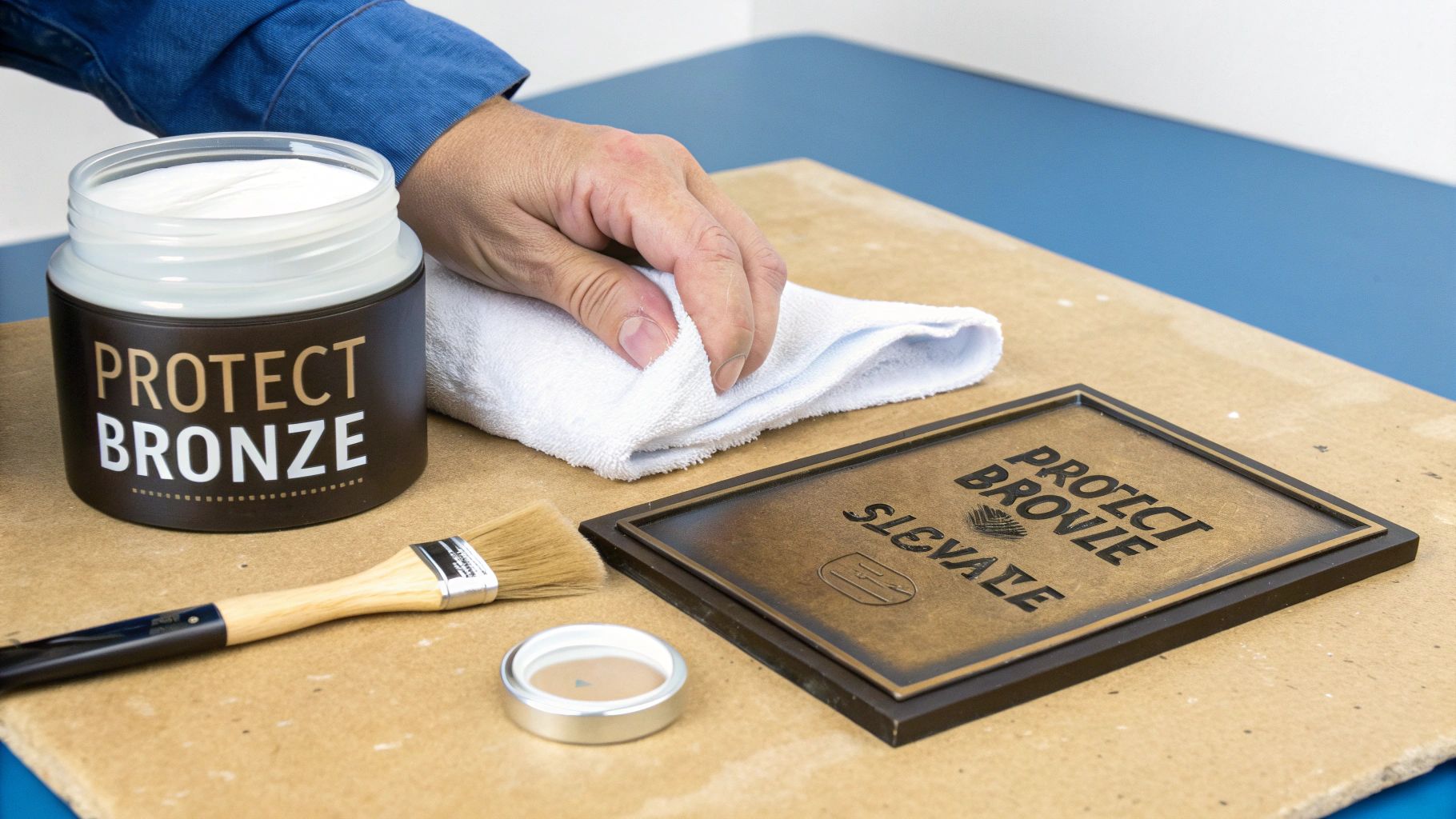
Once you’ve put in all that careful work, the last thing you want is for tarnish to creep back in. This is where a good protective finish comes into play. Think of it as a shield, sealing off the metal from the moisture and oxygen that cause corrosion and undo all your efforts.
You've got two main routes you can go down: waxing or lacquering. What you choose really depends on the piece itself—its age, how it's used, and the look you’re going for.
The Reversible Charm of Waxing
For any piece with history, especially antiques with a beautiful, hard-earned patina, a quality microcrystalline wax is the only way to go. This is what museums and professional conservators use, and for good reason. It’s completely reversible and doesn't obscure the patina; it actually makes it look richer.
The process itself is pretty simple. Grab a soft, lint-free cloth or a natural bristle brush and apply a very thin, even coat of wax. Give it about 20-30 minutes to dry to a light haze. Once it looks cloudy, take a clean cloth and gently buff the surface. You'll be left with a deep, soft sheen that looks incredible.
Expert Takeaway: Waxing does more than just protect; it enriches. It deepens the colors of the patina, giving the bronze a luster and depth that no other finish can replicate. It’s a simple touch that can make a huge difference in how an older piece presents.
If you're dealing with an outdoor sculpture, you might see professionals use a hot waxing technique. They carefully heat the metal before applying the wax, which helps it seep deeper into the pores of the bronze. This creates a much tougher, more weather-resistant seal.
Lacquering and Advanced Coatings
For more modern decorative items that were originally sold with a high-gloss finish, reapplying a lacquer coat is an option. Be warned, though—getting a perfectly smooth, even finish without drips or bubbles is tricky. This is one of those jobs that's often best left to a professional.
When you get into large-scale architectural or industrial bronze, the stakes are even higher. Professional conservators, following guidelines from institutions like the National Park Service, sometimes use a 3% Benzotriazole (BTA) solution. This chemical can inhibit corrosion by 80% or more for several years, usually followed by a hot wax topcoat. This just goes to show how seriously preservation is taken at the professional level. You can read more about these professional bronze preservation methods to see how the pros do it.
For the ultimate barrier against the elements, there are industrial-grade coatings like Intershield 300 Bronze Part A that provide heavy-duty protection. No matter which method you choose, a proper final finish is the crucial last step in ensuring your bronze stays beautiful for years to come.
Common Questions About Cleaning Bronze
Working with bronze often brings up a handful of tricky questions. Even with a good guide in hand, you might run into a specific situation that leaves you stumped. Let's tackle some of the most common queries I hear from collectors to help you avoid any pitfalls and care for your pieces with confidence.
Is It Safe to Use Ketchup to Clean Bronze?
I see this "hack" floating around the internet all the time, and my advice is simple: please don't. For anything you value, stay away from the ketchup.
Yes, the acid from the vinegar and tomatoes can technically eat away at tarnish, but it's a completely uncontrolled chemical reaction. Worse yet, the salt in ketchup can actually speed up corrosion. It’s also nearly impossible to wash all that sugary, acidic residue out of the tiny nooks and crannies. Leftover gunk can lead to pitting and weird discoloration down the road.
If you need a simple at-home solution for a tough spot, a controlled paste of baking soda and lemon juice is a much safer bet.
Key Takeaway: Stick to controlled, simple ingredients. Ketchup is for fries, not for your antiques. Using it is a gamble that can lead to irreversible damage and diminish your item's value.
How Can I Tell If It Is Bronze or Brass?
This is a classic. They can look incredibly similar, but a few clues can help you tell them apart. Bronze usually has a deeper, reddish-brown hue—what I sometimes describe as a "muddier" tone. Brass, on the other hand, is brighter and leans more toward a true yellow-gold.
If you can find a hidden spot to make a tiny, discreet scratch (like on the base), the color of the fresh metal is a dead giveaway. A scratch on bronze will reveal a pinkish-brown color, while brass will look distinctly more yellow. For valuable pieces, finding a foundry mark is the best way to get a definitive answer. Our guide to bronze foundry marks can help you decipher what they mean.
Does Outdoor Bronze Need Different Care?
Absolutely. A bronze sculpture sitting on your patio needs a much more robust care routine than a candlestick on your mantelpiece. Anything exposed to rain, sun, and pollution is fighting a constant battle.
Plan on giving it a thorough cleaning at least once a year. Use a mild, non-ionic detergent and plenty of distilled water, then dry it completely—and I mean completely. The most important step, though, is applying a protective coat of microcrystalline wax afterward. This creates a tough barrier that keeps moisture out.
For larger outdoor sculptures, conservators often use a hot waxing technique. This allows the wax to really seep into the metal's pores, offering maximum, long-lasting protection against the elements.
Navigating the history and value of your finds can be tricky. With the Curio app, you can snap a photo of any antique and get instant identification, historical context, and an estimated value. Take the guesswork out of your collecting journey.