
When it comes to cleaning a bronze statue, the first thing to remember is that you're not trying to make it look shiny and new. The goal is simply to remove surface grime using nothing more than mild soap, distilled water, and a soft brush. The real value, both historically and financially, is in its aged finish—the patina.
A Gentle Approach Is Always Best
Before you touch your statue, let's get one thing straight: less is always more. Trying to make an old bronze look like it just left the foundry is one of the biggest and most costly mistakes you can make. That dark, often mottled layer that forms on bronze over time is called the patina, and it's highly prized by collectors and conservators.
Think of the patina as the statue's story, etched onto its surface. It's actually a form of stable corrosion that acts as a protective shield for the metal underneath. Stripping it away doesn't just erase its history; it can tank its value. So, our focus here is on careful preservation, not aggressive scrubbing.
Indoor vs. Outdoor: A Tale of Two Environments
The first thing I always do is assess where the statue lives. You simply can't treat an indoor piece the same way you'd handle one that's been sitting in a garden for decades.
Indoor Statues: These pieces have it easy. They’re protected from the elements, so their main issues are dust, airborne oils, and fingerprints. Cleaning is usually a straightforward affair involving gentle dusting and minimal moisture to protect what are often very delicate, subtle patinas.
Outdoor Statues: A statue exposed to the great outdoors is fighting a much tougher battle. It has to deal with acid rain, corrosive bird droppings, city pollution, and wild temperature swings. The cleaning process needs to be a bit more involved, typically requiring a good rinse and a protective wax coating to fend off future damage.
It's a common myth that any green on bronze is a bad sign. A stable, dark bluish-green layer can be a beautiful part of a healthy patina. It's that bright, powdery green stuff—verdigris—that you need to worry about. That's active corrosion at work.
Thinking Like a Conservator
To do this right, you need to shift your mindset. Don't think like a house cleaner; think like a museum conservator. Every touch should be gentle and deliberate. Your mission is to get rid of the harmful stuff—like acidic grime or abrasive dust—while leaving the beautiful, stable history of the patina completely intact.
This guide is built on that very principle. We'll walk through safe, time-tested techniques that respect the integrity of your art. By starting with a gentle hand, you ensure its story and beauty will last for generations.
Assessing Your Bronze Before You Begin Cleaning
Before you even think about grabbing a cloth or brush, the most critical part of cleaning a bronze statue is to simply stop and look. A thorough assessment is your best defense against causing permanent damage. Honestly, rushing into cleaning without really understanding what you're working with is a recipe for disaster.
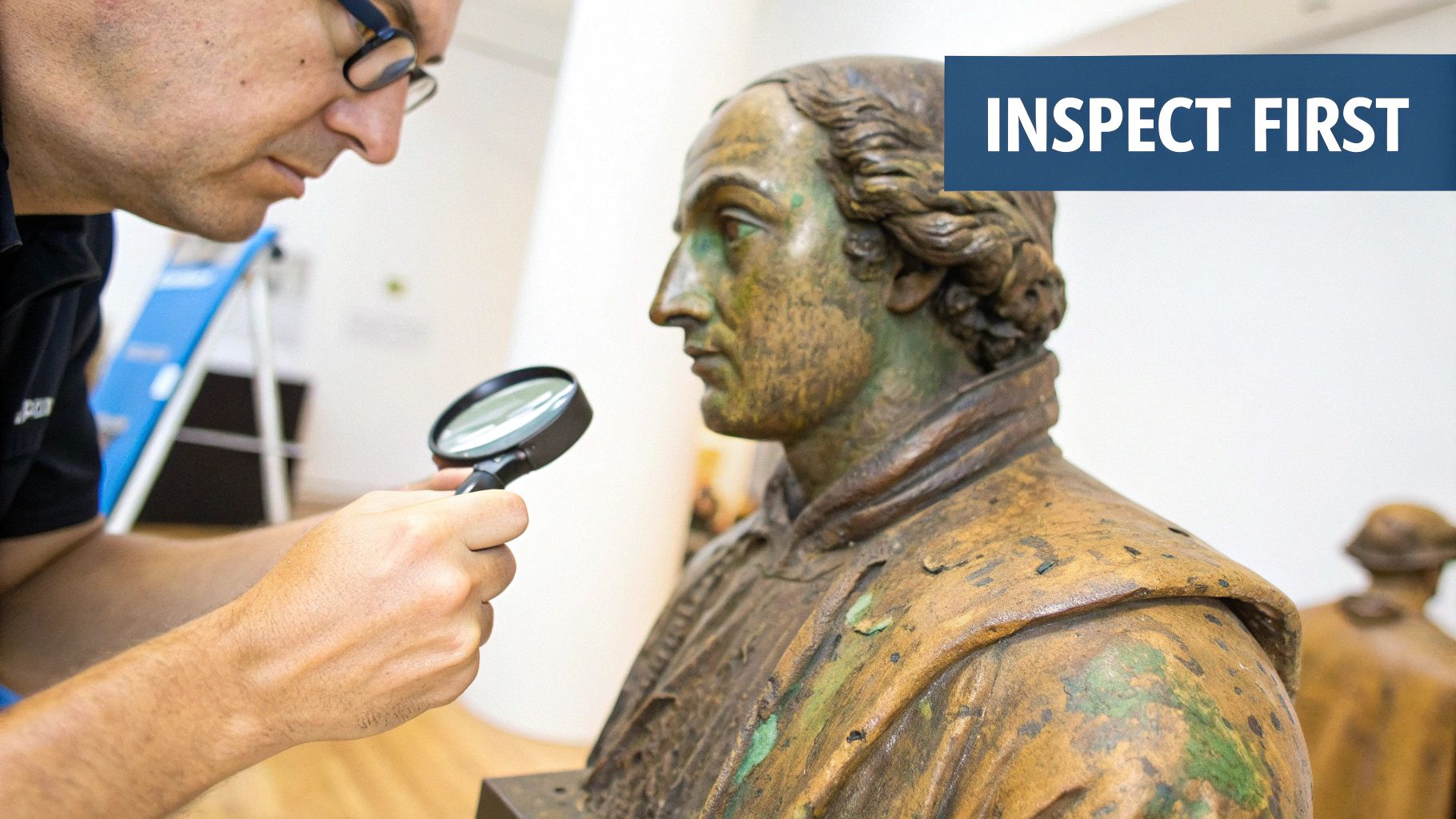
Start by giving the statue a careful, close-up inspection. Get in there and look at it from every angle. I always recommend using your phone's camera for this; take detailed, high-resolution photos of the entire piece. Then, zoom in on the tricky spots—the intricate crevices, the base, and any areas that look discolored or have an unusual texture.
These "before" photos are your baseline. They're more than just a nice memory; they help you track your progress and are absolutely invaluable if you later realize you need to call in a professional conservator.
Distinguishing Patina From Problematic Corrosion
This is probably the most important skill you can learn. To the untrained eye, a healthy patina and active corrosion can look alarmingly similar, but they mean very different things for your statue's long-term health.
A stable patina is the good stuff. It’s that beautiful, protective layer that forms on bronze over decades or even centuries. It’s typically hard, even, and can be anything from a rich dark brown to deep greens and blues. This layer tells the statue’s story, adding to its character and value. You want to preserve this at all costs.
Active corrosion, on the other hand, is bad news. The most common culprit is verdigris, which usually shows up as a light green, powdery, or even flaky substance. Here's a quick field test: if you can gently brush it with your finger and it leaves a dusty residue, you're likely dealing with active corrosion that is literally eating away at the metal.
Key Takeaway: If the surface is hard and the color seems integrated into the metal, it's likely a stable patina. If it’s powdery, flaky, or a chalky, bright green, it’s probably active corrosion that needs to be addressed carefully.
Checking for Structural Issues
Your inspection goes deeper than just the surface. You also need to check for any underlying structural problems. Even a tiny issue can be made much worse by the physical pressure of cleaning.
Run your hands gently over the entire surface, feeling for anything that seems off. Here's a quick checklist of what to keep an eye out for:
- Fine Cracks: Look very closely for hairline fractures. Pay special attention to joints where different parts of the statue were connected during its creation. Knowing a little about how bronze statues are made can help you spot these vulnerable areas.
- Loose Components: Gently test if any parts—like a figure's outstretched arm or a small detail on the base—feel wobbly or loose. Don't force anything, just a light touch.
- Pitting or Flaking: Are there spots where the metal itself seems to be flaking away or has developed tiny pits? This can be a sign of advanced, deep-seated corrosion.
If you find any of these red flags, especially significant cracks or loose parts, stop immediately. Do not try to clean it. These are serious problems that demand the skill of a professional conservator. Stepping back at this stage is the difference between responsible care and a very costly mistake.
Getting Your Toolkit Ready for Bronze Cleaning
Before you touch that statue, let's talk tools. Using the right supplies is everything when it comes to cleaning bronze safely. I’ve seen it happen—the wrong brush or cleaner can strip away a century of beautiful patina in seconds, and you can't get that back.
This isn't about grabbing whatever's under the kitchen sink. We're going to assemble a proper, museum-quality toolkit that's still easy for anyone to put together. Every item has a specific job.
Core Cleaning Essentials
Your first goal is simple: get the surface dirt off without damaging the metal or its history. That means gentle, non-reactive materials are key.
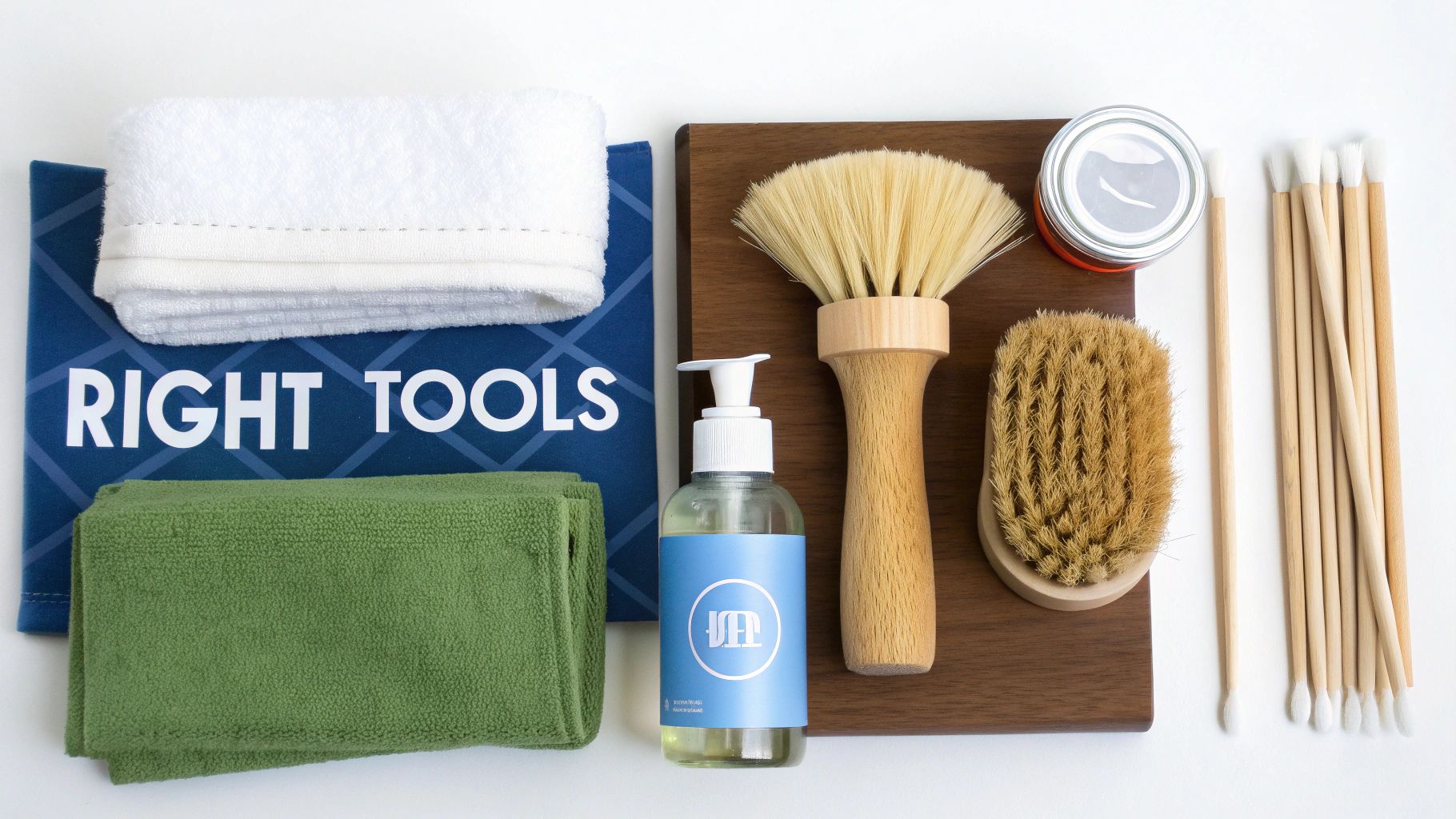
Distilled Water: You might wonder why tap water isn't good enough. It’s full of minerals and chlorine that can leave ugly spots or even cause corrosion over time. Distilled water is just pure H₂O, so it rinses clean every time.
Mild, Non-Ionic Detergent: You need a cleaner that's pH-neutral. Regular dish soaps often have harsh degreasers and fragrances that are too aggressive for bronze. A non-ionic detergent like Orvus WA Paste is what conservators use because it cleans effectively without leaving a chemical film.
Soft, Lint-Free Cloths: Old cotton t-shirts or microfiber cloths are perfect. They’re soft enough that they won't scratch the patina and absorbent enough to dry the surface well. Definitely skip the paper towels—they can be surprisingly abrasive.
Pro Tip: When you mix your cleaning solution, a little goes a long way. Use just a drop or two of detergent in a gallon of distilled water. The water should be slick, but not really sudsy. Too much soap means you'll have to rinse excessively, and less water exposure is always better.
Your Most Important Tool: The Brush
The brush does the real work, so choosing the right one is critical. Too stiff, and you'll scratch the patina. Too soft, and you won't dislodge the grime.
What do the pros use? A 2015 survey of outdoor sculpture specialists found that 51% preferred natural brushes for their softness, while 40% used nylon brushes for tougher jobs. It shows that even experts pick their tools based on the specific task. You can read more about their professional conservation practices in the full survey.
Natural Bristle Brushes: Brushes made from hog hair or Tampico fiber are my top choice for most jobs. They're stiff enough to get into crevices but gentle enough not to harm the surface. For a valuable or delicate piece, this is the only way to go.
Soft Nylon Brushes: For a durable outdoor statue or a stubborn spot like a bird dropping, a soft nylon brush (like a new, soft toothbrush) can work well. Just be sure to test it on a hidden spot first to see how the surface reacts.
What to Keep Far, Far Away
Knowing what not to use is just as important. The items below can cause permanent damage, tanking the value and beauty of your bronze.
To make it easy, here’s a quick-reference table that lays out what's safe and what will cause harm.
| Item Category | Safe and Recommended | Harmful and To Be Avoided |
|---|---|---|
| Water | Distilled Water | Tap Water (contains minerals) |
| Cleaners | pH-neutral, non-ionic detergents (e.g., Orvus Paste) | Commercial metal polishes, vinegar, lemon juice, ammonia, household cleaners, baking soda |
| Brushes | Natural bristle (hog, Tampico), soft nylon brushes | Wire brushes, steel wool, scouring pads, stiff plastic brushes |
| Cloths | Soft microfiber, clean cotton cloths | Paper towels, abrasive rags |
This table should serve as your go-to guide. Never be tempted to grab a "quick fix" from under the sink.
Abrasive Polishes: Commercial metal polishes for brass or silver are designed to strip tarnish and create a mirror shine. On a bronze statue, that means completely removing the patina you want to protect. It's the fastest way to ruin a piece.
Harsh Chemicals: Stay away from vinegar, lemon juice, ammonia, and baking soda. Their acidic or alkaline properties will chemically etch and damage the bronze surface.
Wire Brushes or Steel Wool: These are an absolute no. They will leave deep, ugly scratches in the metal and destroy the finish beyond repair.
Many of these principles apply to other metals as well. For more on this, our guide to cleaning antique brass also highlights the importance of gentle, preservation-focused methods. By putting together the right toolkit, you're all set to clean your bronze effectively while protecting its history and integrity.
Cleaning Methods for Indoor and Outdoor Statues
Now that you have your tools and a clear understanding of your statue's condition, it’s time to get to work. How you approach the cleaning process depends entirely on where the statue lives. An indoor piece just needs a light touch, while an outdoor sculpture has to stand up to the elements and requires a more methodical cleaning.
Let's break down the best approach for both.
Gentle Techniques for Indoor Bronze
Statues kept indoors have it easy. They aren't exposed to rain, pollution, or bird droppings, so your main goal is simply to manage dust and airborne grime. The mantra here is "less is more." Going overboard with aggressive cleaning or too much water is not only unnecessary but can actually damage a delicate patina.
Start with a simple dry dusting. Grab a soft, natural bristle brush and gently go over the entire surface, paying extra attention to the little nooks and crannies where dust tends to collect. If you have some really tight spots, a quick puff of compressed air can help, but keep the can at a distance to avoid hitting the surface with too much force.
If you find that dust has turned into stubborn grime, you can move on to a damp wipe-down.
- Mix Your Cleaner: Add just a tiny drop of non-ionic detergent to some distilled water. You're looking for a solution that feels slightly slick to the touch, not bubbly or sudsy.
- Dampen Your Cloth: Dip a soft, lint-free cloth into the solution, then wring it out until it’s almost completely dry. You want to lift dirt, not soak the statue.
- Wipe Carefully: Gently wipe the statue in small, manageable sections.
- Dry Immediately: Follow right behind with a clean, dry cloth to wipe away any moisture. This simple step is key to preventing water spots and protecting the finish.
For almost any indoor bronze, this gentle method is all you'll ever need. Remember, your goal is to preserve the statue's character, and that often means doing as little as possible.
A Professional Approach for Outdoor Statues
Outdoor sculptures are a different story. They face a constant battle with acid rain, pollution, and all sorts of organic gunk. To clean them safely, we'll borrow a multi-step process from professional conservators that cleans deeply without harming the metal.
First things first, pick a cool, overcast day for the job. If you try to clean bronze in direct sunlight, your cleaning solution will evaporate too quickly, leaving behind a residue that’s tough to get off and can stain the surface.
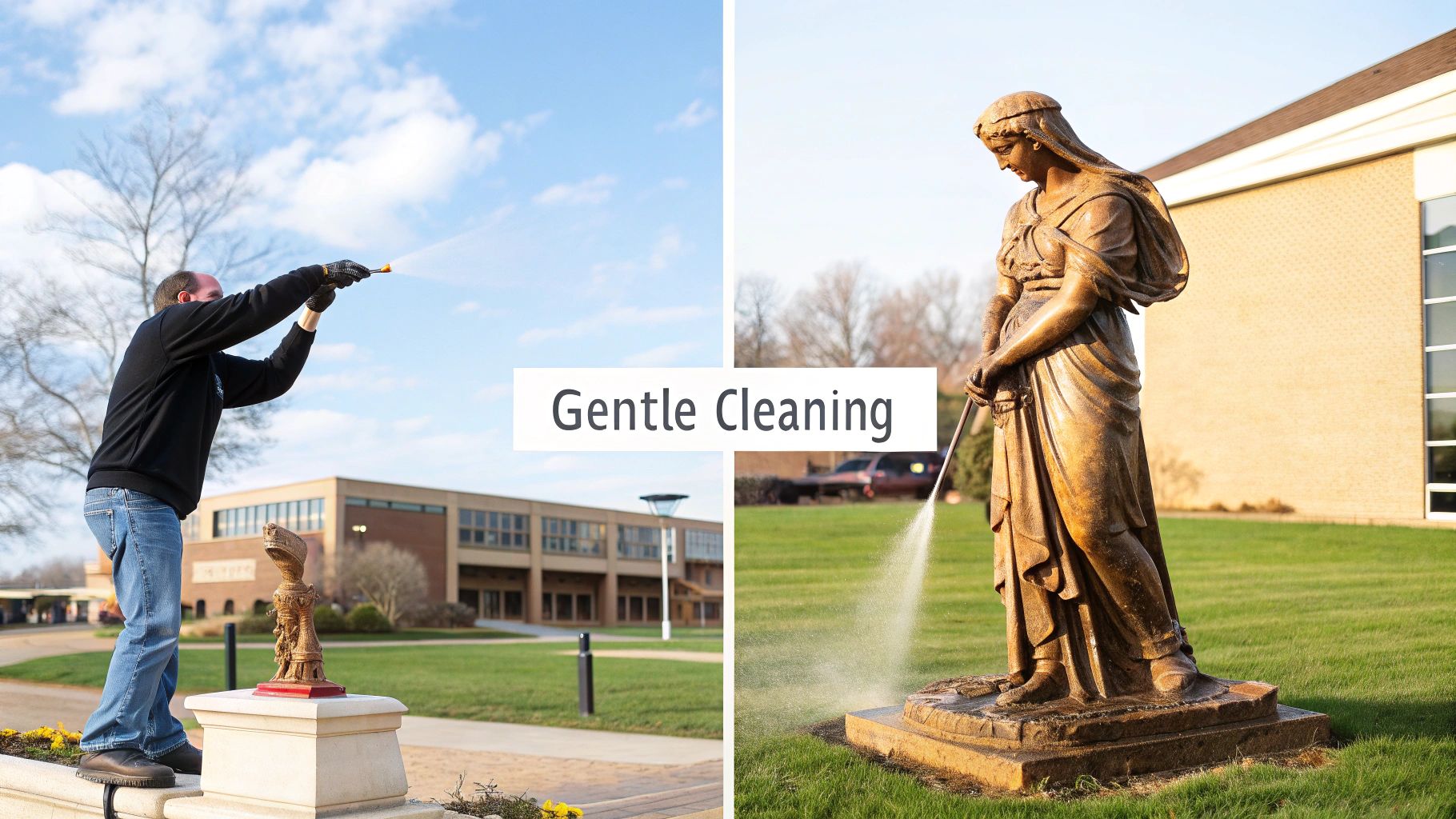
Start with a gentle but thorough rinse. Using a garden hose with a low-pressure nozzle, wet the entire statue from the top down. This initial rinse loosens up the surface grime and washes away any gritty particles that could scratch the bronze when you start scrubbing. Whatever you do, avoid using a high-pressure setting.
With the statue rinsed, it's time to break out the cleaning solution. Dip your natural bristle brush into your bucket of distilled water and non-ionic detergent and begin scrubbing.
- Always work from the top down in small sections you can manage easily.
- Use a gentle, circular motion to lift the dirt away from the surface.
- For really stubborn spots like bird droppings or lichen, let the soapy water sit for a few minutes to soften them up before you try to scrub them away.
- Keep a second bucket of clean distilled water handy to rinse your brush often. This prevents you from just spreading the dirt around.
This methodical scrubbing is the secret to getting into all the intricate details without causing any damage.
Expert Insight: Dealing with caked-on grime is a common headache for conservators. A fascinating professional bronze conservation project by the National Park Service on sculptures at Guilford Courthouse National Military Park shows how the pros handle it. The team started with hot water pressure washing at 300-500 pounds per square inch (psig) to remove decades of buildup. For more delicate corrosion, they switched to ground walnut shell blasting at a very gentle 25-30 psig to lift the flaky corrosion without touching the stable, underlying patina.
This example really drives home the importance of that final, thorough rinse. For us at home, it’s also a stark reminder to be meticulous about drying the statue completely with absorbent cloths to avoid water spots—an issue that spoils an estimated 60% of amateur cleaning jobs.
The Critical Final Rinse and Drying
After all that careful scrubbing, don't rush the final step. The rinse is arguably the most important part of the whole process. Any soap residue left behind will just act like a magnet for new dirt and can even contribute to corrosion down the line.
Give the statue a complete rinse with your low-pressure hose, again working from the top down. Let the water run over every single surface until you can’t see any more suds and the surface no longer feels slick.
Finally, dry the statue completely. Don't just let it air dry; that’s a classic mistake that can undo all your hard work by leaving streaks and spots. Instead, grab some soft, absorbent cloths—microfiber or cotton work great—and blot and wipe away every drop of moisture. Get into all those crevices, because trapped water is the number one cause of spotting. Taking the time to hand-dry ensures a clean, beautiful finish.
Applying Wax and Ensuring Long-Term Care
After all that careful cleaning, you're not quite done. The final, and arguably most important, step is applying a protective wax coating. This isn't about making the bronze shiny; it's about sealing in your hard work and giving the statue an invisible shield against the elements.
Think of it as sunscreen for your sculpture. A high-quality wax guards the bronze against the very things that cause damage: moisture, acid rain, pollutants, and even the natural oils from fingerprints. This simple act transforms a one-time cleaning into a long-term preservation strategy.
Selecting and Applying the Right Wax
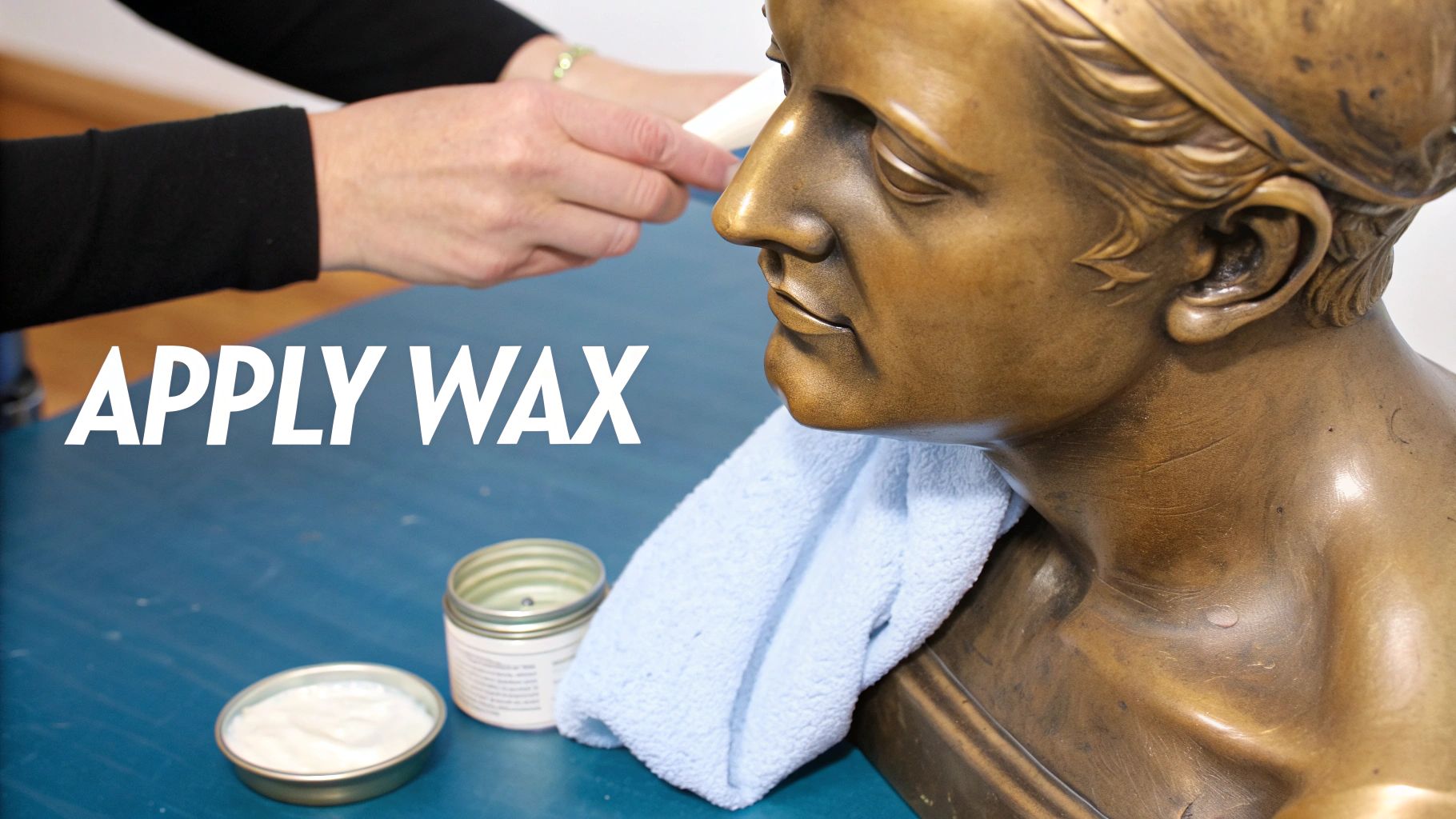
Not just any old wax will do the trick. You need something chemically stable that won't yellow or harm the patina over time. The gold standard among museum conservators is a microcrystalline wax, but a high-quality paste wax made with 100% carnauba is also a fantastic and easy-to-find option. Steer clear of any product that contains cleaners or abrasives.
Applying the wax is a gentle process that requires a bit of patience.
- Make Sure It's Completely Dry: Before you even open the wax, the bronze needs to be bone-dry. Any moisture trapped underneath will just cause more corrosion. I always recommend waiting at least 24 hours after cleaning.
- Apply a Thin, Even Layer: Using a clean, soft, lint-free cloth, work a very thin coat of wax across the surface. Use small, circular motions to get into every detail and crevice. Remember, less is more here.
- Let It Haze Over: Give the wax about 15-20 minutes to dry. You'll see it form a dull, hazy film on the surface.
- Buff to a Soft Sheen: Grab another clean, soft cloth and gently buff the haze away. You're not aiming for a mirror shine but a soft, subtle luster that brings out the deep beauty of the patina.
This protective layer is your statue’s first line of defense and makes future cleanings a whole lot easier.
Creating a Long-Term Maintenance Schedule
With your statue cleaned and protected, the focus shifts to simple, ongoing care. This won't take much time, but consistency is what prevents big problems down the road.
A good maintenance routine will keep your bronze in excellent shape for years, and it’s surprisingly straightforward. Just as bronze requires specific care, other valuable features around your property benefit from regular upkeep. For more on this, you can find some helpful general maintenance tips.
Here’s a practical schedule that works well for most people:
- Monthly Dusting (Indoor Statues): A quick, gentle dusting with a soft brush or cloth is typically all an indoor piece needs to stay looking its best.
- Annual Inspection (Outdoor Statues): At least once a year, give your outdoor statue a close look. Check for any new signs of corrosion or spots where the wax might be wearing thin.
- Annual Re-waxing (Outdoor Statues): For any piece living outside, reapplying a coat of wax once a year is the single best thing you can do to protect it.
A quick word from the pros: the goal is always preservation, not perfection. Conservation experts universally warn that over-polishing strips away the prized patina, which can represent centuries of natural aging and boost a sculpture's value by 20-50%. For home care, gentle dusting is best, as skin acids from bare hands can trigger corrosion in 70% of mishandled cases. Following these professional protocols is crucial for preserving your piece's integrity and worth.
By following this simple waxing and maintenance plan, you’re doing more than just cleaning a statue—you’re becoming its steward, ensuring its story and beauty will be around for generations to come.
When to Call a Professional Conservator
Sometimes, the smartest thing you can do for your bronze statue is nothing at all. Knowing your limits is crucial, and recognizing when a problem is beyond a simple cleaning is the mark of a truly responsible owner.
There are certain warning signs that tell you to put down the brush and pick up the phone. Trying to tackle serious issues without proper training can quickly turn a solvable problem into permanent, heartbreaking damage, tanking both the historical and financial value of your piece.
Red Flags That Demand an Expert
If you spot any of these problems during your initial assessment, stop immediately. These are not DIY situations; they require the skill of a professional conservator.
Active, Flaking Corrosion: This is the big one. If you see areas that are powdery, flaky, or a light, bright green, you're likely looking at what's called "bronze disease." This isn't just a surface issue; it’s an aggressive, destructive process that is actively eating away at the metal itself. A conservator is needed to chemically stabilize the bronze and halt the decay.
Structural Damage: Never try to fix cracks, breaks, or wobbly components yourself. Your home toolkit is no match for this kind of work. Attempting to glue or bend pieces back into shape will almost certainly cause more harm, making the eventual professional repair more complex and costly.
Extreme Value or Historical Significance: Is the piece a priceless family heirloom or a work by a notable artist? If so, the risk of a mistake is just too great. This is particularly important if you're trying to trace its history through details like bronze foundry marks. A professional assessment is vital to protect its provenance and value.
A conservator’s job goes far beyond just cleaning. Their primary role is to stabilize the object—using scientific methods to stop deterioration and preserve the original material for generations to come.
Finding the right person is key. Start by looking for a professional accredited by an organization like the American Institute for Conservation (AIC). Always check their credentials, ask for references, and make sure they specialize in metal conservation. Entrusting your sculpture to an expert is the best investment you can make in its future.
Got Questions? Let's Talk Bronze Statue Care
When you're responsible for a bronze statue, a few questions always pop up. It's completely normal. Getting good answers is the key to protecting your piece, so let's walk through some of the most common things people ask me.
Can I Just Use Vinegar or Baking Soda From My Kitchen?
I get this one a lot. The answer is a firm and absolute no. Please, step away from the pantry. Cleaners like vinegar, lemon juice, or even baking soda are the enemies of a good patina.
These are either too acidic or too abrasive, and they’ll do more than just clean. They can actually strip away the beautiful, protective patina that gives the statue its character and value. You could end up with ugly streaks, discoloration, or worse. Stick with distilled water and a tiny bit of pH-neutral soap—it’s all you need.
A Pro's Take: Remember, you're trying to lift off surface dirt, not the finish itself. A healthy patina is a layer of controlled oxidation that acts as a shield. Harsh household cleaners attack that shield, leaving the raw bronze vulnerable.
So, How Often Do I Need to Clean and Wax This Thing?
This really comes down to one thing: where does it live? The environment dictates the schedule.
An indoor statue has it easy. A light dusting with a soft cloth every few weeks is plenty. A full wash with distilled water might not be needed for years, if ever. Don't overdo it.
Outdoor statues are a different story. They're out in the elements, battling rain, sun, and pollution. Here's a good rule of thumb:
- Wax Annually: This is non-negotiable. Applying a fresh coat of microcrystalline or carnauba wax once a year is the best thing you can do to protect it.
- Wash as Needed: A proper cleaning with detergent and water is usually only needed every one to two years. Do it when you see a noticeable layer of grime that a simple rinse won't handle.
The biggest mistake I see is over-cleaning. Watch your statue; it will tell you when it needs attention.
Are you trying to identify a bronze statue or another family heirloom? The Curio app provides expert identification, historical context, and valuation with just a photo. Uncover the story behind your treasures at https://www.curio.app.