Ever wondered what "coin silverware" actually is? It's not just a fancy name. It refers to a type of early American silver made by literally melting down currency from various nations, long before "sterling" became the official standard. Think of it as a beautiful and resourceful product of necessity, often containing 80% to 90% pure silver.
Understanding Coin Silverware
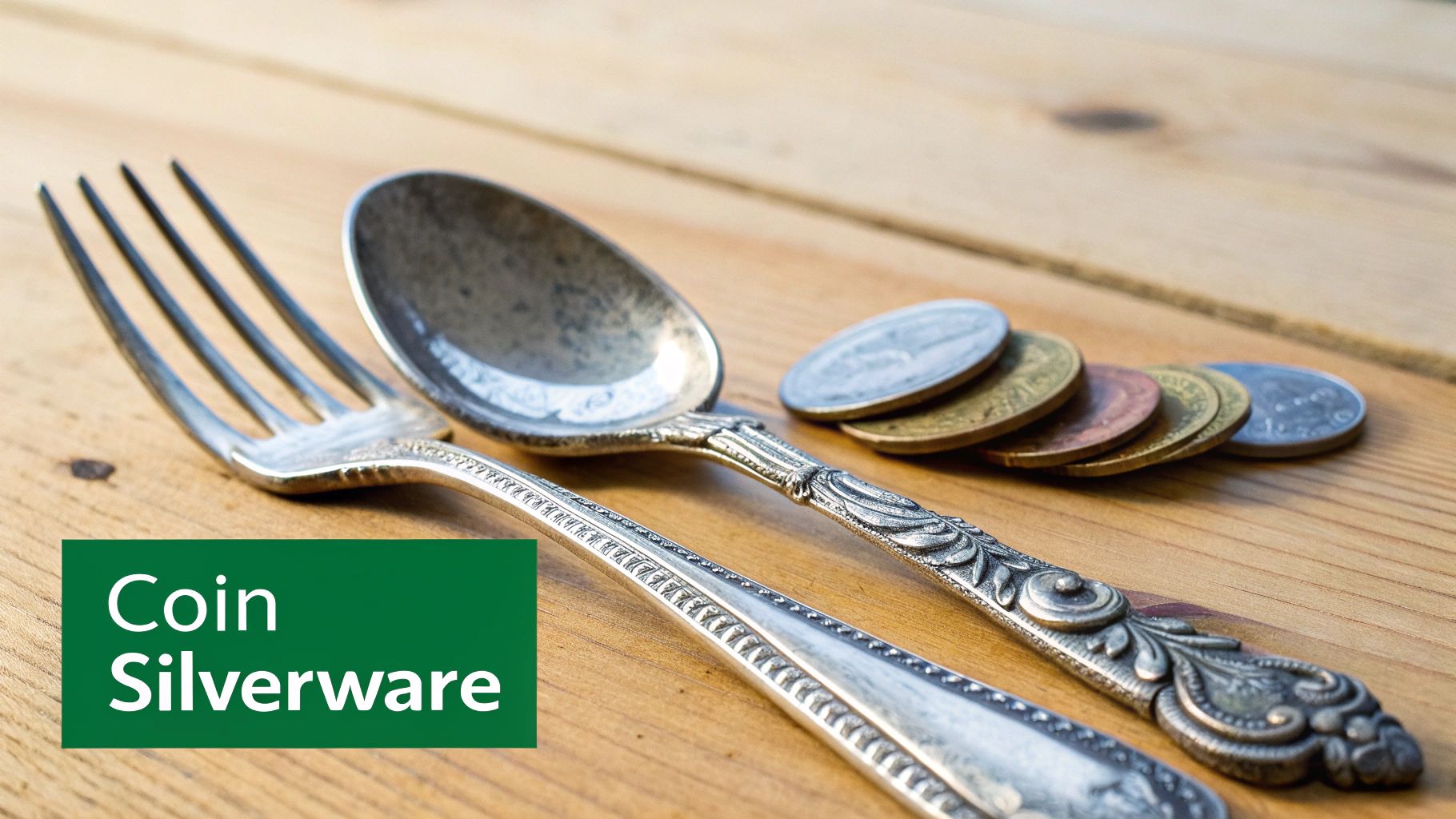
Let's step back in time. Imagine you're a silversmith in the late 1700s. There are no convenient silver suppliers or standardized metal bars to order from. Your primary source for raw material is whatever currency is circulating—Spanish reales, French francs, or even English shillings.
To create something as simple as a spoon or a bowl, you'd have to gather these coins, melt them down in your workshop, and forge the resulting metal. This practical, hands-on process is exactly where the term "coin silverware" comes from. It's a tangible piece of history, crafted in an era before precious metal regulations even existed.
How It Differs From Sterling Silver
The big difference between coin silver and sterling silver comes down to purity. Sterling silver is the standard we know today, legally required to be 92.5% pure silver. That's why you see it stamped with "925."
Coin silver, on the other hand, is a bit of a wild card. Its silver content was never fixed because it depended entirely on the jumble of coins the silversmith melted down that day. The rest of the alloy was usually copper, added for strength.
This quick table breaks down the main distinctions:
Coin Silver vs Sterling Silver at a Glance
| Characteristic | Coin Silver | Sterling Silver |
|---|---|---|
| Silver Purity | Typically 80-90%, but can vary | 92.5% (legally mandated) |
| Common Markings | Silversmith's mark, "COIN," "PURE COIN" | "STERLING," "925," Lion Passant (UK) |
| Era of Production | Primarily late 18th to mid-19th century | Late 19th century to present |
| Appearance | Often a warmer, softer, slightly grayer hue | Brighter, whiter, more brilliant shine |
As you can see, the differences are quite clear once you know what to look for.
The term "coin silver" isn't just a quaint name; it's a direct description of its origin story. Each piece reflects a time of resourcefulness and adaptation, making it a unique artifact of early American life.
This variance in purity doesn't just affect its value; it changes its physical characteristics. Coin silver often has a slightly warmer, softer glow compared to the bright, almost white shine of sterling. While we're diving into historical silverware, it's always useful to know what makes for the best tableware set today. Understanding these distinctions helps you appreciate the unique story each antique piece tells.
The Story Behind America's First Silverware
To really get what coin silverware is all about, you have to picture America as a young, scrappy nation just figuring things out. Back in the late 1700s and early 1800s, there weren't any giant silver mines like the Comstock Lode. Craftsmen couldn't just order standardized silver bars to work with. But that didn't stop people from wanting beautiful things for their homes.
This is where the early American silversmith comes in. These artisans were more than just skilled workers; they were often central figures in their towns, acting as everything from unofficial bankers to trusted metal experts. If a well-to-do family wanted a new set of spoons, they had to bring the silver to the smith themselves.
So, where did they get it? From their pockets. Families would gather up their foreign currency—Spanish reales, Mexican pesos, maybe some French francs or English shillings—and hand the pouch over to the silversmith. These coins, which fueled colonial trade, were the most consistent source of silver around. The silversmith would then melt this jumble of international money into a single ingot, ready to be hammered and shaped into a one-of-a-kind piece.
The Heyday of Coin Silver
This incredibly resourceful process gave rise to what we now call coin silverware. Its golden age ran from right after the Revolutionary War all the way through the 1860s. Every fork, spoon, or cup from this period is a tiny piece of history, telling a story of global trade and local skill. The silver in a spoon made in Philadelphia might have started its life in a Bolivian mine before being stamped into a coin in Spain and later used to buy goods in a colonial market.
But this era of ingenuity couldn't last forever. Things started to change dramatically after the Civil War for a few big reasons:
- We Found Our Own Silver: The game-changer was the discovery of massive silver deposits out West, especially the Comstock Lode in 1859. Suddenly, America had its own reliable supply.
- Standards Took Over: Big companies like Gorham and Tiffany & Co. started mass-producing silverware. They adopted the British sterling standard (92.5% purity) to signal quality and consistency to their customers.
- Tastes Changed: With newfound national wealth, people began to prefer the gleaming, uniform look of sterling silver. It felt more modern and sophisticated.
The move from coin to sterling silver wasn't just a technicality. It was a sign of the times. It mirrored America's own journey from a resourceful, make-do-with-what-you-have economy to a full-blown industrial power with its own resources and rules.
By the 1870s, melting down coins for silverware had become a thing of the past. The craft evolved, and silversmiths began working with standardized sterling sheets. The age of coin silver, America's very first silverware, came to a quiet close, leaving behind a treasure trove of beautiful artifacts rich with history.
How to Identify Coin Silverware Like a Pro
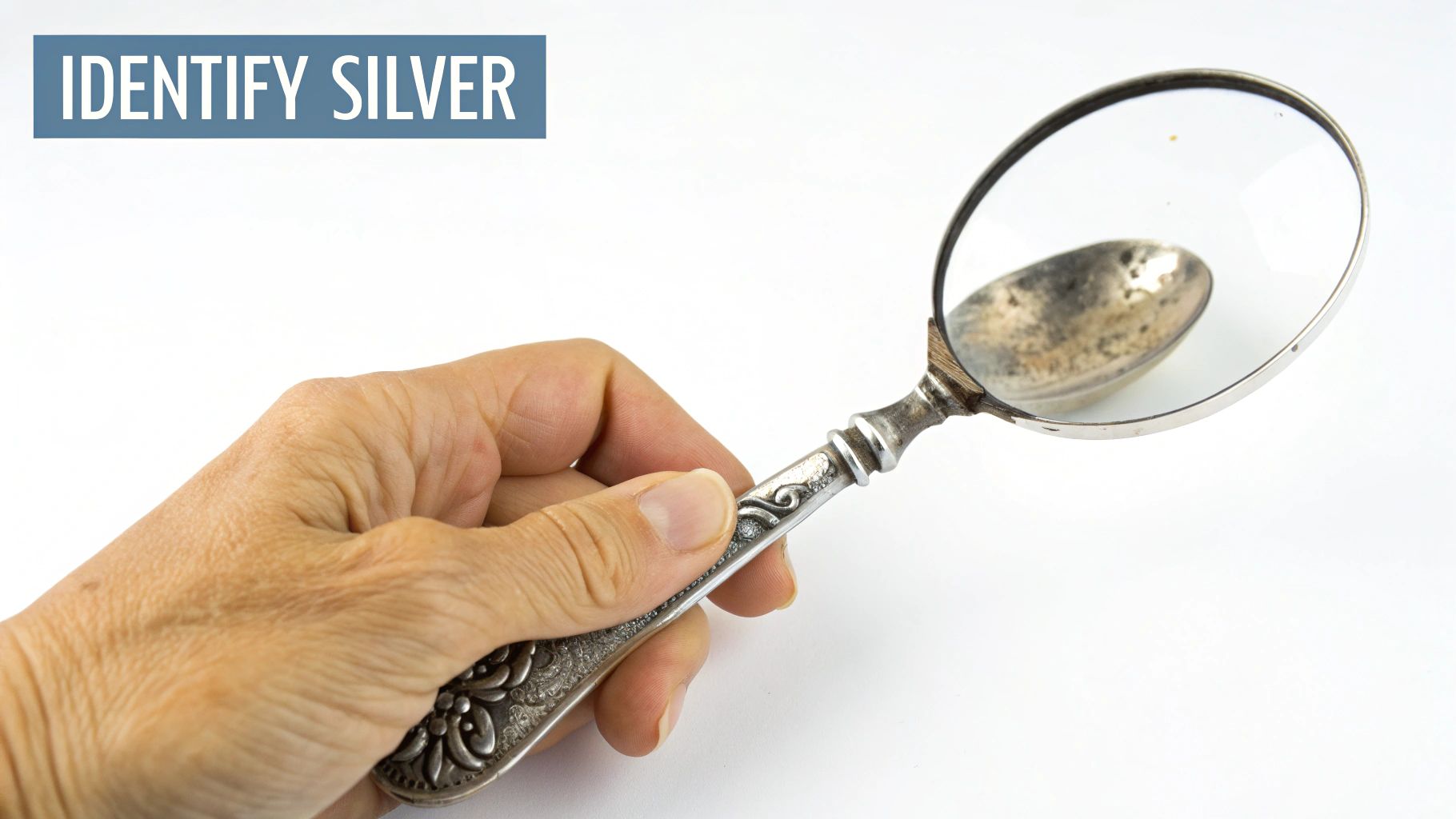
Identifying a genuine piece of coin silverware can feel like a treasure hunt, and the best clues are often hiding in plain sight. Unlike modern sterling that has standardized marks, coin silver tells its story through a much wider, less formal variety of stamps. Learning to read these signs is the first step in telling a historical artifact apart from a more common piece.
The most obvious pieces are those stamped right on the back. You'll want to look for small, often subtle marks on the back of the handle or along the stem.
- "COIN" or "PURE COIN": These are the real giveaways. Silversmiths started using these marks in the mid-1800s as a direct guarantee of the silver content.
- Maker and Town Marks: Many older pieces will have the last name of the silversmith, sometimes with the town or city where they had their shop (like "BAILEY & CO." stamped next to "PHILADELPHIA").
Unlocking the Clues in Marks
In an era before federal regulations, these markings were a craftsman’s promise of quality. A silversmith's name was their brand, a personal assurance to customers that they were getting what they paid for. This history is crucial for anyone using an app like Curio to identify family heirlooms or flea market finds, as knowing the difference between coin and sterling is key to a proper appraisal.
But here's a critical tip: many of the oldest pieces of American coin silver, especially from the 18th century, have no marks at all. Identifying them comes down to recognizing the style, the way they were made, and their known history. To really get into the weeds on this, you can learn more about what silver hallmarks mean and how they evolved over time.
Don’t get discouraged if you don't see a "COIN" stamp. A maker's mark from a known 18th or early 19th-century silversmith is just as good—if not better—at proving you've got the real deal.
Simple Physical Tests You Can Do
Beyond just looking for marks, there are a few simple, non-destructive tests you can do to confirm your suspicions. These are quick checks you can perform anywhere, from a bustling antique market to your own kitchen table.
The Magnet Test
This is the easiest test by far. Real silver, just like gold, isn't magnetic.
- Grab a decent magnet—even a strong refrigerator magnet will work.
- Bring it right up to the silverware.
- If the magnet latches on, the piece isn't solid silver. It's almost certainly silver plate over a magnetic metal like steel.
The Sound and Feel Test
Coin silver just has a different character. Because it's a bit less pure than sterling, it often feels a little softer and might show more small dings from its long life. It also has a distinct luster—a warmer, almost grayish glow that's different from the bright, white shine of sterling. And if you gently tap it, solid silver gives off a clear, high-pitched ring, while plated items usually just make a dull thud.
Understanding What Coin Silver Is Made Of
When you get right down to it, the biggest difference between coin silver and other types of silver is the recipe. Think of sterling silver as a strict, legally defined formula: it must contain 92.5% pure silver. No more, no less. Coin silver, on the other hand, is a bit more like an old family recipe that changed depending on what was in the pantry.
Early American silversmiths literally melted down the currency that was in circulation, so the purity of their finished silverware was all over the place. It simply depended on the coins they could get their hands on. This means the silver content usually hovers somewhere between 80% and 90%, with copper typically making up the rest to add strength. This lack of a single, rigid standard is what truly defines authentic coin silverware.
Purity and Physical Traits
This difference in silver content isn't just a number on a page—it completely changes how the silverware looks and feels. The lower percentage of pure silver gives each piece its own distinct personality.
- A Softer Glow: Coin silver often has a warmer, more subtle luster compared to the brilliant, almost white shine of modern sterling.
- A Bit More Delicate: With less silver in the mix, these items can be slightly softer, which is why you'll often see them with more dents and dings from a long, well-used life.
- A Unique Patina: The way it tarnishes is also different. Coin silver can develop a wonderfully deep, rich patina over time that many collectors find incredibly appealing.
This unique makeup is exactly why an old coin silver spoon feels different in your hand than a modern sterling one. If you're trying to get a handle on all the different types of silver out there, our guide to understanding silver EPNS marks can help clear things up.
The changing purity of coin silver is a direct window into its history. Each piece is a metallurgical snapshot of the exact coins that were being passed around the American colonies and early states when it was crafted.
The 90 Percent Silver Connection
Let’s make this more concrete. Just think about the silver coins that Americans used for decades. Before 1965, all U.S. dimes, quarters, and half-dollars were made of .900 fine silver—that is, they were exactly 90% silver.
This was the raw material for many later silversmiths, making it a perfect example of what "coin silver" purity often looks like in practice. The Coinage Act of 1965 changed everything by pulling silver from our pocket change, which is why those older coins became so historically significant. This context is essential for truly appreciating the piece of history you might be holding.
Simple Ways to Care for Your Coin Silver
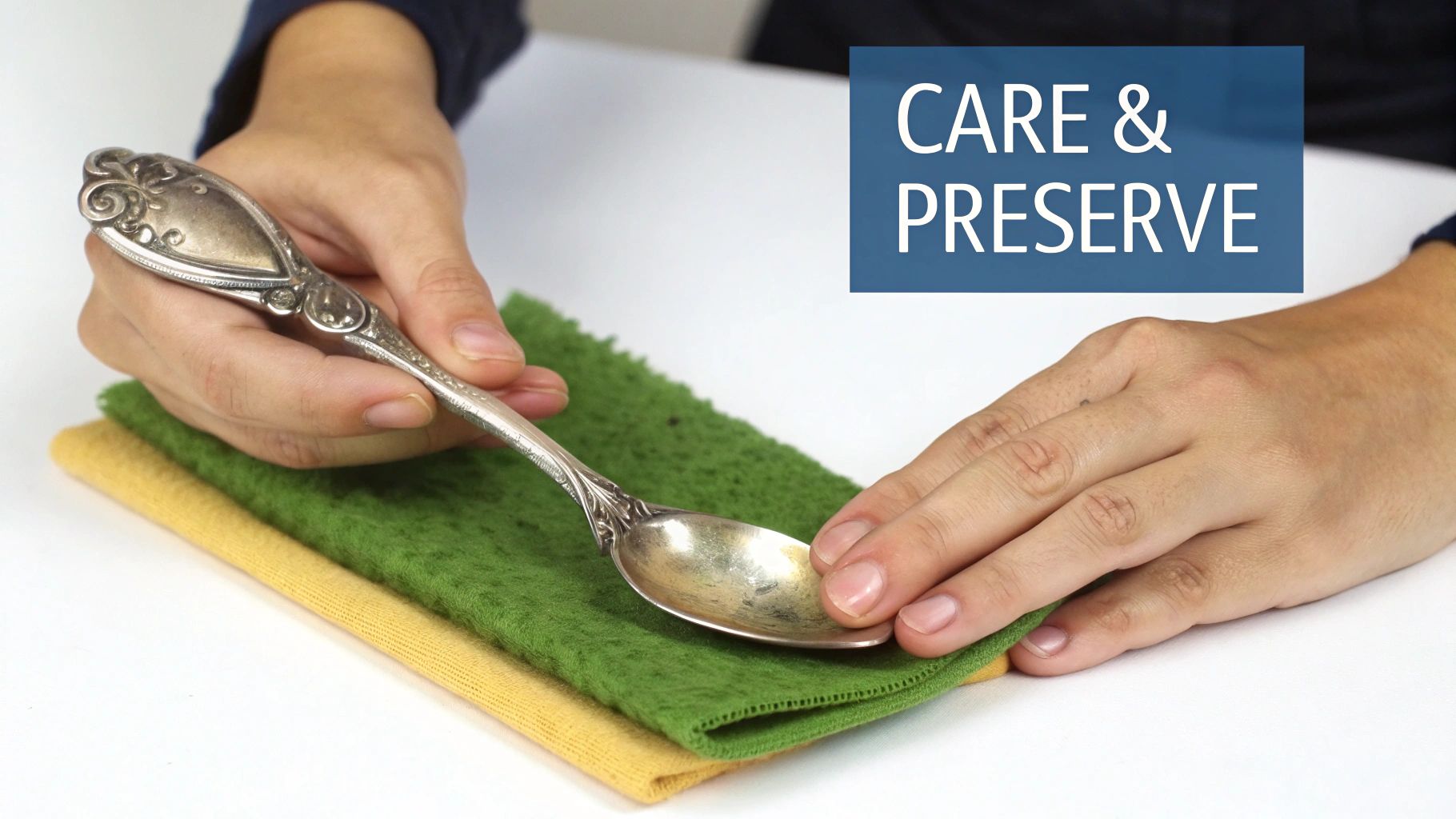
When you own coin silverware, you're holding a piece of American history. Taking care of it isn't complicated, but it does require a gentle touch. Aggressive chemicals and scratchy cloths can cause permanent damage, so the best approach is always the softest one.
Think of it like tending to a delicate old photograph—you want to gently wipe away the grime without harming the image underneath. The goal is to lift the dark tarnish that comes from sulfur in the air, not to scrub away the piece’s unique character.
Your best tools are probably already in your home. A soft, clean cotton cloth (an old t-shirt works wonders) is perfect for polishing and drying. For the cleaning itself, stick with a high-quality, non-abrasive silver polish cream.
Proper Cleaning Techniques
When you're ready to start polishing, put a small dab of cream on your cloth, not directly on the silver. Gently rub the piece in a straight, back-and-forth motion. Polishing in circles can leave tiny swirl marks, so it's best to follow the "grain" of the piece, especially on flat surfaces like spoon bowls. Take extra care around delicate engravings or detailed handles.
Once you’re done, rinse the silverware completely under warm water. Then, dry it immediately and thoroughly with another soft, clean cloth. This simple step is key to preventing water spots and getting rid of any lingering polish. For a more detailed guide, you can find more tips on how to clean antique silver the right way.
Here's a common mistake to avoid: over-polishing. That soft, dark glow that settles into the nooks and crannies of a pattern is called patina. It’s a hallmark of genuine age that actually adds to the value and beauty of an antique. Polishing too aggressively can strip this historical fingerprint away.
And one final rule: never, ever put coin silverware in the dishwasher. The intense heat and harsh detergents will cause discoloration and can permanently damage the metal.
Safe Storage for Long-Term Preservation
How you store your silver is just as important as how you clean it. The enemy of silver is air and humidity, which cause tarnish. Limiting its exposure is the name of the game.
- Wrap each piece individually. This prevents items from knocking against and scratching each other. Acid-free tissue paper or unbleached cotton flannel bags are excellent choices.
- Store in a protected place. A drawer lined with felt or a proper silverware chest is your best bet. Keep it away from materials like rubber, wool, or certain types of felt, as they can release gasses that speed up tarnishing.
- Use anti-tarnish strips. You can buy these small paper strips and tuck them into your storage drawer or chest. They work by absorbing airborne sulfur, keeping your silver bright for much longer between cleanings.
How to Determine the Value of Coin Silverware
So, you think you might have some old coin silverware. The first question that usually pops into people's minds is, "What's the silver worth?" While the "melt value"—the price you'd get if you melted it down—is a starting point, it's almost always the least interesting part of the story.
For genuine antique coin silver, thinking only about melt value is like judging a classic painting by the cost of the canvas and paint. The real value is tied up in its history, its maker, and its rarity. A spoon made by a famous silversmith like Paul Revere, for instance, isn't valuable because it's silver; it's valuable because it's Revere's silver.
Beyond the Melt Value
The melt value gives you a floor price, but these are the factors that truly determine what your coin silverware is worth. Keep in mind, this type of silverware was often made by literally melting down currency. If you're curious about what those original materials might be worth today, you can learn more about foreign coins that are worth money.
For the finished silverware, however, here’s what really matters:
- The Maker's Mark: Flip the piece over. Is there a name or a symbol stamped into it? A clear mark from a well-known or highly collectible silversmith can multiply the value instantly.
- Condition: Collectors want pieces in the best shape possible. Items with crisp details, clear marks, and no major repairs or dents will always fetch more. A word of caution: don't aggressively polish it! That soft gray patina that develops over time is often part of its appeal.
- Rarity and Form: A simple teaspoon is common. But what about a fish server, a marrow scoop, or a complete 12-piece set from the 1790s? Unusual forms and complete sets are much harder to come by and, as a result, are far more valuable.
- Craftsmanship and Provenance: How well was it made? Does it have a unique design? Even better, do you know its history? A piece with a documented story—perhaps it belonged to a notable family—carries an added layer of value.
The biggest mistake you can make is assuming your coin silver is only worth its weight. Its historical context, maker, and condition are the true drivers of its price, often making it worth many times its melt value.
Getting a Professional Appraisal
If you have pieces that you suspect are valuable, the next logical step is to talk to an expert. Find a certified appraiser who specializes in antique American silver. They have the experience to identify makers, accurately judge the condition, and give you a realistic market valuation.
Before you go, it's a good idea to gently wipe the pieces with a soft cloth to remove any dust or grime, but again, don't polish them. Gather any family stories or documentation you might have. Presenting your collection cleanly and with its history helps the appraiser see its full potential and gives you the confidence to make a smart decision.
Got Questions About Coin Silver? Let's Clear Things Up.
Even after you get the hang of what coin silver is, a few common questions always seem to surface. Let’s tackle some of the biggest points of confusion so you can feel totally confident when you’re looking at these fantastic pieces of history.
The number one mix-up? Confusing coin silver with silver plate. They couldn't be more different.
Think of coin silver as a solid chocolate bunny—it’s chocolate all the way through. It’s a solid alloy made of 80-90% pure silver. Silver plate, on the other hand, is like a chocolate-covered pretzel. It's just a whisper-thin layer of silver coated over a cheap base metal like copper or nickel. If you scratch a plated piece, you’ll see that less-valuable metal peeking out from underneath.
Markings and Making an Investment
Another thing people often ask is, "Is all coin silver marked?" The short answer is a definite no.
While you'll often see pieces from the mid-1800s stamped with "COIN" or "PURE COIN," a lot of the really old stuff from the 1700s might not have any purity marks at all. For these incredible early American treasures, figuring out what you have comes down to recognizing the silversmith's unique style, how the piece was made, and its known history (or provenance).
Don't dismiss a piece just because it's missing a "COIN" stamp. On the earliest American silver, the maker's reputation and the object's form are far better clues to its authenticity and value than a simple mark.
Finally, the big question: is coin silver a good investment? It absolutely can be, but it’s a different game than investing in silver bullion.
- For the Collector: If you love history, craftsmanship, and the thrill of finding something rare, it’s a wonderful investment. The value is wrapped up in the story of the piece and the skill of the person who made it.
- For the Metal Investor: If you're just looking to stack silver as a commodity, you're better off buying .999 fine silver bars or pre-1965 90% silver coins. The value of coin silverware is tied to the ever-changing antiques market, not just the daily spot price of silver.
Getting these details right helps you appreciate coin silver for what it truly is: a tangible piece of history where its story, not just its silver content, creates its real worth.
Ready to figure out the history and value of your own treasures? With the Curio app, you can get instant identification, context, and appraisals for your antiques right from your phone. Just snap a photo and let our experts do the rest. Download Curio today and turn your curious finds into known treasures.