At first glance, porcelain and ceramic might seem like two peas in a pod. But when you dig a little deeper, you'll find they're more like cousins than twins, each with a unique personality shaped by clay, heat, and history.
The real heart of the matter comes down to three things: the type of clay used, how hot it's fired, and how much water it soaks up afterward. Porcelain is made from a more refined, pure clay fired at incredibly high temperatures. This process makes it incredibly tough and virtually waterproof. Ceramic, on the other hand, is born from a coarser clay fired at a lower heat, leaving it a bit more porous and less dense.
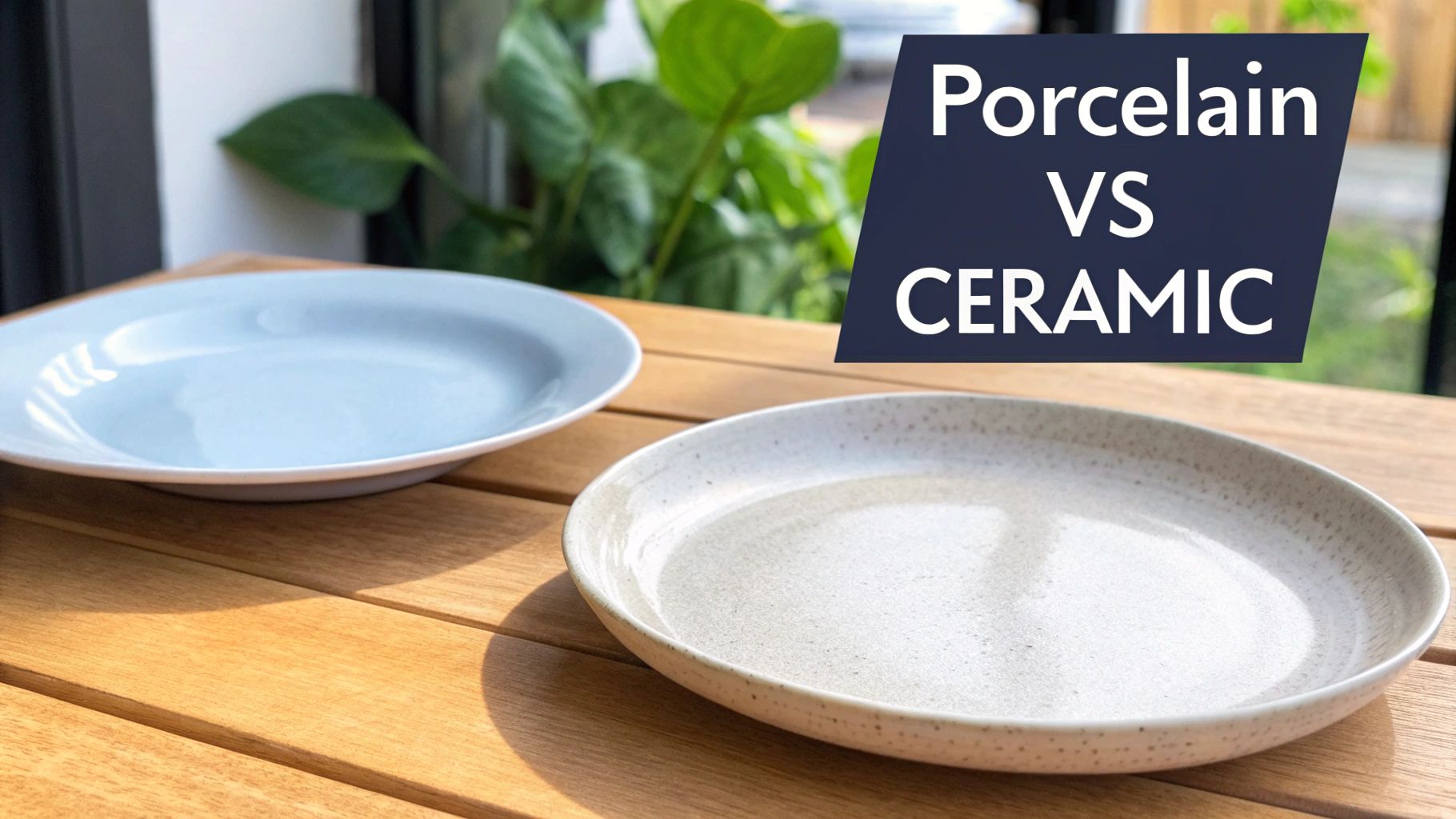
Unpacking the Core Differences
While they might look similar sitting on a shelf, the differences in how porcelain and ceramic are made have a huge impact on their strength, lifespan, and what they're best used for. This isn't just trivia for antique collectors; it's practical knowledge for anyone choosing anything from floor tiles to a new set of pans.
Knowing the difference in density, for example, helps explain why a porcelain tile can handle a busy kitchen floor while a ceramic one might be better for a decorative backsplash. It's these subtle but important details that make all the difference. If you're curious about how these materials stack up in the kitchen, you can find some great Ceramic Cookware Comparisons that break it down even further.
To make things simple, here’s a quick rundown of the main distinctions.
Key Differences at a Glance: Porcelain vs. Ceramic
This table gives you a snapshot of what truly separates these two materials. Think of it as a cheat sheet for everything from the clay's origin to its performance under pressure.
| Attribute | Porcelain | Ceramic |
|---|---|---|
| Clay Type | Fine, purified kaolin clay | Coarser, less refined clay |
| Firing Temperature | Very high (2,200-2,650°F) | Lower (1,800-2,400°F) |
| Water Absorption | Less than 0.5% | 4% or more |
| Density & Durability | Extremely dense and durable | Less dense, more porous |
| Common Uses | Dinnerware, flooring, outdoor tiles | Pottery, decorative tiles, sculpture |
As you can see, the differences are pretty stark once you lay them out.
If there's one single metric that defines the split between these two, it’s water absorption. This isn’t just an interesting fact; it’s the standard used by manufacturers worldwide. A material is typically classified as porcelain only if its water absorption rate is less than 0.5%. Ceramic, by contrast, has a much higher absorption rate, often 4% or more.
This single factor dictates everything from whether a tile is suitable for outdoor use to how it will stand up to stains. These same principles are also key to telling apart other fine materials, a topic we explore more in our guide on https://www.curio.app/blog/porcelain-vs-china.
How Clay and Heat Create a Lasting Difference
To really get to the bottom of what separates porcelain and ceramic, you have to go back to the very beginning—the dirt itself. The journey from a lump of clay to a finished piece is all about the raw ingredients and how they react to intense heat. Understanding how natural materials like ceramics are made is the first step.
Porcelain starts its life as a very specific, highly refined white clay called kaolin. This isn't just any clay; it's prized for its purity and fine grain. When mixed with feldspar and quartz, it creates a smooth, dense, and uniform body. Ceramic, on the other hand, usually comes from more common, coarser clays that are often reddish or brown and contain more natural impurities. This fundamental difference in the starting recipe dictates almost everything that follows.
These materials are in huge demand. To give you an idea of the scale, global ceramic tile production has surpassed 14.95 billion square meters. The production powerhouse is Asia, with China alone making up nearly 42.2 percent of the world's total output last year.

The Trial by Fire
Once a piece is shaped, it heads to the kiln. This is where the second, and arguably most critical, difference comes into play: the firing temperature. It’s in the furnace that porcelain earns its legendary toughness.
Porcelain is fired at incredibly high temperatures, typically between 2,200°F and 2,650°F (1,200°C to 1,450°C). This extreme heat doesn't just harden the clay; it causes the feldspar to melt into a glass-like substance, fusing all the particles together. This process, called vitrification, is what creates an incredibly dense and non-porous body.
Ceramics, being made from less refined clays, are fired at lower temperatures, usually in the range of 1,800°F to 2,400°F (1,000°C to 1,300°C). Because it never gets hot enough to fully vitrify, the finished piece is more porous and less dense than its high-fired cousin.
The Expert Takeaway: It's the combination of pure kaolin clay and scorching-hot firing that gives porcelain its signature glass-like structure. This vitrification is the science behind its incredible strength and why it absorbs almost no water.
What This Means for Strength and Durability
This fork in the manufacturing road has huge consequences for how the final product performs. The dense, vitrified body of porcelain makes it exceptionally durable, stain-resistant, and virtually waterproof. It can take a beating, handle extreme weather, and shrug off moisture without a problem.
Ceramic's slightly porous nature means it's a bit softer and more prone to chipping. While a good glaze offers a strong layer of protection, any crack or chip can expose the absorbent clay body underneath. This is why ceramic is often a better choice for less demanding applications, like decorative wall tiles or pottery that won't see constant, heavy use. Knowing this core difference is the secret to picking the right material for your needs.
Identifying Porcelain and Ceramic Without a Label
So, you're at a flea market or looking through a box of family heirlooms, and you come across a beautiful piece with no markings. How do you tell what it is? Luckily, you don't need a label. With a few simple sensory tricks, you can get a really good idea of whether you're holding porcelain or ceramic. It all comes down to how it looks, feels, and even the sound it makes.
One of the most telling differences between porcelain and ceramic is how they play with light. Because porcelain is fired at such high temperatures, its structure becomes highly vitrified and almost glass-like, giving it a special quality: translucency. This is probably the most dependable visual clue you've got.

The Light and Touch Test
To see this for yourself, hold the piece up to a bright light—a sunny window or your phone’s flashlight works perfectly. If it’s porcelain, you'll notice a soft, warm glow shining through the material, especially where it's thinnest. Ceramic, on the other hand, is more opaque and will block the light completely.
Next, get a feel for the texture. Find an unglazed spot, like the foot-rim on the bottom of a plate or vase. Porcelain feels incredibly smooth, fine, and dense. Run your fingers over it, and you’ll notice its refinement. Ceramic will often feel a bit coarser and more earthy, which makes sense given the less-refined clays used to make it.
The Sound Test: A Clear Indicator
Another old-school trick is the sound test, which works because of the difference in density between the two materials. Gently tap the rim of the dish with your fingernail.
- Porcelain: You’ll hear a clear, high-pitched ring, almost like a faint bell. That resonant, musical tone is a dead giveaway of its dense, vitrified body.
- Ceramic: This will produce a much duller, lower-pitched thud. The sound dies quickly because the material is more porous and absorbs the sound waves.
This simple tap is one of the quickest ways collectors assess pieces on the fly. It reveals the fundamental nature of the material without any special equipment.
The translucency test is your most reliable friend. While glazes and finishes can sometimes mask the feel of a piece, the way it interacts with light reveals the true nature of the clay body beneath. This is a core difference between porcelain and ceramic.
If you're interested in going deeper, especially with decorative pieces, our guide on how to identify a ceramic antique vase offers more specific pointers.
Sensory Identification Checklist: Porcelain vs. Ceramic
When you're out in the wild, it helps to have a quick mental checklist. Combining these simple tests will give you a much clearer picture of what you're holding.
| Identification Method | How to Test | Porcelain Result | Ceramic Result |
|---|---|---|---|
| Sight (Translucency) | Hold the item up to a strong light source. | A faint glow of light passes through thin areas. | The item is completely opaque; no light passes through. |
| Touch (Surface Feel) | Feel an unglazed area, like the bottom foot-rim. | Very smooth, fine-grained, and dense. | Slightly rougher, coarser, and more porous. |
| Sound (The Tap Test) | Gently tap the edge with your fingernail. | A clear, high-pitched, ringing sound. | A dull, low-pitched thud. |
| Weight | Hold the item and gauge its heft for its size. | Feels surprisingly dense and heavy for its thinness. | Feels lighter and less dense for its size. |
By using your eyes, hands, and ears, you're building a strong case for your identification. After a little practice, distinguishing between these two beautiful materials will become second nature.
Why Their Histories Influence Modern Value
To really understand why one piece might be worth more than another, you have to look at its story. This is especially true when you're talking about porcelain and ceramic. The history of porcelain is wrapped up in luxury, secrecy, and prestige. It first appeared in China during the Tang dynasty, and for centuries, its creation was a jealously guarded secret. It was "white gold," made exclusively for emperors and the absolute elite.
This legacy of imperial status and breathtaking artistry gives antique porcelain a high intrinsic value. Making it required rare materials and incredibly advanced kiln technology, so each piece was a clear symbol of immense wealth and power. This history directly inflates its appraisal value today. When you hold a piece of antique Chinese or Meissen porcelain, you're not just holding a beautiful object; you're holding a tangible piece of a luxurious past.
The Utilitarian Roots of Ceramic
Ceramic, on the other hand, has a much more down-to-earth and widespread history. It’s one of the foundational materials of human civilization, with cultures all over the world crafting pottery and tiles for thousands of years. Its purpose was almost always functional—vessels for storing food, bricks for building homes, and tiles for everyday life.
Since it was made from common clays and fired at lower temperatures, ceramic was something everyone could access. That doesn't mean it isn’t valuable, but its worth is usually tied to different things. A significant piece of Roman earthenware or a rare example of English delftware can be incredibly valuable, not because of its material purity, but because of its age, rarity, and connection to a specific culture.
An object's value is rarely about the material alone. It's a complex blend of its composition, the skill of its maker, its historical significance, and its unique story. A simple ceramic bowl used by an ancient civilization can sometimes be more valuable than a mass-produced porcelain plate from a later era.
Market Value in the Modern Era
This historical split still shapes the market today. The global ceramic and porcelain tableware market was valued at $7.4 billion last year and is projected to hit $11.3 billion by 2035. While both materials are part of this massive figure, they appeal to buyers for very different reasons that reflect their unique legacies.
Ultimately, provenance and markings play a huge role in settling an item’s worth. Figuring out a maker's mark or factory stamp can be the key to unlocking an object's true value. We dive deeper into this in our guide on markings on pottery. A known creator or a documented history can turn a simple piece into a prized collector's item, whether it’s humble ceramic or exquisite porcelain.
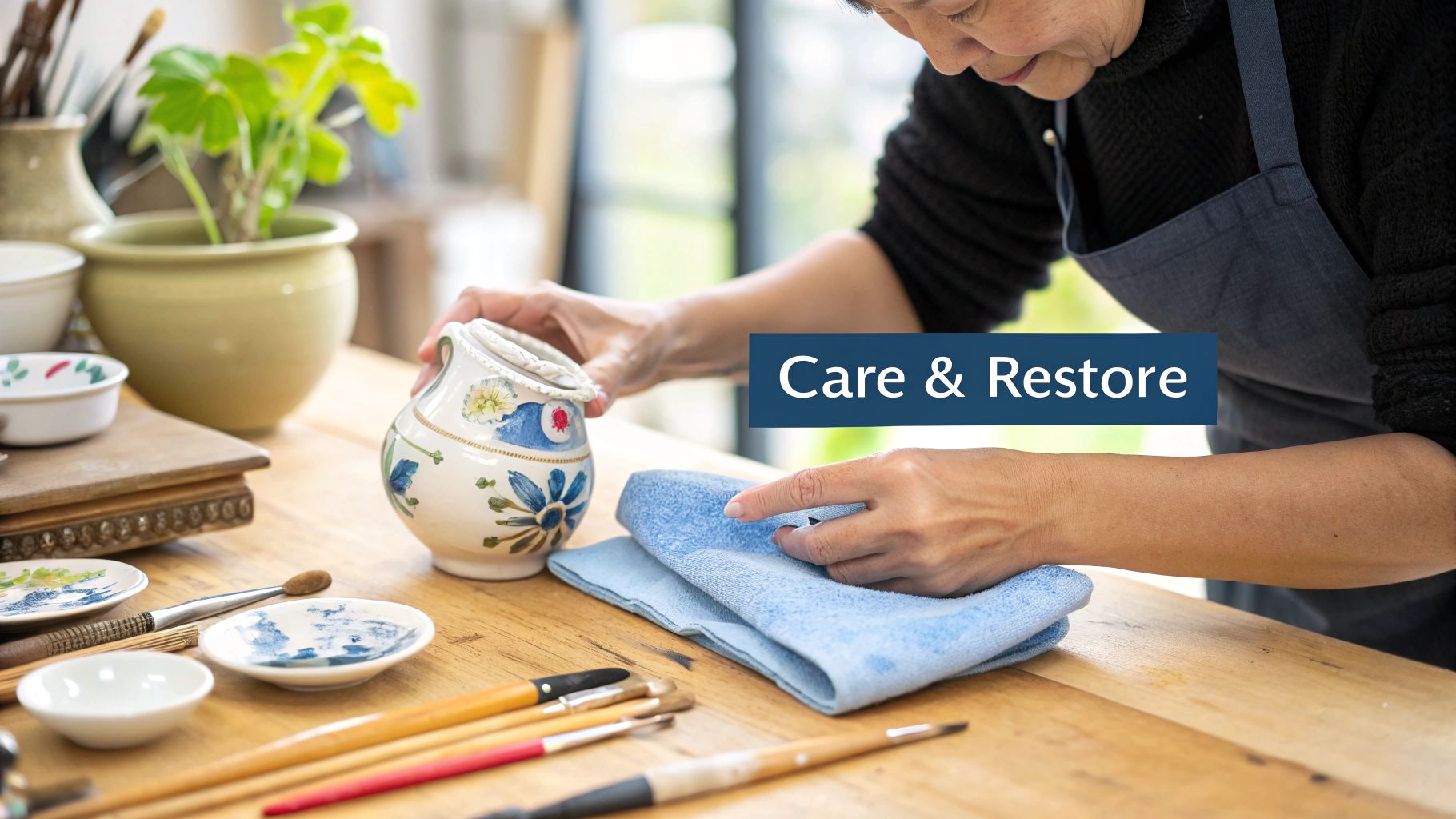
Practical Tips for Care and Restoration
Knowing the real difference between porcelain and ceramic isn't just trivia—it's the key to keeping your treasured pieces looking their best. Proper care isn't about scrubbing with harsh chemicals. It’s about understanding what each material needs. A light touch and the right technique will preserve their beauty for generations.
Caring for Non-Porous Porcelain
Porcelain is a tough material. Its dense, glass-like surface shrugs off most stains, making it surprisingly easy to clean. But don't let its hardness fool you; it's also brittle. A clumsy knock can easily lead to a chip or crack, so gentle handling is everything.
When it comes to routine cleaning, less is more:
- Stick to mild solutions: A soft cloth with warm water and a little mild dish soap is perfect for most jobs.
- Skip the abrasives: Never use scouring pads, gritty powders, or acidic cleaners like vinegar. Over time, they'll dull and scratch the glaze.
- Handle with caution: When washing fine porcelain, I always put a towel down in the sink first. It provides a simple cushion that can prevent a costly accident.
Managing Porous Ceramic Surfaces
With ceramics, the main thing to worry about is its porous nature. Any unglazed spots—especially the base—can soak up liquids and oils like a sponge. Even tiny cracks in the glaze can let moisture seep in, causing stains from the inside out. Keeping your ceramic pieces clean and, more importantly, dry is the goal.
Follow these guidelines to keep your ceramics safe:
- Clean gently, dry quickly: A soft sponge with mild soap and water works well. The golden rule is to never let it soak. Pat it completely dry with a soft towel immediately after washing.
- Prevent stains before they happen: Be extra careful with things like red wine or coffee. If the glaze has any crazing, those dark liquids can leave a permanent mark.
- Avoid temperature shock: A sudden shift from hot to cold can cause the glaze to develop fine cracks, a web-like pattern known as "crazing." Those little fissures are gateways for moisture.
A Critical Reminder: Never, ever put antique or decorative pottery in a dishwasher or microwave. The extreme heat, aggressive detergents, and powerful water jets will cause irreversible damage. Think faded patterns, weakened structures, and even catastrophic breaks.
If you're dealing with a small chip or a clean break on a decorative piece, a high-quality epoxy made for ceramics can work for a home repair. But for anything valuable, antique, or badly damaged, it’s time to call a professional. A trained conservator has the expertise and archival-grade materials to make a repair that’s not only invisible but also preserves the item's integrity and value.
Common Questions, Answered
Even after getting the basics down, you probably still have a few questions rattling around. Let's tackle some of the most common ones that pop up when people are trying to figure out the real-world differences between porcelain and ceramic.
So, Is Porcelain Always Better Than Ceramic?
Not at all. Thinking one is simply "better" than the other is a common mistake. It’s all about a classic case of the right tool for the right job.
If you’re tiling a high-traffic kitchen, a bathroom floor that’s always getting wet, or an outdoor patio, porcelain is absolutely the champion. Its toughness and near-zero water absorption are exactly what you need for those demanding spots. It’s made to take a beating.
But for a decorative backsplash, a delicate piece of pottery, or any project where budget is a major factor, ceramic is often the smarter play. It's more affordable, easier to work with, and a breeze to cut, which is a huge plus for DIY projects. The trick is to match the material's built-in strengths to what you actually need it to do.
Can You Actually Tell Them Apart After They're Installed?
It can be tough, but yes, there are a few tell-tale signs if you know where to look. The best way is to find an unglazed edge—maybe on a leftover tile or along a cut that's hidden from view.
Porcelain almost always has what’s called through-body color, meaning the color is consistent all the way through the material. If it chips, the damage is hard to spot because the inside is the same color as the surface. Ceramic, on the other hand, usually has a different-colored clay body under the glaze. A chip on a ceramic tile will scream for attention because it exposes that contrasting color underneath.
Pro Tip: When in doubt, find a chip. A consistent color running through the entire body is the dead giveaway for porcelain.
Why Does Porcelain Cost So Much More?
The higher price of porcelain really boils down to two things: better ingredients and a much tougher manufacturing process. It starts with highly refined and purified clays, especially kaolin, which is a far cry from the more common clays used to make most ceramics.
Then there's the firing. To achieve vitrification—that state of being super dense, non-porous, and almost glass-like—porcelain has to be baked at extreme temperatures for a long time. That whole energy-intensive process, plus the premium raw materials, adds up. You’re essentially paying for a denser, stronger, and more resilient final product.
Where Does Bone China Fit In? Is It Porcelain or Ceramic?
Bone china is a very special, high-end type of porcelain. It's famous for its stunning white color, incredible translucency (hold it up to a light and you'll see!), and surprising strength. The secret ingredient is right in the name: bone ash, which is mixed in with the usual porcelain components like feldspar and kaolin.
That addition of bone ash gives it fantastic chip resistance, allowing it to be crafted into incredibly thin and delicate pieces without being fragile. So, while it definitely lives under the large porcelain umbrella because it's vitrified and non-porous, its unique recipe and luxurious feel put it in a class of its own. It's often considered the gold standard for fine dinnerware.
Ever look at a piece you own and wonder about its story or worth? With Curio, you can turn that curiosity into real answers. Just snap a photo, and our app can help identify the origin, history, and estimated value of your antiques and collectibles. Download Curio today and start uncovering the treasures you already own.