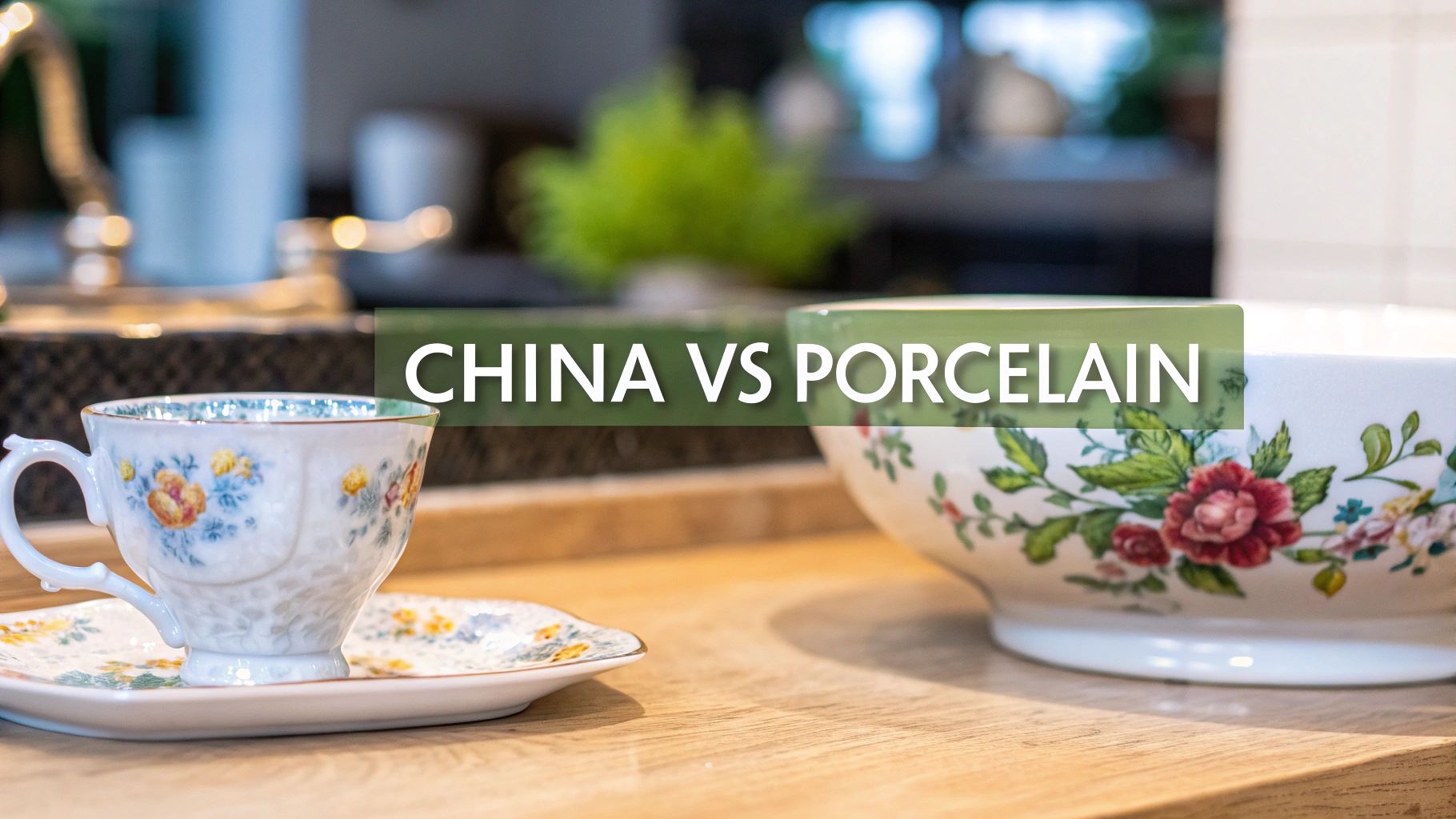
When you first get into ceramics, the terms vitreous china and porcelain can feel like they're used interchangeably. But for a collector, the difference is night and day.
Here's the simplest way to think about it: porcelain is a specific type of high-fired ceramic, prized for its delicate strength and beauty. Vitreous china is a ceramic body—which is often made of porcelain itself—that has been coated with a glassy enamel glaze and fired a second time. This extra step makes vitreous china incredibly durable and completely non-porous, perfect for items that need to withstand a lot of wear and tear.
Decoding Vitreous China Versus Porcelain
At their heart, both materials start from the same place: clay. But their paths diverge in the kiln, resulting in products built for entirely different jobs. Porcelain is all about aesthetic refinement, which is why we see it in fine dinnerware, intricate figurines, and art pieces. Vitreous china, on the other hand, is engineered for pure resilience, making it the go-to material for nearly every bathroom sink and toilet out there.
For anyone trying to identify or appraise a piece, understanding this fundamental split between beauty and brawn is crucial. They might look similar at a glance, but their composition, finish, and original purpose tell the real story.
The Historical Divide
The history of porcelain is a tale of ancient artistry and a major leap in technology. It traces back to China during the Tang Dynasty, around 600 BC. Chinese artisans perfected what we now call "hard-paste" porcelain by blending pure white kaolin clay with a feldspathic rock called petuntse. Firing this mixture at scorching temperatures of around 1,300°C (2,372°F) is what gives porcelain its famous strength and ethereal translucence. To dig deeper, you can explore more about this incredible history and the evolution of ceramics.
Vitreous china is a much younger material, really a product of the 19th century's obsession with sanitation and industrial progress. Its invention was driven by a purely practical demand for hygienic, durable, and easy-to-clean surfaces. This history has a direct impact on what you'll find today; an antique porcelain piece could be many centuries old, whereas vintage vitreous china usually dates back no further than the late 1800s.
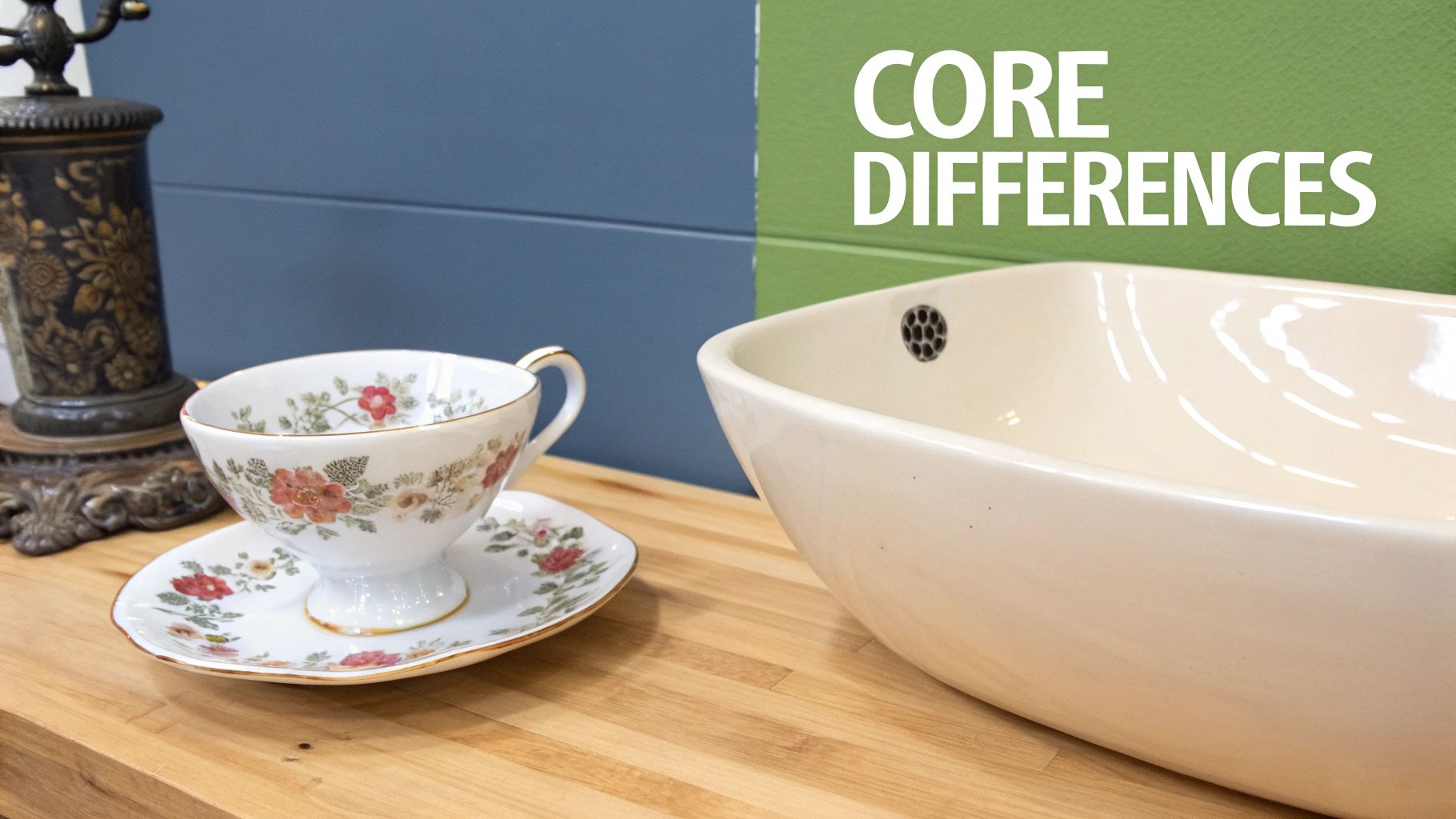
Key Takeaway: The easiest way to picture it is to think of vitreous china as porcelain that’s been given a suit of armor. That glassy enamel glaze isn't just for show; it’s a protective layer fused directly to the ceramic, creating a single, incredibly tough unit.
At a Glance Key Distinctions Between Vitreous China and Porcelain
To make things even clearer, let's break down the core differences head-to-head. This table offers a side-by-side comparison of vitreous china and porcelain, focusing on the defining traits that collectors need to know, from material composition to practical durability.
| Characteristic | Vitreous China | Porcelain |
|---|---|---|
| Primary Composition | Ceramic base (often porcelain) with an enamel glaze | High-fired kaolin clay and petuntse |
| Surface Finish | High-gloss, thick, and completely non-porous | Smooth, fine-grained, can be glazed or unglazed |
| Key Property | Extreme durability and stain resistance | Delicate strength and potential translucency |
| Primary Use Cases | Bathroom sinks, toilets, heavy-duty fixtures | Tableware, decorative objects, fine art |
| Typical Sound | A duller thud when tapped | A clear, high-pitched ring when tapped |
| Porosity | Virtually zero (less than 0.5% absorption) | Low, but higher than vitreous china if unglazed |
In the end, when you're looking at a historical piece, the distinction between vitreous china and porcelain really boils down to function. One was designed to endure, the other to enchant. Recognizing these core differences is essential for any collector looking to accurately identify, value, and truly appreciate their ceramic finds.
A Tale of Two Ceramics: Art vs. Industry
To really get a feel for the difference between vitreous china and porcelain, you have to look at where they came from. Every ceramic piece is a product of its time, shaped by the technology, culture, and trade routes that brought it into existence. Their very different backstories are the reason one became a symbol of fine art while the other became the workhorse of modern plumbing.
Porcelain's story starts in ancient China, where its recipe was a fiercely guarded secret for centuries. Way back in the Tang Dynasty (618-907 AD), Chinese artisans perfected a mix of super-fine white kaolin clay and a feldspar-rich rock called petuntse. They fired this concoction at incredibly high temperatures, creating a material that was dazzlingly white, exceptionally strong, and sometimes even translucent.
Porcelain's Journey West
For hundreds of years, porcelain was China’s most coveted export. It traveled the Silk Road, making its way to the Middle East and, eventually, to the royal courts of Europe. It was so exotic and expensive that it earned the nickname "white gold." European aristocrats went wild for its delicate beauty, which was a world away from the clunky, porous earthenware they were used to.
This created a continent-wide race to figure out how the Chinese did it. Potters spent generations trying to crack the code, and failing. The breakthrough finally came in the early 18th century in Meissen, Germany, where an alchemist named Johann Friedrich Böttger figured it out. This discovery kicked off the European porcelain boom, leading to legendary workshops like Meissen, Sèvres, and Limoges that churned out exquisite tableware and decor for the wealthy.
Porcelain’s history is steeped in artistry and ambition. It was made for emperors and sought after by kings, cementing its legacy as a material of aesthetic perfection and high status.
The Gritty Rise of Vitreous China
Vitreous china has a completely different, much less glamorous origin story. It wasn't dreamed up in a royal workshop; it was born out of necessity during the Industrial Revolution in the 19th century. As cities exploded in size, they faced a massive public health crisis. Proper sanitation was desperately needed to fight disease, and that meant we needed better materials.
Early toilets and sinks were often made from porous pottery or metal—materials that were a nightmare to keep clean and were breeding grounds for germs. The answer was vitreous china. Innovators, most notably Thomas William Twyford in England, developed a process to fuse a thick, glassy glaze onto a tough ceramic body. When fired, the glaze and body became one single, non-porous unit.
This new material was a public health game-changer.
- Totally Non-Porous: Its slick, glassy surface meant water and waste couldn't seep in, making it incredibly hygienic.
- Built to Last: It was tough enough to handle constant use and the harsh cleaning products used in homes and public restrooms.
- Easy to Mass-Produce: Industrial methods made it possible to manufacture toilets and sinks affordably and on a massive scale.
This history is key for anyone interested in antiques. If you come across an old ceramic sink or toilet, its material tells you a lot. A piece made of vitreous china almost certainly dates to the post-industrial era, usually the late 19th century or later. Knowing that vitreous china fixtures only became widespread in the early 20th century helps you accurately date pieces and spot a modern reproduction. The contrast is clear: porcelain was art, while vitreous china was engineering. That's the heart of the vitreous china versus porcelain debate.
The Science of Ceramic Composition
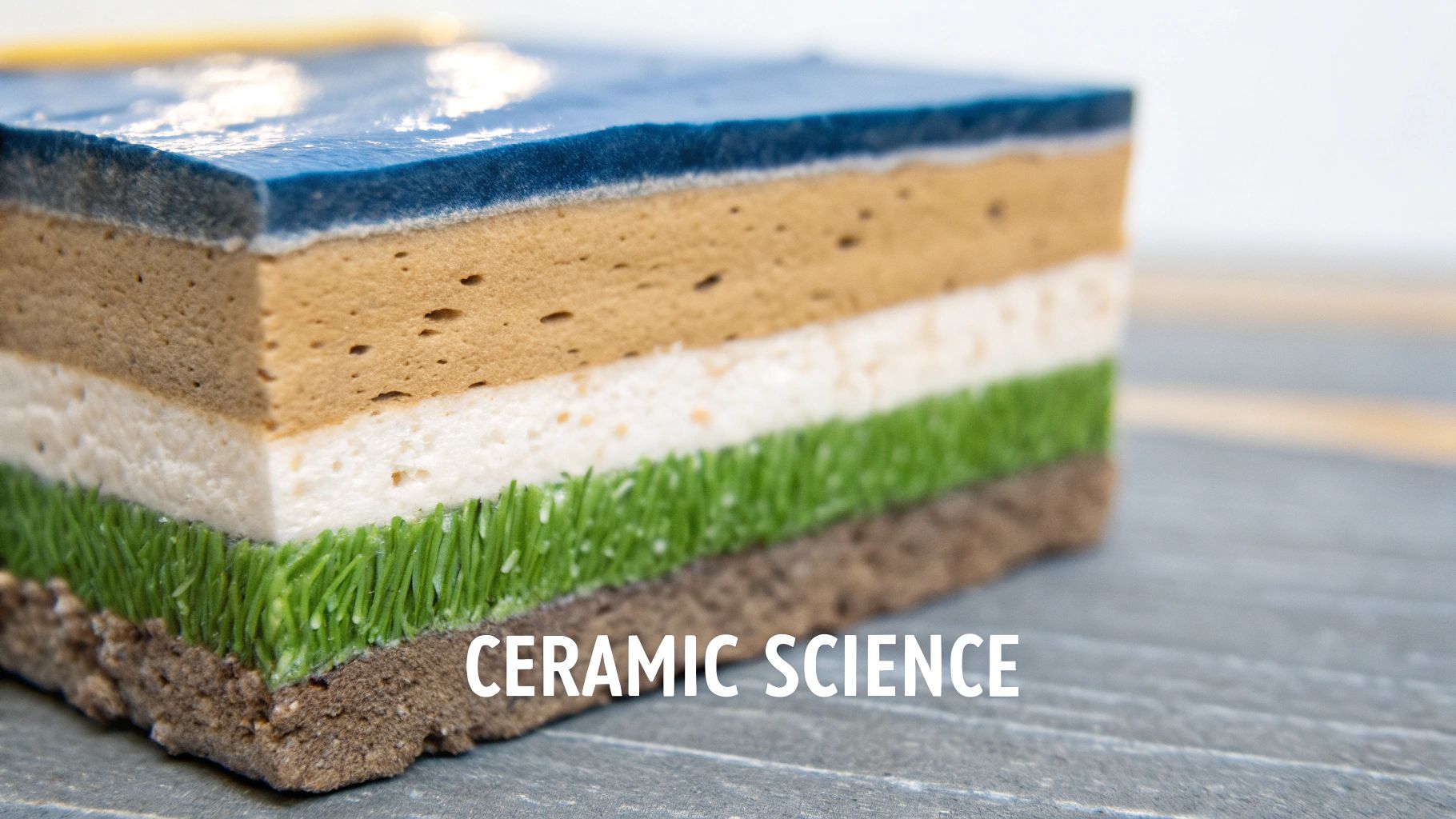
The distinct feel and function of porcelain and vitreous china come directly from what they’re made of and how they’re fired. While they might look similar at a glance, the science behind their creation puts them on completely different paths—one toward artistic elegance, the other toward rugged, everyday use. Understanding these differences is the key to identifying and valuing any ceramic piece you come across.
What Makes Porcelain So Special?
True porcelain is all about precision. It starts with a highly refined recipe of specific ingredients, mainly pure white kaolin clay mixed with a feldspathic stone called petuntse (or china stone). This exact formula is what gives porcelain its famous qualities.
The real transformation happens in the kiln. This mixture gets fired at incredibly high temperatures, typically between 1,200°C and 1,400°C (2,200°F and 2,600°F). At that intense heat, the petuntse melts and fuses with the kaolin, creating an exceptionally dense, non-porous, and strong ceramic.
This process gives porcelain its signature traits:
- Translucency: Hold a thin piece of high-quality porcelain up to a light, and you'll often see a beautiful, subtle glow. You just don't get that with most other ceramics.
- Hardness: Don't let its delicate look fool you. Porcelain is remarkably hard and scratch-resistant because its components have completely fused into a glass-like state.
- Low Porosity: Its dense structure means it absorbs almost no water, even without a glaze. This makes it highly resistant to staining over time.
To see how these qualities stack up against other common types, our guide on the difference between porcelain and ceramic is a great read. It really puts into perspective why porcelain is in a league of its own.
How Vitreous China Is Engineered for Strength
Vitreous china, on the other hand, is less about a single material and more about a specialized two-part process. It begins with a standard ceramic body—often porcelain or a similar tough clay mix. The key step is coating this body with a liquid enamel glaze. This is where the fundamental difference lies.
The piece is then fired at a high temperature, which permanently fuses the glaze to the ceramic body, making them one solid unit. The glaze melts, flows over the surface, and fills every microscopic pore, creating a glassy, impenetrable shield.
Manufacturing Insight: "Vitreous china" isn't a type of clay; it's the name of the finished product. The term "vitreous" literally means "glass-like," and it refers to that incredibly tough, non-porous surface created by the fused glaze.
This industrial process was designed with one main goal in mind: durability. The final product is incredibly tough, stain-resistant, and easy to clean, which is exactly why it became the go-to material for sinks and toilets. It is typically manufactured from a mixture of clay, feldspar, and quartz that is molded, glazed, and fired at extremely high temperatures—often 1,200–1,300°C for single-fired items. This results in a post-vitrification density ranging from 1.83 to 2.48 grams per cubic centimeter, making it exceptionally strong.
For a collector or appraiser, these details are everything. The refined, translucent body of a porcelain piece tells a story of artistry and luxury. In contrast, the thick, opaque, and glossy finish of vitreous china points to a product of the industrial age, built for sanitation and longevity. Recognizing these scientific fingerprints is the first step to making an accurate identification.
A Practical Guide to Identification
Telling the difference between vitreous china and porcelain in a bustling antique mall or at a weekend estate sale is a skill that really separates the casual browser from the serious collector. It comes down to training your senses—sight, touch, and even hearing—to pick up on the subtle but distinct clues each material offers. With a little practice, you'll be able to make confident calls right on the spot.
This guide is all about the practical, hands-on techniques you need. We're moving past the textbook definitions and into the real-world methods for telling these two common, yet often confused, ceramics apart.
Visual and Tactile Clues
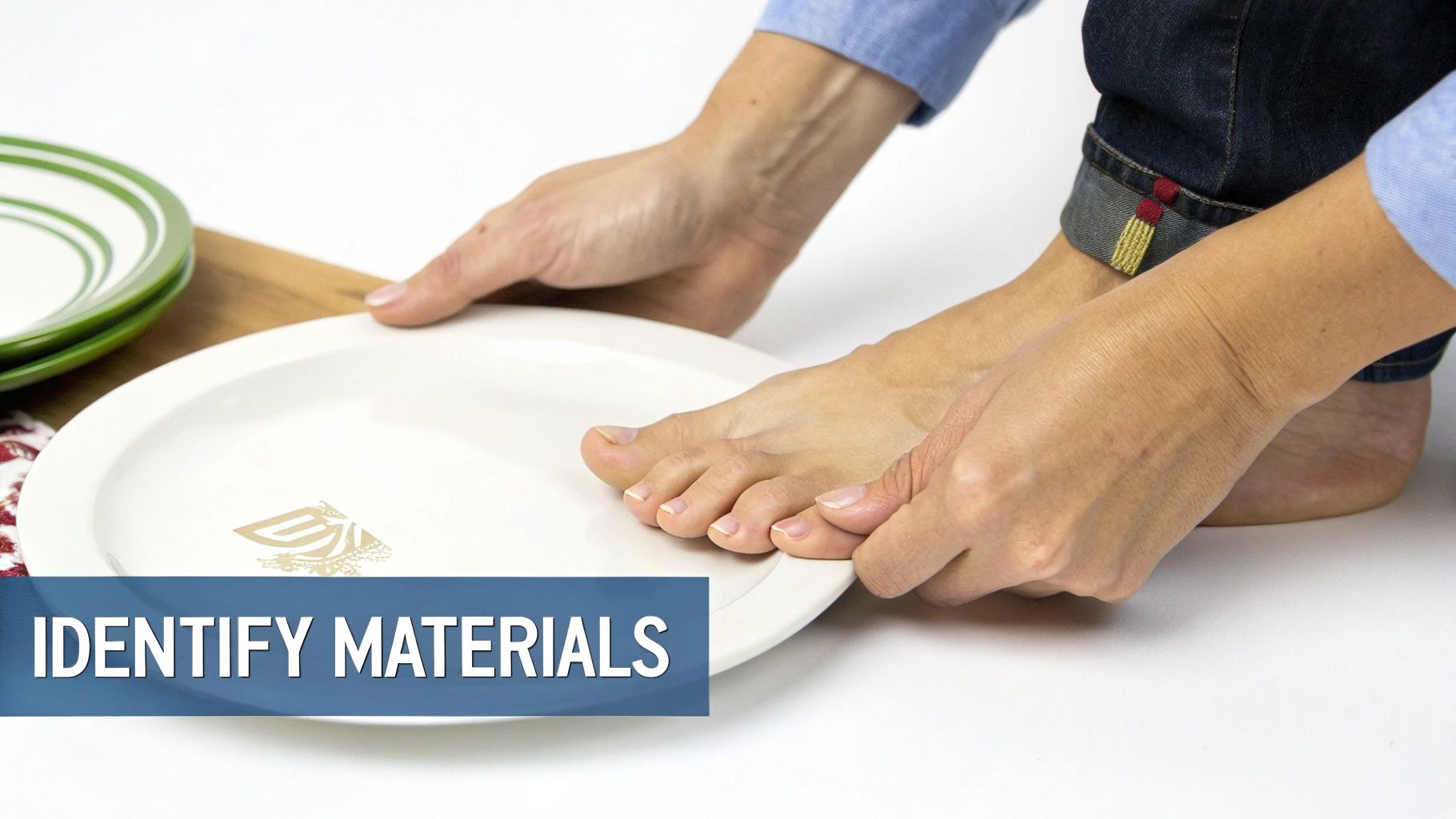
Your first move should always be to just look and feel. The differences in how vitreous china and porcelain are finished and composed become pretty obvious once you know what you’re looking for. Start with the overall appearance and then run your hands over the piece.
Porcelain's Signature Translucency
Good porcelain has an almost ethereal, delicate quality. If you're looking at something thin, like a teacup or a saucer, hold it up to a bright light. Can you see a soft glow or the shadow of your fingers through the body of the piece? If so, you're almost certainly holding true porcelain. This see-through quality is a direct result of its fine kaolin clay and the intense heat of the firing process.
Vitreous China's Opaque Armor
Vitreous china, on the other hand, is completely opaque. That thick, glassy enamel is designed to be an impenetrable barrier, not a delicate screen. It doesn't matter how strong the light is; you will not see through a vitreous china sink. The glaze itself is visibly thicker and has a deeper, more liquid-looking gloss than what you'd find on most porcelain tableware.
Field Tip: Run your fingers over the surface. The glaze on vitreous china often feels a bit heavier, like a distinct layer of glass was poured right on top. Porcelain, even when glazed, tends to feel more integrated, with a finer texture.
The Sound Test: A Clear Giveaway
One of the oldest and most reliable tricks in the book is the sound test. It’s simple: just tap the item gently with your fingernail. The sound it makes can tell you everything you need to know about its density.
If you can, suspend the item—maybe by holding a plate by its rim—and give it a light flick. Listen closely.
- Porcelain: You'll hear a clear, high-pitched, and resonant ring that hangs in the air for a moment. Think of the delicate chime from a fine crystal glass. That musical tone comes from the material's extreme density and complete vitrification.
- Vitreous China: This will give you a much duller, lower-pitched "thud" or "clunk." The sound is short and dead, with no resonance. That’s because the heavier body and thick enamel absorb the vibration instead of letting it ring out.
Examine the Unglazed Foot
For many pieces, the most revealing spot is the one part left unfinished: the base, or "foot." Potters usually leave the bottom rim of a vase or plate unglazed so it doesn't fuse to the kiln shelf during firing. This exposed area gives you a direct look at the clay body underneath.
Flip the item over and look for these tell-tale signs:
- Porcelain's Fine, White Body: The unglazed foot of a porcelain piece will be fine-grained, smooth, and usually a bright, clean white. It almost feels like polished stone.
- Vitreous China's Coarser Base: On a vitreous china fixture (check the underside of a sink or the base of a toilet), the unglazed area will reveal a coarser, more utilitarian ceramic body. The color is often off-white or even a little grayish.
Understanding Maker's Marks
Finally, don't forget the maker's mark. The manufacturer's stamp is a huge clue that can often tell you what you're holding before you even do any other tests. For anyone wanting to really get into the weeds, our guide to understanding markings on pottery is a fantastic resource.
- Vitreous China Marks: You're looking for industrial manufacturers known for plumbing fixtures. If you see brands like Kohler, Crane, American Standard, or Twyfords stamped into the ceramic, it's definitely vitreous china. These marks are built for function, not for show.
- Porcelain Marks: Here, you're hunting for the insignia of historic potteries famous for fine dinnerware and art. Names like Limoges, Wedgwood, Meissen, or Royal Copenhagen are clear indicators of high-quality porcelain. These marks are often elegant, sometimes hand-painted, and are a symbol of prestige and artistry.
Durability: Putting Them to the Test in the Real World
When you’re trying to decide between vitreous china and porcelain, theory only gets you so far. The real story is how they hold up under pressure in our homes. Their unique makeups mean they are built for entirely different jobs—one is made for the chaos of daily life, while the other is crafted for more delicate, aesthetic roles. It's not about which one is "better," but which one is right for the task at hand.
Porcelain's elegance is its calling card, making it the go-to for fine dinnerware, collectibles, and art. Its delicate strength and sometimes translucent quality give it an aesthetic that's hard to beat. But that same delicacy is its Achilles' heel in a busy environment. A beautiful porcelain teacup or figurine is prone to chipping or cracking if it takes a tumble, making it a risky choice for a hectic family kitchen.
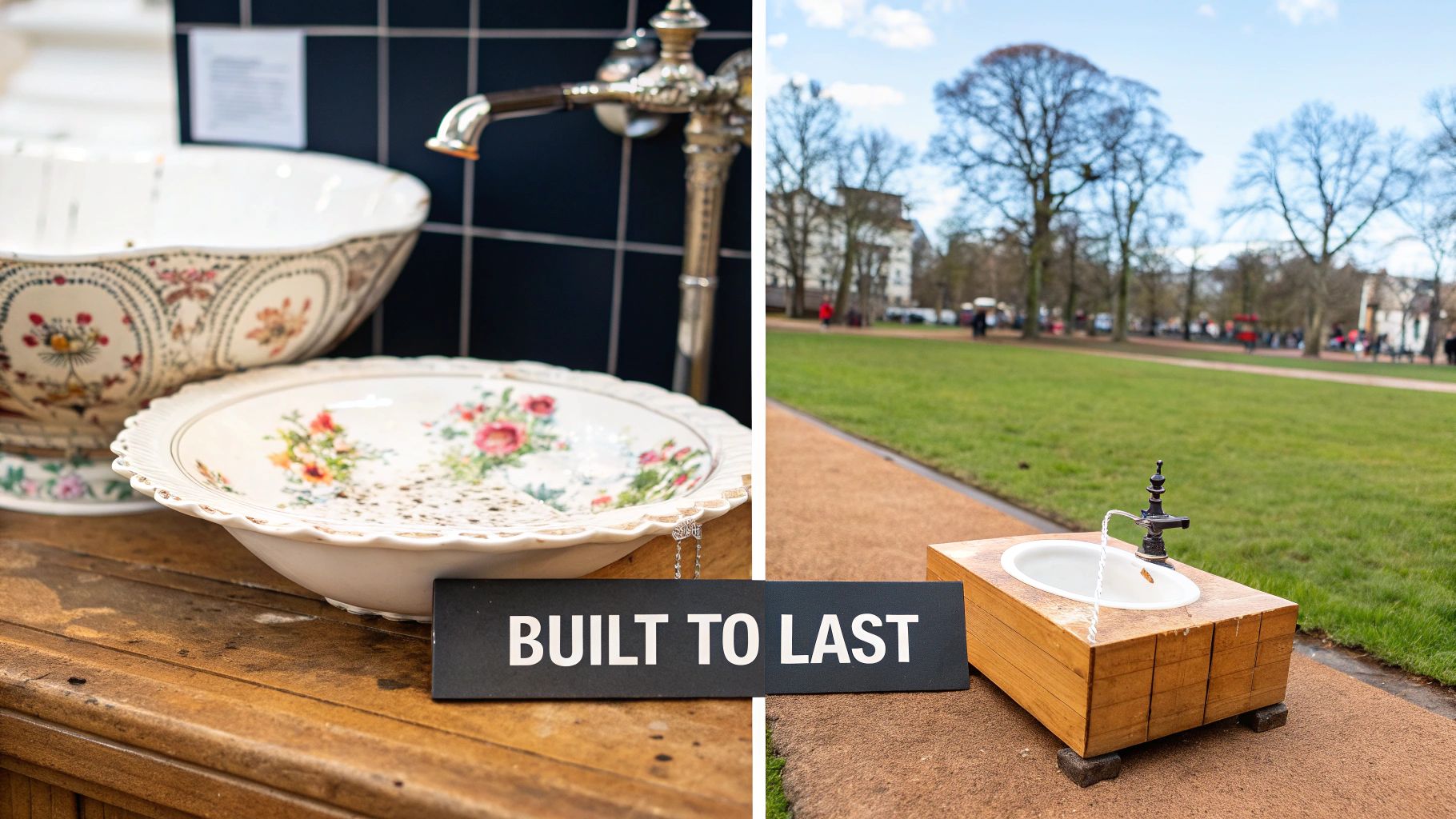
Vitreous China: The Unsung Hero of Fixtures
Vitreous china, on the other hand, is engineered from the start for toughness. The process of fusing a thick, glassy glaze onto a dense ceramic body creates a single, incredibly tough unit. This isn't an accident; the material is specifically designed to handle the daily grind of a bathroom or kitchen.
Just think about what a bathroom sink goes through. It has to stand up to:
- Constant Water Exposure: The non-porous surface of vitreous china boasts a water absorption rate of less than 0.5%, which stops moisture from seeping in and causing problems down the line.
- Aggressive Cleaners: Its tough, glass-like enamel is chemically resistant, so you don't have to worry about bleach-based sprays or abrasive scrubs staining or dulling the finish.
- Physical Knocks and Bumps: While it's not invincible, it can shrug off a dropped soap bottle or an accidental bump from a belt buckle far better than standard porcelain.
This is exactly why vitreous china has been the undisputed king of sanitary ware for more than a century. If you're exploring ideas for bathroom remodeling that involve tiles and fixtures, you'll see it everywhere. It's the proven standard for performance that lasts.
Porcelain: Reserved for Special Occasions
Porcelain's value lies in its artistry and perfection, not its brute strength. It truly shines in situations where beauty is the main goal and people know to handle it with care. It's the material of choice for heirloom dinner plates that are only brought out for the holidays or for intricate figurines displayed safely on a mantle.
Its relative fragility is simply the trade-off for its stunning appearance. While quite strong for how light it is, its thinner form makes it more susceptible to thermal shock—think of the cracking that can happen when you pour boiling water into a cold teapot.
The Bottom Line: For items that will see daily use, frequent cleanings, and the occasional knock, vitreous china is the hands-down winner. For things meant for display, special events, or pure aesthetic enjoyment, porcelain’s delicate beauty is second to none.
This fundamental difference in durability directly shapes how these pieces are valued on the antique market. A flawless 18th-century porcelain figurine commands a high price precisely because it's so fragile; finding one in perfect condition is rare. Its value is tied to its pristine, untouched state.
Conversely, a vintage vitreous china sink from the 1920s is valuable for the opposite reason: its proven ruggedness. Collectors seek these fixtures out for their historical charm and the fact that they can still work perfectly a hundred years later. One tells a story of preservation, the other a story of resilience.
How to Care For and Value Your Collection
Once you know whether you're holding porcelain or vitreous china, the game changes. You need to think about how to take care of it and what it might actually be worth. The two materials look similar but have completely different needs, and those same differences are what an appraiser or collector will zero in on. Good care isn't just about preservation; it directly protects your investment.
These ceramics both require a gentle hand, but that's where the similarities end. One was built for delicate beauty, the other for hard-working utility, and how you clean them should honor that history.
Preserving Your Ceramic Finds
Fine antique porcelain is fragile. It's incredibly sensitive to harsh chemicals and anything abrasive. That beautiful hand-painted detail or gold trim can be stripped away in an instant, tanking its value.
- For Porcelain: Stick to the basics: a soft cloth, lukewarm water, and a mild, pH-neutral soap. Never, ever put it in the dishwasher. The intense heat and harsh detergents will ruin the finish, causing fading and crazing. Abrasive cleaners or scouring pads are completely out of the question.
- For Vitreous China: This stuff is tough, but vintage fixtures can still show their age with stains or crazing. For everyday cleaning, any standard non-abrasive bathroom cleaner is fine. If you run into a stubborn stain, try a paste of baking soda and water—it’s gentle enough not to scratch the glaze.
Crazing, that network of fine cracks in the glaze, is a common sight on older vitreous china. It happens because the glaze and the ceramic body expand and contract at different rates over many years. While it's part of the piece's story, you'll want to avoid any colored cleaners that could seep into those cracks and stain it permanently.
Valuation Insight: Condition is king with porcelain. A single chip or even a hairline crack can slash its value by over 50%. With vitreous china, some wear like minor crazing is often expected and even adds to its vintage character. For these pieces, rarity and design style are much bigger factors in its price.
Understanding Market Value
What makes a piece of vitreous china valuable is worlds away from what makes porcelain valuable. The porcelain market is all about perfection and provenance. For vitreous china, it’s more about functional charm, nostalgia, and rarity. If you're diving into the world of ceramic collecting, a great resource is this guide on collecting Royal Copenhagen Star Fluted porcelain.
When you're trying to figure out what a piece is worth, keep these different roadmaps in mind:
- Porcelain Value Factors: It's all about the details. The maker's mark (think Meissen or Sèvres), the time period it was made, the complexity of the decoration, and its condition are paramount. A solid history of ownership, or provenance, can also send the value soaring. A gorgeous piece with no documentation will almost always sell for less. You can learn more about specific types in our guide to antique Chinese porcelain vases.
- Vitreous China Value Factors: Here, think brand, style, and scarcity. The manufacturer (like Crane or Kohler), the design era—Art Deco pieces are especially hot right now—and how many are left in the world are key. Unique colors, like the pastel pinks or mint greens from the 1950s, often fetch more than plain white. Its value is really tied to its modern-day usability and its appeal in retro-inspired homes.
Common Questions Answered
When you're dealing with ceramics, especially in fixtures like sinks and toilets, the terms "porcelain" and "vitreous china" get tossed around a lot. It can be confusing. Let's clear up some of the most common questions people have.
Is Vitreous China a Type of Porcelain?
Essentially, yes. Think of vitreous china as an upgraded version of porcelain. It starts with a standard porcelain base, but then it gets a special, heavy-duty glaze applied.
The whole piece is fired at a very high temperature, which fuses that glassy glaze permanently to the porcelain body. The result is an incredibly tough, non-porous surface. It’s porcelain, but with a built-in suit of armor.
The word "vitreous" literally means "like glass." This points directly to that tough, shiny finish that makes the material perfect for high-use items that need to resist stains and moisture, like sinks and toilets. It's not a different clay, but a different finishing process.
How Can I Tell if My Vintage Sink Is Valuable?
Material is just one piece of the puzzle. When you're trying to figure out if that old sink is a treasure, you need to play detective and look for a few key things:
- Who made it? Flip it over and look for a maker's mark. Names like Crane, Standard, or Kohler are a great sign.
- What's the style? Sinks with distinct designs from specific eras, like Art Deco or Mid-Century Modern, are often in high demand.
- Is the color unusual? While white is common, vintage pastel colors like mint green, pink, or buttercup yellow can make a piece significantly more valuable.
- What's the condition? Be realistic. Major cracks, deep chips that go through the glaze, or heavy, permanent staining will hurt its value and usability.
Can You Repair a Chip in Vitreous China?
You certainly can. For small chips and surface-level cracks, you can find specialty epoxy or porcelain repair kits at just about any hardware store. They do a decent job of sealing the blemish and keeping moisture out.
However, if you're dealing with a rare or valuable antique, I'd strongly recommend calling a professional. A pro can perfectly match the color and sheen of the original glaze, making the repair nearly invisible and ensuring the fixture holds its value.
Unsure about an item's history or value? Let Curio be your guide. Snap a photo, and our app provides instant identification, historical context, and an expert appraisal, turning your curiosity into confident knowledge. Discover the story behind your treasures with Curio today!